-
Sandra Ruckstuhl on Capturing Practical Lessons on Water, Conflict, and Cooperation
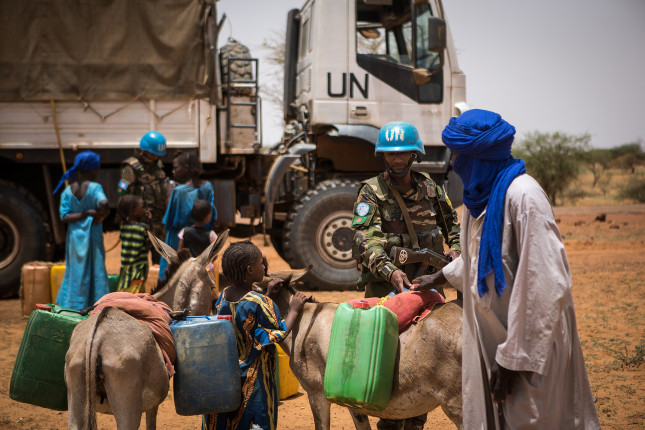
›Friday Podcasts // Water Stories (Podcast Series) // December 14, 2018 // By Kathryn Gardner & Truett Sparkman We realized “there was a need for a toolkit on water,” says Sandra Ruckstuhl in this week’s Water Stories podcast, “with a focus of conflict and conflict mitigation, but also peacebuilding.” Ruckstuhl, a consultant for the World Bank who has researched water programs in Yemen and the Middle East, helped the Wilson Center produce USAID’s Water and Conflict toolkit, which documents examples of successful development interventions focused on water and peacebuilding.
 -
Aaron Wolf on Transboundary Water Conflict and Cooperation
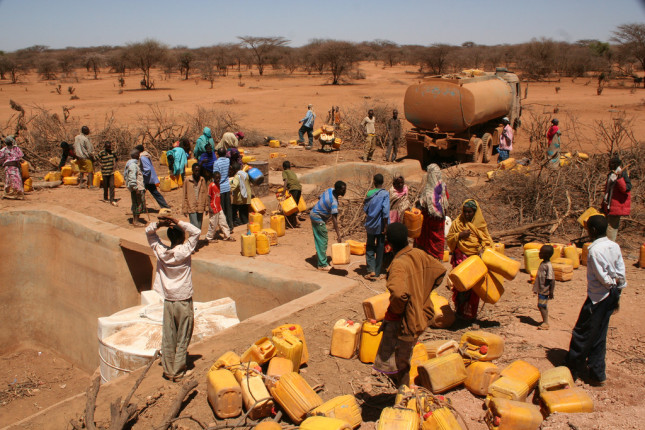
›Friday Podcasts // Water Stories (Podcast Series) // November 30, 2018 // By Evan Barnard & Sharif Wahab“Countries—even countries that don’t like each other much—have, and continue to have, conversations over water resources, even when they won’t about other issues,” says Aaron Wolf, Director of Water Conflict Management and Transformation at Oregon State University, in this week’s Water Stories podcast. -
International Water Cooperation Opens the Door to Peacemaking
›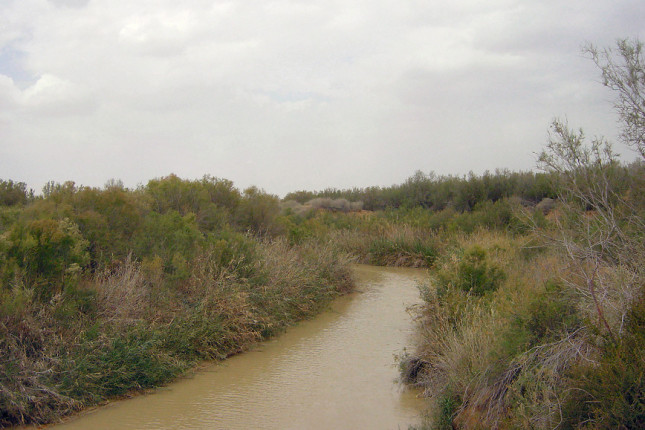
Although water is an essential input for agriculture and industrial production, it is also scarce in many regions. When it crosses international borders via shared rivers, lakes and aquifers, it can become a source of conflict and contention. Yet while water can be a source of instability, especially in the face of climate change, it can also be a source or catalyst for cooperation and even peace.
-
Environmental Security in Times of Armed Conflict
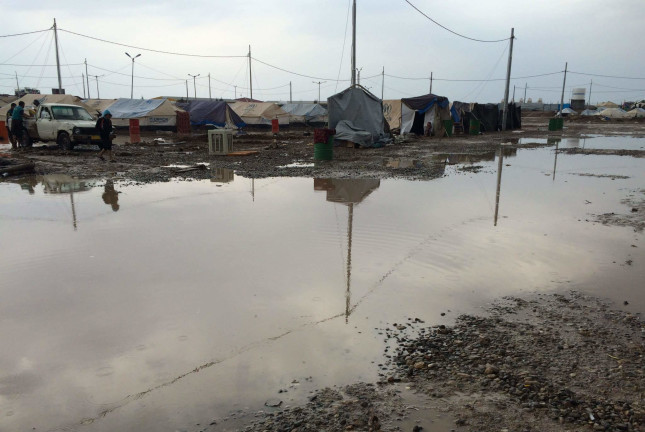
›This summer, Iraqi citizens in Basra demonstrated in the streets to protest a serious public health crisis caused by polluted water. The condition of their water infrastructure was deplorable after years of devastating wars, corruption, and droughts and regional hydropolitics. More than 100,000 people have reportedly been poisoned by polluted water, while recent estimates warn that some 277,000 children are at risk of diseases, such as cholera due to rundown water and sanitation facilities at schools.
-
Lessons from Post-Conflict States: Peacebuilding Must Factor in Environment and Climate Change
›The challenge of peacebuilding missions is not only to stop violence and prevent a rekindling of conflict, but also to help societies and governments reset their internal relations on a peaceful path towards sustaining peace.
-
The Double Burden of Climate Exposure and State Fragility
›The security implications of climate change emerged as an important area of concern in the mid 2000s in both policy circles and academia. Since then, there has been much research exploring causal pathways between climate phenomena and violent conflict, often with inconclusive or mixed results.
-
China vs. United States: Competition Over Rare Minerals Ratchets Up
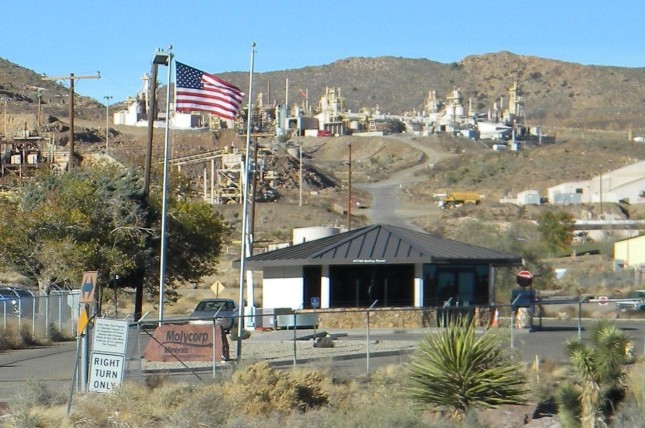
›“Historically, resource conflicts have often centered on fuel minerals, like oil. Future resources conflicts may however focus more on competition for non-fuel minerals that enable [modern] technologies,” said Andrew Gulley, Mineral Economist at the United States Geological Survey. America’s 2018 National Defense Strategy says that great power competition is the country’s most important defense challenge. Its key competitor for resources is China. Gulley was among several experts gathered at New America on September 20 to discuss the new competitive space and prospects for conflict or cooperation.
-
Separatist Conflicts Persist, While Revolutions Just “Age Away”
›The research presented in this article was subsequently published in a peer-reviewed article: https://link.springer.com/chapter/10.1007/978-3-030-73065-9_3
The Kurdish people’s century-long quest for self-determination reveals a key aspect of ethnic separatist conflicts. Ideas of nationhood can endure for generations, unifying people across borders and often making separatist conflicts hard to resolve. But how much harder is it to resolve separatist conflicts than other violent, non-territorial intra-state wars (such as political revolutions)? In practical terms, how much longer, on average, can policymakers expect separatist conflicts to persist and reoccur than the typical political revolution? These are tough questions. Surprisingly, demography helps us find the answers.
Showing posts from category conflict.
 We realized “there was a need for a toolkit on water,” says Sandra Ruckstuhl in this week’s Water Stories podcast, “with a focus of conflict and conflict mitigation, but also peacebuilding.” Ruckstuhl, a consultant for the World Bank who has researched water programs in
  “Countries—even countries that don’t like each other much—have, and continue to have, conversations over water resources, even when they won’t about other issues,” says