-
Climate Engineering: Innovative Solution or Ethical Dilemma?
›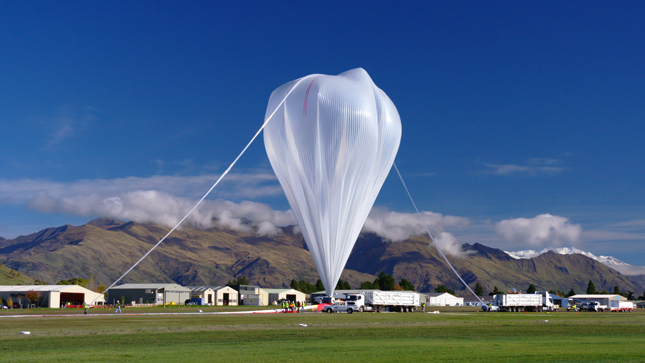
“Climate engineering can be a way to build a better world,” said Katharine Mach, a senior research scientist at Stanford University during a recent virtual workshop on the promises and pitfalls of climate engineering held by the Institute on Science for Global Policy, in partnership with the Forum for Climate Geoengineering Assessment at American University, and the School of Sustainability at Arizona State University.
-
Backdraft #8: Simon Nicholson on Climate Engineering
› When the Paris Agreement set an ambitious goal of limiting the global temperature rise to 1.5 degrees Celsius above pre-industrial levels, the negotiators put climate engineering on the table, says Simon Nicholson, professor at American University, in this week’s episode of Backdraft. Once the purview of science fiction, a majority of the models run by the Intergovernmental Panel on Climate Change (IPCC) required large-scale use of climate engineering technologies to keep additional warming below 2 degrees.
 -
Consensus, Certainty, and Catastrophe: The Debate Over Ocean Iron Fertilization
›Almost three decades ago, at a conference at the Woods Hole Institute, oceanographer John Martin said with “a half a tanker of iron…I will give you the next ice age.”
-
Jessica F. Green & Thomas N. Hale, Duck of Minerva
Why IR Needs the Environment and the Environment Needs IR
›April 13, 2017 // By Wilson Center StaffThe state of the global environment is terrible – and deteriorating. The globalization of industrial production and the consumptive habits of 7 billion people have created the Anthropocene, a geologic age in which the actions of humans are the primary determinant of the Earth’s natural systems. This shift creates a profound new form of environmental interdependence, of which climate change is only the most salient example.
-
New “Backdraft” Podcast Series, on the Peace and Conflict Consequences of Climate Responses
›The science is clear: To prevent major disruption, the global community must take steps to address climate change. But it is also increasingly clear that efforts to address climate change can have major effects on societies that are not always anticipated. -
Retooling U.S. Foreign Policy to Confront 21st-Century Threats
›At a time when the relative influence of the United States is decreasing, and the relative influence of states is decreasing, we need a retooling of the architecture of U.S. foreign policy. Just as “personnel is policy,” it is also true that “organization is policy.”
-
Backdraft Revisited: The Conflict Potential of Climate Change Adaptation and Mitigation
›Whether or not we respond to climate change – and the security implications of that decision – is a major public policy question. But increasingly experts are paying closer attention to how we respond.
-
Paradox of Progress: National Intelligence Council Releases Global Trends Report
›January 11, 2017 // By Schuyler NullDo you experience information overload? Feel like there’s always another crisis to worry about? Sense a kind of chaos? Well, you may be a citizen of the early 21st century.
Showing posts from category climate engineering.
 When the Paris Agreement set an ambitious goal of limiting the global temperature rise to 1.5 degrees Celsius above pre-industrial levels, the negotiators put climate engineering on the table, says Simon Nicholson, professor at American University, in this week’s episode of Backdraft. Once the purview of science fiction, a majority of the models run by the Intergovernmental Panel on Climate Change (IPCC) required large-scale use of climate engineering technologies to keep additional warming below 2 degrees.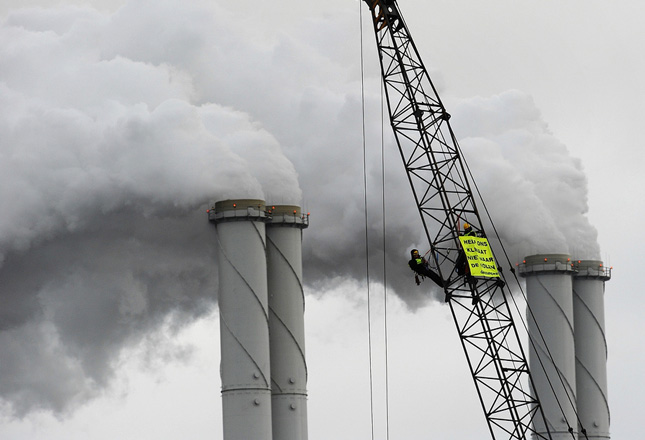
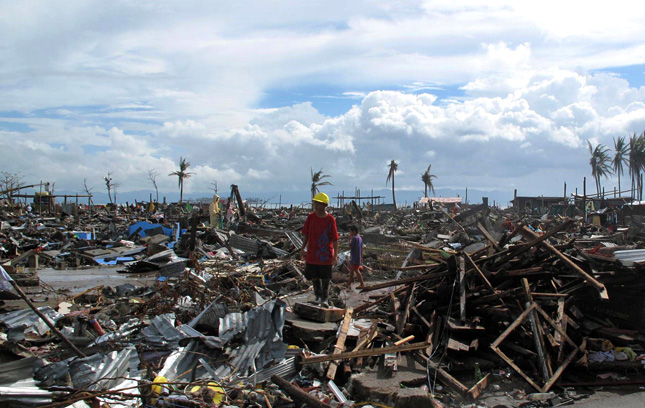
 The science is clear: To prevent major disruption, the global community must take steps to address climate change. But it is also increasingly clear that efforts to address climate change can have major effects on societies that are not always anticipated.