• woodrow wilson center
  • ecsp

New Security Beat

Subscribe:
  • rss
  • mail-to
  • Who We Are
  • Topics
    • Population
    • Environment
    • Security
    • Health
    • Development
  • Columns
    • China Environment Forum
    • Choke Point
    • Dot-Mom
    • Friday Podcasts
    • Navigating the Poles
    • Reading Radar
  • Multimedia
    • Water Stories (Podcast Series)
    • Backdraft (Podcast Series)
    • Tracking the Energy Titans (Interactive)
  • Films
    • Water, Conflict, and Peacebuilding (Animated Short)
    • Paving the Way (Ethiopia)
    • Broken Landscape (India)
    • Scaling the Mountain (Nepal)
    • Healthy People, Healthy Environment (Tanzania)
  • Publications
  • Events
  • Contact Us

NewSecurityBeat

The blog of the Wilson Center's Environmental Change and Security Program
Showing posts from category climate change.
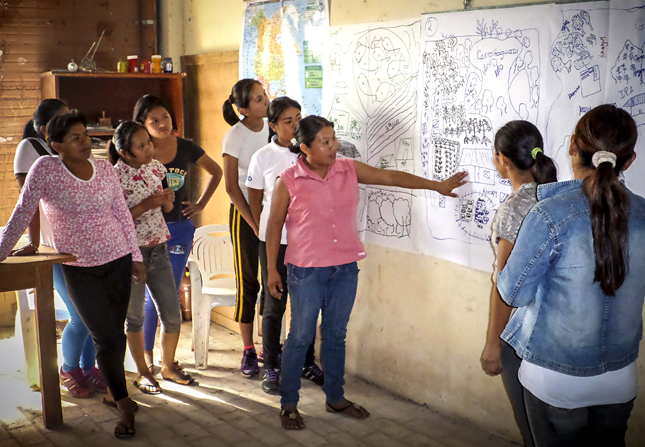
  • Amidst Climate Change and Shifting Energy Markets, New Challenges for Transatlantic Security

    ›
    From the Wilson Center  //  July 8, 2013  //  By Jacob Glass

    “In the post-Cold War period, the challenges of energy, environment, climate change, and water have become very much a part of our fundamental transatlantic relationship,” said CNA General Counsel Sherri Goodman, launching a new report on U.S.-EU security at the Wilson Center. [Video Below]

    MORE
  • Environmental Security: A Guide to the Issues (Book Preview)

    ›
    Guest Contributor  //  July 1, 2013  //  By Elizabeth L. Chalecki
    Soviet nuclear bunker

    I remember the first moment when my interest in national security came crashing into ecological reality. I was on a U.S. government trip to Central Asia to inspect uranium mines in the newly-independent states of the former Soviet Union. The Cold War security imperative to achieve nuclear superiority had done a number on the environment there: Uranium was leached from the ground with sulfuric acid, transformed into a uranium oxide powder called yellowcake, and shipped off to be enriched for nuclear reactor fuel or weapons. The generals in Moscow who issued these orders did not see the collateral damage that their idea of security wreaked on the environment in Central Asia. In their attempt to out-weaponize the United States, they laid waste to the groundwater, agriculture, and public health of their own citizens.

    MORE
  • Wilson Center Roundtable on ‘Backdraft’: The Unintended Consequences of Climate Change Response

    ›
    Eye On  //  From the Wilson Center  //  June 25, 2013  //  By Jacob Glass

    As President Obama readies a new road map for addressing climate change in the United States, experts warn that poorly designed and implemented initiatives, especially in already-fragile parts of the world, could unintentionally provoke conflicts, rather than diffuse them.

    MORE
  • The Farmer’s Dilemma: Climate Change, Food Security, and Human Mobility

    ›
    From the Wilson Center  //  June 24, 2013  //  By Kate Diamond

    “Most of the world’s poor are farmers; they share the same profession and the same challenges,” said One Acre Fund’s Stephanie Hanson at a recent Wilson Center event on small-scale farming, climate change, food security, and migration. They are tasked with growing enough food to support their families with only tenuous access to land and natural resources, the most basic of tools, and increasingly unpredictable weather patterns to deal with. [Video Below]

    MORE
  • Susan Bradley on Feed the Future: Solving Hunger Requires Cross-Cutting Development Initiatives

    ›
    Friday Podcasts  //  June 21, 2013  //  By Jacob Glass
    Susan Bradley podcast

    “Sustainable food security means that food production has to be climate smart,” says Susan Bradley in this week’s podcast. “In order to achieve climate smart food security, we are going to have to build resilience and adaptive capacity into agriculture.”

    Bradley, division director for the USAID’s Bureau for Food Security, is working to implement the U.S. government’s Feed the Future Initiative. Unveiled by the Obama Administration in 2009, the $3.5 billion “whole of government” initiative aims to alleviate hunger and increase food security around the world.

    MORE
  • From Dakar to Abidjan, Population Finally Finding Its Place in Food Security Assessments

    ›
    June 20, 2013  //  By Kathleen Mogelgaard
    Senegalese women in Keur Moussa transport rocks to construct a dike to control soil erosion in their community

    A woman sat crouched on the side of a busy road in Dakar, a baby in a sling on her back and a basket of peanuts in front. I know only a little French, and no Wolof, but I decided to try anyway. “Bonsoir,” I said, and smiled at the toddler beside her. “Combien?” I asked, pointing at the peanuts.

    She smiled back at me, we negotiated a sale, and in exchange for the coins in my pocket I walked away with a few bags of the small, tasty nuts that are grown throughout the “peanut basin” of central Senegal.

    MORE
  • ‘At the Desert’s Edge’ Gives a Glimpse of China’s Massive Desertification Challenge

    ›
    China Environment Forum  //  Eye On  //  June 17, 2013  //  By Luan "Jonathan" Dong

    In may not be surprising that China, home to so many other superlatives, also faces desertification on a grand scale. According to China’s State Forestry Administration, over 27 percent of the country now suffers from desertification – more than 1,000,000 square miles, or about one-third of the continental United States – impacting the lives of more than 400 million people.

    MORE
  • The Leopard in the Well: Wilson Center and Circle of Blue Launch ‘Choke Point: India’

    ›
    Choke Point  //  June 13, 2013  //  By Keith Schneider
    Irrigation pump in Punjab

    The original version of this article, by Keith Schneider, appeared on Circle of Blue. Choke Point: India is a research and reporting initiative produced in partnership between Circle of Blue and the Wilson Center’s China Environment Forum and Asia Program.

    Perhaps because India is so big, so bewildering and chaotic, and so determined to update its elusive rural identity with sleek urban flare, Indians and the national press are fascinated by how the nation’s wild animals are faring amid the dizzying change. In many cases, not well.

    MORE
Newer Posts   Older Posts
View full site

Join the Conversation

  • RSS
  • subscribe
  • facebook
  • G+
  • twitter
  • iTunes
  • podomatic
  • youtube
Tweets by NewSecurityBeat

Trending Stories

  • unfccclogo1
  • Pop at COP: Population and Family Planning at the UN Climate Negotiations

Featured Media

Backdraft Podcast

play Backdraft
Podcasts

More »

What You're Saying

  • Volunteers,At,The,Lagos,Food,Bank,Initiative,Outreach,To,Ikotun, Pan-African Response to COVID-19: New Forms of Environmental Peacebuilding Emerge
    Rashida Salifu: Great piece 👍🏾 Africa as a continent has suffered this unfortunate pandemic.But it has also...
  • A desert road near Kuqa An Unholy Trinity: Xinjiang’s Unhealthy Relationship With Coal, Water, and the Quest for Development
    Ismail: It is more historically accurate to refer to Xinjiang as East Turkistan.
  • shutterstock_1779654803 Leverage COVID-19 Data Collection Networks for Environmental Peacebuilding
    Carsten Pran: Thanks for reading! It will be interesting to see how society adapts to droves of new information in...

What We’re Reading

  • Rising rates of food instability in Latin America threaten women and Venezuelan migrants
  • Treetop sensors help Indonesia eavesdrop on forests to cut logging
  • 'Seat at the table': Women's land rights seen as key to climate fight
  • A Surprise in Africa: Air Pollution Falls as Economies Rise
  • Himalayan glacier disaster highlights climate change risks
More »
  • woodrow
  • ecsp
  • RSS Feed
  • YouTube
  • Twitter
  • Facebook
  • Home
  • Who We Are
  • Publications
  • Events
  • Wilson Center
  • Contact Us
  • Print Friendly Page

© Copyright 2007-2021. Environmental Change and Security Program.

Woodrow Wilson International Center for Scholars. All rights reserved.

Developed by Vico Rock Media

Environmental Change and Security Program

Woodrow Wilson International Center for Scholars

Ronald Reagan Building and International Trade Center

  • One Woodrow Wilson Plaza
  • 1300 Pennsylvania Ave., NW
  • Washington, DC 20004-3027

T 202-691-4000