• woodrow wilson center
  • ecsp

New Security Beat

Subscribe:
  • rss
  • mail-to
  • Who We Are
  • Topics
    • Population
    • Environment
    • Security
    • Health
    • Development
  • Columns
    • China Environment Forum
    • Choke Point
    • Dot-Mom
    • Friday Podcasts
    • Navigating the Poles
    • Reading Radar
  • Multimedia
    • Water Stories (Podcast Series)
    • Backdraft (Podcast Series)
    • Tracking the Energy Titans (Interactive)
  • Films
    • Water, Conflict, and Peacebuilding (Animated Short)
    • Paving the Way (Ethiopia)
    • Broken Landscape (India)
    • Scaling the Mountain (Nepal)
    • Healthy People, Healthy Environment (Tanzania)
  • Publications
  • Events
  • Contact Us

NewSecurityBeat

The blog of the Wilson Center's Environmental Change and Security Program
Showing posts from category climate change.
  • Babbage, The Economist

    Cloudy With a Chance of War?

    ›
    August 8, 2013  //  By Wilson Center Staff
    Cloudy With a Chance of War

    The original version of this article appeared on The Economist’s Babbage blog.

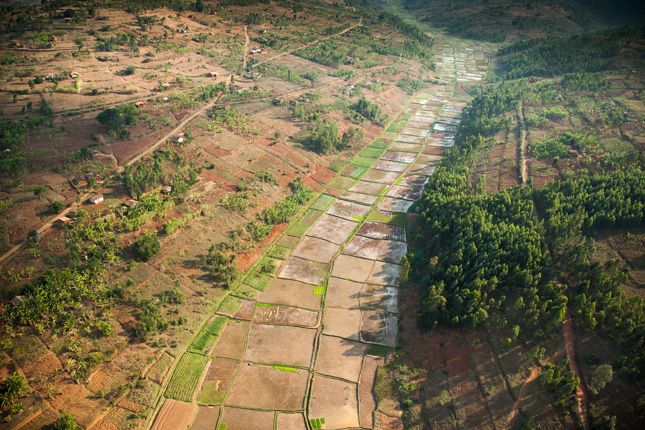
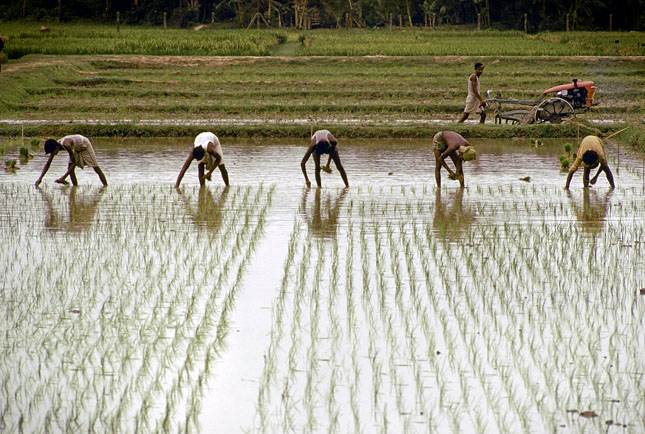
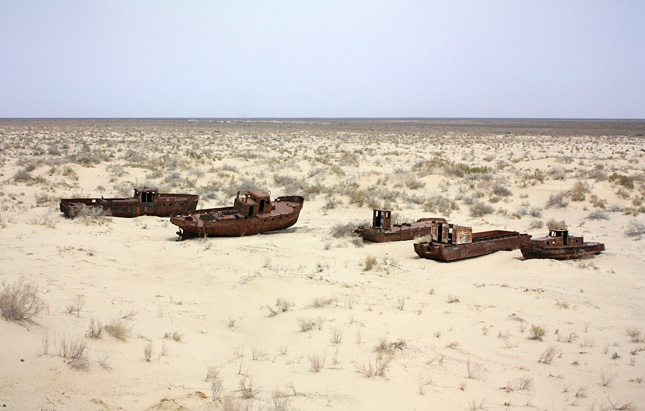
    Earth’s climate is changing, whether you like it or not. As it does, other changes – like rising sea levels or falling crop yields – follow. It is easy to see how this might lead to conflict. Competition for ever scarcer resources such as arable land and its bounty can turn ugly. As the price of food rises the poor, who spend more of their income on it, are hit more than the rich, exacerbating income inequality and leading to disaffection, resentment and, possibly, violence.

    MORE
  • The Great Anatolia Project: Is Water Management a Panacea or Crisis Multiplier for Turkey’s Kurds?

    ›
    Guest Contributor  //  August 5, 2013  //  By Ilektra Tsakalidou
    Great Anatolian Project

    During the Gezi Park protests last month in Istanbul, Turks and Kurds dismissed historical mistrust and banded together against Prime Minister Erdogan’s growing authoritarianism. Some have suggested the newly unifying cause has strengthened momentum for a long-standing solution to Kurdish autonomy and rights in Turkey. Still it may be water that the fate of Kurdish ambitions is most tied to, rather than officials in Ankara or protestors in Istanbul.

    MORE
  • Vulnerability View: GAIN Index Rates Climate Change Preparedness

    ›
    Eye On  //  July 31, 2013  //  By Jacob Glass
    DPRK GAIN Index Profile

    According to the UN, the planet has warmed faster since the turn of the century than any other period on record. Sea-level rise has also increased pace to 0.12 inches a year – almost double the rate observed during the 20th century. This “unprecedented” rate of climate change is expected to disproportionally impact developing countries, whose socio-economic, political, and physical landscapes make them particularly vulnerable to the effects. The GAIN Index, an interactive mapping tool recently acquired by the University of Notre Dame, can help policymakers prepare for these changes by comparing the climate change vulnerability and readiness of countries around the world.

    MORE
  • Backdraft: Flipping the Frame on Conflict and Climate Change

    ›
    Guest Contributor  //  July 29, 2013  //  By Michael Svoboda

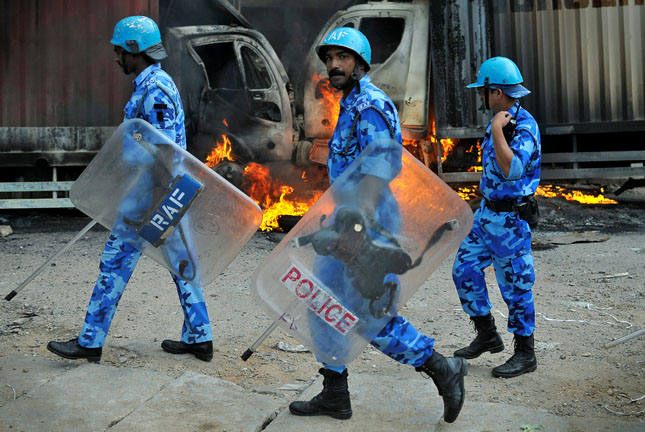
    Fire needs oxygen to burn. When a fire starts inside a building, the floors, ceilings, walls, doors, and windows can constrict the flow of air. Breaking in to fight the fire thus carries the risk of opening a new airway. If that happens, a smoldering fire can expand explosively, bursting into roaring flames as it sucks air in through the new passageway. This sudden inrush of air to fuel a burst of fire has a name: backdraft.

    MORE
  • Lisa Friedman: Bangladesh Shows Importance of Expanding Coverage of Climate-Induced Migration

    ›
    Friday Podcasts  //  On the Beat  //  July 19, 2013  //  By Jacob Glass
    Lisa-Friedman-podcast2

    “What I found in Bangladesh was that [climate migration] wasn’t a straight line,” says Lisa Friedman in this week’s podcast. It’s “a far more complicated story.”

    Friedman is the deputy director of ClimateWire, a news service that brings readers daily information related to climate change and its effects on business and society. At the launch of ECSP’s new report, Backdraft: The Conflict Potential of Climate Mitigation and Adaptation, Friedman discussed her experiences reporting on climate-induced migration in Bangladesh – one of the most vulnerable countries to climate change in the world, due to its low-lying geography, dense population, and high poverty levels.

    MORE
  • Reproductive Health Organizations Embrace Cross-Sectoral Partnerships in Africa

    ›
    From the Wilson Center  //  July 18, 2013  //  By Swara Salih
    Kenyan mother and child

    “The places in the world where the environment is most fragile, women’s health is most fragile,” said Leila Darabi, director of global communications for the Planned Parenthood Federation of America, at the Wilson Center. “The negative impacts on the environment tend to affect women the most. Women are the people who are planting kitchen gardens, women are traditional healers, and so they often feel the impact first when those things are degraded.”

    MORE
  • Mike Ives, Yale Environment 360

    Vietnam’s Rice Boom Has Steep Environmental Costs for Mekong Delta

    ›
    July 17, 2013  //  By Wilson Center Staff
    Rice husks on the Mekong River, Vietnam

    The original version of this article, by Mike Ives, appeared on Yale Environment 360.

    Phan Dinh Duc leans against yellow sacks of freshly harvested rice. It’s a warm spring evening in Vietnam’s Mekong Delta, and Duc, a local farmer, is waiting for traders to arrive by truck to purchase his produce and sell it on commodities markets. Beyond him lies a vast checkerboard of rice paddies, each filled with water and bordered by a network of canals and roughly 10-foot-high earthen dikes. They enable year-round rice cultivation in an area where, a half century ago, vast floodplains typically lay fallow for half the year and farmers planted one annual rice crop that grew in tandem with seasonal floods.

    MORE
  • On World Population Day, ICPD Conference Reminds Us of Population’s Role in Development

    ›
    July 11, 2013  //  By Roger-Mark De Souza
    Nafis Sadik at ICPD Beyond 2014

    “The development agenda is discretionary and the human rights agenda is obligatory,” said Kitty van der Heijden, the ambassador for sustainable development in the Dutch Ministry of Foreign Affairs, on the final day of the ICPD International Conference on Human Rights here in the Netherlands.

    MORE
Newer Posts   Older Posts
View full site

Join the Conversation

  • RSS
  • subscribe
  • facebook
  • G+
  • twitter
  • iTunes
  • podomatic
  • youtube
Tweets by NewSecurityBeat

Trending Stories

  • unfccclogo1
  • Pop at COP: Population and Family Planning at the UN Climate Negotiations

Featured Media

Backdraft Podcast

play Backdraft
Podcasts

More »

What You're Saying

  • Volunteers,At,The,Lagos,Food,Bank,Initiative,Outreach,To,Ikotun, Pan-African Response to COVID-19: New Forms of Environmental Peacebuilding Emerge
    Rashida Salifu: Great piece 👍🏾 Africa as a continent has suffered this unfortunate pandemic.But it has also...
  • A desert road near Kuqa An Unholy Trinity: Xinjiang’s Unhealthy Relationship With Coal, Water, and the Quest for Development
    Ismail: It is more historically accurate to refer to Xinjiang as East Turkistan.
  • shutterstock_1779654803 Leverage COVID-19 Data Collection Networks for Environmental Peacebuilding
    Carsten Pran: Thanks for reading! It will be interesting to see how society adapts to droves of new information in...

What We’re Reading

  • Rising rates of food instability in Latin America threaten women and Venezuelan migrants
  • Treetop sensors help Indonesia eavesdrop on forests to cut logging
  • 'Seat at the table': Women's land rights seen as key to climate fight
  • A Surprise in Africa: Air Pollution Falls as Economies Rise
  • Himalayan glacier disaster highlights climate change risks
More »
  • woodrow
  • ecsp
  • RSS Feed
  • YouTube
  • Twitter
  • Facebook
  • Home
  • Who We Are
  • Publications
  • Events
  • Wilson Center
  • Contact Us
  • Print Friendly Page

© Copyright 2007-2021. Environmental Change and Security Program.

Woodrow Wilson International Center for Scholars. All rights reserved.

Developed by Vico Rock Media

Environmental Change and Security Program

Woodrow Wilson International Center for Scholars

Ronald Reagan Building and International Trade Center

  • One Woodrow Wilson Plaza
  • 1300 Pennsylvania Ave., NW
  • Washington, DC 20004-3027

T 202-691-4000