-
Education as a Conservation Strategy – Really?
›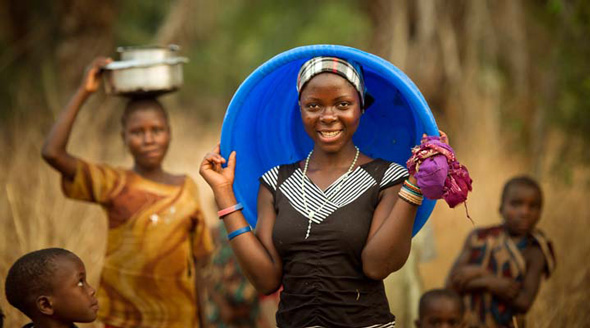
The original version of this article appeared in The Nature Conservancy’s October issue of their Science Chronicles newsletter.
It seems like everywhere you turn recently, you hear how the planet’s population is headed to 10 billion. And obvious questions follow: How can we balance far more people with the natural resources needed for their survival? How will we get more food? How will we get more energy?
-
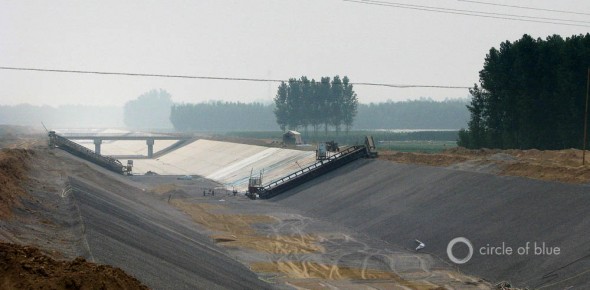
Choke Point China Part II: Food Supply, Fracking, and Water Scarcity Challenge a Juggernaut Economy
›
The original version of this article, by Keith Schneider, appeared on Circle of Blue. Choke Point: China is a research and reporting initiative produced in partnership between Circle of Blue and the Wilson Center’s China Environment Forum.
Where the wide, muddy waters of the Songhua River flow north from Jiamusu to the Russian border, just 150 kilometers (90 miles) distant, the whole of China’s largest treeless prairie sweeps to the horizon. This expanse of fertile grasslands endures the dark fright of cold Siberian winters and the raging winds of Mongolian summers. At night, in the scattered villages, the sky fills with stars so thick and bright that walking along unlit streets is easy.
-
Kathleen Mogelgaard on How Malawi Shows the Importance of Considering Population, Food, and Climate Together
›October 24, 2012 // By Carolyn LamereQuantifying the role population plays in food security is “an incredibly powerful piece of information,” said Kathleen Mogelgaard in an interview with ECSP. Malawi is a case in point.
Mogelgaard saw the connections between food, population, and climate change firsthand on a recent trip to the southeast African country, whose population of 15 million is largely dependent on subsistence, rain-fed agriculture. “One in five children in Malawi is currently undernourished,” Mogelgaard said, and climate change paints a bleak picture for the future.
-
Population and Environment in Saadani National Park, and Repositioning Family Planning in Sub-Saharan Africa
›Tanzania’s Saadani National Park is a hotbed of biodiversity and, like other national parks in the region, it’s surrounded by human activity. A report by the BALANCED Project, “Population, Health, Environment Situational Analysis for the Saadani National Park Area, Tanzania,” provides a snapshot of the population, health, and environment situation inside the park to serve as a baseline for future activities of the Tanzania Coastal Management Partnership (TCMP) – a joint initiative of the government of Tanzania, USAID, and the University of Rhode Island’s Coastal Resources Center. A behavioral monitoring system implemented in June 2009 used surveys that reached a total of 437 respondents (54 percent women) from eight villages to analyze the “behaviors that positively and negatively influence the utilization and condition of natural resources.” The surveys found that arable land is scarce, fisheries are being depleted, and people have inadequate access to healthcare, water, sanitation, fuel, and family planning resources. The results suggest a strong case for expanding TCMP’s existing integrated approach – combining HIV/AIDS, conservation, and livelihoods goals – to include promotion of positive behavior changes, particularly as they relate to family planning and the effects of population growth on biodiversity loss and resource depletion.
-
Who Are the Most Vulnerable to Ocean Acidification and Warming?
›In 2011, a record 34 billion cubic tons of carbon dioxide were emitted from man-made sources. Half the emitted CO2 stays in the atmosphere, about a quarter is absorbed on land (as trees grow, for example), and the remainder is absorbed by the ocean. Unsurprisingly, this incredible amount of carbon dioxide significantly changes the ocean environment. Over time, increased absorption of carbon dioxide in the oceans has led to ocean acidification, and overall warming has also led to warming of ocean waters – both changes impact marine ecosystems and the people who rely on them.
-
International Day of the Girl Child: Recognizing the Unique and Complex Vulnerability of Young Girls
›October 11, 2012 // By Schuyler NullToday is the first “International Day of the Girl Child” – a day established last year by the United Nations to acknowledge the rights and unique challenges faced by young girls around the world.
The latest UN projections put the number of women under the age of 19 at about 1.18 billion today. Especially in developing countries (though not only) these young girls often face outsized barriers to happy, healthy, and productive lives.
-
Beer: The Perfect Illustration of the Water-Energy-Food Nexus?
›The water-energy-food nexus seems to be garnering more and more attention in the media and elsewhere, and it’s easy to see why: it’s a relatively simple way to illustrate how interconnected the world is today and the kind of domino-like effects that scarcity can have.
-
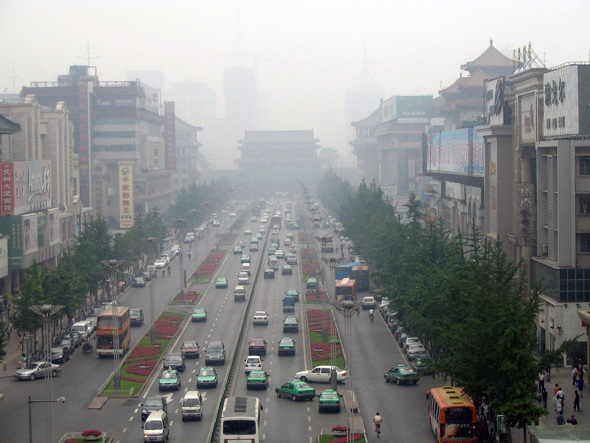
Containing a Development Flood: Green Urbanization in Asia
›On April 1, 2012, a Chinese woman on her way to work suddenly felt the earth beneath her crumble and, in an instant, found herself plunging into an abyss of scalding hot water. The woman had unknowingly stepped into one of the many sinkholes appearing in China’s megacities. The emergence of sinkholes in China is part of a larger set of environmental issues related to rapid urbanization taking place in the Asia-Pacific region overall. [Video Below]
Showing posts from category climate change.