• woodrow wilson center
  • ecsp

New Security Beat

Subscribe:
  • rss
  • mail-to
  • Who We Are
  • Topics
    • Population
    • Environment
    • Security
    • Health
    • Development
  • Columns
    • China Environment Forum
    • Choke Point
    • Dot-Mom
    • Friday Podcasts
    • Navigating the Poles
    • Reading Radar
  • Multimedia
    • Water Stories (Podcast Series)
    • Backdraft (Podcast Series)
    • Tracking the Energy Titans (Interactive)
  • Films
    • Water, Conflict, and Peacebuilding (Animated Short)
    • Paving the Way (Ethiopia)
    • Broken Landscape (India)
    • Scaling the Mountain (Nepal)
    • Healthy People, Healthy Environment (Tanzania)
  • Publications
  • Events
  • Contact Us

NewSecurityBeat

The blog of the Wilson Center's Environmental Change and Security Program
Showing posts from category climate change.
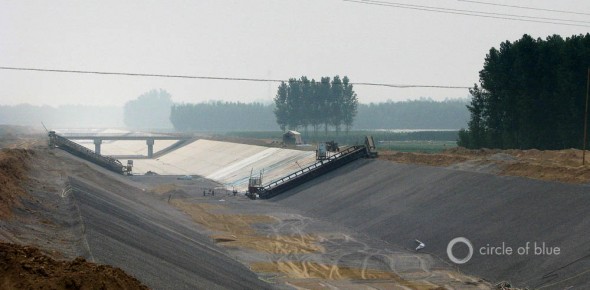
  • Kenyan Pastoralists Clash With Ugandan Army

    ›
    August 21, 2008  //  By Daniel Gleick
    On Sunday, the Ugandan army attacked thousands of Turkana herders from drought-stricken northern Kenya who had crossed into Uganda seeking water and pasture for their cattle. “This is the second time our people have been attacked and killed,” John Munyes, Kenyan labor minister and Turkana North MP, told The Daily Nation. In 2005, 60 Turkana herders were killed by the Ugandan army in a similar incident. Yet talks scheduled for last month never occurred, and Munyes complained to The Nation that “the [Kenyan] Government had not shown any concern” over deaths in his community.

    A UNICEF video discusses the hardships facing the Turkana.

    According to The Daily Nation, some Turkana have resorted to cattle rustling to make a living. After a raid earlier this week, residents of the Kenyan town of Galole in the North Horr district reported that Turkana raiders stole “more than 20,000 animals,” and that 11 people were killed while pursuing the raiders. According to The Daily Nation, “[s]ince 2005, there have been a series of livestock raids between Turkana herders and their neighbours in North Horr.” At a recent Wilson Center event, Peter Hetz of ARD, Inc. explained that “[i]nsecure land tenure and property rights and the inequitable access to land and natural assets are two of the leading triggers of violent conflict, population displacement, the over-exploitation of natural resources, and political instability throughout eastern Africa.”

    Sadly, this type of conflict may become even more prevalent. Survival of the fittest: Pastoralism and climate change in East Africa, a new report by Oxfam International, notes that the risk of conflict “is greatest during times of stress, for example drought or floods.” Drawing on the Intergovernmental Panel on Climate Change’s (IPCC) reports, it points out that some regions are expected to have higher rainfall, which could lead to flooding, and others are likely to face further drought. While more rain could be a boon in some cases, it could also make semi-arid lands attractive to farmers—who are typically more politically enfranchised—pushing out pastoralist communities.

    Given this dynamic, the interstate and intrastate conflicts that occurred earlier this week could become more common all over the continent. “Pastoralism enabled people to adapt to an increasingly arid and unpredictable environment by moving livestock according to the shifting availability of water and pasture,” notes the report, but “[t]o be practiced effectively, pastoralism depends on freedom of movement for all herds between pastures and water sources.” It is impossible to attribute the incidents this week directly to climate change, but as the climate in the area shifts and affects local resources, migration will likely become an increasingly attractive adaptive mechanism for pastoralists. Environmentally induced migration is currently being discussed in more detail in an interactive online seminar co-sponsored by the Environmental Change and Security Program and the Population-Environment Research Network.

    The problems Survival of the fittest discusses are serious, but the report argues that because they have been adapting to climatic changes for millennia, “pastoralist communities could have a sustainable and productive future in a world affected by climate change, given the right enabling environment.” Mohamed Elmi, Kenya’s minister for the development of Northern Kenya and other arid lands, supported the report’s conclusion, saying that pastoralist adaptability “cannot be realised without government support and investment.” While it is impossible to predict the exact changes the Turkana and other pastoral groups will face, it is certain that without government support, clashes such as the ones earlier this week will continue to occur.
    MORE
  • Weekly Reading

    ›
    Reading Radar  //  August 15, 2008  //  By Wilson Center Staff
    “Over the next twenty years physical pressures – population, resource, energy, climatic, and environmental – could combine with rapid social, cultural, technological, and geopolitical change to create greater uncertainty,” warns the newly released 2008 National Defense Strategy. Demographic trends, resource scarcity, and environmental change all inform the updated strategy, which encourages international cooperation to address these impending challenges.

    The “Population Forum” in the September issue of WorldWatch Magazine “reveals that empowering women to make their own family size choices…is the best strategy to tackle population growth” and the environmental and security problems linked to it. A short history of population trends is available online; the website offers free previews of Lori Hunter’s article on PHE and gender, as well as “Population and Security” by Elizabeth Leahy and ECSP’s own Sean Peoples. Bernard Orimbo links population growth and environmental degradation in his native Kenya, and PAI staff discuss urbanization.

    Climate change threatens to exaggerate the challenges faced by the billions of people worldwide who depend upon natural resources for their survival. But the competition and, at times, violent conflict that results from increased resource scarcity is not a given; the recently released World Resources Report 2008 finds that “well-designed, community-based enterprises” can ease the environmental burden on natural resources and pave the way for sustainable dependence on the land.

    At the 2008 World Expo’s “Water and Conflict Resolution” week, municipal representatives working with Friends of the Earth Middle East (FoEME) presented case studies from its “Good Water Neighbors” programs: cross-border solutions for the Lower Jordan River; the Jordan River Peace Park project; and the town of Auja in the Jordan River Valley. Speaking about these programs the Wilson Center, FOEME’s Gidon Bromberg said that “by working together, not only do we advance the environmental issues…we also advance peace between our peoples.”
    MORE
  • No Good Deed Goes Unpunished: Climate Scientists in the Policy Realm

    ›
    August 14, 2008  //  By Geoffrey D. Dabelko
    As someone who sits between scholarship and policy at the Woodrow Wilson Center, I am sympathetic to Harvard Professor John Holdren’s efforts to articulate critical scientific issues in short, digestible formats. Holdren, who also directs the Woods Hole Research Center, recently tackled what he views as the dangers of climate change deniers in a Boston Globe op-ed—which is, by definition, brief. According to an email sent by Holdren, the reaction to “Convincing the climate-change skeptics” has been quite critical, with castigation running 6 or 7 to 1 over praise.

    Holdren’s op-ed neglected to explicitly note that healthy skepticism is a necessary foundation for good science. In a response posted online, Holdren provides his original text including this point, which was edited out by the Globe—a common frustration of scientists who attempt to simplify complex arguments to fit the constraints of newspapers and more popular outlets (he was on Letterman in April).

    Those scientists who excoriate Holdren for underplaying skepticism are often the same ones who complain about bad (or no) climate policy—but refuse to engage policymakers and the media (and, therefore, forfeit their right to complain). Just as bad, some scientists assume policymakers will find their book or article, read it, understand it, and glean the correct conclusion from the scientific evidence—with no translation necessary. I’ve said it before: to reach policymakers, we have to speak their language.

    I also think headline writers are the bane of every serious op-ed or news story. As someone who spends a lot of time on the faux water wars argument, I have come to believe that headline writers seeking to make a splash are a big part of the continued belief that states go to war over water.

    Holdren’s experience suggests scientists should take proactive steps, such as setting up supporting web pages when the piece is published, and including the URL as part of their byline. This annotated or fully referenced and extended online version may help temper some of the outrage in cases like this. Jeff Sachs’ “Sustainable Developments” column in Scientific American, Andy Revkin’s Dot Earth blog, and Nick Kristof’s New York Times column and “On the Ground” blog commonly include links to more extensive discussions.

    We need top-flight scientists to engage the “skeptics” rather than cede the ground without a fight, as it will be filled with good, bad, and ugly science and policy—whether those scientists who refuse to be “contaminated” by the policy process like it or not.

    Photo: John Holdren discusses global warming with David Letterman (courtesy of CBS.com)

    MORE
  • Averting a Global Freshwater Crisis

    ›
    August 7, 2008  //  By Karen Bencala
    With more than one billion people lacking adequate access to freshwater, the world is already experiencing a vast set of challenges. In the not-so-distant future, as the global population continues to grow and as the impacts of climate change are felt, the problem will intensify. In this month’s issue of Scientific American, Harvard professor Peter Rogers unpacks the multiple factors contributing to this scarcity and proposes six priority actions to alleviate some of this stress.

    Rogers’ key message is: “If a crisis arises in the coming decades, it will not be for lack of know-how; it will come from a lack of foresight and from an unwillingness to spend the needed money.” He points out that it is the combination of climate change and continued population growth that will have a devastating affect on local water scarcity. However, water scarcity is not only driven by demand outweighing supply, but also by the pollution of our water supply and by the wasting of water by individuals, industry, and our water-supply systems.

    To address these issues, Rogers proposes six priority recommendations:
    1. Set higher prices for water use. In the United States and other developed countries, water is so cheap that “it seems almost free,” so there is little incentive to conserve or reuse. Increasing the price of water supply would drive conservation. For instance, municipalities would be more likely to fix leaks in water-supply systems and to invest in water reuse.
    2. Improve irrigation efficiency. With approximately 70 percent of available freshwater going to agriculture, increasing the efficiency of irrigation systems—fixing leaks, creating low-loss storage capabilities, and more efficiently applying water to crops—would create a volume of water that could go to other uses.
    3. Supply “virtual water.” “Virtual water” refers to the amount of water used to produce a product. If arid and semiarid areas imported more food or other water-intensive products, this import of virtual water would allow the limited water that is available to go to other uses, such as drinking water or industry. Implementing this recommendation would require the liberalization of trade in farm products and a reduction in tariffs. Given the highly contested debates about farm subsides in the United States and the EU, this seems a far-off proposition.
    4. Use dry or low-water devices for sanitation. This would reduce the amount of water used for sanitation and could also reduce the use of fossil fuel-based fertilizers if the solid waste were collected and composted for farming purposes.
    5. Use desalination to increase supply. Once limited by high costs and high energy demands, desalination technologies are nearing commercial viability.
    6. Invest in water. Major investment in existing technologies to conserve water, maintain and replace infrastructure, and construct sanitation systems will be needed to stave off a water crisis. According to the article, Booz Allen Hamilton estimates that a $1 trillion annual investment in these sectors will be required to meet the world’s water needs through 2030.
    Rogers lays out a solid set of steps to address our growing water needs, but implementing them will require leadership in the government and beyond, as well as the conscious planning and management of water resources. And while these steps are reasonable for large economies with robust governance systems, the areas of the world that are most affected by a lack of water—places where diarrhea is the leading cause of death for children under five and where women and children are required to walk miles to wells to collect drinking water—will require not only financial support, as Rogers notes, but also long-term technical and legal assistance.
    MORE
  • Weekly Reading

    ›
    Reading Radar  //  August 1, 2008  //  By Wilson Center Staff
    “The term ‘climate refugees’ implies a mono-causality rarely found in human reality,” argue the authors of a report on climate change and forced migration released by the Norwegian Refugee Council. The report’s authors urge additional research on the links between climate change, migration, and conflict, and strongly emphasize the importance of helping developing countries adapt to climate change’s impacts.

    According to a report released by the Internal Displacement Monitoring Centre of the Norwegian Refugee Council, the number of internally displaced persons (IDPs) reached 26 million in 2007, despite an overall decline in the number of violent conflicts around the world.

    The Philippine government reached a deal with a Muslim rebel group that will expand an autonomous region in the southern Philippines. “The proposed homeland will be entitled to a large share of the resources in the area,” reports the BBC.
    MORE
  • Climate Change, Natural Disasters Disproportionately Affect Women, Report Finds

    ›
    July 31, 2008  //  By Sonia Schmanski
    Women “are the most likely to bear the heaviest burdens when natural disasters strike,” says a new report from the Women’s Environment and Development Organization (WEDO), “Gender, Climate Change and Human Security: Lessons from Bangladesh, Ghana and Senegal.” The report also encourages governments to allow women to play larger roles as agents of preparedness, mitigation, and adaptation.

    Climate change, the report says, “forms a major threat to human security at national and livelihood levels.” Because 70 percent of people living below the poverty line are women, their livelihoods are threatened most acutely by climate change and the natural disasters it is likely to make increasingly frequent and severe. In addition, women are often responsible for “tasks such as food collection and energy supply for the household as well as many care-giving tasks, such as caring for the children, sick, elderly, the home and assets.” In the wake of a natural disaster, these activities can become nearly impossible, and being responsible for them can prevent women from migrating from disaster zones, despite the burden of living where disaster has struck. This migration, the authors write, has significant impacts on those who stay as well as those who leave, as “the relocation of people has severe impacts on social support networks and family ties—mechanisms that have a crucial value for women.”

    Losing over half a million citizens to natural disasters between 1970 and 2005 has given Bangladesh the highest disaster mortality rate in the world, and gender-neutral data collection makes it difficult to determine gender-specific outcomes. From the data that does exist, the report notes that following the cyclone and flood disasters of 1991, for example, the death rate among adult women (20-44 years of age) was 71 per 1000, almost five times higher than the rate of 15 per 1000 for adult men.

    There is consensus that South Asia is among the regions most affected by climate change, the report says, and that Bangladesh is the most vulnerable country in the region. For the 80 percent of Bangladeshi women who live in rural areas and are solely responsible for water and firewood collection, food preparation, and family health care, the future appears increasingly imperiled.

    A study published last year in the Annals of the Association of American Geographers confirmed that natural disasters decrease the life expectancy of women much more dramatically than men; that the more intense the disaster, the stronger this effect; and that the wealthier the women, the less they are affected by this phenomenon.

    Even as women suffer disproportionately from climate change and natural disasters, the report says, “women are more often overlooked as potential contributors to climate change solutions,” and their ability to contribute to preparation, mitigation, and rehabilitation efforts is undervalued. The report recommends that countries develop National Adaptation Programmes of Action (NAPAs) that involve women as contributors to adaptation processes and work toward “improving human security in the context of climate change from a gender perspective.”
    MORE
  • Al Jazeera Films the Evaporating Way of Life of Niger’s Tuareg Rebels

    ›
    July 29, 2008  //  By Sonia Schmanski
    The land of Niger’s Tuareg Bedouin tribes—and thus the Tuareg way of life—is drying up. The steadily advancing Sahara desert is swallowing northern Niger at a rate of six kilometers per year, part of a centuries-old process recently accelerated by climate change and groundwater withdrawals by the nation’s booming uranium mining industry.

    French nuclear giant Areva flies in workers rather than hiring locals to man the mines, and as a result, the Tuareg and other tribal groups have little or no opportunity to find employment. Cut out of the revenue stream, rebel fighters, made up of Tuaregs as well as members of other Bedouin tribes, are demanding a percentage (20-30 percent, by most accounts) of the revenue generated by the uranium mined on their land.

    Defying a government ban on reporting on the conflict, Al Jazeera television reporter May Welsh interview the rebels in a five-part video series on the Tuareg. “They’re fighting a state that’s ignoring their problems,” she says. For example, a family suffering from a new and mysterious ailment claim they have been denied care by Areva’s medical offices. Welsh suggests their illness could be attributed to the radioactive water around Areva’s facilities.

    Areva, for its part, rejects the notion that it is poisoning the people of northern Niger. In a document released in August 2007, the company reports that 60-70 percent of its private hospital patients are members of surrounding communities. Areva also states it gives preference to local sub-contractors in its exploration and procurement activities. But the yawning gulf between Areva’s position and the reality in northern Niger belies the company’s claims.

    Conflict between rebel groups and the Nigerien army has separated families, displaced people, destroyed schools—and interfered with humanitarian missions. The government ordered the French NGO Medecins Sans Frontieres (MSF) to suspend its activity in Niger based on unsubstantiated suspicions that members of the organization were colluding with rebels. Welsh’s daring reports illuminate these and other dangers of life in Niger’s desert, a life that may soon become impossible.
    MORE
  • Weekly Reading

    ›
    Reading Radar  //  July 25, 2008  //  By Meaghan Parker
    “Women are key to the development challenge,” says Strategies for Promoting Gender Equity in Developing Countries, but “gender mainstreaming has been associated with more failures than gains.” Detailing findings from an April 2007 conference co-sponsored by the Wilson Center and the Inter-American Foundation, the report calls for a redesigned approach operating on multiple fronts. Blogging about the report, About.com’s Linda Lowen dubs the gap between women and men in developing countries a “Grand Canyon-like divide” compared to the “crack in the sidewalk” faced by Western women.

    A Council on Foreign Relations backgrounder on Angola—now Africa’s leading oil producer—tackles the familiar paradox of extreme poverty in resource-rich countries. Burdened by “an opaque financial system rife with corruption,” Angola’s leaky coffers are filling up with Chinese currency. As Angolan President Jose Eduardo dos Santos put it, “China needs natural resources, and Angola wants development.” FastCompany.com’s “Special Report: China In Africa” criticizes the overwhelming Chinese presence in Africa: “The sub-Sahara is now the scene of one of the most sweeping, bare-knuckled, and ingenious resource grabs the world has ever seen.”

    In Scientific American’s “Facing the Freshwater Crisis,” Peter Rogers writes that the demands of increasing population, along with increasingly frequent droughts due to climate change, signal rough waters ahead, and calls for major infrastructure investments to prevent catastrophe. Closer to home, Circle of Blue reports on a new era of water scarcity in the United States, and director Jim Thebaut’s documentary “Running Dry: The American Southwest” takes a look at the hard-hit region.

    Pastoralists are socially marginalized in many countries, making them highly vulnerable to climate change despite their well-developed ability to adapt to changing conditions, reports the International Institute for Environment and Development in “Browsing on fences: Pastoral land rights, livelihoods and adaptation to climate change.” The paper notes that the “high rate of development intervention failure” has worsened the situation, and calls for giving pastoralists “a wider range of resources, agro-ecological as well as socio-economic,” to protect them.
    MORE
Newer Posts   Older Posts
View full site

Join the Conversation

  • RSS
  • subscribe
  • facebook
  • G+
  • twitter
  • iTunes
  • podomatic
  • youtube
Tweets by NewSecurityBeat

Trending Stories

  • unfccclogo1
  • Pop at COP: Population and Family Planning at the UN Climate Negotiations

Featured Media

Backdraft Podcast

play Backdraft
Podcasts

More »

What You're Saying

  • Volunteers,At,The,Lagos,Food,Bank,Initiative,Outreach,To,Ikotun, Pan-African Response to COVID-19: New Forms of Environmental Peacebuilding Emerge
    Rashida Salifu: Great piece 👍🏾 Africa as a continent has suffered this unfortunate pandemic.But it has also...
  • A desert road near Kuqa An Unholy Trinity: Xinjiang’s Unhealthy Relationship With Coal, Water, and the Quest for Development
    Ismail: It is more historically accurate to refer to Xinjiang as East Turkistan.
  • shutterstock_1779654803 Leverage COVID-19 Data Collection Networks for Environmental Peacebuilding
    Carsten Pran: Thanks for reading! It will be interesting to see how society adapts to droves of new information in...

What We’re Reading

  • Rising rates of food instability in Latin America threaten women and Venezuelan migrants
  • Treetop sensors help Indonesia eavesdrop on forests to cut logging
  • 'Seat at the table': Women's land rights seen as key to climate fight
  • A Surprise in Africa: Air Pollution Falls as Economies Rise
  • Himalayan glacier disaster highlights climate change risks
More »
  • woodrow
  • ecsp
  • RSS Feed
  • YouTube
  • Twitter
  • Facebook
  • Home
  • Who We Are
  • Publications
  • Events
  • Wilson Center
  • Contact Us
  • Print Friendly Page

© Copyright 2007-2021. Environmental Change and Security Program.

Woodrow Wilson International Center for Scholars. All rights reserved.

Developed by Vico Rock Media

Environmental Change and Security Program

Woodrow Wilson International Center for Scholars

Ronald Reagan Building and International Trade Center

  • One Woodrow Wilson Plaza
  • 1300 Pennsylvania Ave., NW
  • Washington, DC 20004-3027

T 202-691-4000