-
‘The New York Times’ Highlights Converging Development Trends in Brazil’s Amazon
›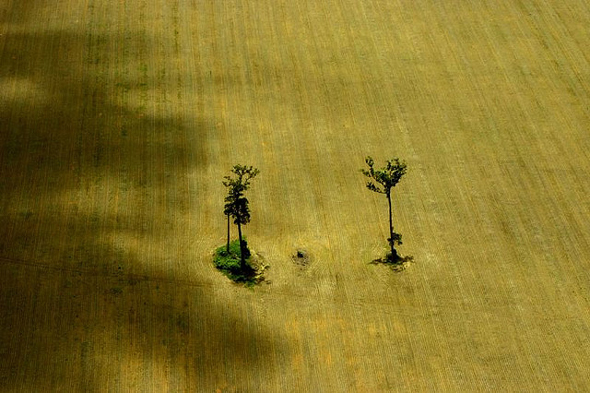
The Amazon is home to some of the world’s most expansive rainforest – and, increasingly, some of Brazil’s fastest growing cities. Urbanization and deforestation are upending the traditional image of the Amazon, turning one of the world’s most biodiverse regions into an economic and demographic explosion, according to an in-depth article by Simon Romero in The New York Times.
-
Does Climate Change Kill Five Million People A Year? DARA’s 2012 Climate Vulnerability Monitor
›
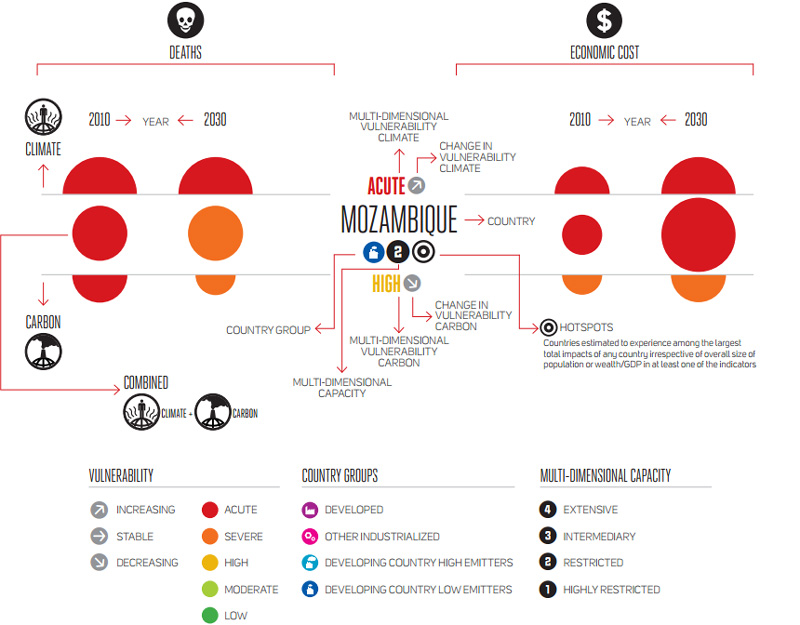
Five million people die each year due to climate- or carbon-related causes, and total mortality by 2030 could total 100 million people, according to new report from DARA, a nonprofit organization that works to improve aid to those affected by conflict and climate change and quantify the global cost of climate change and carbon use. But the report has drawn some fire for being too alarmist.
-
India’s Environmental Security Challenge: Water, Coal, Natural Gas, and Climate Change Fuel Friction
›November 23, 2012 // By Michael KugelmanThe original version of this article appeared in NATO Review.
Few regions are more environmentally insecure than South Asia.
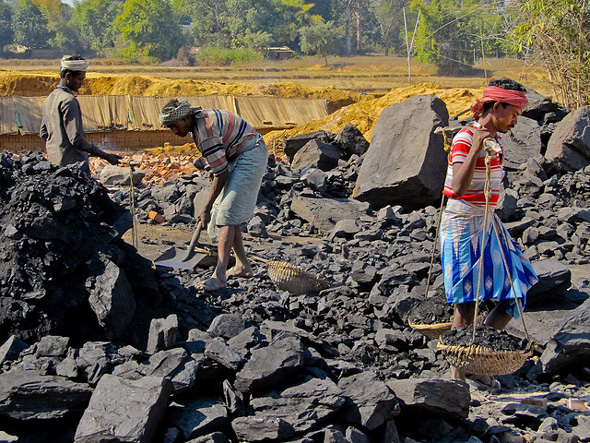
The region faces rising sea levels and regularly experiences coastal flooding – of particular concern in a region with heavily populated and arable-land-rich coastal areas. Additionally, it is highly vulnerable to glacial melt. The Western Himalayas, which provide water supplies to much of South Asia, have experienced some of the most rapid melt in the world.
-
Can Family Planning Save Millions From Malnutrition in a Warming World?
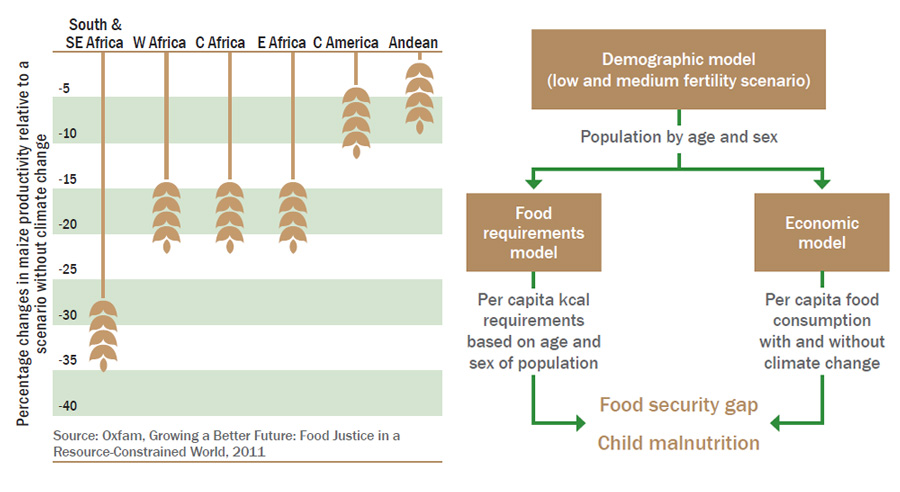
›As the effects of climate change become increasingly apparent, existing poverty and human security challenges are being compounded. Among them, food security is one of the most pressing, especially in the developing world.
Based on a model developed by researchers at Futures Group, a pilot project in Ethiopia reveals that a lower fertility track for some countries could help compensate for the negative effects of climate change on agricultural yields. The study, conducted by MEASURE Evaluation and funded by USAID and The David and Lucile Packard Foundation, suggests incorporating family planning into existing climate change adaptation strategies.
-
Climate and Conflict in East Africa, and UNEP’s Plan to Avoid Future Famines
›While climate change will undoubtedly have an impact on societies throughout the world, researchers are still debating whether or not it will cause conflict. John O’Loughlin, Frank D.W. Witmer, Andrew M. Linke, Arlene Laing, Andrew Gettelman, and Jimy Dudhia use a quantitative approach to tackle some of “sweeping generalizations” that have come to characterize this debate in a new study, “Climate Variability and Conflict Risk in East Africa, 1990-2009,” published last month in PNAS. They found that while there is “no statistically significant relationship” between precipitation and conflict, increased heat is correlated with more conflict in East Africa. Still, they also found that other factors, like population size and the space-time lag for violence, predict conflict more reliably than either of the climate-related elements. -
What Next? Finding Ways to Integrate Population and Reproductive Health Into Climate Change Adaptation
›November 12, 2012 // By Kathleen MogelgaardThe size, composition, and spatial distribution of human populations are constantly changing, and in some areas of the world, they’re changing very rapidly. Related trends in fertility and reproductive health are also in flux. These changes will affect how people experience climate change, both individually and societally.
-
Joel Cohen on Why Students Should Consider Demography
›“Why should you consider taking a demography course in college?” That’s the question Joel Cohen, noted demographer and professor at Rockefeller and Columbia University, looks to answer in a 45-minute introduction to demography produced by the Floating University and released for free on YouTube.
-
Michael D. Lemonick, Climate Central
Surprise Geoengineering Test Goes Forward Off Coast of Canada
›November 2, 2012 // By Wilson Center StaffThe original version of this article, by Michael D. Lemonick, appeared on Climate Central.
Harvard’s David Keith calls it the “goofy Goldfinger scenario” – a rogue nation, or even an individual, would conduct an unsupervised geoengineering experiment – and he confidently predicted in a story I wrote last month that it would never happen.
Showing posts from category climate change.