-
‘Motherland Afghanistan’ Shows Maternal Mortality Not Just A Health Issue
›Afghanistan has one of the highest rates of maternal mortality in the world: 327 out of every 100,000 women who give birth die during childbirth. Despite some recent improvements, political, social, cultural, and economic factors present enormous challenges. Last month, the Center for Population and Development Activities hosted an online viewing and dialogue discussion of the PBS Independent Lens film Motherland Afghanistan, which follows Afghan-American filmmaker Sedika Mojadidi and her father, Dr. Qudrat Mojadid, as they return to their home country and visit the Laura Bush Maternity Ward in Kabul. The conditions they find are devastating and underscore not only the need for greater commitment to reproductive health services, but also the advancement of women’s and girl’s access to education, security, and political participation.
-
Nine Strategies to Stop Short of Nine Billion
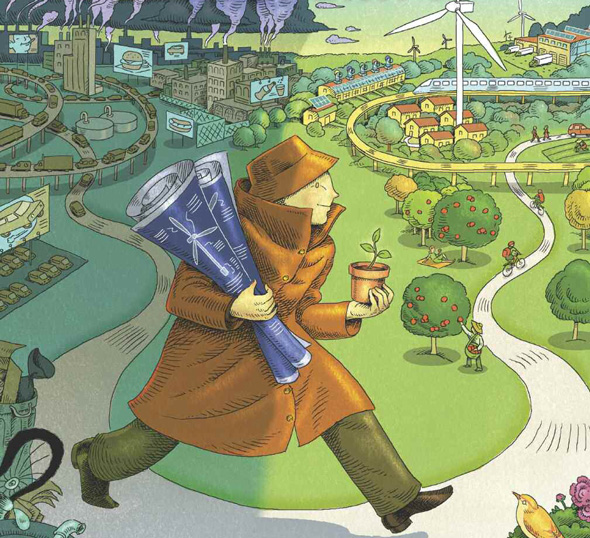
›Although most analysts assume that the world’s population will rise from today’s seven billion to nine billion by 2050, it is quite possible that humanity will never reach this population size.
My chapter in this year’s State of the World 2012: Moving Toward Sustainable Prosperity, “Nine Population Strategies to Stop Short of 9 Billion,” outlines a series of strategies that would prompt significant declines in birth rates. Based purely on the intention of women around the world to have small families or no children at all, these initiatives, policies, and changes in attitude could end population growth before mid-century at fewer than nine billion people.
Examples from around the world demonstrate effective policies that not only reduce birth rates, but also respect the reproductive aspirations of parents and support an educated and economically active society that promotes the health of women and girls. Most of these reproduction policies are relatively inexpensive to implement, yet in many places they are opposed on the basis of cultural resistance and political infeasibility.
In creating this list, I sought to eschew the language and approaches of “population control” or the idea that anyone should pressure women and their partner on reproduction. Instead, I hoped to highlight strategies that could put human population on an environmentally sustainable path:- Provide universal access to safe and effective contraceptive options for both sexes. With two in five pregnancies reported as mistimed or never wanted, lack of access to good family planning services is among the biggest gaps in assuring that each baby will be wanted and welcomed in advance by its parents.
- Guarantee education through secondary school for all, especially girls. In every culture surveyed to date, women who have completed at least some secondary school have fewer children on average, and have children later in life, than do women who have less education.
- Eradicate gender bias from law, economic opportunity, health, and culture. Women who can own, inherit, and manage property; divorce; obtain credit; and participate in civic and political affairs on equal terms with men are more likely to postpone childbearing and to have fewer children compared to women who are deprived of these rights.
- Offer age-appropriate sexuality education for all students. Data from the United States indicates that exposure to comprehensive programs that detail puberty, intercourse, options of abstinence and birth control, and respecting the sexual rights and decisions of individuals can help prevent unwanted pregnancies and hence reduce birth rates.
- End all policies that reward parents financially based on the number of children they have. Governments can preserve and even increase tax and other financial benefits aimed at helping parents by linking these not to the number of children they have, but to parenthood status itself.
- Integrate lessons on population, environment, and development into school curricula at multiple levels. Refraining from advocacy or propaganda, schools should educate students to make well-informed choices about the impacts of their behavior, including childbearing, on the environment.
- Put prices on environmental costs and impacts. In quantifying the cost of an additional family member by calculating taxes and increased food costs, couples may decide that the cost of having an additional child is too high. Such decisions, freely made by women and couples, can decrease birth rates without any involvement by non-parents in reproduction.
- Adjust to an aging population instead of boosting childbearing through government incentives and programs. Population aging must be met with the needed societal adjustments, such as increased labor participation, rather than by offering incentives to women to have more children.
- Convince leaders to commit to stabilizing population through the exercise of human rights and human development. By educating themselves on rights-based population policies, policymakers can ethically and effectively address population-related challenges by empowering women to make their own reproductive choices.
Kathleen Mogelgaard assisted with research for this piece.
Robert Engelman is the president of the Worldwatch Institute and contributing author to State of the World 2012: Moving Toward Sustainable Prosperity.
Sources: Bloom et al. (2011), Guttmacher Institute, Kohler et al. (2008), Population Reference Bureau, UN, UNFPA, The Wall Street Journal, Yadava and Yadava (1999).
Image Credit: Worldwatch Institute, State of the World 2012: Moving Toward Sustainable Prosperity. -
World Population Day 2012: Looking Beyond Reproductive Health
›How should the seven billion or so of us on Earth mark World Population Day? Today, major global players are focusing on increasing access to family planning around the world. But there are other important aspects to population that also deserve our sustained attention.
The links between demography and development have come into the limelight over the last few months, first as advocates decried the last minute removal of reproductive rights language from the Rio+20 outcome document and now as the Bill and Melinda Gates Foundation prepares a massive funding push for reproductive health (starting today, not coincidentally).
“Multiple crises – food, fuel, and financial – have caused significant suffering and served as a wake-up call about the need to pay far more attention to the building blocks of sustainable development,” UN Secretary-General Ban Ki-moon says in an address for today. “Reproductive health is an indispensable part of the sustainable development equation.”
The sustainable development connection is fairly obvious. Environmental destruction in some of the most biodiversity-rich parts of the world has complex but significant population drivers, as Wilson Center consultant Laurie Mazur explains:Human impact on the environment is mediated by a host of factors, including culture, technology, institutions, and market forces. And inequitable socioeconomic systems mean that some human beings have far greater impact than others.
“Often, the value of biodiversity becomes apparent only when it is lost,” Mazur continues. “For example, with the global decline of honeybee populations, growers can now calculate the monetary value of pollination services that were once provided for free by nature. ‘Bee pollination is worth $190 billion,’ said Pavan Sukhdev, a Yale environmental economist, in an interview with Bloomberg. ‘But when did a bee ever send you an invoice?’”
But some generalizations can be made. We live on a planet dominated and transformed by human activity. As we have become more numerous, we have also become more adept at altering ecosystems for human use, replacing species-rich natural landscapes with simpler monocultures.
In other areas, population drivers threaten more basic scarcities: food and water, which in turn impede development and cost human lives. Some of the most successful efforts to address these relationships have combined women’s empowerment, family planning, and basic health interventions with site-based conservation and livelihood efforts.
But besides reproductive rights, there are other important aspects of population that deserve attention on this day.
The demographic dividend – a concept that marries population dynamics and development economics – requires more than just fertility decline to take effect in countries. Economic and social policies that prepare and enable young people to enter the workforce are just as important.
And the Arab Spring helps illustrate the complex relationship between population and democracy. “Among the five countries where revolt took root, those with the earliest success in ousting autocratic leaders also had the most mature age structures and the least youthful populations,” writes Wilson Center consultant and demographer Elizabeth Leahy Madsen. The work of fellow Wilson Center consulting demographer Richard Cincotta shows that countries with very young age structures are prone both to higher incidence of civil conflict and undemocratic governance. What happens next in Egypt, Libya, Yemen, and Syria will further test the connection between youth and democracy.
In South Asia, Madsen finds that as Afghanistan and Pakistan’s political circumstances have become more entwined, their demographic paths are more closely parallel than expected. “For Afghanistan, given its myriad socioeconomic, political, cultural, and geographic challenges, this is good news. But for Pakistan, where efforts to meet family planning needs have fallen short of capacity, it is not,” she writes in the first issue of the newly re-launched ECSP Report, “Afghanistan, Against the Odds: A Demographic Surprise.”
In more developed countries, population aging is a concern. At the Wilson Center last year, economists Andrew Mason and Ronald Lee explained the challenges that those on the other side of the “demographic divide” will face in the near future. From 2010 to 2015, 85 countries are projected to witness the largest absolute increase in history of their populations aged 60 and over, straining public welfare systems and reducing labor forces. It’s not the “catastrophe” that it has been portrayed to be in the media, they said, but like many demographic issues, it is a challenge that will require planning for.
These connections demonstrate the wide importance of population dynamics to understanding how the world works today. Demography is the study of us – all seven billion of us. Demography affects – and is affected by – economics, political stability, health, the environment, food security, foreign policy, development, and conflict. Let’s not overlook that breadth on this World Population Day 2012.
For more, be sure to read some of our additional resources from the recent archives:- Food Security in a Climate-Altered Future: More Than a Supply Problem
- Taming Hunger in Ethiopia: The Role of Population Dynamics
- Uganda’s Demographic and Health Challenges Put Into Perspective With Newfound Oil
- New Surveys Generate Mixed Demographic Signals for East and Southern Africa
- In Building Resilience for a Changing World, Reproductive Health Is Key
- Demographic Security 101 (video)
- Yemen: Revisiting Demography After the Arab Spring
- Hania Zlotnik Discusses Latest Changes to UN Population Projections (audio)
- Book Review: ‘World Population Policies’
- Tunisia’s Shot at Democracy: What Demographics and Recent History Tell Us
- Joel E. Cohen on Solving the Resource-Population Equation in the Developing World (video)
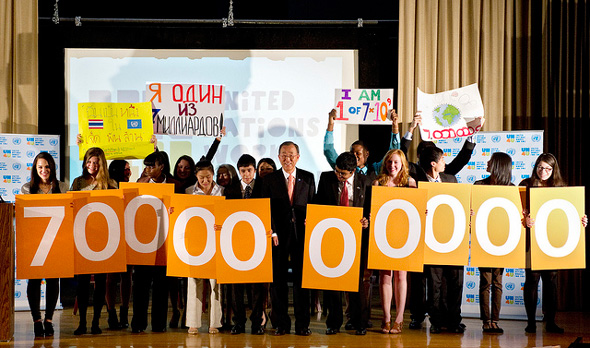
Photo Credit: UN Day Secretary-General Ban Ki-moon with students in October celebrating the seven billion mark, courtesy of Eskinder Debebe/UN Photo. -
USAID Turns to Crowdsourcing to Map Loan Data
›
The original version of this article, by Aaron Lovell, appeared on the Wilson Center’s Science and Technology Innovation Program Commons Lab blog.
On June 28, officials from USAID met at the Wilson Center to discuss a recent experiment in using crowdsourcing to help clean up and map data on development loans. The agency had 117,000 records on private loans made possible by their Development Credit Authority, which theoretically could be mapped and made available to the public. The problem? Location data for the loans was not standard and was difficult to parse. USAID decided to turn to “the crowd” and recruit interested volunteers from the Standby Task Force and GISCorps – two online volunteer communities – to help clean the data, making it available for additional analysis.
Shadrock Roberts, Stephanie Grosser, and D. Ben Swartley – all with USAID – discussed the results of the project. They were able to clean up the information at virtually no cost to the government, noting that they hope it will be an example for further collaboration between government and engaged volunteers.
“Our hope is that the case study will provide others in government with information and guidance to move forward with their own crowdsourcing projects. Whether the intent is opening data, increased engagement, or improved services, agencies must embrace new technologies that can bring citizens closer to their government,” the officials wrote in a recently released case study focused on the exercise. While the exercise resulted in high-quality output, Roberts et al. did provide advice for other agencies considering similar work. Grosser stressed the need to “crawl, walk, [then] run” – that is, start small with a few hundred records and then expand on that, as the system is refined.
But USAID sees crowdsourcing becoming a key part of improving government data. “We need to be working as hard to release relevant data we already have as we are to create it,” Roberts concluded, when discussing how the experience could apply more generally. “The crowd is willing to do research, data mining, and data cleanup.”
Sources: USAID. -
Guttmacher Updates Unmet Need Estimates, and West Africa’s Demographic Dividend Examined
›The Guttmacher Institute has updated their estimates for global contraceptive services, putting the number of women around the world who have an unmet need for modern family planning at 222 million (up from 215 million). Authors Susheela Singh and Jacqueline E. Darroch, in Adding It Up: Costs and Benefits of Contraceptive Services Estimates for 2012, also examine the estimated current costs of contraception, cost of meeting the current unmet need, and the money saved from having fewer unintended pregnancies. An estimated four billion dollars is currently spent on contraception in the developing world, and “the total cost of fully meeting the contraceptive needs of all women in the developing world with appropriate services would…be $8.1 billion per year.” Singh and Darroch note that there are substantial benefits to increasing access to contraception, including reduced infant and maternal mortality and lower education and health costs as smaller populations put less strain on existing systems. They conclude that “the gains that derive from meeting the contraceptive needs of all women in the developing world more than outweigh the financial costs.”How Can We Capitalize on the Demographic Dividend?, by Jean-Pierre Guengant of the Institute of Development Research, explores the connection between population age structure and economic growth in 12 West African countries (the West African Economic and Monetary Union plus Ghana, Guinea, Mauritania, and Nigeria). While much of Africa has recently experienced economic growth between four and six percent, Guengant notes it has been “too low to allow for any substantial increase in per capita income levels” due to continued population growth. And he suggests that projections of declining fertility in much of Africa are overly optimistic. “Contrary to popular belief,” he writes, “the demographic future of sub-Saharan Africa has not been written.” Guengant extrapolates his own fertility projection using data beginning in 1960. If fertility declines rapidly, he writes, the larger proportion of people in the labor force could increase the GDP per capita and drive up the standard of living. -
Hania Zlotnik Discusses Changes to Latest UN Population Projections
›Former UN Population Division Director Hania Zlotnik spoke recently at the Wilson Center discussing last year’s highly-publicized UN world population projections and explaining the methodology behind the figures. “The latest projections are very special,” she said, adding that “we think that this methodology is a lot better than what we had before.”
What accounts for such improvement? Zlotnik said it has a lot to do with greater availability of data. “The UN has been…mandated by governments to produce population estimates since the 1950s,” she stated, and they have refined their projections process over the years based on an increasing record of data and identification of some “patterns that can inform the future.”Former UN Population Division Director Hania Zlotnik spoke recently at the Wilson Center discussing last year’s highly-publicized UN world population projections and explaining the methodology behind the figures. “The latest projections are very special,” she said, adding that “we think that this methodology is a lot better than what we had before.”
What accounts for such improvement? Zlotnik said it has a lot to do with greater availability of data. “The UN has been…mandated by governments to produce population estimates since the 1950s,” she stated, and they have refined their projections process over the years based on an increasing record of data and identification of some “patterns that can inform the future.”
The increasingly large dataset accumulated during this process is particularly important because of what Zlotnik called “inertia” in population change. “There’s something called ‘population momentum,’ where the population changes on the basis of how many people have already been accumulated on the planet,” she explained, pointing out that many of the people included in the UN’s population projections for 2050 have already been born.
This inertia helps make population projections fairly accurate, but last year’s projections differed from previous efforts in two significant ways.
First, the UN Population Division provided projections not just to 2050 but also to 2100. These more long-term projections estimated an end-of-century population of more than 10 billion – notably higher than previous reports, which had predicted that population would stabilize mid-century at around nine billion.
Second, the underlying methodology used shifted from a deterministic to a probabilistic approach that, according to Zlotnik, does a better job capturing variability in each country’s fertility rate over the next century. “Essentially,” she explained, “a model was developed for every country that takes into account the past path of fertility change [and] also takes into account changes that have happened in other countries…Then [it] does a simulation for the future for every country, in which 100,000 paths are projected, essentially by throwing dice, and then the central path of those 100,000 is used to project the future.”
Zlotnik cautioned that projecting so far into the future is an inexact – albeit necessary – science: “Of course, as we go further into the future, the numbers are more subject to uncertainty. But [the long-term projections] help us give people a better feeling of how important it is to change trends from here to 2050, so that we ensure that, at the end of the century, the number of people on the planet is sustainable.”
“In order to make sure that the population projections made by the United Nations [are realized],” Zlotnik said, “it’s very important that fertility continues to decline, and especially that fertility decline happens in the countries that still have very high fertility.”
“Fertility decline happens in many ways,” she continued, “but the immediate reason why fertility can be reduced is that more people use modern methods of contraception.” -
An Update on PRB’s Population, Health, and Environment Project Map
›As reproductive rights advocates reflect on their disappointment with the outcome of last week’s Rio+20 summit, it is encouraging to see that population, health, and environment (PHE) projects – which fundamentally connect women’s health with sustainable development – continue to sprout up around the world. The Population Reference Bureau (PRB) launched their community-supported PHE Project Map in March 2010, and since then, the map has grown to include 76 projects across three continents, and has been viewed more than 82,000 times.
The goal of the map is to show which organizations are doing what PHE work where and when. While the map highlights expected hotspots like Ethiopia, Madagascar, and the Philippines, it also brings into focus countries that may not necessarily come to mind when thinking about PHE – South Africa, Venezuela, and Vietnam being among them. The map is updated on a rolling basis, and has grown substantially during its first two years.
These numbers should offer encouragement to reproductive rights and sustainable development advocates. Even if world leaders are still struggling to integrate these issues into a global development framework, NGOs, local nonprofits, and development agencies across the world are moving full-speed ahead to improve healthcare, strengthen ecosystems, and empower women and men across Latin America, sub-Saharan Africa, and South Asia.
To add a project to the map, contact PRB’s Rachel Yavinksy at ryavinsky@prb.org. -
Top 10 Posts for June 2012
›With the focus on sustainable development last month, Rio+20 coverage and related-population, health, and environment stories crept into the top posts (measured by unique pageviews). Carl Haub of Population Reference Bureau made a surprise appearance too with his update on the Democratic Republic of Congo’s latest demographic and health survey coming in at number three. To read ECSP’s full coverage of the 20th anniversary of the UN Earth Summit, see a full line-up of posts from Sandeep Bathala and our partners here.
1. India’s Maoists: South Asia’s “Other” Insurgency
2. The Year Ahead in Political Demography: Top Issues to Watch
3. Republic of Congo Demographic and Health Survey Shows High Maternal Health, But No Fertility Decline
4. In Search of a New Security Narrative: The National Conversation Series Launches at the Wilson Center
5. Reading Radar: USAID’s New Global Health Framework and Delivering Equity in Health Interventions
6. Guest Contributor Tim Hanstad: Poor Land Tenure: A Key Component to Why Nations Fail
7. Pop at Rio+20: Getting Women’s Rights on the Agenda
8. Bringing Environment and Climate to the 2012 Population Association of America Annual Meeting
9. On the Beat: Sex and Sustainability on the Road to Rio+20
10. PHE and Community-Based Adaptation to Climate Change: Stronger Together
Showing posts from category *Blog Columns.