-
Considering “Soft Geoengineering”
›Even as the climate debate has been paralyzed by politics, the concept of geoengineering has been in the news lately, most notably in October when Russ George dumped 120 tons of iron particles into the Pacific Ocean in a scheme to try and score carbon credits. Earlier this month, the Wilson Center’s Science and Technology Innovation Program hosted an event taking a look at “soft geoengineering” – techniques that might have low or minimal environmental side effects but still address or reverse climate change.
-
‘The Global Farms Race’: Comprehensive Study of Large-Scale Land Acquisitions Launches at Wilson Center
›Last month, Oxfam made an extraordinary request. It asked the World Bank to freeze its investments in agricultural land.
At a time when urbanization and growing service industries are bringing great neglect to agricultural sectors across much of the developing world, why would Oxfam want the World Bank to suspend its generous levels of agricultural funding?
-
‘The New York Times’ Highlights Converging Development Trends in Brazil’s Amazon
›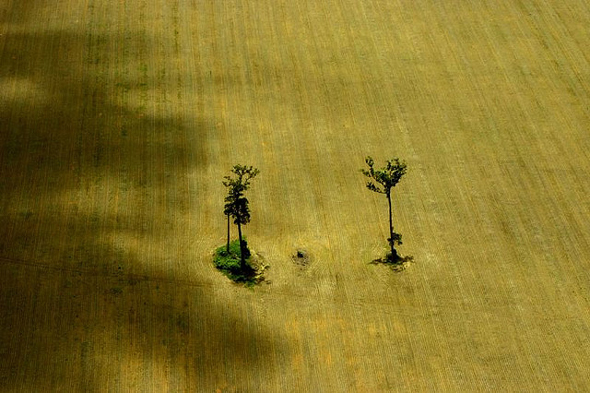
The Amazon is home to some of the world’s most expansive rainforest – and, increasingly, some of Brazil’s fastest growing cities. Urbanization and deforestation are upending the traditional image of the Amazon, turning one of the world’s most biodiverse regions into an economic and demographic explosion, according to an in-depth article by Simon Romero in The New York Times.
-
Feminized Development in Latin America: Understanding the Confluence of Gender Equity and Cultural Tensions
›
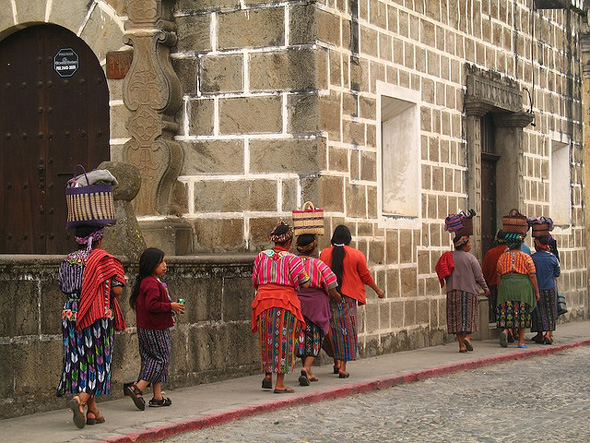
Poverty in Latin America has become increasingly “feminized,” said John Coonrod, executive vice president of The Hunger Project, at the Wilson Center on October 22. As a result, many governments and NGOs are starting to focus on the needs of women, especially indigenous women. [Video Below]
-
Ravao’s Story: A Health and Environment Champion From Madagascar’s Mikea Forest
›The original version of this article, by Vik Mohan, appeared on Blue Ventures’ blog.
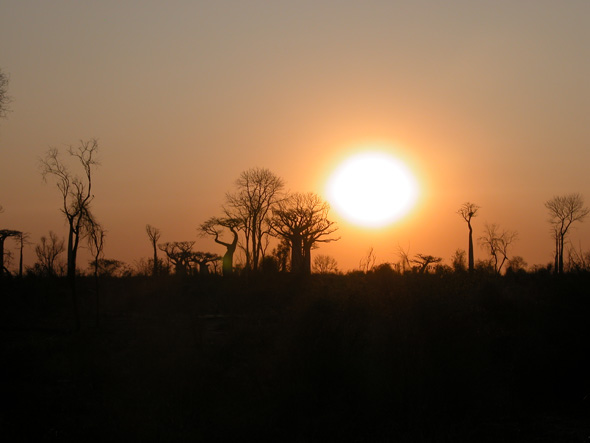
I recently spent a hectic and intense couple of weeks in the village of Andavadoaka, where Blue Ventures’ community health project is based, during my annual visit to Madagascar. Although I founded our Safidy (meaning “choice”) health program several years ago, each return visit brings new and inspiring stories and lessons from our team on the ground.
-
Linking Academia With Policy: Youth and Land Markets in Urban Development
›“It’s always important when working in policy to consider what we can do beyond conception and look at more implementation,” said Valerie Stahl of New York University at the Wilson Center last month.
Stahl was one of three graduate students presenting their winning papers for an annual academic paper competition, “Reducing Urban Poverty,” co-sponsored by the Wilson Center, USAID, International Housing Coalition, Cities Alliance, and the World Bank. This year’s competition was the third in an effort to better link new academic work on urban issues to actual policymaking. [Video Below]
-
Climate and Conflict in East Africa, and UNEP’s Plan to Avoid Future Famines
›While climate change will undoubtedly have an impact on societies throughout the world, researchers are still debating whether or not it will cause conflict. John O’Loughlin, Frank D.W. Witmer, Andrew M. Linke, Arlene Laing, Andrew Gettelman, and Jimy Dudhia use a quantitative approach to tackle some of “sweeping generalizations” that have come to characterize this debate in a new study, “Climate Variability and Conflict Risk in East Africa, 1990-2009,” published last month in PNAS. They found that while there is “no statistically significant relationship” between precipitation and conflict, increased heat is correlated with more conflict in East Africa. Still, they also found that other factors, like population size and the space-time lag for violence, predict conflict more reliably than either of the climate-related elements. -
Three Critical Maternal Health Medicines That Could Save Women’s Lives
›“We know maternal health medicines are safe, we know they’re effective, we know they’re essential to keeping women healthy throughout pregnancy and childbirth,” said Kristy Kade at the Wilson Center on October 23. But lack of supply, poor quality, and misuse means they do not always help the women who need them. [Video Below]
Showing posts from category *Blog Columns.