-
Choke Point China Part II: Food Supply, Fracking, and Water Scarcity Challenge a Juggernaut Economy
›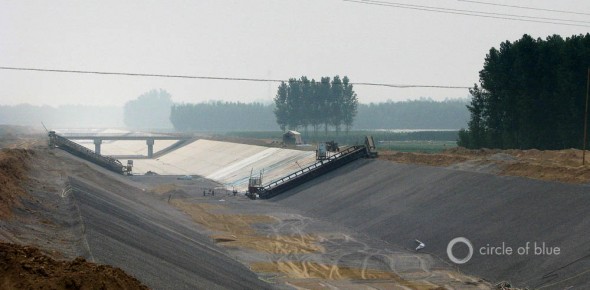
The original version of this article, by Keith Schneider, appeared on Circle of Blue. Choke Point: China is a research and reporting initiative produced in partnership between Circle of Blue and the Wilson Center’s China Environment Forum.
Where the wide, muddy waters of the Songhua River flow north from Jiamusu to the Russian border, just 150 kilometers (90 miles) distant, the whole of China’s largest treeless prairie sweeps to the horizon. This expanse of fertile grasslands endures the dark fright of cold Siberian winters and the raging winds of Mongolian summers. At night, in the scattered villages, the sky fills with stars so thick and bright that walking along unlit streets is easy.
-
Population and Environment in Saadani National Park, and Repositioning Family Planning in Sub-Saharan Africa
›
Tanzania’s Saadani National Park is a hotbed of biodiversity and, like other national parks in the region, it’s surrounded by human activity. A report by the BALANCED Project, “Population, Health, Environment Situational Analysis for the Saadani National Park Area, Tanzania,” provides a snapshot of the population, health, and environment situation inside the park to serve as a baseline for future activities of the Tanzania Coastal Management Partnership (TCMP) – a joint initiative of the government of Tanzania, USAID, and the University of Rhode Island’s Coastal Resources Center. A behavioral monitoring system implemented in June 2009 used surveys that reached a total of 437 respondents (54 percent women) from eight villages to analyze the “behaviors that positively and negatively influence the utilization and condition of natural resources.” The surveys found that arable land is scarce, fisheries are being depleted, and people have inadequate access to healthcare, water, sanitation, fuel, and family planning resources. The results suggest a strong case for expanding TCMP’s existing integrated approach – combining HIV/AIDS, conservation, and livelihoods goals – to include promotion of positive behavior changes, particularly as they relate to family planning and the effects of population growth on biodiversity loss and resource depletion.
-
Programmatic and Policy Recommendations for Addressing Obstetric Fistula and Uterine Prolapse
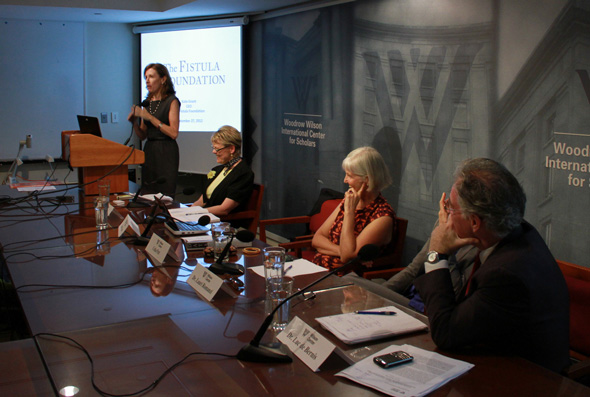
›Obstetric fistula is “not just a medical issue, but a human issue,” said Dr. Luc de Bernis, senior maternal health advisor at UNFPA, during a September 27 panel discussion at the Wilson Center. Obstetric fistula, a hole in the birth canal that can develop between the vagina and the bladder and/or rectum during prolonged labor without proper medical intervention, is preventable and treatable but continues to affect more than two million women worldwide, mostly in developing countries where women lack access to cesarean services. Women stricken with it face severe pain and suffering, social stigmatization, and usually give birth to a stillborn child.
-
Who Are the Most Vulnerable to Ocean Acidification and Warming?
›In 2011, a record 34 billion cubic tons of carbon dioxide were emitted from man-made sources. Half the emitted CO2 stays in the atmosphere, about a quarter is absorbed on land (as trees grow, for example), and the remainder is absorbed by the ocean. Unsurprisingly, this incredible amount of carbon dioxide significantly changes the ocean environment. Over time, increased absorption of carbon dioxide in the oceans has led to ocean acidification, and overall warming has also led to warming of ocean waters – both changes impact marine ecosystems and the people who rely on them.
-
2012 Aid Transparency Index
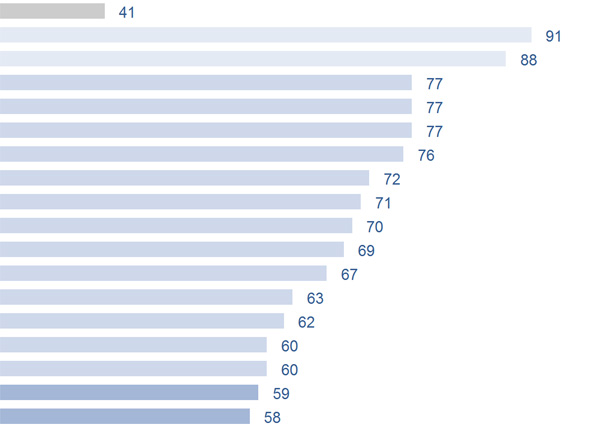
›Publish What You Fund recently released its 2012 Aid Transparency Index, an annual review of 43 indicators assessing to what degree information about policies, strategies, and individual projects are published for public consumption by aid donors. These indicators include things like disclosing the type of aid given (e.g., grant, loan, export credit, debt relief), the quality of disclosure policies, and the online presence of centralized, public databases of all the organization’s activities.
-
Beer: The Perfect Illustration of the Water-Energy-Food Nexus?
›The water-energy-food nexus seems to be garnering more and more attention in the media and elsewhere, and it’s easy to see why: it’s a relatively simple way to illustrate how interconnected the world is today and the kind of domino-like effects that scarcity can have.
-
Containing a Development Flood: Green Urbanization in Asia
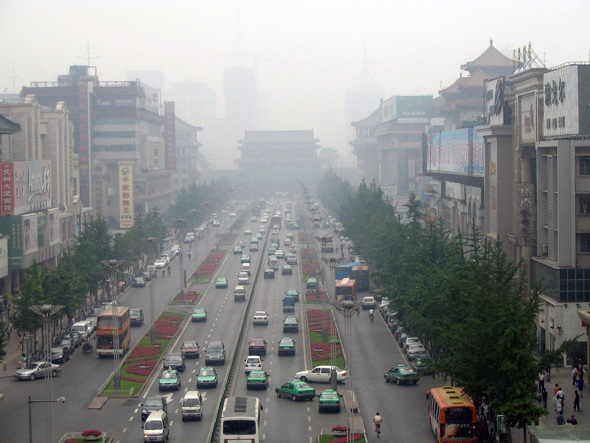
›On April 1, 2012, a Chinese woman on her way to work suddenly felt the earth beneath her crumble and, in an instant, found herself plunging into an abyss of scalding hot water. The woman had unknowingly stepped into one of the many sinkholes appearing in China’s megacities. The emergence of sinkholes in China is part of a larger set of environmental issues related to rapid urbanization taking place in the Asia-Pacific region overall. [Video Below]
-
Maintaining the Momentum: Highlights From the 2012 London Summit on Family Planning
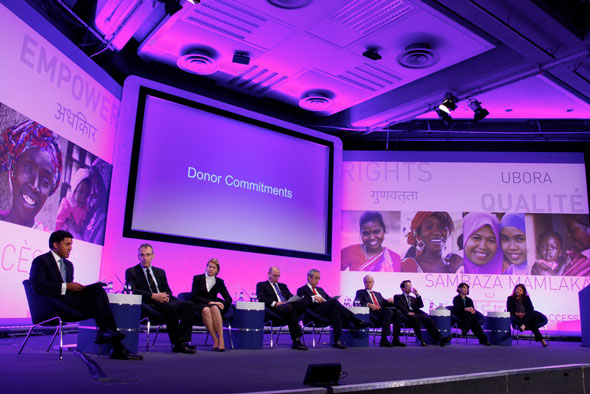
›This summer, 26 countries and private donors met at the London Summit on Family Planning to pledge $2.6 billion to expand family planning services to 120 million more women in the poorest countries around the world. But while the summit renewed focus on reproductive health with its ambitious target, “we’re now at that point where we have to really sit down and work through” how to achieve that goal, said Julia Bunting of the UK’s Department for International Development at the Wilson Center on September 17. [Video Below]
Showing posts from category *Blog Columns.