-
Top 10 Posts for September 2012
›September brought a crop of fresh faces to the top 10 (based on unique pageviews). Valerie Hudson’s spring launch at the Wilson Center of her new book Sex and World Peace, which asks if the domestic treatment of women impacts the security of states, was very popular, and Carolyn Lamere’s snapshot of the current political and development situation along the Nile river basin also jumped the charts.
-
Water and Land Conflict in Kenya in the Wake of Climate Change
›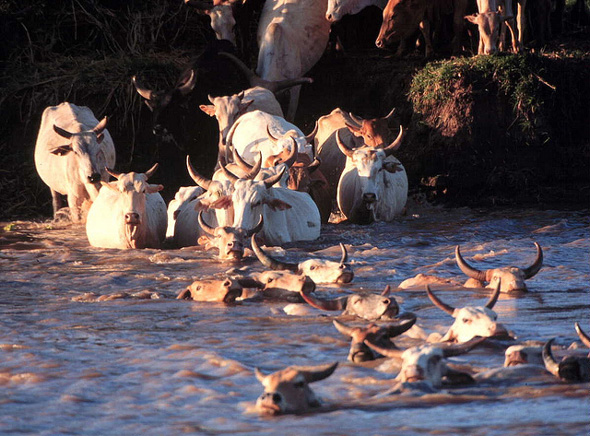
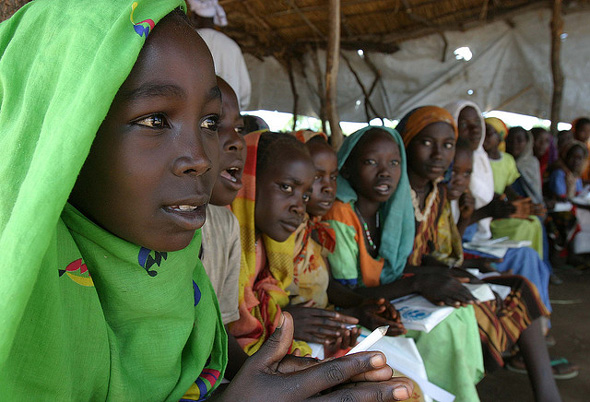
Earlier this month, there was a flurry of stories about brutal mass killings in clashes between the Pokomo and Orma communities over water and land in southeast Kenya’s Tana River County. The Kenyan media reported that about 30 people, including eight security personnel, had been killed and scores wounded, and reports on the death toll since last month are more than 100.
-
The Role of Renewable Natural Resources and Gender in Conflict
›
Devesh Kapur, Kishore Gawande, and Shanker Satyanath open their Center for Global Development working paper, “Renewable Resource Shocks and Conflict in India’s Maoist Belt,” with a crucial question: “Is there a causal relationship between shocks to renewable natural resources, such as agricultural and forest lands, and the intensity of conflict?” While the connection between the environment and conflict has been the focus of much study, Kapur et al. say that previous attempts have been plagued with “failure to address reverse causality and a failure to systematically control for alternative explanations for conflict.” Their report analyzes the relationship between the availability of resources and conflict by measuring rainfall, vegetation prevalence, and deaths due to the Maoist conflict in India. They find “a strong and substantively large relationship between adverse renewable resource shocks and the intensity of conflict,” and conclude that protecting the livelihoods of residents of the Maoist belt can help reduce violence. “Giving tribals greater access to forests and a range of forest products, whose consumption is the only available option during times of distress, can provide them with a critical self-insurance mechanism.”
-
Michael Klare on the Race for What’s Left
›Around the world, as the most easily accessible natural resources are depleted, states are beginning to turn to more remote reserves to meet their needs and the shift may spark international tensions or even conflict, said Hampshire College professor Michael Klare in a recent interview with ECSP. “I worry very much about this growing global competition for the remaining resources in those parts of the world,” he said.
-
Kate Gilles and Marissa Pine Yeakey, Behind the Numbers
World Contraception Day
›The original version of this article, by Kate Gilles and Marissa Pine Yeakey, appeared on the Population Reference Bureau’s Behind the Numbers blog.
World Contraception Day “centers around a vision for a world where every pregnancy is wanted,” with a goal of enabling “young people to make informed choices on their sexual and reproductive health.”
-
Tracking This Year’s Extreme Weather
›“Over the past several months, extreme weather and climate events seemed to have become the norm rather than the exception,” writes Kelly Levin for the World Resources Institute (WRI). Indeed, records have been broken around the world as countries experience unprecedented heat, drought, flooding, or other types of severe weather. And people are starting to take notice. A number of recent stories try to make sense of this wild weather and what, if anything, it has to do with climate change.
-
Modeling Demographic Dividends, Fertility, and Income in Developing Countries
›The poorest households gain the least when countries reap the demographic dividend, according to a preliminary draft of a new study by four Harvard School of Public Health researchers. In “Microeconomic Foundations of the Demographic Dividend,” authors David Bloom, David Canning, Günther Fink, and Jocelyn Finlay write that 18 years of Demographic Health Surveys (DHSs) from 60 developing countries show that while declining fertility rates and dependency ratios can lead to rising incomes on a nationwide level, sub-nationally those trends occur unevenly and mostly benefit wealthier households. Poorer households, meanwhile, are likelier to see slower fertility declines, delaying the economic gains that can result from demographic transitions, and increasing inequality. Importantly, the authors emphasize that the study reflects “the early stages of the demographic transition”; long-term economic effects of fertility decline, they write, “remain ambiguous.”
-
Al Jazeera Maps Water Flashpoints Around the World
›Historically, the concept of “water wars” – inter-state wars fought solely over water – has been fairly unsubstantiated. But continued population growth, accelerating development, and environmental changes are making water more scarce and in turn increasing the chances of related tensions and violence. To illustrate the growing role water plays in tensions around the world, Al Jazeera has put together a map linked to a series of stories they’ve done on water “flashpoints.”
Showing posts from category *Blog Columns.