-
The Challenges and Benefits of Addressing Young Adolescent Reproductive Health
›There are 1.2 billion adolescents (ages 10 to 19) in the world today, accounting for 17 percent of the global population. They are the largest youth cohort in history, and 90 percent live in the developing world. Within that broad age group, very young adolescents (ages 10 to 14) often fall through the cracks of international development work, especially when it comes to health, and reproductive health in particular.
-
Counting the World: UNFPA Highlights the Challenges of Census-Taking
›The United Nations biannual population projections are some of the most (if not the most) widely used numbers in demography. Researchers and policymakers alike rely on the figures to plan for present and future challenges. But few consider the story behind the statistics. Where does the data come from? The United Nations Population Fund (UNFPA) recently released a short documentary on conducting censuses in challenging environments, with a spotlight on Indonesia, Chad, the Palestinian Territories, Belarus, and Bolivia.
-
Regulating the Resource Curse: U.S. Adopts International Transparency Rules for Oil Industry
›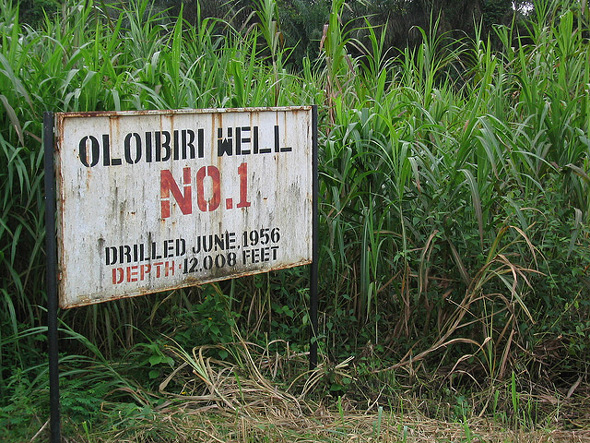
It’s not often that a change in accounting rules could reduce the probability of war. But that’s exactly what happened at the U.S. Securities and Exchange Commission (SEC) last month.
-
Jill Hagey, Behind the Numbers
Sahel Drought: Putting Malnutrition in the News
›
The original version of this article, by Jill Hagey, appeared on the Population Reference Bureau’s Behind the Numbers blog.
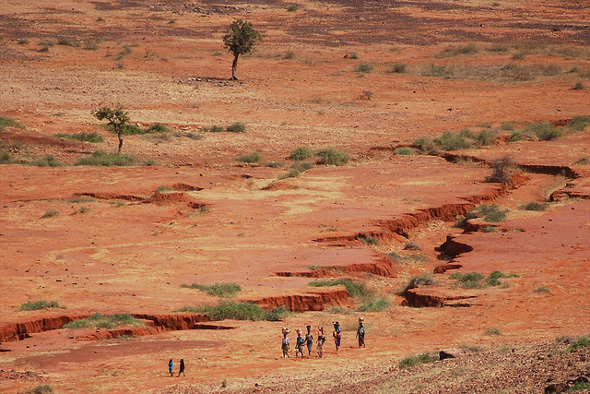
Over the past few months, the Sahel drought has sparked attention of news media and concerned citizens around the world. Throughout this media blitz, I have been struck by the sharp contrast between this coverage and how the devastating effects of malnutrition are usually portrayed. Malnutrition is often overlooked in favor of more “newsworthy” diseases, and it takes a crisis to focus our attention on this public health issue. Yet an emergency such as this drought – affecting more than 18 million people, including nearly 2 million children – is difficult to ignore.
-
Top 10 Posts for August 2012
›August is a slow month in DC, but not so on New Security Beat: 8 of the top 10 last month (measured by unique pageviews) were new posts. Laurie Mazur’s discussion of inequality, population, and sustainability took the top spot followed by a look at what’s new in the Population Reference Bureau’s latest data sheet; Kate Diamond’s feature on Mongolia’s climate and development challenges; a discussion on the naming of the Failed States Index; a summary of the National Intelligence Council’s extensive series on aging; and two reactions to Iran’s surprising shift on family planning.
-
Changing Cities: Climate, Youth, and Land Markets in Urban Areas
›The number of urban slum dwellers worldwide is staggering. According to UN-Habitat, 827.6 million people live in slums around the world. Despite meeting a Millennium Development Goal to significantly improve the lives of at least 100 million slum dwellers by 2020, the total number of people living in these areas still increased by 55 million between 2000 and 2010. By 2020, the world slum population is projected to reach 889 million. With the majority of people now living in cities, urban priorities are synonymous with human security and environmental sustainability and must be accounted for in the global development agenda.
-
Farzaneh Roudi for the Middle East Program
Iran Is Reversing Its Population Policy
›Excerpted below is the introduction by Farzaneh Roudi. The full report is available for download from the Wilson Center’s Middle East Program.
Once again, the Iranian government is reversing its population policy – its fertility policy, to be more precise. Alarmed by the country’s rapidly aging population, Iran’s Supreme Leader Ayatollah Ali Khamenei is now calling on women to procreate and have more children, and the Iranian Minister of Health and Medical Education Marzieh Vahid Dastjerdi has recently said, “The budget for the population control program has been fully eliminated and such a project no longer exists in the health ministry. The policy of population control does not exist as it did previously.”
-
Coming of Age: Reason for Optimism in Burma’s Turn Towards Democracy
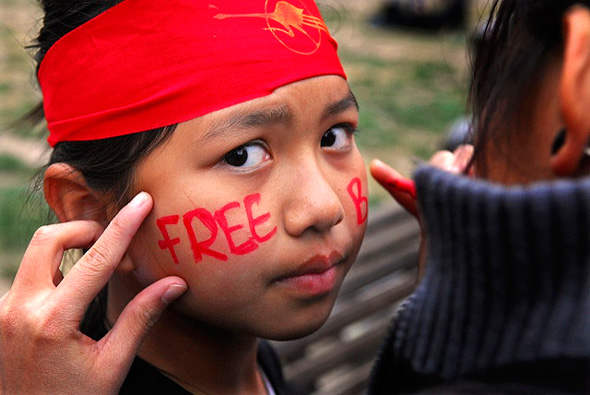
›Burma (also known as Myanmar), a country plagued by internal political turmoil and direct or tacit military rule since 1962, had its first general elections in 50 years in 2010 and long-time jailed opposition leader Aung San Suu Kyi won a seat in the National Assembly, but questions remain as to how much power the military is willing to cede. Demography provides reason for hope that this turn towards democracy is more than temporary.
Showing posts from category *Blog Columns.