

-
Linking Extreme Weather Events to Climate Change
›
Specifically attributing a particular weather event to climate change has been difficult – as one famous analogy goes, it’s like determining which of Mark McGwire’s home runs were because of steroids and which weren’t. But climate attribution science is slowly becoming more accurate and accepted. In “Explaining Extreme Events of 2011 From a Climate Perspective,” a new study appearing in July’s Bulletin of the American Meteorological Society, editors Thomas C. Peterson, Peter A. Stott, and Stephanie Herring provide a review of six extreme weather events from last year and offer “some illustrations of a range of possible methodological approaches” to the process of attribution. Among their conclusions, the editors note that, due to climate change, the extreme heat and drought that suffocated Texas in 2011 was 20 times more likely to occur than 40 years earlier. However, the devastating floods that swept across Thailand last year are blamed on a number of other non-climatic factors.
-
Stress Levels of Major Global Aquifers Revealed by Groundwater Footprint Study
›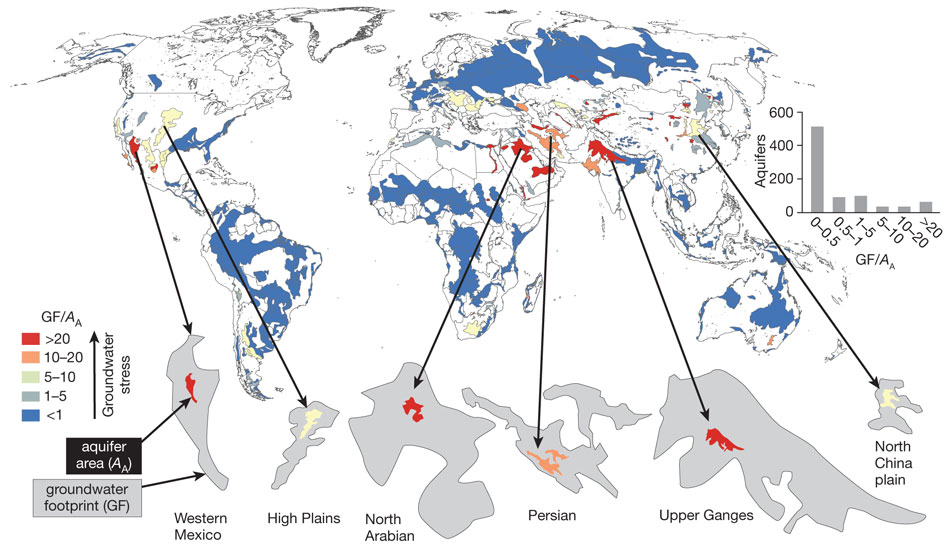
In the “first spatially explicit comparison of groundwater use, availability, and environmental flow for aquifers globally,” a new article in Nature finds that the “size of the global groundwater footprint is currently about 3.5 times the actual area of aquifers.” An aquifer’s footprint is the theoretical size it would need to be to sustainably support use at its current rate, so groundwater footprints being much larger than their corresponding aquifers is a sign of overuse.
-
Hans Rosling on Religion, Babies, and Poverty
›“I’m going to talk about religion. But it’s a broad and very delicate subject, so I have to limit myself. Therefore I will limit myself to only talk about the links between religion and sexuality…I will talk on what I remember as the most wonderful – it’s the moment when the young couple whispers, ‘tonight, we are going to make a baby,’” said Hans Rosling, the eclectic Swedish doctor and statistician known for his Gapminder tool, in a TedxSummit presentation in April.
-
Taking On Domestic Violence in Post-Conflict Liberia
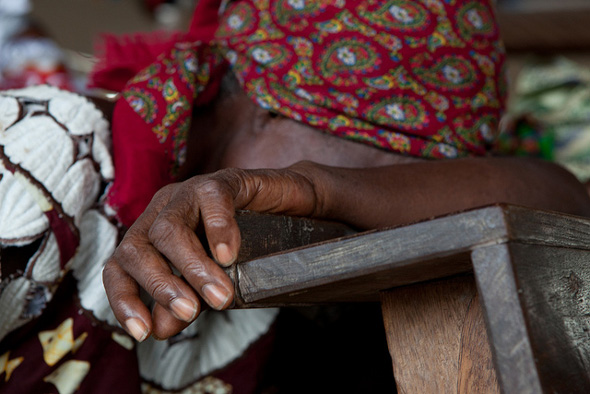
›Liberia is a case study in post-conflict violence against women, said panelists at the Wilson Center on July 24. “Confined merely to performing household chores and childrearing duties, from early childhood, women and girls have been socialized into subservience and powerlessness and acceptance of domestic abuse as a norm,” Annette Kiawu, deputy minister for research and technical services at the Liberian Ministry of Gender and Development, told the audience. [Video Below]
Kiawu was joined by Pamela Shifman of the Novo Foundation and Esther Karnley and Elisabeth Roesch of the International Rescue Committee (IRC). They discussed the prevalence of domestic violence in Liberia after the 14-year civil war, which ended in 2003.
Violence Stemming from Changing Norms
Kiawu pointed to women’s changing roles in Liberia as a source of household tension. She noted that women are increasingly “demanding a greater role in household decision making,” which some men see as “encroachment on their sphere of influence.”
“According to the LDHS [Liberia Demographic and Health Survey], the persistence of domestic violence is directly linked to the increased status of women on the one hand and men’s [perception] of loss of power and authority on the other,” she said. Some men’s urge to assert dominance is exacerbated by higher levels of alcohol abuse and a tendency towards violence learned during the civil war.
There has been legislation against gender-based violence – including the Rape Amendment Act, also known as the “revised rape law,” the Revised Gender-Based Violence Action Plan, and the African Union Protocol – as well as action plans and community-based groups meant to decrease the rate of domestic violence, like the Gender-Based Violence Network, an initiative designed to increase community ownership of domestic violence issues and improve response at the grassroots level. But despite these advances, Kiawu stressed that there still is a long way to go, saying that increased funding and coordination between domestic and international agencies and the Liberian government is necessary to have a real impact on the lives of the “countless women” whose lives are threatened by domestic violence.
Making Reality Match Rhetoric
Pamela Shifman agreed that domestic violence prevention programs need more funding. “So often in conflict-affected settings we hear that we need to address other issues first…that domestic violence is a back-burner issue,” she said. Domestic violence is often perceived to be “not that serious” when compared to other issues in conflict-prone and post-conflict countries.
But Shifman argued that divorcing domestic violence from other types of violence is problematic. “Violence in the home normalizes violence in the street, normalizes violence in the community, and normalizes violence by the state,” she said.
NoVo is one of the few private organizations which prioritizes domestic violence and gender equity, Shifman said, but she asserted that all humanitarian organizations should devote time and money to these issues, saying that “if we ignore domestic violence, all of the other investments we make to improve the quality of life for communities will suffer.”
Empowering women can have significant results for the whole community. Shifman remarked that “investing in women is smart economics,” citing studies which suggest directing funds towards women “pays off at huge levels” for women’s families and communities. But when women experience violence, “their potential is thwarted,” she said. “They suffer, their families suffer, their community suffers, the entire nation suffers.”
Programs targeting domestic violence need greater awareness, more long-term commitment, and more funding, she said. “We don’t expect that violence is going to end overnight – no deep-seated social problem will be solved that quickly,” she said. “In order to make a dent in improving the lives of girls and women and ending violence against girls and women, we need more direct funding” from private and public sources.
“To put it bluntly, I think the reality needs to match the rhetoric,” Shifman concluded.
Perspectives from the Field: Social Isolation
Esther Karnley described the results of interviews conducted with Liberian women, both survivors of domestic violence and fellow community members. She found that a key reason women stay in abusive relationships is financial dependence. “Most of them said, ‘it’s because we depend on the men for everything… we don’t have any money, we are not empowered financially, we depend on the men for everything. Because of that, we remain in that relationship and we get killed.’”
She added that social isolation means that many women lack the resources to leave a relationship. “We are isolated socially, we don’t have access to services, we are all by ourselves,” they told her. Without support from friends, relatives, or organizations, it can be difficult to find the means to relocate.
Part of the problem in Liberia is the prevalence of informal education, especially Sande bush schools – schools run by a traditional women’s society designed to prepare girls for marriage, teaching them traditional housekeeping methods and culminating in female circumcision. Girls leave home to attend these traditional schools for several months, which severely curtails their access to formal education. Kiawu reported that “over 60 percent of girls attending Sande school drop out of regular school.” This means that “successive generations of young children, especially young girls, are expected to forgo formal education in favor of attending the Sande school.”
In addition to formal education, Karnley said financial empowerment and legislation holding perpetrators of domestic violence accountable for their actions would enable more women to leave abusive relationships.
Reaching Both Women and Men
Each of the panelists recognized that working against domestic violence requires comprehensive societal reforms. Karnley stressed that the impetus to begin working with men came from Liberian women. “Initially when we started working on GBV issues, we talked to women, and then the women came and said, ‘OK, you talk to us every day, and when we go home, we go and meet fire. Can you also talk to our men?’” In response, the IRC developed a 16-week program designed to change men’s behavior and views about violence and relationships. Karnley also mentioned a desire to reach out to the religious community to change the constant focus on the man as the head of a relationship to one based on love.
The Liberian government is also working with churches and mosques to change norms that encourage the subjugation of women, including work with a network of religious leaders known as Christian/Muslim United against SGBV (sexual and gender based violence). Kiawu said this organization emphasizes partnership within a marriage and teaching equality to children in the home. The panelists also mentioned additional efforts to increase the responsiveness and sensitivity of the police and judicial system to domestic violence issues, as well as the need for resources like safe houses to provide relief to survivors.
“The family, far from being off limits, has to be a priority for us in the humanitarian community as we help to rebuild nations where peace not only exists between nations, and among nations, and among communities, but among families,” Shifman contended. Kiawu agreed, adding that without interventions, violence and isolation prevent women “from taking advantage of opportunities that peace presents.”
Event Resources: Photo Credit: A woman prays during a Sunday morning service in Monrovia, courtesy of Bruce Strong/Newhouse School. -
Family Planning Saves Lives, Can Help Mitigate Effects of Climate Change
›Contraceptives prevented an estimated 272,040 maternal deaths in 2008, reducing worldwide maternal mortality by 44 percent, according to a recent paper by Saifuddin Ahmed, Qingfeng Li, Li Liu, and Amy O. Tsui, published in The Lancet. But the prevention of maternal deaths could have been even higher. The study, “Maternal Deaths Averted by Contraceptive Use: An Analysis of 172 Countries,” estimates that an additional 104,000 maternal deaths – many occurring in developing parts of Africa and South Asia – could have been averted simply by satisfying existing unmet need for contraception. In sub-Saharan Africa, for example, only 22 percent of women who are married or sexually active use contraception – a far cry from the 65 percent which the study suggests is the point at which maternal deaths avoided by contraceptive use begin to plateau. Not surprisingly, this has also yielded some of the highest regional fertility rates in the world.
Such high fertility rates are driving growing concerns about scarcity and capacity in the region, and how climate change might exacerbate already-difficult development hurdles. This nexus of issues was the subject of a recent policy brief by Population Action International and the African Institute for Development Policy, titled Population, Climate Change, and Sustainable Development in Africa. The brief points out that “a large share of Africa’s population lives in areas susceptible to climate variation and extreme weather events,” and that there is an inherent tension the continent faces as it seeks to balance high population growth with climate change-induced reductions in the availability of natural resources, like water and arable land. The authors urge policymakers, rather than focusing on environment, population, and health individually, to “connect population dynamics and climate change” to address their interlinked challenges together.
-
PRB’s 2012 World Population Data Sheet
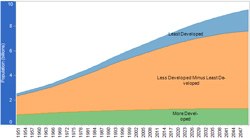
›“The most rapid population growth in many ways [occurs in] the countries that can least afford it,” said Carl Haub in a webinar on July 19 to launch the Population Reference Bureau’s (PRB) 50th annual World Population Data Sheet. This year, the report explores aging populations in more developed countries, rapid population growth in less developed countries, and the increased global prevalence of non-communicable diseases in an interactive map, which concisely illustrates global trends. PRB estimates that the world’s population is 7,057,075,000 as of mid-2012; the global population crossed the seven billion threshold in October 2011.
 “The most rapid population growth in many ways [occurs in] the countries that can least afford it,” said Carl Haub in a webinar on July 19 to launch the Population Reference Bureau’s (PRB) 50th annual World Population Data Sheet. This year, the report explores aging populations in more developed countries, rapid population growth in less developed countries, and the increased global prevalence of non-communicable diseases in an interactive map, which concisely illustrates global trends. PRB estimates that the world’s population is 7,057,075,000 as of mid-2012; the global population crossed the seven billion threshold in October 2011.
Aging Europe and East Asia
Haub explained that population growth in Europe has been declining since the 1970s and is more or less a “pre-programmed destiny” for these countries. People of child-bearing ages make up a smaller percent of the population in many more developed countries, so unless there is an “enormous increase” in total fertility rates, these populations will continue to decline for the foreseeable future.
Haub noted that these aging populations are unprecedented. In Germany and Italy, for example, 21 percent are over the age of 65; many other European countries have similar figures, as do other developed countries like Japan and South Korea. PRB expects these percentages to increase throughout the next century and for European countries to struggle to support greater numbers of retirees.
Many such states have already found it difficult to raise the retirement age, even though medical advances allow people to work until later ages. PRB projects that in Japan, 42 percent of their population will be over the age of 60 in 2050; if such a large percentage of the population is no longer in the labor force, it will be difficult for to find the resources to support them.
The report shows that the United States, on the other hand, is still experiencing modest population growth. The higher birthrate is in part due to immigration, as recent immigrants to the United States tend to have more children. Haub noted that European states have been reluctant to accept greater numbers of migrants to try to reverse their declining population.
Youthful Developing Countries
While the demographic destiny of aging countries is somewhat determined, the future for less developed countries is more uncertain. Many countries in sub-Saharan Africa, the Middle East, and South Asia have large and growing youth populations, and how many children these “future parents” will have is uncertain. That uncertainty is underscored by the variety of scenarios for future population growth. The UN has four variants – high, medium, low, and constant fertility – which vary considerably in their projections for future populations, and PRB’s global projections for 2050 are some 600 million people more than the commonly-used medium variant UN projection.
Rapid growth in the least developed countries is hardly a new phenomenon, but PRB breaks down the numbers to an impressive degree. The 2012 Data Sheet provides updated net migration rates, projected population as a multiple of today’s, infant mortality rates, rate of natural increase, and other basic statistics. PRB also provides population pyramids from the wealthiest and poorest quintiles of the population of Malawi, as an example of the utility of desegregating data to better allocate resources to the underserved. They found that while birthrates have begun to decline for the wealthiest one-fifth of Malawians, the poorest citizens still have a total fertility rate of over seven children per woman.
Measuring Health Systems
Devastating infectious diseases – malaria, tuberculosis, and HIV/AIDS – have long been entrenched in some of the least developed and most rapidly growing parts of the world. But this year, PRB began to assess health on a broader level by tracking deaths attributed to non-communicable diseases as well. Diseases like cardiovascular disease, diabetes, respiratory illness, and cancer are leading causes of death in developed countries, but they have also increased in prevalence in developing countries at an alarming rate.
PRB is not the only organization to take note of the change in disease predominance. The World Health Organization has issued guidelines targeting four factors which increase the risk of these illnesses: tobacco use, alcohol abuse, poor diet/obesity, and physical inactivity. The UN also called a special session last September to discuss non-communicable diseases. President of PRB Wendy Baldwin noted that the last such discussion on a health issue was 10 years ago about HIV/AIDS.
Baldwin also pointed out that non-communicable diseases can increase the burden on the health systems of developing countries even more so than in developed states. She reported that in south Asia, for example, people have heart attacks on average six years earlier than people in developed countries, meaning more families lose their primary breadwinners.
The risk factors for these non-communicable diseases are difficult to target, especially with increasing urbanization in developing countries. But in a video accompanying the report, Baldwin mentioned that raising the price of cigarettes is an effective way to reduce tobacco consumption, especially for youth. Some countries have also made progress in increasing physical activity through sports programs and making urban areas safer for pedestrians. “The low and middle income countries have a real opportunity to take really positive steps to confront that rise in non-communicable diseases and to address the risk factors that drive them,” she said.
The Data Sheet Over Time
The World Population Data Sheet has long been a vital resource for those in the population, health, and environment fields and has grown to include far more data than its first iteration in 1962. At first, the sheet had only four indicators: a population estimate for the year, annual rate of increase, crude birth rate, and crude death rate. Over time, PRB began measuring a greater number of key figures like infant mortality and life expectancy at birth. Population projections, a staple of the current version, were not added until 1978, perhaps in response to the inception of the United Nations World Population Projections in 1974.
Over the past five decades, the data sheet has been witness to some major shifts in global population trends. While PRB discourages researchers from comparing past data to current figures because the measures and methods of gathering information have likely changed over time, it is still possible to see the rise of importance in several trends based on the indicators PRB chose to focus on each year. For example, extremely young populations have been found to have profound effects on a country’s stability and prosperity, as have aging populations. The 1966 data sheet was the first to measure the percentage of the population under the age of 15, and it didn’t become a consistent data point until 1977.
The number of people living in cities in the developing world surpassed those in the developed in 1970, according to the UN, and in 1972, PRB began tracking the percentage of populations living in urban areas. HIV/AIDS indicators were added in 2000, as global awareness and a commitment to fighting the disease was rising.
PRB’s demonstrated commitment to continually adding more data and refining existing projections makes the data sheet is a valuable resource to those studying the problems of today and the future. Fifty years on, the amount of information collected is staggering. The data sheet provides a glimpse at not just how many people there are in the world, but also where and how they live.
For more information, take a look at the full data sheet!
Sources: Population Reference Bureau, UN Population Division.
Image Credit: PRB; Video: Noncommunicable Diseases and Youth in Developing Countries. -
Three UN Millennium Development Targets Reached and a Review of the Human Drivers of Climate Change
›“It is plausible that key transitions in human evolutionary history have been driven in large part by climate change,” write Eugene A. Rosa and Thomas Dietz in “Human Drivers of National Greenhouse-Gas Emissions,” a literature review published by Nature Climate Change. “Changes in climate will doubtless be a key force in the future evolution of social systems, including all aspects of social, economic, and political life, while impinging on the health and well-being of the individuals who populate them.” Rosa and Dietz cite numerous studies to argue that nearly every facet of society will be affected by climate change. “The critical point,” they write, “is that population, affluence, technology, and all other drivers act not alone or additively but in a multiplicative fashion.” For example, rapid population growth can lead to an increase in urbanization, which generates “substantial demand for goods and services that can induce emissions in distant places.” They conclude that huge changes must be made in technology and consumption in order to combat the effects of climate change that are being caused by a growing population and an increasingly affluent world.The United Nations’ 2012 Millennium Development Goals Report, released last month in New York City, announces that three of the eight major human development goals have been reached ahead of their 2015 targets. The Millennium Development Goals, set at a conference in 2000, were established to “uphold the principles of human dignity, equality, and equity at a global level.” The 2012 report indicates that the number of people living in extreme poverty has been halved since 1990; the proportion of people in the world without sustainable access to safe drinking water has also been halved; and more than 200 million slum dwellers have “gained access to either improved water sources, improved sanitation facilities, or durable or less crowded housing.” At the report launch, UN Secretary-General Ban Ki-moon noted that “these results represent a tremendous reduction in human suffering and are a clear validation of the approach embodied in the MDGs, but they are not a reason to relax.” Goals that have yet to be achieved include universal primary education; gender equality; reduced child mortality and improved maternal health; reducing rates of diseases such as HIV and malaria; and creating a global partnership for development.
Keenan Dillard is a cadet at the United States Military Academy at West Point and an intern with the Woodrow Wilson Center’s Environmental Change and Security Program. -
Is This What Climate Change Feels Like? Geoff Dabelko on ‘CONTEXT’
›“I think that the conditions that we’re experience now are ones that track with what we expect to see more of; so dry places getting drier, wet places getting wetter, and more extremes in terms of variability of the weather,” said ECSP Director Geoff Dabelko in the latest installment of CONTEXT, a weekly Wilson Center interview series. While it’s difficult to link the current drought – or any one weather or climate event – directly to man-made climate change, Dabelko said that “the warming trends that we’re seeing and anticipating with climate change suggests that this is a preview of what may be to come.”
Showing posts from category *Blog Columns.



 “The most rapid population growth in many ways [occurs in] the countries that can least afford it,” said Carl Haub in a webinar on July 19 to launch the Population Reference Bureau’s (PRB) 50th annual



