-
Economic and Political Fragility and Insecurity: A Climate Triple Threat in South Sudan
›September 3, 2025 // By Rachel Stromsta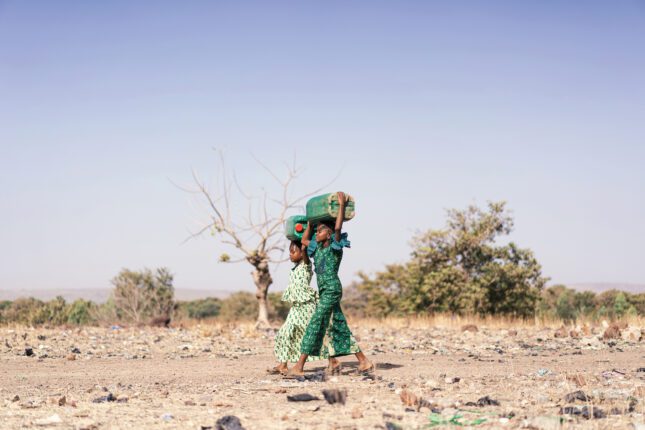
Climate-related catastrophes are posing significant challenges in already-fragile South Sudan. When record-breaking floods again swept across the country in mid-2024, for instance, the disaster affected 1.4 million people, with the cumulative years of flooding submerging two-thirds of the country.
-
Environmental Security Weekly Watch: August 25-29, 2025
›
Amazon Nations Sign Political Blueprint for Rainforest Protection (Associated Press)
Presidents from South America’s Amazon nations gathered in Colombia’s capital to sign the Declaration of Bogotá on August 22, 2025,. This political blueprint establishes cooperation across a region that spans over 2.5 million square miles and has a crucial role in to play as a massive carbon sink that slows global warming. Signatories hope that it is a sign that the region will move past political rhetoric to concrete actions.
-
Deep Currents: Assessing Threats to the Indus Waters Treaty
›The Indus Waters Treaty of 1960 has kept two nuclear-armed rivals – India and Pakistan – in a stable river sharing arrangement for more than six decades. Yet that significant achievement now seems to be at risk.
India’s government has stated it is holding the treaty in abeyance and is threatening to cut off water to Pakistan after a terrorist attack killed more than 20 Indian citizens in late April 2025. India’s Prime Minister Narendra Modi described the treaty as a “blunder” and a “betrayal” of India’s dignity committed by then Prime Minister Jawaharlal Nehru, and proclaimed that “blood and water cannot flow together.”
-
Environmental Security Weekly Watch: August 4-8, 2025
›A window into what we’re reading at the Stimson Center’s Environmental Security Program
A Water Security Crisis Grips Pakistan’s Indus Delta (Al-Jazeera)
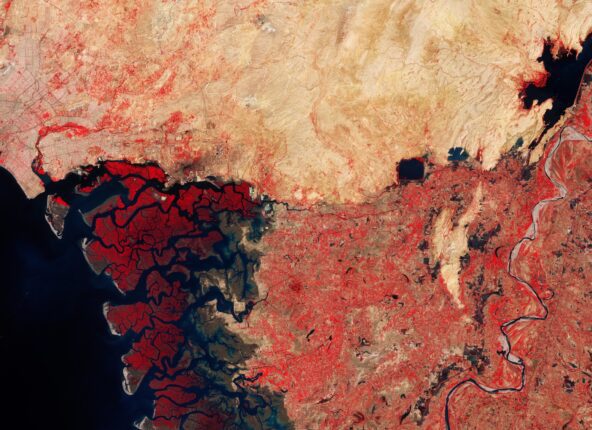
The Indus delta in Pakistan is experiencing severe environmental collapse as seawater intrusion makes farming and fishing impossible. Salinity levels have risen 70% since 1990, forcing tens of thousands from coastal districts. Over 1.2 million people from the broader delta region have abandoned their homes in the past two decades. The construction of irrigation canals and hydropower dams, compounded by the impacts of climate change on glacial melt, has accelerated the crisis and reduced downstream flow by 80% since the 1950s. More than 16% of fertile Indus delta land has become unproductive, as salt crusts cover the ground and boats must transport drinking water to the region’s remaining villages.
-
Northern Myanmar’s Rare Earths Are Shaping Local Power and Global Competition
›August 4, 2025 // By Amara ThihaThis article is adapted from “Rare Earths and Realpolitik: Kachin Control, Chinese Calculus, and the Future of Mediation in Myanmar,” written by Amara Thiha for the Stimson Center.
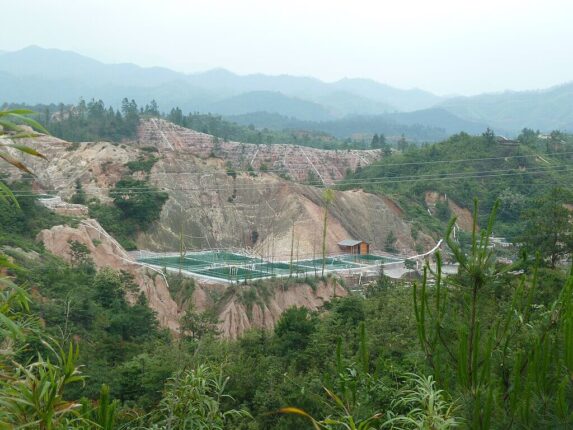
As global powers race to secure critical minerals, Myanmar’s rare earths have emerged as both prize and flashpoint. Last week, Reuters reported that the Trump administration has been privately reviewing competing proposals to access Myanmar’s heavy rare earth minerals, including potential engagement with Myanmar’s military junta and direct negotiation with the Kachin Independence Army (KIA), an ethnic armed group that now controls key extraction sites. Since the February 2021 military coup, rare earth mining has surged in northern Kachin State near the Chinese border, where the KIA has seized highly valuable rare earth mines and a critical corridor in the global supply chain. What began as a local insurgency has evolved into resource-backed diplomacy, drawing in China, India, and now the United States.
-
Environmental Security Weekly Watch: July 28-August 1, 2025
›A window into what we’re reading at the Stimson Center’s Environmental Security Program
Low Political Will and Depleted Supplies: Inside Iran’s Water Crisis (The New York Times)
Water shortages are a day-to-day reality for many Iranians, as reservoirs shrink, taps run dry for hours, and water pressure remains so low that it doesn’t reach above the second floor. This acute water crisis is driven by a confluence of climatic changes and poor water policies, as Iran’s five-year drought has combined with overdevelopment, excessive dam development, and draining groundwater for agriculture to push already dwindling supplies to the brink.
-
The Mekong Dam Monitor Tracks a River Under Pressure
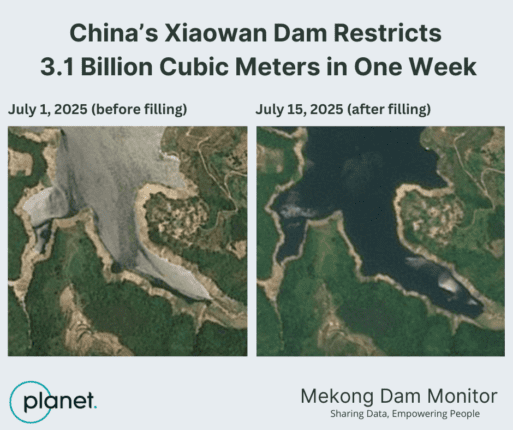
›The Mekong River’s seasonal floods nurture the world’s most productive inland fishery and irrigate rice paddies that feed millions. Approximately 70 million people live in the lower Mekong Basin, and 75% of them depend on fishing and farming for their livelihoods. But hydropower expansion and other development projects are fragmenting the river and disrupting its natural rhythms, with severe consequences for those living downstream.
-
Decoding China’s Response to Environmental Justice Movement in Shenzhen
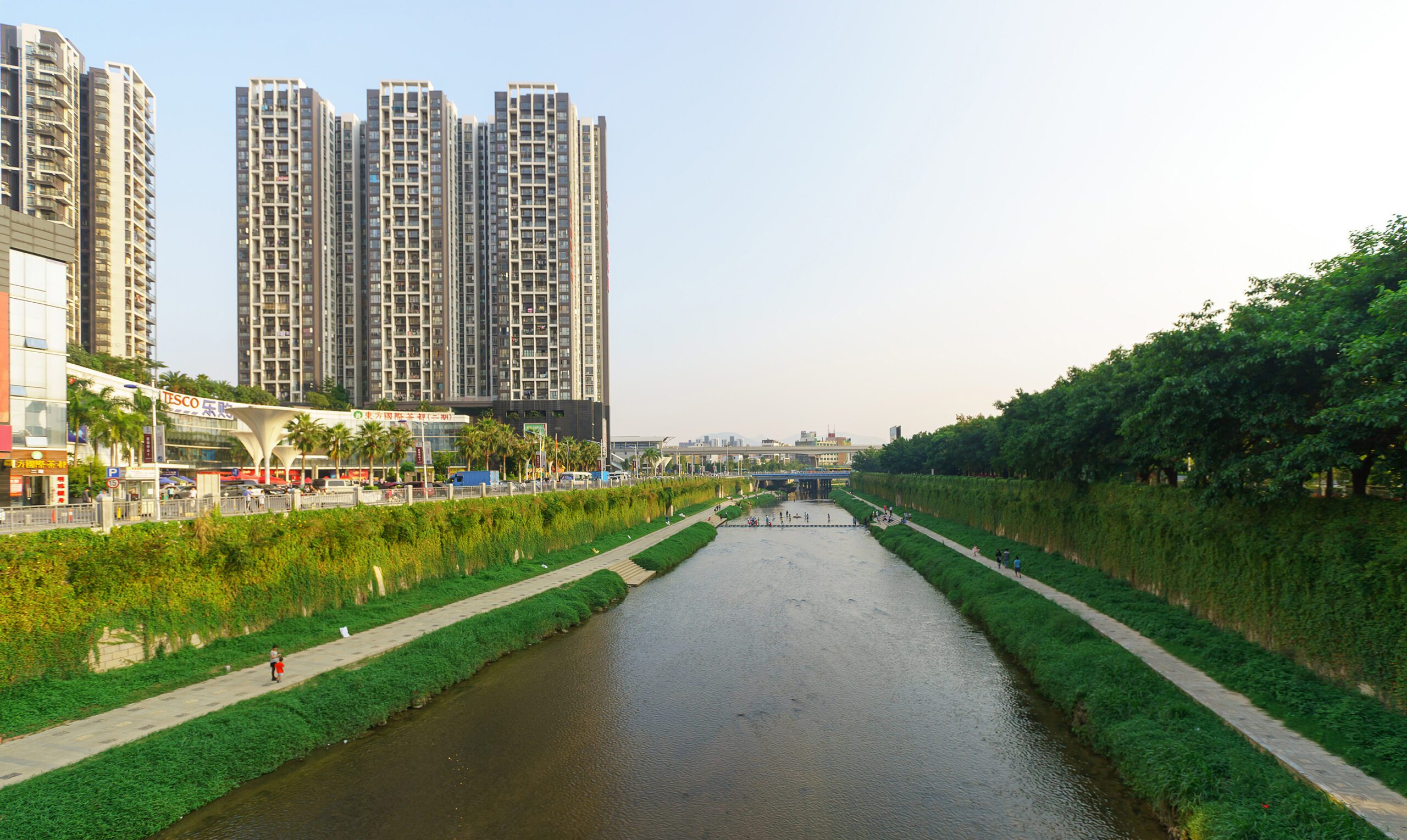
›China Environment Forum // Guest Contributor // Vulnerable Deltas // January 23, 2025 // By Zhao Zhong & Kuoray MaoThe Wutongshan River flows through the east suburbs of Shenzhen and the basin is an important ecological zone for Shenzhen, which is often referred to as the “lungs of Shenzhen.” Rich in plant and animal resources, this area is the city’s natural museum and a genetic reservoir for flora and fauna. The river importantly provides 70% of Hong Kong’s and 40% of Shenzhen’s water.
Showing posts with tag Water.
Show all posts