• woodrow wilson center
  • ecsp

New Security Beat

Subscribe:
  • rss
  • mail-to
  • Who We Are
  • Topics
    • Population
    • Environment
    • Security
    • Health
    • Development
  • Columns
    • China Environment Forum
    • Choke Point
    • Dot-Mom
    • Friday Podcasts
    • Navigating the Poles
    • Reading Radar
  • Multimedia
    • Water Stories (Podcast Series)
    • Backdraft (Podcast Series)
    • Tracking the Energy Titans (Interactive)
  • Films
    • Water, Conflict, and Peacebuilding (Animated Short)
    • Paving the Way (Ethiopia)
    • Broken Landscape (India)
    • Scaling the Mountain (Nepal)
    • Healthy People, Healthy Environment (Tanzania)
  • Publications
  • Events
  • Contact Us

NewSecurityBeat

The blog of the Wilson Center's Environmental Change and Security Program
  • Sustainable Infrastructure: Building Resilience in a Changing World

    ›
    On the Beat  //  September 8, 2017  //  By Antony Martel
    Brooklyn-Infrastructure

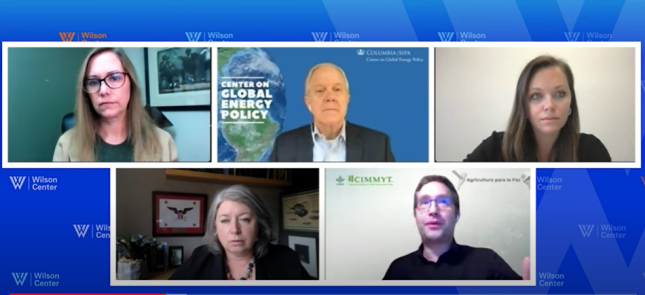
    The United States currently faces an infrastructure crisis, as well as a growing climate crisis. Taking a sustainable approach to infrastructure could help address both problems, argued participants in a recent webinar conducted by the National Council for Science and the Environment, in partnership with the Security & Sustainability Forum. 

    MORE
  • Managing Sludge Mountains: What Beijing Can Learn From Brooklyn

    ›
    China Environment Forum  //  Choke Point  //  September 7, 2017  //  By Carl Hooks
    Newtown Creek Digester Eggs

    This is the first article in a series of case studies of innovative wastewater treatment plants in Brooklyn and Brazil from the China Environment Forum and Circle of Blue’s Choke Point China Initiative, which since 2010 has been exploring challenges and solutions to water-energy-food confrontations in the world’s most populated country.

    Chinese cities are being encircled by untreated sludge—a pungent, viscous mixture of human excreta and stormwater runoff. Four years ago in Beijing, trucks loaded with untreated sludge from the city’s largest wastewater treatment plant were illegally dumping mountains of sludge in the outskirts of the capital as “free fertilizer” for peri-urban farms. Similarly, in the southern China city of Guangzhou, disposing toxic sludge into the nearby river required nothing more than a hired boat. From the far western desert city of Urumqi to the eastern metropolis of Shanghai, more and more of China’s cities are struggling to manage mountains of sludge and municipal waste, as well as floods of wastewater and stormwater runoff. 

    MORE
  • Gaming Your Way to Disaster Risk Insurance

    ›
    Guest Contributor  //  August 30, 2017  //  By Madeleine Varkay
    Climate-Development-Game

    Fear fends off disaster, but does fear give us the tools to manage risk? Do we need to spend precious time learning complex risk management techniques? Perhaps not: learning disaster reduction techniques could be as easy as playing a game.  “Well-designed games, like risk management measures, involve decisions with consequences. While games can never fully capture the complexity of climate risk management decisions, through gameplay these complexities can be revealed, discussed, and processed,” writes Pablo Suarez, the Climate Centre’s associate director for research and innovation.

    MORE
  • Climate Variability, Water, and Security in El Salvador

    ›
    August 29, 2017  //  By Herman Rosa & Chelsea Spangler
    El-Salvador

    This article is a summary of the chapter by Herman Rosa, former minister of environment for El Salvador, in the new book, Water, Security and U.S. Foreign Policy. The book was produced by the World Wildlife Fund-US and edited by David Reed. The summary was prepared by Chelsea Spangler. 

    Water-related challenges in El Salvador have acquired far greater significance over the past decade as they have intersected with other social problems including migration, criminal violence, and drug trafficking. When combined, these factors pose threats to domestic and regional stability. Damaging heavy rains, droughts, and rising temperatures are exacerbated by steadily intensifying El Niño oscillations and threaten the production of staple and export crops.  The declining viability of rural livelihoods is driving many farming families to migrate to urban centers or across borders. Food security is a constant concern across the region, and millions already rely on humanitarian assistance. Infrastructure has been damaged repeatedly by floods and raging rivers. El Salvador can mitigate many of these risks by employing ecological landscape restoration.  Improving the soil’s capacity to retain and regulate water will help maintain both agricultural and ecological viability.

    MORE
  • Flooding in Bangladesh: Calling Out Climate Change From the High Ground

    ›
    Guest Contributor  //  August 28, 2017  //  By Todd A. Eisenstadt & Mahfuzul Haque
    17.8.23-pic-in-Kutubdia-foc

    Floods have taken the lives of more than 100 people in northern Bangladesh over the last two weeks. Fully one third of the country has been flooded and some 600,000 people have been displaced in the riverine nation as a result of monsoons in India and Nepal. At international climate forums, Bangladeshi diplomats consistently decry such disasters as part of their urgent calls for action to mitigate changing weather patterns worldwide. But here in the country’s Rangpur-Kurigam region, both authorities and citizens have been reluctant to attribute these deadly disasters to the effects of climate change.

    MORE
  • Fresh Water, Safe Water: Integrating Freshwater Conservation and WASH in Sub-Saharan Africa

    ›
    On the Beat  //  August 23, 2017  //  By Namita Rao
    Africa-WASH

    Despite sharing a common element—water—the freshwater community and the Water, Sanitation and Hygiene (WASH) community have traditionally worked independently of each other, said Jimmiel Mandima, director of U.S. government relations at the African Wildlife Foundation during a recent webinar organized by USAID-supported Africa Biodiversity Collaborative Group (ABCG). However, that is starting to change: “Integration will bring value addition and synergy,” he said.

    MORE
  • Water Stress, Instability and Violent Extremism in Nigeria

    ›
    August 22, 2017  //  By Marcus King & Chelsea Spangler
    Nigeria-Water

    This article is a summary of the chapter by Marcus King, John O. Rankin Associate Professor of International Affairs at the George Washington University Elliott School of International Affairs, in the new book, Water, Security and U.S. Foreign Policy. The book was produced by the World Wildlife Fund-US and edited by David Reed. The summary was prepared by Chelsea Spangler. 

    Nigeria is ranked among the most fragile states in the world. The country faces significant water challenges, which vary greatly from one region to another. Weak governance exacerbates these water challenges, while conflicts over water resources make governance more difficult. There are three main geographical flashpoints where conflict over water is likely to break out. In the north and northeast, Boko Haram has waged a violent insurgent campaign since 2010; among their demands is government provision of clean water. In Nigeria’s Middle Belt, changing rainfall patterns are limiting the grazing area of Muslim Fulani herders, who then encroach on the land of predominantly Christian farmers. Conflict over these lands killed more Nigerians than Boko Haram in 2016. Finally, in the Niger Delta, militant groups are attacking oil infrastructure, partially motivated by conflict over rights to land and waterways. Oil spills also contribute to food insecurity and malnutrition in this region.

    MORE
  • A Little Respect: Improving Maternity Care

    ›
    Dot-Mom  //  On the Beat  //  August 21, 2017  //  By Yuval Cohen
    Midwife-Sierra-Leone

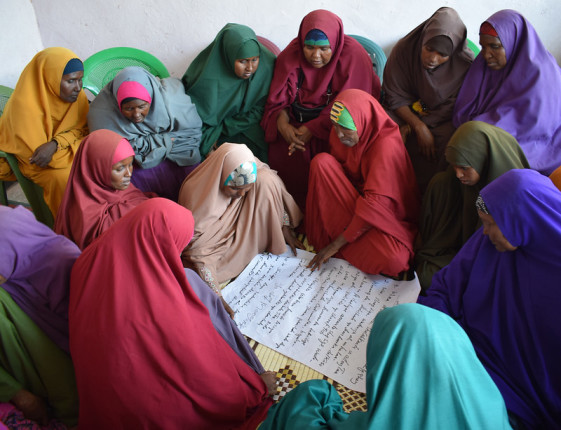
    “Disrespect and abuse during facility-based childbirth is a very widespread phenomena with different manifestations,” said Rima Jolivet from the Maternal Health Task Force (MHTF) during a recent webinar hosted by MHTF and Ariadne Labs on the need for respectful maternity care (RMC). Jolivet was joined by Katherine Semrau from Ariadne Labs, Rose Molina from Beth Israel Deaconess Medical Center and Ariadne Labs, Saraswathi Vedam from Birth Place Lab, and David Sando from the Harvard T.H. Chan School of Public Health.

    MORE
Newer Posts   Older Posts
View full site

Join the Conversation

  • RSS
  • subscribe
  • facebook
  • G+
  • twitter
  • iTunes
  • podomatic
  • youtube
Tweets by NewSecurityBeat

Trending Stories

  • unfccclogo1
  • Pop at COP: Population and Family Planning at the UN Climate Negotiations

Featured Media

Backdraft Podcast

play Backdraft
Podcasts

More »

What You're Saying

  • Volunteers,At,The,Lagos,Food,Bank,Initiative,Outreach,To,Ikotun, Pan-African Response to COVID-19: New Forms of Environmental Peacebuilding Emerge
    Rashida Salifu: Great piece 👍🏾 Africa as a continent has suffered this unfortunate pandemic.But it has also...
  • A desert road near Kuqa An Unholy Trinity: Xinjiang’s Unhealthy Relationship With Coal, Water, and the Quest for Development
    Ismail: It is more historically accurate to refer to Xinjiang as East Turkistan.
  • shutterstock_1779654803 Leverage COVID-19 Data Collection Networks for Environmental Peacebuilding
    Carsten Pran: Thanks for reading! It will be interesting to see how society adapts to droves of new information in...

What We’re Reading

  • Rising rates of food instability in Latin America threaten women and Venezuelan migrants
  • Treetop sensors help Indonesia eavesdrop on forests to cut logging
  • 'Seat at the table': Women's land rights seen as key to climate fight
  • A Surprise in Africa: Air Pollution Falls as Economies Rise
  • Himalayan glacier disaster highlights climate change risks
More »
  • woodrow
  • ecsp
  • RSS Feed
  • YouTube
  • Twitter
  • Facebook
  • Home
  • Who We Are
  • Publications
  • Events
  • Wilson Center
  • Contact Us
  • Print Friendly Page

© Copyright 2007-2021. Environmental Change and Security Program.

Woodrow Wilson International Center for Scholars. All rights reserved.

Developed by Vico Rock Media

Environmental Change and Security Program

Woodrow Wilson International Center for Scholars

Ronald Reagan Building and International Trade Center

  • One Woodrow Wilson Plaza
  • 1300 Pennsylvania Ave., NW
  • Washington, DC 20004-3027

T 202-691-4000