-
Women and Art at a Time of War: Acknowledging Ukrainian Women
›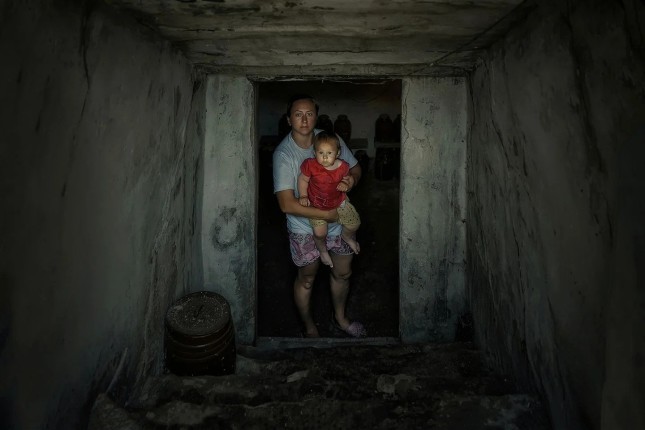
“War is central to history. History has been written (and painted) by men. This exhibition provides a platform for women narrators of history and also examines gendered perspectives of war,” said art curator Monika Fabijanska, referring to the exhibit “Women at War” she recently put together, which was on display at the Stanford in Washington Art Gallery from January through March 2023.
-
USAID’s Revised Water and Conflict Toolkit
›
Links between water and conflict seem to crop up everywhere one looks these days. The Horn of Africa will soon face a sixth consecutive failed rainy season in 2023—its worst drought on record. Not only is this drought a consequence of global climate change, but it has also led to widespread food shortages and local civil conflicts. And over the past year in Ukraine, Russian troops have directly damaged that nation’s already vulnerable water systems, including pipelines, pumping stations, and treatment facilities. These repeated attacks on water infrastructure have not only undermined local livelihoods in Ukraine, but they have also polluted surface waters and threatened biodiversity.
-
The UN Water Conference and Latin American Transboundary Waters: A Case for Better Governance
›In recent decades, the international system has undergone profound changes—especially in terms of the types of threats that destabilize international peace and security. As new threats emerge, a focus on new dimensions of the concept of security is now reaching the top of the international agenda. In this context, the global freshwater crisis is beginning to be perceived as an existential threat to states requiring extraordinary measures to alleviate or solve the problem.
-
Tracking Conflict and Cooperation Over the World’s International Freshwater Resources
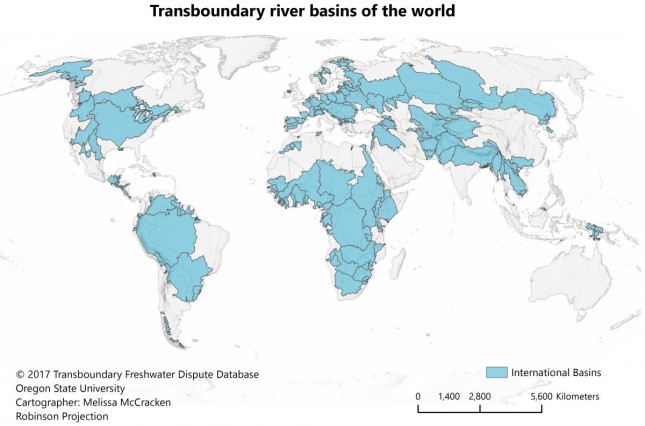
›Guest Contributor // March 20, 2023 // By Alexandra Caplan, Melissa McCracken, Susanne Schmeier, Zoe Rosenblum & Aaron WolfWaters that cross international political borders can drive the countries that share them to conflict—or encourage cooperation between them. Indeed, since the 1940s, overall trends point to a tendency for countries to cooperate over shared water resources, which stands in stark contrast to media portrayals of “water wars.”
Yet instances of conflict over water have increased slightly since 2000. Why? Most of them are fueled by water quantity disputes or the unilateral development of dams or other infrastructure. Institutions often play a key role in facilitating cooperation (and reducing conflict) over shared waters, but their growth and adoption have slowed over the last two to three decades.
-
The Changing Geopolitics of Critical Minerals and the Future of the Clean Energy Transition
›At a recent Wilson Center event on the shifting geopolitics of critical minerals, Cory Combs, Associate Director at Beijing-based Trivium China, noted that “the nature of global resource competition is changing—and quite rapidly.”
-
Connecting the Dots: Gender Equality and Sexual and Reproductive Health and Rights
›In today’s episode of New Security Broadcast, Sarah Barnes, Project Director for the Wilson Center’s Maternal Health Initiative met with Bridget Kelly, Director of Research for Sexual and Reproductive Health and Rights at Population Institute to discuss the launch of Population Institute’s new report: Connecting the Dots, Sexual and Reproductive Health and Rights as Prerequisites for Global Gender Equality and Empowerment. On the episode Kelly, lead author of the Connecting the Dots report, shares findings from the report on the importance of the Sexual and Reproductive Health and Rights (SRHR) agenda, how SRHR leads to gender equality, the power of and need for increased U.S. investment, and policy recommendations to fully realize the SRHR agenda and improve gender equality and empowerment.
-
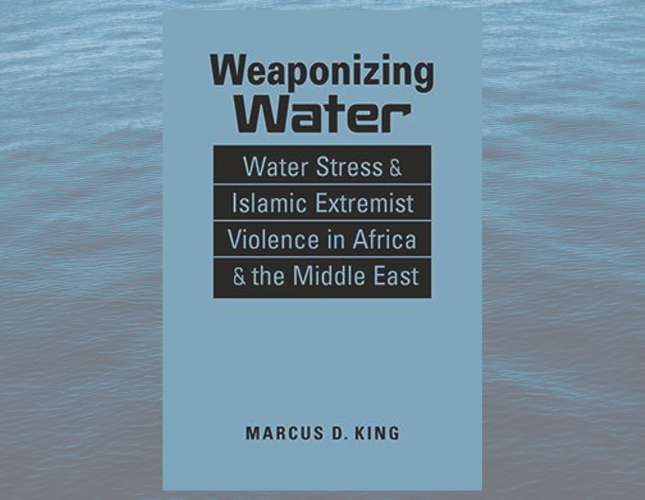
Book Preview: “Weaponizing Water” by Marcus D. King
›By 2050, two-thirds of the population will face some form of water stress. As a fundamental part of life, water—or a lack of it—influences other parts of life, including conflict. In fact, as author Marcus King notes in his new book, Weaponizing Water: Water Stress and Islamic Extremist Violence in Africa and the Middle East, there is a “correlation between the spheres of influence of violent extremist organizations (VEOs) and the driest lands or areas of sparse vegetation in some of the most arid regions on earth.”
-
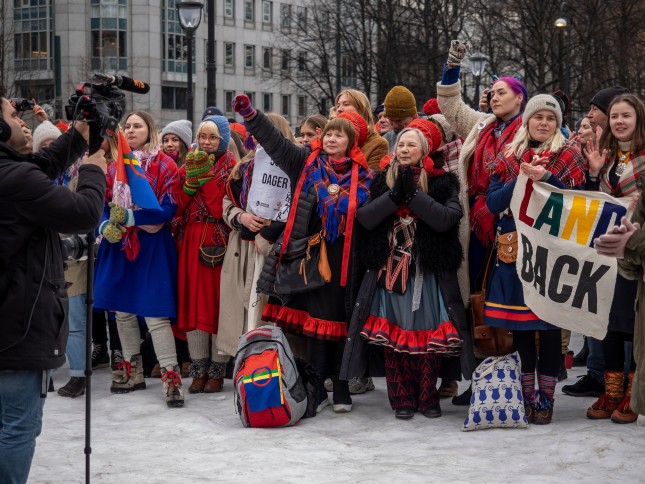
A Land Grab or a Boon for Communities: Renewable Hydrogen in the Norwegian Arctic
›Green hydrogen is often portrayed as a key component in the green energy transition, since it is produced with renewable energy through electrolysis – the splitting up of freshwater into hydrogen and oxygen – and it does not emit carbon dioxide when combusted. Yet green hydrogen’s huge potential for the decarbonization of hard-to-abate sectors (e.g. steelmaking and production of fertilizers) as well as maritime shipping and aviation are not the only promises that it harbors. Green hydrogen’s use as an energy storage solution makes it particularly promising for remote and sparsely populated areas with an abundance of renewable energy resources such as the Norwegian Arctic.
 A Publication of the Stimson Center.