-
Top 10 Posts for August 2011
›August brought a crop of newcomers to the top 10 (measured by unique pageviews). Joining Richard Cincotta’s popular look at Tunisia’s demographics and the Mr. Y white paper launch at the Wilson Center were ECSP’s “Backdraft” event; PRB’s new population data sheet; interviews with Aaron Wolf and Alecia Fields; and guest contributions from Lukas Rüttinger, Moira Feil, and Jim Duncan.
1. In Search of a New Security Narrative: The National Conversation at the Wilson Center
2. Tunisia’s Shot at Democracy: What Demographics and Recent History Tell Us
3. Backdraft: Minimizing Conflict in Climate Change Responses
4. PRB’s Population Data Sheet 2011: The Demographic Divide
5. India’s Maoists: South Asia’s “Other” Insurgency
6. Guest Contributors Lukas Rüttinger and Moira Feil: Beyond Supply Risks: The Conflict Potential of Natural Resources
7. Watch: Alecia Fields on Population, Health, and Environment Advocacy with the Sierra Club
8. Conflict Minerals in the DRC: Still Fighting Over the Dodd-Frank Act, One Year Later
9. Watch: Aaron Wolf on the Himalayan and Other Transboundary Water Basins, Climate Change, and Institutional Resilience
10. Guest Contributor Jim Duncan: Redrawing the Map of the World’s International River Basins -
Karen Seto on the Environmental Impact of Expanding Cities [Part Two]
› “A lot of cities are trying to become green cities,” said Karen Seto in part two of an interview with ECSP about her recently published article, “A Meta-Analysis of Global Urban Land Expansion,” co-authored with Michail Fragkias, Burak Güneralp, and Michael K. Reilly. “I think one of the main policy implications of our study is that how a city urbanizes is critical, because one of the things we are finding is that urban land is growing faster than urban population, and in some cases it is growing much faster.”
Seto said that the cities with the best prospects for implementing green growth and expansion strategies “tend to focus on the low-hanging fruit,” such as planting trees or constructing buildings with green roofs. From the public’s perspective, these types of measures are relatively painless because they “don’t require changing people’s behavior.”
More challenging, said Seto, will be getting rapidly expanding cities to anchor future development around public-transit systems, especially given the changing lifestyle preferences of upwardly mobile urban populations across China and India, for whom private car ownership serves as an important status symbol.
Still, Seto said she is tentatively optimistic about city planners’ ability to grow cities in a sustainable fashion. “We’ve experienced this rapid growth of urban population and urban land areas, but we’re also seeing that over the next 20 years, according to the UN, we’re going to see even more people living in urban areas,” she said.
“We have this window of opportunity to really shape the way in which cities get developed, and I think that’s really one of the big messages of the study.”
Part one of Karen Seto’s interview is available here. The “Pop Audio” series is also available as podcasts on iTunes.
Sources: China Daily, USA Today. -
Karen Seto on the Environmental Impact of Expanding Cities [Part One]
›“When we think about the environmental impacts of rapid urbanization, we really need to unpack what we mean by ‘urbanization,’” said Karen Seto, an associate professor in Yale University’s School of Forestry and Environment Studies, in this interview with ECSP. “There is the demographic component, where more people are living in cities; there is economic urbanization, which is where livelihoods and economies are becoming more urban rather than rural; and then there is the land component – the conversion of land from agriculture and other ecosystems to become urban.”
Seto is the lead author of a new article, “A Meta-Analysis of Global Urban Land Expansion” (with Michail Fragkias, Burak Güneralp, and Michael K. Reilly), which uses satellite imagery to help document the physical expansion of urban areas in developed and developing nations between 1970 and 2000.
Over that period, the population of cities in the developing world boomed. In 1970, there were roughly the same number of city dwellers in developed nations as in developing nations. By the mid-1990s, however, urban residents of the developing world outnumbered their developed-world counterparts by a factor of two to one. Since then, the gap has continued to grow.
According to the report, urban growth sprawled to cover nearly 60,000 square kilometers of previously non-urban areas during the last three decades of the twentieth-century. One of their most interesting finds, said Seto, was that “urban expansion has been occurring in low-elevation coastal zones more than it has been elsewhere.”
“Essentially what that means is that cities are growing precisely in areas that are highly vulnerable to the impacts of climate change, like sea level rise and storm surges,” she said.
Demography and the Environment
Seto acknowledged that many of the today’s discussions surrounding urbanization focus on the negative impacts for the environment and human security – among them the “loss of agricultural land, conversion of forests, biodiversity loss, changes in hydrology, and climate effects.” Ultimately though, she said, urbanization and its attendant land-use changes shouldn’t be viewed through a black-or-white lens.
“Certainly we think about the oncoming demographic transition of something like three billion more people living in cities,” Seto said, but “that means there’s a lot of efficiency to be gained, whether it is in education, energy, sanitation, or health – urbanization allows for opportunities for really efficient use of resources.”
The real challenge to achieving environmentally sustainable urban development, said Seto, is thoughtful city planning: “How we configure ourselves has a big impact on the environment, so it is not the issue of just whether we are urbanizing – the form in which we urbanize [also] has a huge impact.”
Part two of Karen Seto’s interview is available here. The “Pop Audio” series is also available as podcasts on iTunes.
Sources: Population Reference Bureau, UNFPA. -
Population and Development, Scarcity and Fairness
›Monica Das Gupta, John Bongaarts, and John Cleland’s World Bank working paper, “Population, Poverty, and Sustainable Development: A Review of the Evidence,” analyzes the evidence so far on three questions: 1) Does high fertility affect low-income countries’ prospects for economic growth and poverty reduction?; 2) Does population growth exacerbate pressure on natural resources?; and 3) Are family planning programs effective at lowering fertility, and should they be publicly funded? They find the answers to these questions mainly to be “yes,” but more so in low-income countries with “poor policy environments,” where reducing fertility can lessen the pressure on natural resources – the management of which frequently faces “deep challenges” – and allow economic growth. Gupta et al. highlight sub-Saharan Africa in particular as a region that could gain from these policy levers.Resource Scarcity, Fair Shares and Development, a discussion paper by Alex Evans of the Center on International Cooperation at New York University, published in cooperation with WWF and Oxfam, tackles what Evans writes is an oft-ignored issue in relation to resource scarcity: the notion of fairness in a world of environmental limits. The need to advocate for “fair shares” will become a major issue for poor people and poor countries, and is therefore an important part of the development agenda, he writes. “Scarcity isn’t just relevant to specialists in environment, climate and rural livelihoods,” writes Evans. “On the contrary, resource scarcity will become increasingly central to governance, economics, social development and conflict advisers, and should be incorporated into training and professional development across these areas.” -
Michael Kugelman, Huffington Post
Pakistan’s Biggest Threats May Not Be What You Think They Are
›August 30, 2011 // By Wilson Center StaffThe original version of this article, by Michael Kugelman, appeared on the Huffington Post.
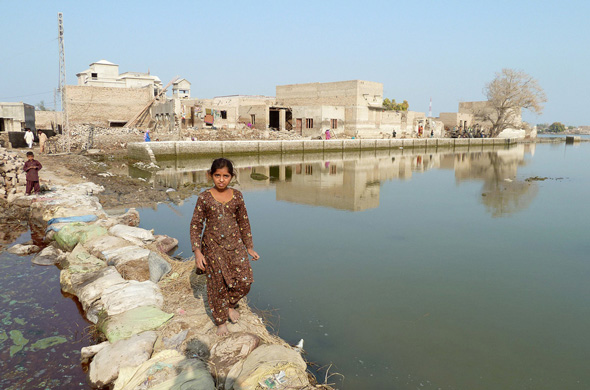
The most troubling news to emerge from Pakistan in recent days has little to do with militancy or other headline-grabbing scourges that afflict the country. Rather, it relates to a new Oxfam report’s finding that more than a third of the country’s population – about 60 million people – is undernourished.
Pakistan may well be convulsed by extremist violence; according to Pakistani estimates, it has killed or injured 30,000 in recent years. Yet contrary to what U.S. media coverage may suggest, this is not the greatest threat to the Pakistani people.
Numerous candidates contend for this dubious honor. One, underscored by Oxfam, is hunger. Even before last year’s devastating floods, which destroyed more than 2 million hectares of arable land, the World Food Program estimated that 77 million Pakistanis were going hungry. Another is water insecurity, one of Pakistan’s biggest killers. With a third of Pakistanis lacking access to clean water, no wonder waterborne illness claims the lives of 1.2 million Pakistanis per year – and 630 children every day. Lack of education also tops the list. More than 40 million of Pakistan’s 70 million school-age children (those between the ages of 5 to 19) are not in school. And then there is Pakistan’s energy crisis. Due to power shortfalls, some Pakistanis suffer outages for as long as 20 hours per day – crippling industry and bringing misery to millions of households. All of this is compounded by state corruption, which constrains access to these precious resources and services.
Continue reading on Huffington Post.
Sources: Business Recorder, Oxfam International, PBS, World Food Program.
Michael Kugelman is a program associate with the Wilson Center’s Asia Program.
Photo Credit: “People returning home as soon as the water recedes enough,” courtesy of flickr user DFID – UK Department for International Development. -
‘Dialogue’ TV: Revisiting Mr. Y and “A National Strategic Narrative”
›“We are, what I would call, very non-linear thinkers,” said U.S. Navy Captain Wayne Porter about the white paper he co-authored with U.S. Marine Colonel Mark Mykelby, “A National Security Narrative,” launched by Woodrow Wilson Center President Jane Harman at the Center in April. “We’re almost incapable of restricting ourselves to defense and security in isolation from a much larger perspective,” he told Dialogue TV.
“I think maybe that’s why Admiral Mullen has kept me around – I can offer a perspective that maybe he wouldn’t get from conventional strategists or from conventional planners,” said Porter, who served three out of four tours with the current chairman of the Joint Chiefs of Staff as a special assistant for strategy.
Dialogue host John Milewski sat down with Captain Porter and Robert Litwak, director of International Security Studies and vice president for programs at the Wilson Center, for a discussion about the white paper – published under the pseudonym “Mr. Y” (echoing George Kennan’s seminal “X” article) – and its contention that the United States should move away from an outmoded Cold War-era model of containment, deterrence, and control towards a “strategy of sustainability.”
The narrative has been well received, Porter said: “I think there is an appreciation that it’s a very complex strategic environment that we live in now and that maybe we need to re-look at all of the tools that we could use as a nation to pursue our enduring national interest.”
Inflection Points in History
“The timing of such conversations is cyclical,” said Litwak. “The original ‘X’ article emerged from the end of the Second World War and the advent of the Soviet threat, which required a new conception of international relations that Kennan articulated, as well as the National Security Act of 1947 to line up the U.S. government with this new environment.”
There have also been periods of concern about American decline. “I think what one sees in the current era are both of those trends coming together,” Litwak said:The system is changing – it’s a debatable proposition that the United States is in decline – but we see in the international system rising powers, notably China, as well as transnational trends that are beyond the sovereign control of any single state, which have called into question the nature of the international system…as well as a sense that…there’s something qualitatively different about this recession than the typical economic, cyclical recession and that has to do with the domestic sources of American strength.
These conditions, as well as the source of argument – coming from the military – combined to give particular resonance to the piece, Litwak said.
The Information/Globalization Age
“I think the thing that has changed materially to us is that the information age has brought about an awareness that our environment is completely interconnected,” Porter said. “There’s a complexity to this that can’t be analyzed linearly, that has to have new tools applied.”
“I’d honestly characterize it as significant as the Enlightenment in the 1600s,” he said.
“Certainly we’ve thought in silos and debates have been too often compartmentalized,” Litwak said. “One of the strengths of this piece is that it is truly synthetic – working across the continuum of instruments of power – and talks in a really powerful way about how hard power…has its place, but that the non-military dimensions of American power have been neglected.”
But, Porter said, it’s important to focus on being proactive, rather than reactive:The thing that bothered us most about the strategies that we see every day in our jobs on our side of the river and across the river is that they are almost universally based on anticipating and countering known risk and threat, and our sense is that we have entered an age in which we need to overcome that sense of fear and seize the opportunity to shape the environment of the future as opposed to simply being resilient to it.
As Litwak points out, Secretaries Gates (now former) and Clinton – in the form of the Quadrennial Defense Review, Quadrennial Diplomacy and Development Review, and numerous speaking engagements – have both called for closer integration between State and Defense, more resources for non-military levers of power, and more holistic concepts of security. But unfortunately the greater integration called for in these documents remains unrealized.
Dialogue is an award-winning co-production of the Woodrow Wilson International Center for Scholars and MHz Networks that explores the world of ideas through conversations with renowned public figures, scholars, journalists, and authors. The show is also available throughout the United States on MHz Networks, via broadcast and cable affiliates, as well as via DirecTV and WorldTV (G19) satellite.
Find out where to watch Dialogue where you live via MHz Networks. You can send questions or comments on the program to dialogue@wilsoncenter.org. -
Certification: The Path to Conflict-Free Minerals from Congo
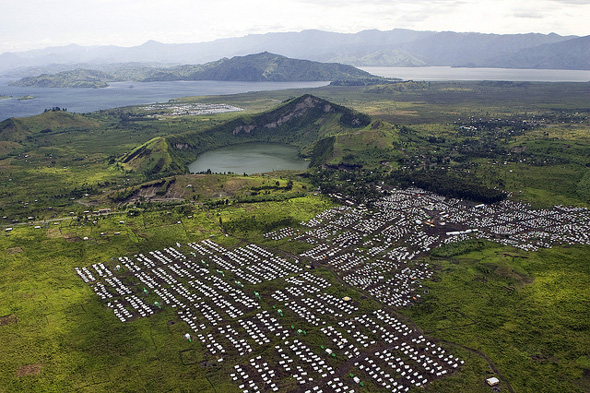
›This summer, the Wilson Center’s Africa Program, in co-sponsorship with the Enough Project, assembled a panel of experts from American, British, and Congolese governments, private industry, and the NGO community to discuss the deplorable situation in the eastern Democratic Republic of the Congo (DRC) involving conflict minerals and certification as a way forward.
After introductory remarks by Wilson Center President Jane Harman, Africa Program Director Steve McDonald introduced John C. Bradshaw, executive director of the Enough Project, who moderated the panel discussion. [Video Below]
Under Secretary of State Robert D. Hormats began by saying the “extremely traumatic” humanitarian situation in the restive areas of the eastern DRC requires “a bold, resolute, and morally inspired response by the United States and other countries.”
Sasha Lezhnev, policy consultant for the Enough Project, explained how the demand for tin, tantalum, tungsten, and gold – for use in batteries, circuit boards, and screens in computers and cellphones – are, in effect, driving the conflict in the DRC.
However, Ambassador to the United States from the DRC Faida Mitifu pointed out that a significant 70 percent of the economy in the eastern regions of the country depends on mining, thus any initiative would have to take into account the livelihoods of the people. In order to assist those communities while a process is formulated, Lezhnev called for targeted development projects in the most affected regions.
The Kimberley Process: A Potential Model?
“If we want to have a lasting impact, we’re going to need a certification process,” Lezhnev said, and we must learn lessons from the Kimberley Process (KP) in order to implement a suitable framework in the DRC.
Clive Wright, who served as the diplomatic negotiator for the KP and head of the foreign policy team for the British High Commission in Ottawa, described the intricacies of the process and its genesis. Under the provisions of the KP, the trade of rough diamonds is permissible, provided that there is a certificate from the country of origin and complementary legislation is in place in the importing country. This agreement was made through consultations and dialogue between the private sector and civil society.
Though successful in certain respects, Wright listed several shortcomings of the KP: it is not legally binding, therefore there are no levers to pull that compel government action; the process is void of an independent monitoring mechanism; and a consensus clause allows one government to block any action which clears the way for the status quo to prevail.
To implement a policy similar to the KP that guarantees legitimate minerals trade in the DRC, Under Secretary Hormats highlighted four key actors that have critical roles independently and collaboratively: 1) regional governments; 2) industry; 3) civil society; and 4) the U.S. government.
Regional Governments
Governments in the region face considerable challenges, said Hormats, as rebel groups trade across borders and evade efforts to rein in the commerce of precious gems, minerals, and arms. The states surrounding the Great Lakes – including Uganda, Rwanda, Burundi, Zambia, Kenya, and the DRC – have coalesced around these issues and developed a plan that will require effective coordination to ensure credibility. Some countries have already established traceability schemes, which are crucial for states that share borders with the DRC, since smuggling is incessant.
With regard to rebel factions, Kinshasa has occasionally participated in joint operations with the governments of Rwanda and Uganda “to stabilize [and] contain the activities of armed groups,” said Ambassador Mitifu. Progress, though slow, has also been made in demilitarizing the mining areas in the Kivu provinces as well as Maniema and in weakening the Congrès National pour la Défense du Peuple’s (CNDP) parallel administration.
The government in Kinshasa has made significant steps toward a certification framework and taken punitive action against military personnel who have engaged in illicit trade, said Ambassador Mitifu. She outlined the efforts the Kabila administration has made to address the issue, including initiatives to put in place a credible certification system so that clean minerals can be exported. In conjunction with MONUSCO – the UN peacekeeping mission in the DRC – the Congolese government has introduced centers where miners can bring their products and feed them into a legitimate supply chain. Finally, Kinshasa is working closely with the private sector, international organizations, and local NGOs to minimize fraud and enhance cooperation. Nevertheless, governance and corruption represent a formidable roadblock in the implementation of any certification process.
Industry Responsibility
Tim Mohin, the director of corporate responsibility for Advanced Micro Devices – one of the largest semiconductor manufacturers in the world – argued that industry can positively influence the supply chain by creating conflict-free smelter programs and a due diligence bulwark where anyone along the supply chain can trace their resources back to a certified smelter.
Customers, Mohin said, are going to have to insist that businesses comply with this tracking system. Under Secretary Hormats agreed with this sentiment, saying that companies that look into the origin of their minerals send a powerful message to the region and the world. He also expressed hope that “companies [would] work to find ways to adhere to legislation [Dodd-Frank] and honor their obligations to their shareholders without shunning the region’s minerals entirely.”
The most difficult stretches along the supply chain are getting buy-in from the miners and the smelters; overcoming the constraints of socio-economic realities on the ground and geo-politics; and the lack of a sustainable tracing system that spans the spectrum of the supply chain. In addition to shored-up U.S. involvement, Mohin called for increased public-private sector partnerships with incentives reminiscent of the Fair Trade system, development aid to assist displaced people, and enhanced security for artisanal miners and their businesses.
Civil Society and Government
Hormats commended the pivotal role civil society has played and must continue to play in highlighting the humanitarian issues at stake, as governments and companies have been only “dimly aware of the link between human rights abuses and the minerals trade.” Furthermore, Wright encouraged civil society’s participation because it serves as a “great policeman” that monitors the bad behavior of governments, especially when the allure of profiteering seeps into deliberations. Moving forward on boosting security for civil society on the ground in the Congo will be essential.
The U.S. government, Hormats asserted, has to do its part to support initiatives on the table to create conflict-free supply chains. If more revenue is invested in legitimizing supply chains, a substantial portion of the problem would be solved. USAID and the State Department are working with civil society to take action against those responsible for illegitimate trade and exacerbating the conflict. Of course there remains work to be done, but as Under Secretary Hormats indicated “this is the most significant moral issue of our time.”
Derek Langford is a program assistant with the Wilson Center’s Africa Program.
Photo Credit: “Aerial View of Camps for People Displaced by Conflict,” courtesy of flickr user United Nations Photo. -
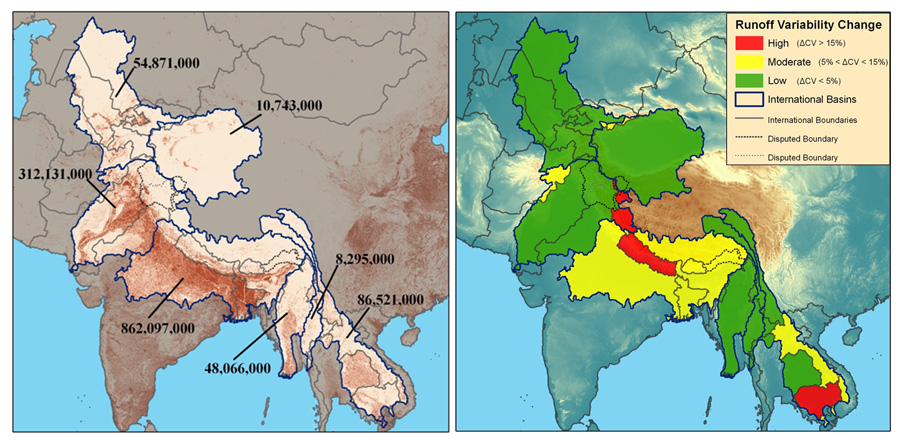
Redrawing the Map of the World’s International River Basins
›Understanding why conflict over water resources arises between nations begins with a solid understanding of the geography of international river basins. Where are the basins? How big are they? How many people live there? Who are the riparian nations, and what is the significance of each to the basin?
 A Publication of the Stimson Center.