-
Jan Eliasson, Huffington Post
What Somalia Teaches Us: Sanitation, Health, and Conflict
›September 15, 2011 // By Wilson Center StaffThe original version of this article, by Jan Eliasson, appeared on Huffington Post.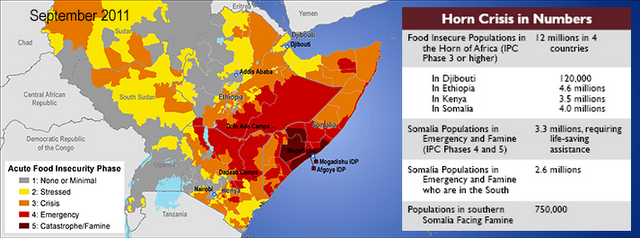
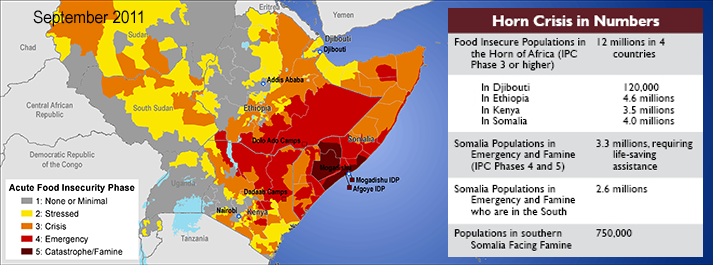
The confirmation of cholera deaths in Somalia offers a chilling reminder of what happens when there is no safe water and inadequate sanitation. The refugee crisis in Somalia is fueled by the worst drought in the horn of Africa in over 60 years.
This humanitarian disaster is a glaring example of the international community’s failure to uphold basic needs and rights of some of our planet’s most vulnerable people. As we struggle to respond to this humanitarian catastrophe, we must remember that Somalis are in need of more than access to food, but also safe water, sanitation, shelter, and healthcare.
For many of Somalia’s poorest citizens, who have walked for days and miles, drinking contaminated water, and staying in crowded camps, deadly diseases including cholera may be a tragic but predictable end result. Up to 100,000 people have crowded into Mogadishu, seeking shelter, food, and water. More arrive each day in Mogadishu and in overflowing camps in neighboring Kenya.
Experts estimate that more than 29,000 children under the age of five have already died from the combination of drought, famine, and illness. Diarrhea is on the rise in overcrowded shelters where there is a shortage of safe water and large numbers of weak and malnourished children. These conditions provide a breeding ground for infectious diseases, including measles, cholera and pneumonia. On August 18th, Tarik Jasarevic, a spokesperson for the World Health Organization, said, “We don’t see the end of it.”
Continue reading on Huffington Post.
Sources: AP, The New York Times, UN.
Image Credit: “The Horn of Africa food security crisis in numbers,” courtesy of the Famine Early Warning Systems Network (FEWS NET) and USAID. -
Water: Asia’s New Battleground
›“Asia faces a daunting water crisis,” warns Brahma Chellaney, professor at the Center for Policy Research (New Delhi) and author of the new book, Water: Asia’s New Battleground. It is a crisis that imperils the region’s economic and political rise, and that deepens environmental risk in a part of the world marked by melting glaciers and densely populated coastal areas.
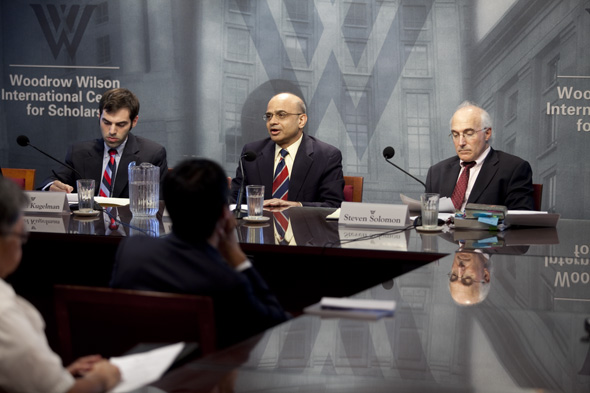
In his book, Chellaney, regarded as one of India’s most distinguished strategists, surveys the water landscape across Asia; examines the security implications of water-based territorial disputes; and offers policy recommendations to help prevent water conflict. On September 12, Chellaney spoke about Water at a Wilson Center event organized by the Asia Program and co-sponsored by the China Environment Forum and Environmental Change and Security Program. Steven Solomon, a journalist and author who last year published Water: The Epic Struggle for Wealth, Power, and Civilization, offered commentary.
According to Chellaney, Water “fills a void in the literature” by, for the first time, focusing on water issues across the entire continental region of Asia – an immense expanse that includes not only Northeast, Southeast, and South Asia, but also Central Asia and the Middle East. The book, he explained, defines Asia “as it looks on a map.”
The World’s Dam Center
What drives the water crisis in this vast region? One factor is population. Asia is the world’s largest and most populous continent but also the most water-deficient; its freshwater levels per capita are one-third those of Europe’s, and slightly less than Africa’s. Another is tied to economic development. Asia is the world’s fastest developing continent, yet its most rapidly developing nations, particularly India and China, are already afflicted by serious water challenges.
Rising income levels and attendant growth in consumption rates are additional drivers. Asians are consuming more resources, including meat, which requires prodigious amounts of water to produce. A fourth factor is intensive irrigation. Seventy percent of the world’s total irrigation originates in Asia, and 80 percent of the region’s “water withdrawals” are allocated to agriculture. (The latter figure is only 30 percent in Europe.) Such large-scale irrigation has enabled Asia to evolve from “a land of recurrent famine” to a major food exporter, yet it has also spawned ruinous agricultural conditions such as waterlogging and soil salinity.
Chellaney contended that Asia’s water ills can also be attributed to the “large-scale impoundment of water” by dams, barrages, and other storage-creating structures. Asia is the world’s “dam center,” he said, with China boasting half the world’s dams and now planning to construct “mega dams,” including one “higher than the Eiffel Tower.” Impounding water triggers riverwater depletion, which in turns promotes “the reckless use” of sub-surface groundwater resources, said Chellaney. With water tables plummeting, millions of groundwater pumps are depleting what used to be a pristine and plentiful resource.
“We Need Better Politics”
In a region rife with transboundary rivers yet devoid of mechanisms to promote transboundary water-sharing, Asia’s water troubles pose grave geopolitical risks.
According to Chellaney, “water wars” are already being waged across the region via non-military means, fostering mistrust and hampering efforts toward greater cooperation. He argued that in order to forestall water conflict, Asia must develop a set of norms on shared resources based on the 1997 UN Convention on the Non-Navigational Uses of International Watercourses – the only available instrument for international water management. Chellaney also called for the creation of “inclusive water institutions,” that emphasize transparency and dispute settlements, and for the adoption of “holistic planning” on central and provincial governmental levels that aim for better water efficiency.
Playing devil’s advocate, Solomon faulted Chellaney for according insufficient attention to Asia’s crisis of energy – a resource that, he pointed out, is “extraordinarily water-intensive.” He also countered Chellaney’s criticism of dams by observing that Asia desperately needs storage – a deficiency that makes the region highly vulnerable to drought. And he questioned whether China’s dam-building activities on the Brahmaputra River truly imperil lower riparian India’s water security, noting that only 15 percent of the river’s flows entering India are impacted by Chinese dams.
Ultimately, Chellaney said, alleviating Asia’s water crisis will also require improving the region’s poor political environment. While Asian economies are coming together, its politics are more divided. Transboundary water cooperation – and any treaty meant to undergird it – cannot be expected to last if co-riparians do not get along. “We need better politics,” he concluded.
Event ResourcesMichael Kugelman is a program associate with the Wilson Center’s Asia Program.
Photo Credit: David Hawxhurst/Wilson Center. -
Debts, Deficits, and Development
›The debates surrounding the U.S. national debt and deficit bring with them implications for both overall U.S. development policy and the budgets of USAID and the Department of State. These implications were the focus of the Wilson Center on the Hill event that took place on August 2, “Debts, Deficits, and Development,” moderated by Wilson Center Senior Scholar John Sewell. Sewell said that Congressional action on deficit reduction could potentially reduce funding for development-related initiatives just as the U.S. government “for the first time…is taking development and the notion of development very seriously.”
After an introduction from Sewell, Gordon Adams, distinguished fellow at the Henry L. Stimson Center, began by talking about the lack of attention that international affairs and the civilian side of U.S. international engagement usually receive in the government budget. He noted the growth in personnel and funding at USAID and the Department of State over the past ten years as a success, adding that a fair amount of this growth was related to the conflicts in Iraq and Afghanistan and the global effort against terrorist organizations.
“Foreign policy, development, foreign assistance, [and] diplomacy have increasingly been viewed as a key part of a broadly defined security budget,” said Adams. The first Quadrennial Diplomacy and Development Review had the potential to restructure the Department of State and USAID in line with these goals, he said, but lacked the force to prioritize programs and allocate funds effectively.
In post-conflict environments, Adams emphasized the need to build the capacity to govern effectively, efficiently, and accountably first. “Where we fall down,” added George Ingram, co-chair of the Modernizing Foreign Assistance Network, “is in rushing too much money in right as the conflict ends for two or three years and then getting distracted by other crises from year five to ten; when the country’s built up a capacity and probably could use the assistance, our interest falls off.” In his opinion, that sequencing should be reversed.
Focus on Priorities
Adams continued to emphasize the need for goals and priorities when he addressed the topic of belt-tightening at USAID or the Department of State. According to Adams, the four categories to consider in allocating resources are: security assistance; the individual priorities of foreign assistance and development funds; conflict prevention and resolution; and better preparation and training of personnel. He lauded the military’s commitment to training its servicemen and women throughout their careers and suggested a similar program for members of the Foreign Service. To coordinate these priorities, however, a coherent U.S. development strategy (currently lacking) is essential, said Ingram.
Focusing on how the current budget environment is impacting development, Ingram said that the decade of growth in the international affairs budget for development may have just hit a brick wall. He described the FY 2012 budget as “skewed heavily toward reducing the development accounts and protecting the security accounts,” resulting in an 11 percent overall cut from 2011 levels and some development accounts being reduced by 20 or 30 percent.
Ingram noted that USAID’s overall operating expenses were cut by 27 percent from FY 2011 levels. This operating expense reduction will likely halt planned increases in USAID staff and may ultimately lead to staff cuts. The failure to build up staff at USAID will reduce its ability to manage key development programs and slow the Department of Defense’s efforts to shift responsibilities for development work to civilian hands.
Adams added that in light of shrinking resources, legislators will probably ask supporters of development about the tangible outcomes of investment in development and about the link between development and American interests, so they should be prepared with answers. Ingram cited the successes of U.S. aid over the last decades – such as the Green Revolution and oral rehydration – and noted how they benefited from a long-term perspective rather than approaching development on a project-by-project basis.
Given the tumult in the Middle East since the start of the Arab Spring, the need for expertise in governance is high, said Adams. “The problem of governance in failing, fragile, weak, brittle authoritarian states,” he said, “is a great risk to stability.”
Event Resources:Erica Pincus is an intern at the Wilson Center’s Program on America and the Global Economy.
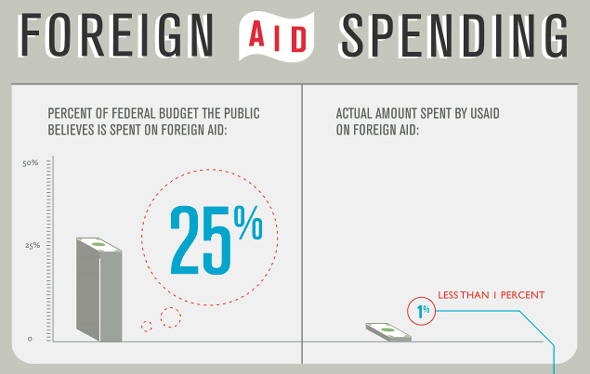
Image Credit: “Foreign Aid Spending,” courtesy of visual.ly user maggie, published by USAID. -
Rich Thorsten on Water Sanitation, Population, and Urbanization in the Developing World
›“For the first time in human history, more than one half of the world’s population now lives in urban areas, and some of the largest and fastest growing population centers in the world – countries like India, China, parts of sub-Saharan Africa – are in areas where water resources are becoming more and more scarce,” said Water.org’s Rich Thorsten in a recent interview with ECSP.
Thorsten serves as director of international programs for Water.org, which partners with local communities, governments, and NGOs across Central America, South Asia, and Africa to bring improved water sanitation to at-need rural and urban populations. He emphasized that ensuring access to clean water has a number of positive spillover effects, ranging from improved prospects for economic development to greater social stability, since access to non-polluted water supplies removes one potential source of tension within and between communities.
Community Health
The greatest benefit of improved sanitation services, however, comes in the form of enhanced public health outcomes. “I would definitely say there is a strong correlation” between the two, Thorsten asserted. “Water and sanitation-related diseases are related to the deaths of at least 3.5 million people every year in the developing world – not to mention millions of hours and dollars that are lost to treating health problems and coping with health problems as a result of poor [water] access and hygiene practices.”
Thorsten said that community participation has been a key aspect of ensuring the sustainability of Water.org’s projects. To pave the way for continued gains in economic development and public health, he said they work alongside water users, engineers, and government officials in target communities to make those parties stakeholders in the infrastructure development process. Fostering a sense of community ownership of sanitation projects helps reduce the likelihood that infrastructure will fall into disrepair or disuse after the initial programming intervention has been conducted.
Given that improving water-sanitation access for the world’s poor is a key element of the UN Millennium Development Goals, Thorsten said he is pleased the subject seems to be attracting more attention within the policymaking and development communities. Despite the positive momentum, however, he acknowledged the fight to ensure clean-water access for the developing world will remain an uphill battle.
“When one considers that….about 2.6 billion people lack access to basic sanitation, that there’s more people in the world that have access to a cell phone than a pit latrine or a toilet, it’s still a very daunting task that will require a lot more investment, commitment, and attention in order to improve the situation for billions of people,” Thorsten said.
Sources: UN.
The “Pop Audio” series is also available as podcasts on iTunes. -
John Donnelly, Global Post
Family Planning and Seven Billion at the Aspen Institute
›September 9, 2011 // By Wilson Center Staff
The original version of this article, by John Donnelly, appeared on Global Post.
Sometime this fall, the world’s population will reach 7 billion people. Experts now forecast that by 2050, the population could be 10 billion.
Those numbers, said the former presidents of Chile and Latvia at an event in Washington D.C., Wednesday night, should force policy makers to focus more intently on making family planning much more widely available in the developing world.
“When we are 9, 10 billion people, what are we going to do? Go to Mars? Go to the moon?” said Michelle Bachelet, the former president of Chile and now the Under Secretary-General and Executive Director of UN Women, the latest agency created by the United Nations. “We are really going to have huge problems. Family planning is a huge issue.”
Her comments came during a series of discussions organized by Aspen Global Health and Development called “7 Billion: Conversations that Matter.” The talks, funded in part by the U.S. Agency for International Development, have often centered on global health issues, and Wednesday’s event was no different.
Continue reading on Global Post.
Video Credit: The Aspen Institute. -
Alex Evans, Global Dashboard
Is it Time for Sustainable Development Goals?
›September 8, 2011 // By Wilson Center StaffThe original version of this article, by Alex Evans, appeared on Global Dashboard.
From MDGs to…SDGs? That’s one of the ideas swirling around in discussions ahead of the Rio 2012 sustainable development summit next year, anyway.
You can see the attraction. With less than a year to go, there are precious few concrete ideas on the table for what the summit might produce, especially in the area of “institutional framework for sustainable development,” one of two key themes for the event (sure, there’s much talk of a new World Environment Organization, but color me very unconvinced of the case for that). So might SDGs help to fill the gap?
Well, that would depend on what they cover. The government of Colombia has set out a proposal for SDGs that would cover various sectors – atmosphere, climate resilience, land degradation, sustainable agriculture, biotech, waste and so forth. This would mainly be about ‘reaffirming’ (that awful word – who, other than diplomats, ever ‘reaffirms’ anything?) commitments made at Rio 1992. But you have to wonder: important though delivery of existing commitments undoubtedly is, is ‘reaffirmation’ of stuff agreed 20 years ago really going to set any pulses racing outside the sustainable development priesthood?
Continue reading on Global Dashboard.
Sources: UN.
Image Credit: Adapted from UNSCD 2012 official logo. -
Watch: Don Lauro on How Integrated Development Deepens Community Involvement
›September 7, 2011 // By Schuyler NullPopulation, health, and environment (PHE) projects address an impressive range of issues – natural resource management, family planning, maternal and child health, water, sanitation, nutrition, and strengthening health systems – but perhaps their most important advantage is the level of community involvement elicited, said long-time PHE expert Don Lauro in an interview with ECSP.
“There’s a depth to these programs,” Lauro said. Tools like rural participatory appraisal allow communities to map out their problems and then come up with solutions on their own. “If you get deep enough, it becomes they who own the project, and I think that that’s your ultimate goal,” he explained. “You have a much greater prospect for sustainability of that effort, no matter what happens to the funding.”
Lauro recently visited the USAID-funded BALANCED Project in Tanzania as part of a wider look at integrated development projects. He emphasized that what exactly this integrated approach is called – be it PHE, HELP, or HELPS – is insignificant; what matters is that these disparate elements are combined. -
Jennifer Dabbs Sciubba, The Philadelphia Inquirer
Family Planning Can Help in Afghanistan
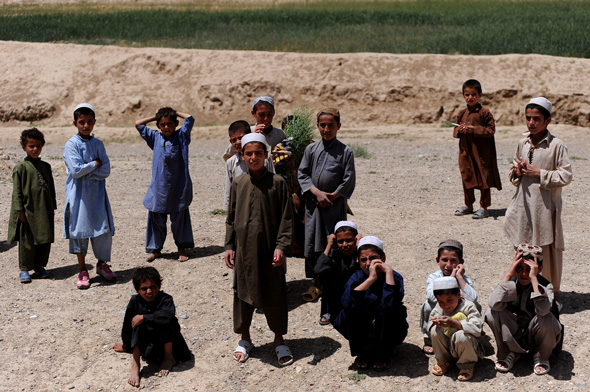
›September 6, 2011 // By Wilson Center StaffThe original version of this op-ed, by Jennifer Dabbs Sciubba, appeared in The Philadelphia Inquirer.
Most experts agree that the mark of long-term success in Afghanistan will be stable governance that allows the economy, democracy, and the people to flourish. Many factors will determine that, but a major one that seems to be left out of most high-level conversations is population.
Afghanistan is a country of 31 million people, but that number will double by 2035, according to the most recent UN projections, and could reach 126 million by midcentury. That’s 95 million more Afghans to govern, clothe, feed, and employ.
Without attention to population, countries like Afghanistan and Pakistan stand a good chance of staying mired in poverty, conflict, and corrupt, repressive government. That is why sustained investment in family planning by the United States and other countries would do more to stabilize the political climate there than any other foreign policy initiative. Though efforts by the Afghan government to provide contraceptives have met some resistance by conservative Muslim groups, the success of family planning in other Muslim states demonstrates that it can be effective.
Continue reading on The Philadelphia Inquirer.
Sources: UN Population Division.
Photo Credit: “100430-F-2616H-050,” courtesy of flickr user Kenny Holston 21 (Kenny Holston).
 A Publication of the Stimson Center.