-
Kangaroo Mother Care: A Critical Role in Welcoming the Tiniest Lives
›
“When babies are born early, they actually are not prepared to be in an environment that’s below [the temperature] of the human body, and they have to start pulling calories to be able to keep their body temperature at 37 degrees Celsius,” said Dr. Ann Hansen, a neonatologist at the Neonatal Intensive Care Unit at Boston Children’s Hospital and Founder of the Global Newborn Solution during a recent event held in commemoration of World Prematurity Day. “To keep them in what we call a thermal neutral environment, they need to have an external heat source.”
-
Low-Carbon Transitions: A Spur (and a Solution) to Colonial Violence?
›
At the recent G20 meeting in June 2024 in Rio de Janeiro, United Nations Secretary General António Guterres gave an ominous warning: “Unless we limit global temperature rise to 1.5 degrees Celsius, spiraling disasters will devastate every economy.” Guterres implored governments to “speed-up the just transition from fossil fuels to renewables,” and declared that “the end of the fossil fuel age is inevitable.”
-
The Traumas of Unplanned Decarbonization in Fragile States
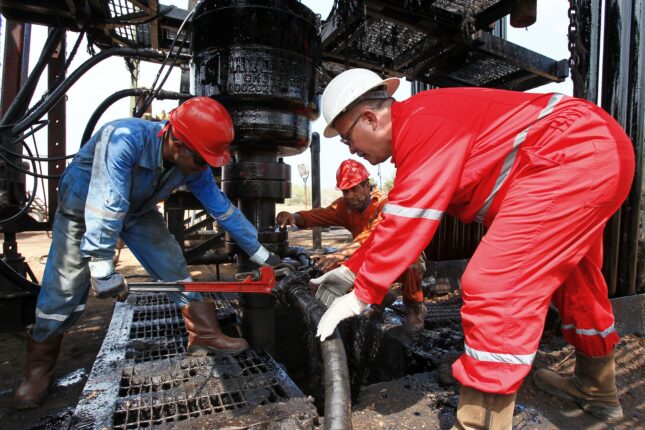
›It is widely recognized that oil states are rarely democratic, and often conflict-prone. As these governments wind down their dependence on this toxic resource as part of broader global efforts to decarbonize, one might imagine that the end of oil will spell a better future for the citizens of oil-producing countries. Sadly, a look at the cases of fragile fossil fuel producing states (FFFPs) suggests that this may not be the case.
-
ECSP Weekly Watch | December 16 – 20
›A window into what we’re reading at the Wilson Center’s Environmental Change and Security Program
Humanitarians Highlight the Climate-Conflict Nexus (The New Humanitarian)
Climate change’s disproportionate impacts on vulnerable populations exacerbate socioeconomic inequalities and conflict, particularly during natural disasters. This vexed connection has led humanitarians and peacebuilders increasingly to address climate and conflict challenges together in order to provide integrated relief, recovery, and aid.
-
The Struggle Against Plastic Choking the Mekong
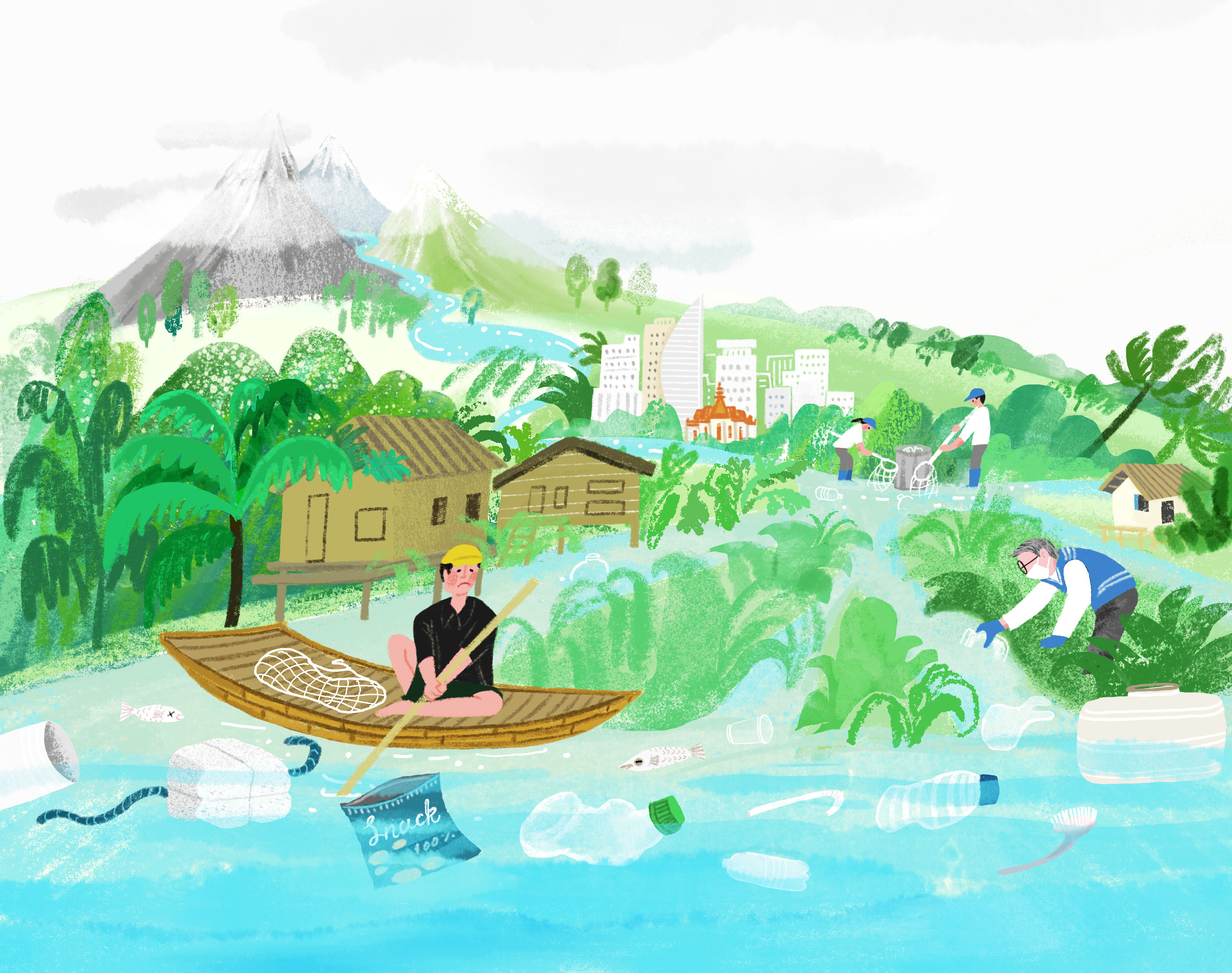
›China Environment Forum // Guest Contributor // Vulnerable Deltas // December 19, 2024 // By Anton L DelgadoOn Son Island in Vietnam’s Mekong Delta, Le Trung Tin scatters fish feed into his ponds, where dozens of snakehead fish leap through the surface in synchronised bursts. “I taught them how to do that,” he says proudly, tossing another handful of feed at his fish.
The scene looks idyllic, but Le’s fish farm is a reluctant response to an escalating crisis. For decades, he made his living fishing the Hau River, a distributary of the Mekong. But in recent years, plastic waste clogged his nets and strangled the fish. “I had no choice but to stop,” he says. “Everything was tangled – trash, nets, even the fish themselves. It was hopeless.”
-
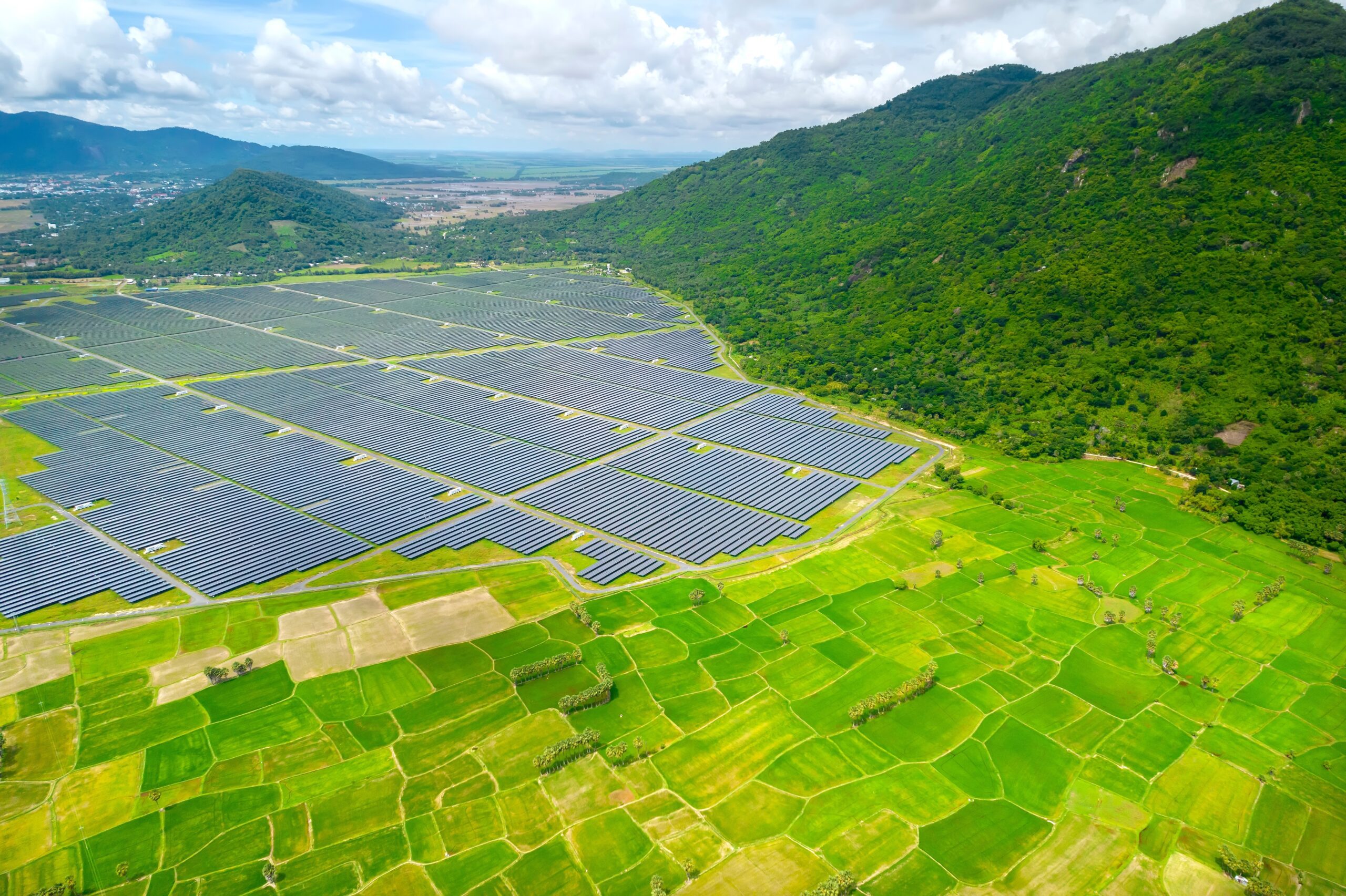
A Little Help from My Friends: Chinese Clean Energy Investments in Vietnam
›China and the Global Energy Transition // China Environment Forum // Guest Contributor // December 19, 2024 // By Linjie Bao & Diego MonteroIn his speech on the world’s struggle against poverty at the 19th G20 Summit in Rio de Janeiro in November 2024, China’s President Xi Jinping, cited his country’s standout track record of wealth creation, and exulted: “If China can make it, other developing countries can make it too.
China’s promise to guide the Global South on the path toward modernization has included support for green and sustainable development. Yet its pledge also holds a central environmental challenge, especially as the share of global greenhouse gas emissions from emerging markets and developing economies continues to increase.
-
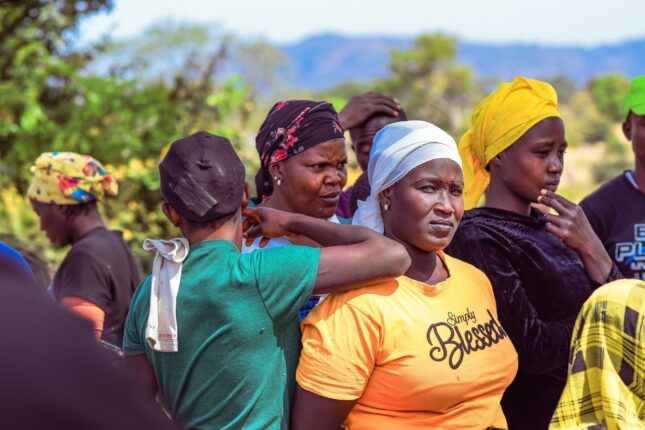
Rethinking Peacebuilding in Northeastern Nigeria
›In October 2024, women from countries across the globe converged on New York for the United Nations Security Council’s annual open debate on Women, Peace and Security (WPS).
In Nigeria, however, thousands of women and girls were sighing in despair. Many of them were thinking about where they might find their next meal. A humanitarian crisis in Nigeria’s northeast region remains critical, and people living there are in dire need of food, clothing and shelter.
-
ECSP Weekly Watch | December 9 – 13
›A window into what we’re reading at the Wilson Center’s Environmental Change and Security Program
Mekong River Development Faces Public Outcry (Mongabay)
The Mekong River flows through China, Myanmar, Laos, Thailand, Cambodia, and Vietnam—and a new development on this waterway near the downstream Thailand-Laos border has triggered protests in Thailand. The Pak Beng hydropower development is a joint project of China Datang Overseas Investment and Thailand-based Gulf Energy Development which is estimated to generate 912 megawatts of power to be sold to Thailand’s state energy company.
 A Publication of the Stimson Center.