
-
Keep Moving Forward: Refugee Resilience and Citizen Diplomacy
›August 15, 2018 // By John Thon Majok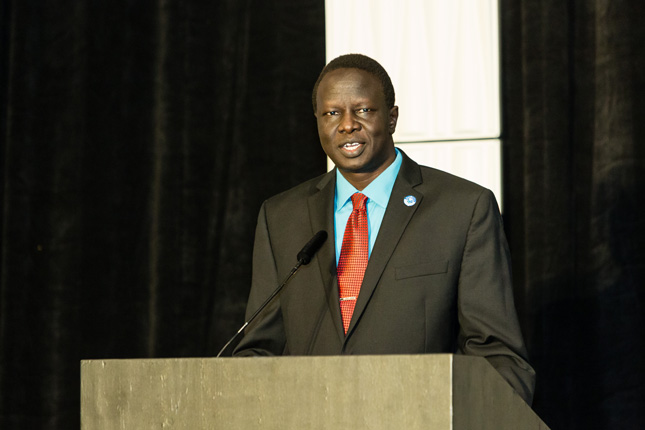
More than 17 years ago, I came to the United States as part of a refugee group known as the “Lost Boys” of Sudan. In 1987, civil war separated me from my parents for almost 10 years. After 13 years of living in limbo in refugee camps, I was given the opportunity to settle in Tucson, Arizona, where I quickly integrated myself into the American society as a productive citizen. My story demonstrates the resilience paradox: Exposure to prior hardships helps us become more resilient.
-
Water Security in a New Age of Nationalism
›
The idea of a “new middle” or “third way”—a blend of neo-liberal economic doctrines and social policies that was supposed to overcome the dichotomy between mixed economy and free market paradigms—more or less dominated U.S. and European politics for the last two decades. But today, this centrist consensus has been upended by a wave of populist, nationalist parties. Many have won over their electorates by questioning the benefits of free trade and globalization (as well as the international institutions that espouse them), while pursuing expansionary domestic economic policies.
-
Death From Delay: Improving Maternal Health Care in Conflict Zones
›How much time passes before a woman—or her relatives—decide to seek care or emergency medical services during pregnancy? It often depends on how much they know about the services available.This information may be hard to come by in conflict-affected areas, especially among internally displaced women. According to a retrospective study of health care during the 2006 war in Lebanon, 80 percent of Lebanese pregnant women before the war sought antenatal care, while the share of displaced women seeking care was only 34.5 percent.
-
Everybody Counts: Maternal Mortality
›It’s 2018, so why are women still dying in childbirth? This episode of Everybody Counts, hosted by Jennifer D. Sciubba, a professor of political demography at Rhodes College, explores why maternal mortality is a global issue, what policy solutions can keep mothers healthy, and why valuing women is at the heart of the issue. -
Europe Takes the Lead in Climate, Energy, and Security
›With the tumultuous NATO summit and a simmering trade war dominating stateside headlines last month, the European Union’s progress on climate-security connections has received little attention. After the U.S. government rolled back its significant efforts in early 2017, the EU and its leading members—particularly Sweden and Germany—picked up the ball. Three significant events herald what could be the start of a new era of climate-security policymaking—one under European leadership.
-
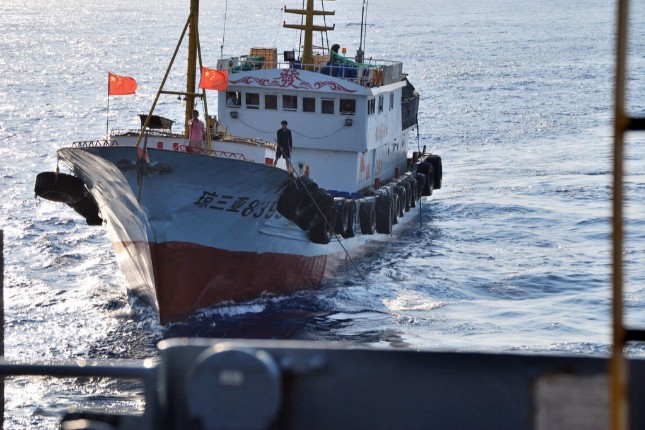
Like Water and Oil: Fish as a Geostrategic Resource
›Access to and competition over natural resources has been one of the most common triggers for conflict. Throughout the centuries, countries and communities have fought over productive agricultural land, trade routes, spices, textiles, opium, and oil, to name just a few. But the battle over one natural resource—fish—has long been overlooked. As trends in the global fish industry increasingly mirror the conflict-ridden oil sector, fish may become the newest addition to the list of resources driving geopolitical competition. There are five parallels between oil and fish that call for increasing the sustainability of the fishing industry, or we might find ourselves facing what U.S. Coast Guard Captain Jay Caputo has called “a global fish war.”
-
Women’s Health, Population, Water, and Waste: The Top Posts for July 2018
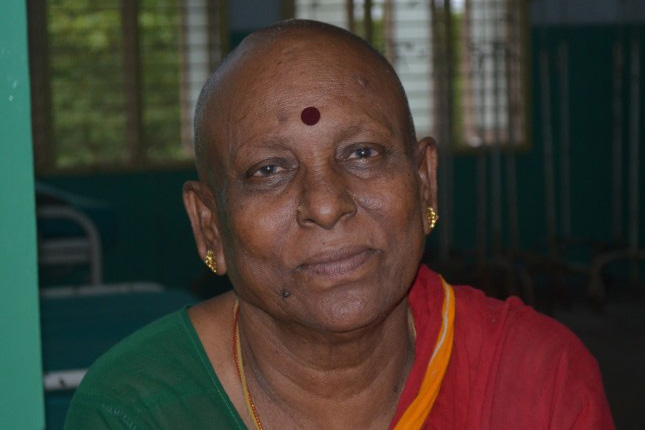
›Breast and cervical cancer, the leading forms of cancer among women in India, threaten not only women’s physical health but also their mental health, due to the stigma it brings to them and their families. In July’s top post, Yuval Cohen writes about Wilson Center Public Policy Fellow Cecilia Van Hollen’s research on the connections between agricultural chemicals, breastfeeding, gendered work, poverty, and spiritual beliefs in India, featured in her upcoming book, “The Curse of the Kali Yuga: Searching for Meaning and Care for Cancer in India.”
-
Parfait Eloundou-Enyegue: Moving from Laundry Lists to Bottom Lines
›“A lot of the advocacy of family planning has been built around establishing a long list of the many ways in which family planning can be relevant” to other development goals, says Parfait Eloundou-Enyegue of Cornell University in our latest Friday Podcast. While comprehensive accounts of the ways family planning access benefits communities, these “laundry lists” are not “clear, synthetic, or integrative,” he says.
 A Publication of the Stimson Center.

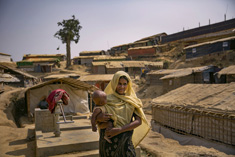 How much time passes before a woman—or her relatives—decide to seek care or emergency medical services during pregnancy? It often depends on how much they know about the services available.
 It’s 2018, so why are women still dying in childbirth? This episode of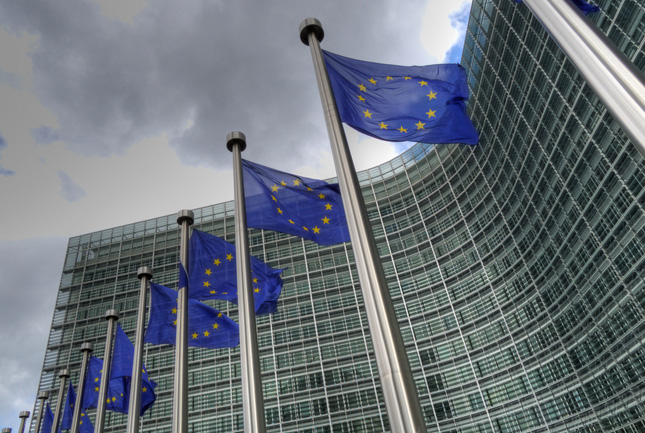
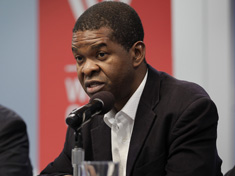 “A lot of the advocacy of family planning has been built around establishing a long list of the many ways in which family planning can be relevant” to other development goals, says Parfait Eloundou-Enyegue of Cornell University in our latest Friday Podcast. While comprehensive accounts of the ways family planning access benefits communities, these “laundry lists” are not “clear, synthetic, or integrative,” he says.

