-
Feeding Unrest: A Closer Look at the Relationship Between Food Prices and Sociopolitical Conflict
›
From the Roman poet Juvenal’s observations about bread and circuses to Marie Antoinette’s proclamation, “let them eat cake!” the link between food and political stability is well established in pop culture. In academic and policy circles, however, it’s a source of considerable debate.
-
Dividend or Divide? Africa’s Demographic Challenge
›
“Sub-Saharan Africa’s young people are in effect the global labor force of the future,” said Jack Goldstone at the Wilson Center on October 15. “Whether they are productive, how large that cohort turns out to be, whether they find work or not, is going to have a bearing, I think, on all of us.” [Video Below]
-
Integrated Development Programs Work to Expand Conservation and Health Efforts in Uganda and Madagascar
›As is becoming clear, climate change, environmental degradation, population, and poverty alleviation are inextricably linked in many parts of the world. [Video Below]
-
Is Food Aid Helpful or Harmful in Conflict-Affected Areas?
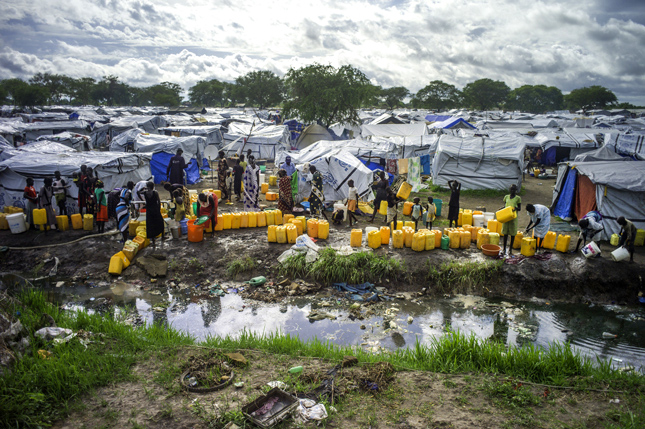
›Food aid is one of the most common humanitarian interventions, but it has come under increasing scrutiny from some observers who charge it may not be an effective means of addressing food security and may actually make matters worse. Two recent studies examine the relationship between food aid and conflict, shedding light on both sides of an ongoing debate. -
Paola Adriázola and Stephan Wolters, ECC Platform
Investing in Collaboration to Manage Natural Resource Conflict
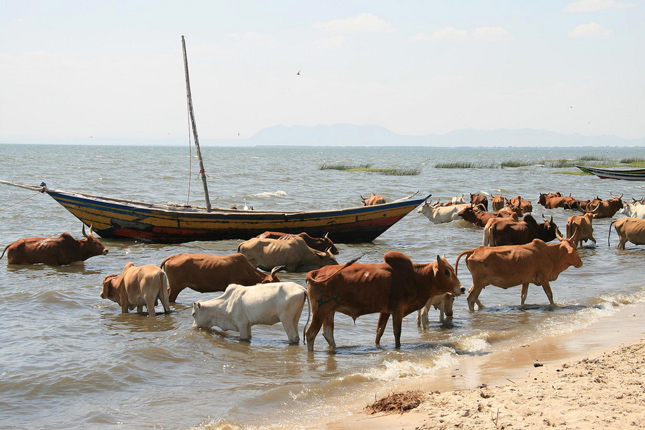
›September 25, 2014 // By Wilson Center StaffConflict over environmental resources endangers rural people’s livelihoods and can increase the risk of broader social conflict. Yet joint action to sustain shared resources can also be a powerful means for community building. The Strengthening Aquatic Resource Governance (STARGO) project demonstrated this in three ecoregions: Lake Victoria, with a focus on Uganda; Lake Kariba, with a focus on Zambia; and Tonle Sap Lake in Cambodia. The results of the project were released at an event in Berlin in early July 2014.
-
Effective Conservation Efforts Must Recognize Livelihoods, Participatory Decision-Making, Research Finds
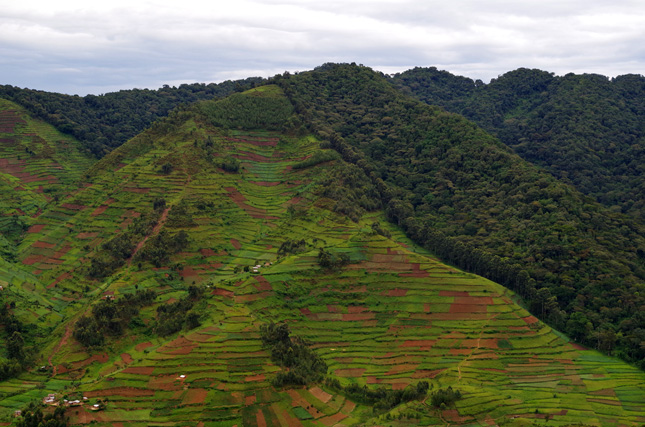
›A new report from the International Institute for Environment and Development seeks to understand why Uganda’s Bwindi Impenetrable National Park continues to be exploited despite park officials’ implementation of “integrated conservation and development” (ICD) efforts. The study finds that local people’s perceptions of the benefits of the integrated conservation and development vary depending on five primary factors: age, level of education, homestead distance to the national park, quality of life, and wealth. -
What Can the Environmental Community Learn From the Military? Interview With Chad Briggs on Scenario Planning
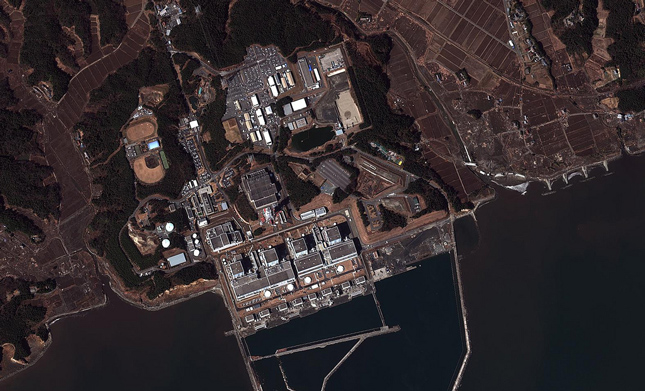
›September 8, 2014 // By Moses JacksonIs it possible to prepare for the unexpected? Could anyone have foreseen, for instance, a nuclear meltdown triggered by an earthquake-induced tsunami? Or a brutal band of transnational militants quickly capturing Iraq’s largest dam while attempting to establish a new Islamic caliphate? Perhaps not exactly, but that shouldn’t stop us from anticipating unlikely events, says Chad Briggs, a risk assessment expert and strategy director of consulting firm GlobalInt.
-
Opportunity Costs: Evidence Suggests Variability, Not Scarcity, Primary Driver of Water Conflict
›Nearly 1 billion people lack reliable access to clean drinking water today. A report by the Water Resources Group projects that by 2030 annual global freshwater needs will reach 6.9 trillion cubic meters – 64 percent more than the existing accessible, reliable, and sustainable supply. This forecast, while alarming, likely understates the magnitude of tomorrow’s water challenge, as it does not account for the impacts of climate change.
Showing posts from category Uganda.