-
Planning to Move: Relocating Coastal Communities in the United States
› Sea-level rise will put approximately 13 million coastal Americans at risk of displacement by 2100, but the first to move will be the most vulnerable communities. In Reaching Higher Ground: Avenues to Secure and Manage New Land for Communities Displaced by Climate Change, Wilson Center Global Fellow Maxine Burkett and her coauthors look at Native American communities on the frontlines of climate change as a model for how vulnerable coastal communities can successfully relocate. Currently, there is no central mechanism within the federal government for relocating communities displaced by climate change. Federally recognized Native American communities have historically coexisted alongside the United States government as sovereign entities, and their many avenues – legal, policy, and corporate – to acquire land could provide a starting point for addressing this imminent challenge. The authors identify tools communities can use to secure new homes and preserve their ownership of evacuated lands.
 -
People not Polar Bears: National Security and the Changing Climate
›
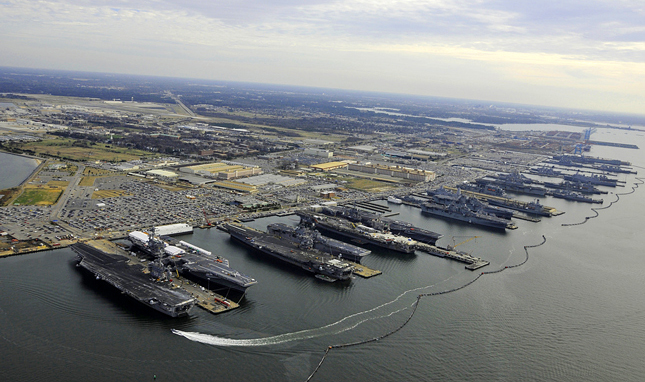
“If we really cared about the polar bears, we would have done something,” quipped retired U.S. Navy Rear Admiral David Titley, who gave an Environmental Research and Education Distinguished Lecture at the National Science Foundation on June 27, 2017. Titley framed climate change in terms of U.S. national security interests, focusing on infrastructure, the changing Arctic, and how environmental factors can exacerbate conflict.
-
Top 5 Posts for June 2017
›Water, water everywhere but not a drop to drink: All five of the most popular posts last month focused on water scarcity.
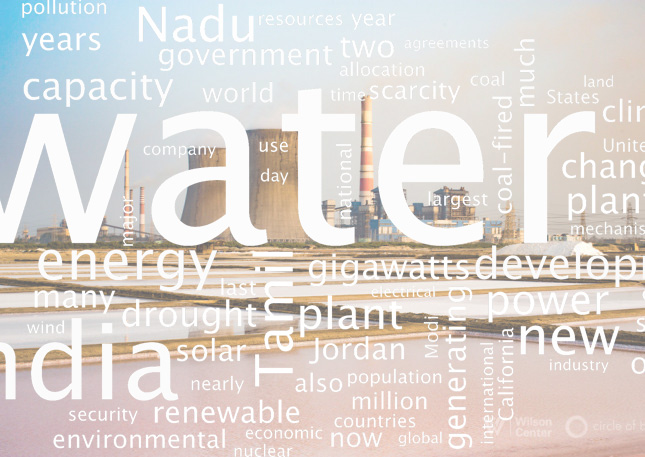
The final two parts of our “Choke Point: Tamil Nadu” series, which explores the conflicting demands for water, food, and energy in the South Indian state, took the top spots. In June’s most popular post, Circle of Blue’s Keith Schneider reports on Tamil Nadu’s leadership in India’s transition to solar and wind energy, which use far less of the country’s scarce water resources than coal and nuclear power plants. Schneider also wrote “New Media Helps Galvanize Tamil Nadu to Fight a Toxic Legacy,” which describes an environmental activist’s fight against industrial water contamination.
-
Ceding U.S. Leadership in Advanced Energy Is a National Security Risk, Says Military Advisory Board
›June 28, 2017 // By Anuj Krishnamurthy“As new energy options emerge to meet global demand, nations that lead stand to gain; should the U.S. sit on the sidelines, it does so at considerable risk to our national security,” advises the latest report from CNA’s Military Advisory Board (MAB), a group of retired generals and admirals.
-
David Reed, World Wildlife Fund-US
U.S. National Security and Prosperity Under Rising Pressure From Water Stress
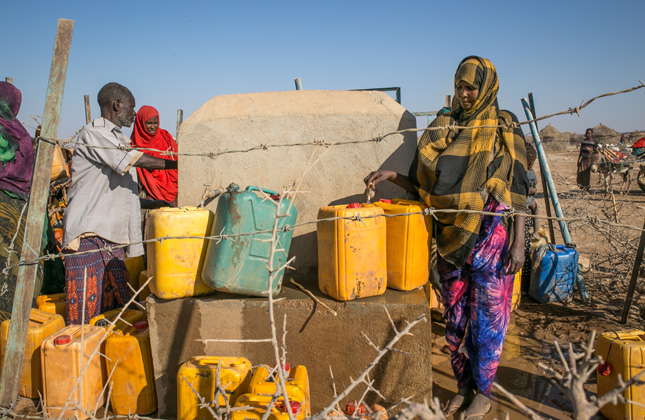
›U.S. prosperity and national security depend directly on the prosperity and stability of our partner countries and competing countries around the world. Today, water-driven stresses are, with increasing frequency, undermining economic productivity, weakening governance systems, and fraying social cohesion. Water scarcity has created a context of human and societal need wherein water stress has undermined the vitality of rural livelihoods, driven broad migratory movements, become a weapon of war, contributed to the growth of insurgencies and terrorist networks, and given rise to increased demand for U.S. development, humanitarian, and military assistance.
-
No Room for Waste: Honolulu’s Sludge Plant Points Toward More Sustainable Urban Development
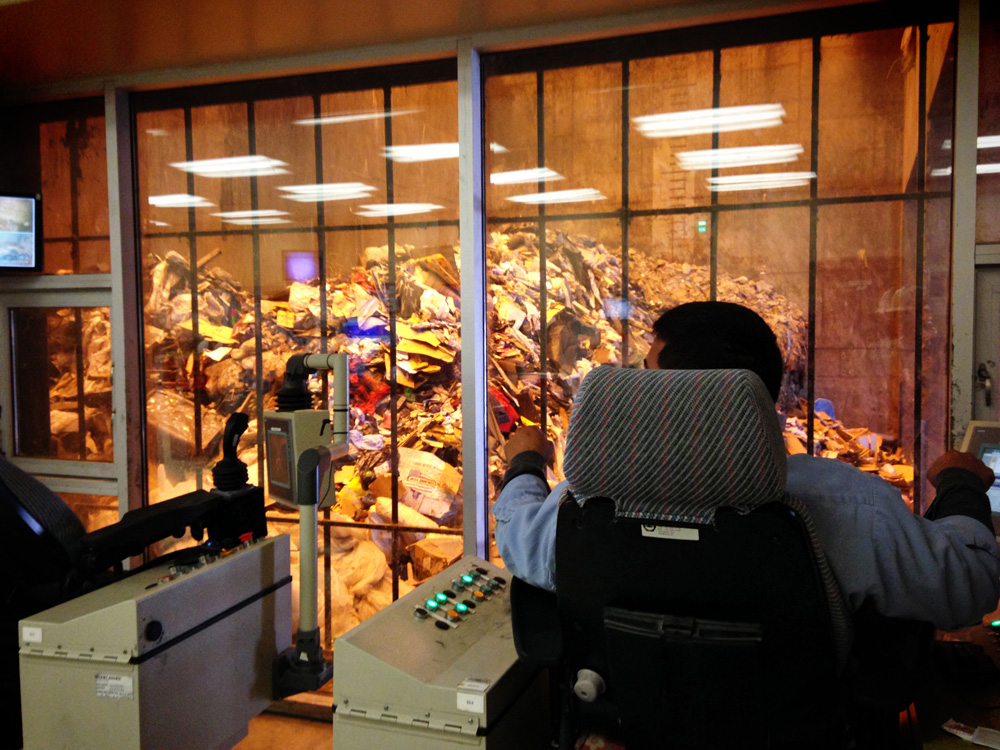
›HONOLULU – Sludge. The final, unwanted byproduct of a toilet flush. The semi-solid stuff that even wastewater treatment plants send packing to the landfill. Unseen in the steel pipes snaking high on the exterior of Honolulu’s H-POWER plant, sludge is injected into a massive boiler where it joins the city’s trash in a roaring inferno. From the gravel lot outside, it all seems very antiseptic and smells less than a stroll past the neighborhood dumpster. But the 70-megawatt waste-to-energy facility is a workhorse, processing as much as 2,000 tons of refuse each day from Oahu’s 1 million residents. All told, it generates up to 10 percent of the electricity needed to power this Pacific island.
-
Citizen Science Is Making it Harder for China’s Biggest Polluters to Hide
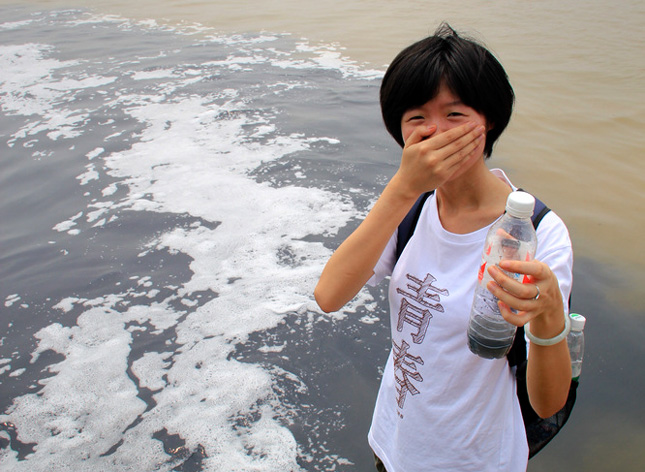
›In 2016, the Environmental Protection Agency charged its federal advisory committee with exploring how citizen science and crowdsourcing should be integrated into the agency’s mission. The resulting report eloquently describes how if the environment is to be protected then it’s the duty of all – the government, institutions, and citizens – to work together to achieve this.
-
Former Defense Officials, Officers Discuss Climate Change and National Security on Capitol Hill
›“There’s a lot you can do to mitigate risk once you acknowledge the risk exists,” said John Conger, senior advisor at the Center for Strategic and International Studies at a June 5th briefing on Capitol Hill. Convened by the Environmental and Energy Study Institute, Center for Climate and Security, and the Henry M. Jackson Foundation, the panel of former Department of Defense (DOD) officials and retired military officers included Sherri Goodman, senior fellow at the Wilson Center, and three members of the Military Advisory Board: Brigadier General Gerald Galloway, General Ron Keys, and Rear Admiral Ann C. Phillips.
Showing posts from category U.S..
 Sea-level rise will put approximately 13 million coastal Americans at risk of displacement by 2100, but the first to move will be the most vulnerable communities. In