• woodrow wilson center
  • ecsp

New Security Beat

Subscribe:
  • rss
  • mail-to
  • Who We Are
  • Topics
    • Population
    • Environment
    • Security
    • Health
    • Development
  • Columns
    • China Environment Forum
    • Choke Point
    • Dot-Mom
    • Friday Podcasts
    • Navigating the Poles
    • Reading Radar
  • Multimedia
    • Water Stories (Podcast Series)
    • Backdraft (Podcast Series)
    • Tracking the Energy Titans (Interactive)
  • Films
    • Water, Conflict, and Peacebuilding (Animated Short)
    • Paving the Way (Ethiopia)
    • Broken Landscape (India)
    • Scaling the Mountain (Nepal)
    • Healthy People, Healthy Environment (Tanzania)
  • Publications
  • Events
  • Contact Us

NewSecurityBeat

The blog of the Wilson Center's Environmental Change and Security Program
Showing posts from category U.S..

  • MCC Mobilizes Private-Sector Investment to Expand Access to Water in Jordan

    ›
    Guest Contributor  //  August 14, 2017  //  By Alex Russin
    AsSamra_photo

    In Jordan—one of the driest, most water poor countries in the world—population growth is straining the country’s aging infrastructure and limited water resources. As the Jordan country director for the Millennium Challenge Corporation (MCC), I’ve met urban residents and business owners who have only received water from the city utility once every two weeks, relying on storage tanks to fill the gaps. I’ve spoken with water utility managers who could no longer keep up with urgent repairs, leading to bursting water pipes and sewage overflowing into streets. And farmers in the Jordan Valley have told me that each year their wells have grown drier, and they feared the next generation would be forced to give up farming olives, tomatoes, grapes, and strawberries.

    MORE
  • Feeding the Future? One Year After the Global Food Security Act

    ›
    On the Beat  //  August 10, 2017  //  By Anuj Krishnamurthy
    Balkh-Wheat-Harvest

    “The United States should maintain a unique leadership role in global food security,” said former Senator Richard Lugar at a recent Center for International & Strategic Studies event, “The U.S. Global Food Security Strategy: Progress, Setbacks, and Forward Momentum,” which marked the one-year anniversary of the passage of the Global Food Security Act. Signed into law on July 20, 2016, the act required the interagency Feed the Future initiative to develop the first-ever U.S. Global Food Security Strategy.

    MORE
  • Water-Energy Nexus in the Himalayas

    ›
    August 8, 2017  //  By Keith Schneider & Chelsea Spangler
    Tehri-Dam

    This article is a summary of the chapter by Keith Schneider, senior editor and chief correspondent for Circle of Blue, in the new book, Water, Security and U.S. Foreign Policy. The book was produced by the World Wildlife Fund-US and edited by David Reed. The summary was prepared by Chelsea Spangler. 

    The region at the base of the Himalayas faces difficult tradeoffs when allocating freshwater resources for energy production versus agricultural, industrial, and domestic uses. This is one of the most ecologically unstable areas on Earth, and weather patterns are becoming increasingly irregular. On one end of the spectrum, water shortages frequently disrupt energy production, which depends largely on water-intensive coal and hydropower plants. The opposite extreme is also a factor: Dozens of hydropower plants in the Himalayas have been damaged or destroyed by severe floods caused by unusually heavy rainfall in recent years. Construction of new power plants faces increasing resistance from local communities, resulting in social disruptions and instability. In order to ensure both energy security and water security for their countries, governments must look beyond hydropower and coal.

    MORE
  • Global Climate Cooperation, Post-Paris: Can Subnational Agreements Pick Up the Slack?

    ›
    China Environment Forum  //  July 27, 2017  //  By Emily Calvert
    Jerry-Brown-China

    At the G20 Summit in Hamburg early July 2017, leaders of the world’s strongest economies issued a joint statement reaffirming their commitment to the Paris Climate Accord. President Trump—the lone outsider—had announced in early June he would withdraw the United States from the agreement. As China doubles down on meeting its Paris targets, the chasm between the world’s two largest emitters and energy consumers continues to widen as previous joint efforts to curb carbon emissions fade away. Post-summit headlines focusing on the “G19” nations suggest America has abandoned international cooperation against climate change. But some U.S. cities and states are continuing the climate fight with their Chinese counterparts.

    MORE
  • Security Links: An Emerging Congressional Common Ground on Climate Change?

    ›
    July 26, 2017  //  By Lauren Herzer Risi
    USAID-Military-Airlift

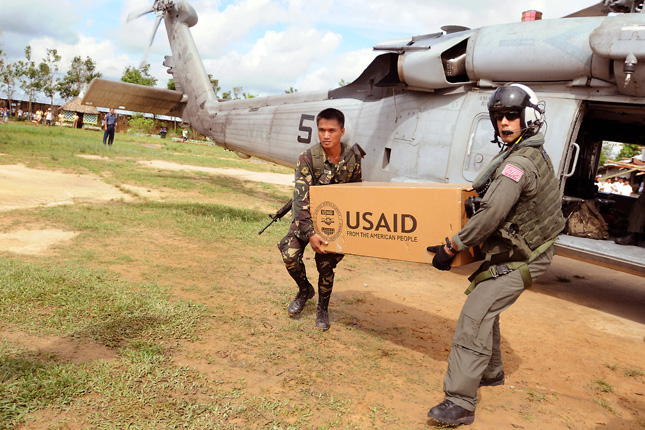
    Earlier this month 46 House Republicans voted with Democrats to protect an amendment in the current National Defense Authorization Act that acknowledges that “climate change is a direct threat to the national security of the United States” and requires the secretary of defense to provide “a report on the vulnerability to military installations and combatant command requirements resulting from climate change over the next 20 years.”

    MORE
  • To Fight Global Water Stress, U.S. Foreign Policy Will Need New Strategic Tools

    ›
    From the Wilson Center  //  July 25, 2017  //  By Anuj Krishnamurthy
    Children-Pump

    Capable of upending rural livelihoods, compromising institutions of governance, and inducing new patterns of migration and crime, global water stress has emerged as one of the principal threats to U.S. national security, said David Reed, senior policy advisor at the World Wildlife Fund (WWF) and editor of WWF’s new book, Water, Security and U.S. Foreign Policy, on June 27 at the Wilson Center. Four defense and development leaders – retired U.S. Marine Corps General James L. Jones; Paula Dobrianksy, vice chairwoman of the National Executive Committee of the U.S. Water Partnership; retired U.S. Navy Admiral Lee Gunn, vice chairman of the CNA Military Advisory Board; and Kristalina Georgieva, chief executive of the World Bank – joined Reed for a panel discussion of water’s central role in global stability and prosperity.

    MORE
  • Planning to Move: Relocating Coastal Communities in the United States

    ›
    Reading Radar  //  July 24, 2017  //  By Antony Martel

    Reaching-Higher-GroundSea-level rise will put approximately 13 million coastal Americans at risk of displacement by 2100, but the first to move will be the most vulnerable communities. In Reaching Higher Ground: Avenues to Secure and Manage New Land for Communities Displaced by Climate Change, Wilson Center Global Fellow Maxine Burkett and her coauthors look at Native American communities on the frontlines of climate change as a model for how vulnerable coastal communities can successfully relocate. Currently, there is no central mechanism within the federal government for relocating communities displaced by climate change. Federally recognized Native American communities have historically coexisted alongside the United States government as sovereign entities, and their many avenues – legal, policy, and corporate – to acquire land could provide a starting point for addressing this imminent challenge. The authors identify tools communities can use to secure new homes and preserve their ownership of evacuated lands.

    MORE
  • People not Polar Bears: National Security and the Changing Climate

    ›
    On the Beat  //  July 19, 2017  //  By Arundhati Ponnapa
    B-1_Bombers_on_Diego_Garcia

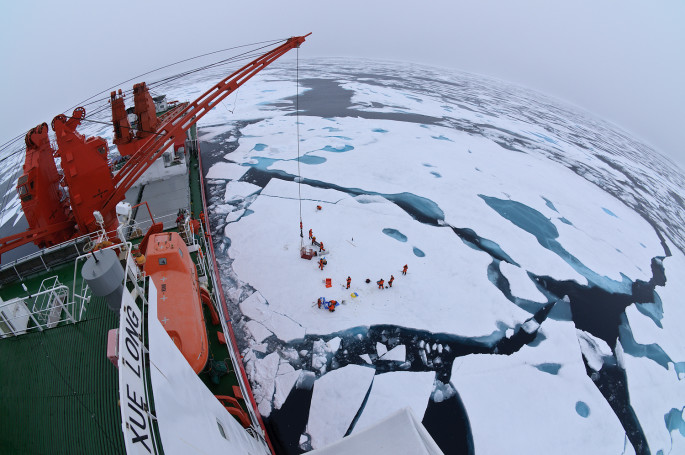
    “If we really cared about the polar bears, we would have done something,” quipped retired U.S. Navy Rear Admiral David Titley, who gave an Environmental Research and Education Distinguished Lecture at the National Science Foundation on June 27, 2017. Titley framed climate change in terms of U.S. national security interests, focusing on infrastructure, the changing Arctic, and how environmental factors can exacerbate conflict.

    MORE
Newer Posts   Older Posts
View full site

Join the Conversation

  • RSS
  • subscribe
  • facebook
  • G+
  • twitter
  • iTunes
  • podomatic
  • youtube
Tweets by NewSecurityBeat

Trending Stories

  • unfccclogo1
  • Pop at COP: Population and Family Planning at the UN Climate Negotiations

Featured Media

Backdraft Podcast

play Backdraft
Podcasts

More »

What You're Saying

  • Volunteers,At,The,Lagos,Food,Bank,Initiative,Outreach,To,Ikotun, Pan-African Response to COVID-19: New Forms of Environmental Peacebuilding Emerge
    Rashida Salifu: Great piece 👍🏾 Africa as a continent has suffered this unfortunate pandemic.But it has also...
  • A desert road near Kuqa An Unholy Trinity: Xinjiang’s Unhealthy Relationship With Coal, Water, and the Quest for Development
    Ismail: It is more historically accurate to refer to Xinjiang as East Turkistan.
  • shutterstock_1779654803 Leverage COVID-19 Data Collection Networks for Environmental Peacebuilding
    Carsten Pran: Thanks for reading! It will be interesting to see how society adapts to droves of new information in...

What We’re Reading

  • Rising rates of food instability in Latin America threaten women and Venezuelan migrants
  • Treetop sensors help Indonesia eavesdrop on forests to cut logging
  • 'Seat at the table': Women's land rights seen as key to climate fight
  • A Surprise in Africa: Air Pollution Falls as Economies Rise
  • Himalayan glacier disaster highlights climate change risks
More »
  • woodrow
  • ecsp
  • RSS Feed
  • YouTube
  • Twitter
  • Facebook
  • Home
  • Who We Are
  • Publications
  • Events
  • Wilson Center
  • Contact Us
  • Print Friendly Page

© Copyright 2007-2021. Environmental Change and Security Program.

Woodrow Wilson International Center for Scholars. All rights reserved.

Developed by Vico Rock Media

Environmental Change and Security Program

Woodrow Wilson International Center for Scholars

Ronald Reagan Building and International Trade Center

  • One Woodrow Wilson Plaza
  • 1300 Pennsylvania Ave., NW
  • Washington, DC 20004-3027

T 202-691-4000