• woodrow wilson center
  • ecsp

New Security Beat

Subscribe:
  • rss
  • mail-to
  • Who We Are
  • Topics
    • Population
    • Environment
    • Security
    • Health
    • Development
  • Columns
    • China Environment Forum
    • Choke Point
    • Dot-Mom
    • Friday Podcasts
    • Navigating the Poles
    • Reading Radar
  • Multimedia
    • Water Stories (Podcast Series)
    • Backdraft (Podcast Series)
    • Tracking the Energy Titans (Interactive)
  • Films
    • Water, Conflict, and Peacebuilding (Animated Short)
    • Paving the Way (Ethiopia)
    • Broken Landscape (India)
    • Scaling the Mountain (Nepal)
    • Healthy People, Healthy Environment (Tanzania)
  • Publications
  • Events
  • Contact Us

NewSecurityBeat

The blog of the Wilson Center's Environmental Change and Security Program
Showing posts from category Middle East.
  • Farzaneh Roudi for the Middle East Program

    Iran Is Reversing Its Population Policy

    ›
    From the Wilson Center  //  August 29, 2012  //  By Wilson Center Staff

    Excerpted below is the introduction by Farzaneh Roudi. The full report is available for download from the Wilson Center’s Middle East Program.

    Once again, the Iranian government is reversing its population policy – its fertility policy, to be more precise. Alarmed by the country’s rapidly aging population, Iran’s Supreme Leader Ayatollah Ali Khamenei is now calling on women to procreate and have more children, and the Iranian Minister of Health and Medical Education Marzieh Vahid Dastjerdi has recently said, “The budget for the population control program has been fully eliminated and such a project no longer exists in the health ministry. The policy of population control does not exist as it did previously.”

    MORE
  • Inside U.S. Climate Security Policy: Geoff Dabelko Interviewed by ISN

    ›
    August 20, 2012  //  By Kate Diamond

    Climate change “has been thought of in many quarters as something that affects folks ‘over there,’ and not as much domestically, and I think that’s a mistake,” said ECSP’s Geoff Dabelko in a recent podcast with the Zurich-based International Relations and Security Network. “I think folks are coming to a realization that there are very high economic, political, and ultimately security stakes for the United States.”

    MORE
  • Iran’s Surprising and Shortsighted Shift on Family Planning

    ›
    August 8, 2012  //  By Elizabeth Leahy Madsen

    In late July, Iran’s government announced that it would no longer fund family planning programs, a dramatic reversal following 20 years of support. The change is especially abrupt for a country that has been lauded as a family planning success story, with thorough rural health services and an educated female population contributing to one of the swiftest demographic transitions in history.

    MORE
  • Emmanuel Karagiannis: Mediterranean Oil and Gas Discoveries Could Change Regional Alignments, Global Energy Equation

    ›
    Eye On  //  From the Wilson Center  //  August 6, 2012  //  By Keenan Dillard

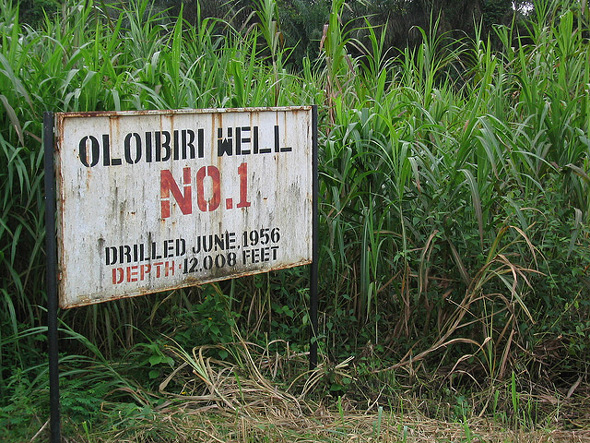
    “The discovery of gas reserves in the eastern Mediterranean comes at a time when world demand for energy is growing rapidly and many are questioning the reliability of supplies from North Africa and the Middle East,” said Emmanuel Karagiannis, assistant professor of Russian and post-Soviet politics at the University of Macedonia, in an interview at the Wilson Center.

    The newly-discovered fields contain about 122 trillion cubic feet of recoverable natural gas reserves, 25 trillion of which are located within Israeli territorial waters. “That’s twice the reserves Libya has,” according to Karagiannis. The remaining fields have been claimed by the Republic of Cyprus, the Turkish Republic of Northern Cyprus, Syria, and Lebanon.

    Europe currently depends on Russia for most of its gas supplies, so the new fields could provide an “important alternative source for European economies,” said Karagiannis.

    The discovery also has the potential to increase stability in the region by serving as an incentive for nations to work together. “For example, Israel and Cyprus have come closer to each other in many respects, including military cooperation,” Karagiannis said. Greece and Israel have also strengthened their relationship, in part due to the historical relationship between Cyprus and Greece but also because the latter could serve as an energy hub to transport gas throughout Europe, he said. “In effect Israel, Greece, and Cyprus could form a new axis of stability in the region.”

    “Turkey can also play a significant part in the business of transporting energy resources to Europe,” Karagiannis said, but Syria and Lebanon, the two other countries that lie adjacent to the newly discovered gas reserves, are less likely to benefit in the near future from the find, given their current political circumstances. “It’s very difficult to imagine their participation in the regional energy projects,” he said. Lebanon has tried and failed to sell offshore exploratory licenses twice due to its lack of a state petroleum administration, while the current uprising against President Bashar al-Assad is preventing any progress in Syria.

    In part as a result of these political challenges, the gas fields also have the potential to generate conflict in the region. There will be a divide between “haves and have-nots,” explained Karagiannis. According to a report by the Institute for National Strategic Studies, “piping Israeli gas to the RoC [Republic of Cyprus] and then onto Turkey, which could be the gateway to the European market, is unlikely due to current tensions between Ankara, the RoC, and Tel Aviv.” Since the discovery of the fields, “Turkey has already issued military threats against Cyprus in order to stop the gas exploration process that is currently taking place in the Cypriot Exclusive Economic Zone,” Karagiannis said. The Israeli government issued a response to the threat, stating that they are committed to protecting energy infrastructure in the region.

    The first new natural gas field in the region is expected to begin full-scale production this year, with two additional fields coming on-line over the next six years.

    Keenan Dillard is a cadet at the United States Military Academy at West Point and an intern with the Woodrow Wilson Center’s Environmental Change and Security Program.

    Sources: Institute for National Strategic Studies, Noble Energy Inc., Turkish Weekly, U.S. Geological Survey.
    MORE
  • World Population Day 2012: Looking Beyond Reproductive Health

    ›
    On the Beat  //  July 11, 2012  //  By Schuyler Null
    How should the seven billion or so of us on Earth mark World Population Day? Today, major global players are focusing on increasing access to family planning around the world. But there are other important aspects to population that also deserve our sustained attention.

    The links between demography and development have come into the limelight over the last few months, first as advocates decried the last minute removal of reproductive rights language from the Rio+20 outcome document and now as the Bill and Melinda Gates Foundation prepares a massive funding push for reproductive health (starting today, not coincidentally).

    “Multiple crises – food, fuel, and financial – have caused significant suffering and served as a wake-up call about the need to pay far more attention to the building blocks of sustainable development,” UN Secretary-General Ban Ki-moon says in an address for today. “Reproductive health is an indispensable part of the sustainable development equation.”

    The sustainable development connection is fairly obvious. Environmental destruction in some of the most biodiversity-rich parts of the world has complex but significant population drivers, as Wilson Center consultant Laurie Mazur explains:
    Human impact on the environment is mediated by a host of factors, including culture, technology, institutions, and market forces. And inequitable socioeconomic systems mean that some human beings have far greater impact than others.

    But some generalizations can be made. We live on a planet dominated and transformed by human activity. As we have become more numerous, we have also become more adept at altering ecosystems for human use, replacing species-rich natural landscapes with simpler monocultures.
    “Often, the value of biodiversity becomes apparent only when it is lost,” Mazur continues. “For example, with the global decline of honeybee populations, growers can now calculate the monetary value of pollination services that were once provided for free by nature. ‘Bee pollination is worth $190 billion,’ said Pavan Sukhdev, a Yale environmental economist, in an interview with Bloomberg. ‘But when did a bee ever send you an invoice?’”

    In other areas, population drivers threaten more basic scarcities: food and water, which in turn impede development and cost human lives. Some of the most successful efforts to address these relationships have combined women’s empowerment, family planning, and basic health interventions with site-based conservation and livelihood efforts.

    But besides reproductive rights, there are other important aspects of population that deserve attention on this day.

    The demographic dividend – a concept that marries population dynamics and development economics – requires more than just fertility decline to take effect in countries. Economic and social policies that prepare and enable young people to enter the workforce are just as important.

    And the Arab Spring helps illustrate the complex relationship between population and democracy. “Among the five countries where revolt took root, those with the earliest success in ousting autocratic leaders also had the most mature age structures and the least youthful populations,” writes Wilson Center consultant and demographer Elizabeth Leahy Madsen. The work of fellow Wilson Center consulting demographer Richard Cincotta shows that countries with very young age structures are prone both to higher incidence of civil conflict and undemocratic governance. What happens next in Egypt, Libya, Yemen, and Syria will further test the connection between youth and democracy.

    In South Asia, Madsen finds that as Afghanistan and Pakistan’s political circumstances have become more entwined, their demographic paths are more closely parallel than expected. “For Afghanistan, given its myriad socioeconomic, political, cultural, and geographic challenges, this is good news. But for Pakistan, where efforts to meet family planning needs have fallen short of capacity, it is not,” she writes in the first issue of the newly re-launched ECSP Report, “Afghanistan, Against the Odds: A Demographic Surprise.”

    In more developed countries, population aging is a concern. At the Wilson Center last year, economists Andrew Mason and Ronald Lee explained the challenges that those on the other side of the “demographic divide” will face in the near future. From 2010 to 2015, 85 countries are projected to witness the largest absolute increase in history of their populations aged 60 and over, straining public welfare systems and reducing labor forces. It’s not the “catastrophe” that it has been portrayed to be in the media, they said, but like many demographic issues, it is a challenge that will require planning for.

    These connections demonstrate the wide importance of population dynamics to understanding how the world works today. Demography is the study of us – all seven billion of us. Demography affects – and is affected by – economics, political stability, health, the environment, food security, foreign policy, development, and conflict. Let’s not overlook that breadth on this World Population Day 2012.

    For more, be sure to read some of our additional resources from the recent archives:
    • Food Security in a Climate-Altered Future: More Than a Supply Problem
    • Taming Hunger in Ethiopia: The Role of Population Dynamics
    • Uganda’s Demographic and Health Challenges Put Into Perspective With Newfound Oil
    • New Surveys Generate Mixed Demographic Signals for East and Southern Africa
    • In Building Resilience for a Changing World, Reproductive Health Is Key
    • Demographic Security 101 (video)
    • Yemen: Revisiting Demography After the Arab Spring
    • Hania Zlotnik Discusses Latest Changes to UN Population Projections (audio)
    • Book Review: ‘World Population Policies’
    • Tunisia’s Shot at Democracy: What Demographics and Recent History Tell Us
    • Joel E. Cohen on Solving the Resource-Population Equation in the Developing World (video)
    Sources: Bloomberg.

    Photo Credit: UN Day Secretary-General Ban Ki-moon with students in October celebrating the seven billion mark, courtesy of Eskinder Debebe/UN Photo.
    MORE
  • Jennifer Dabbs Sciubba, The Huffington Post

    Global Threats Exist, But Also Many Global Demographic Opportunities for the United States

    ›
    July 3, 2012  //  By Wilson Center Staff
    The original version of this article, by Jennifer Dabbs Sciubba, appeared on The Huffington Post.

    Events like the Arab Spring gave birth to a generation of demographic converts in the national security community. Many are now convinced that demography matters because demographers today can clearly show how youthful population profiles in the developing world could lead to conflicts over the next 20 years – a major concern for policymakers.

    Too much focus on demography and conflict, though, means policymakers miss opportunities for cooperation.

    We are used to thinking of the wealthy and stable “Global North” and the poor and tumultuous “Global South,” but a demographic divide within the developing world is emerging, a third category of states that are growing older, more urban, more prosperous, more peaceful, and active in international affairs. These states – particularly India, Brazil, and South Africa – represent opportunities for building U.S. and world security.

    Even as it maintains its longstanding relationships in Europe and elsewhere in the developed world, the U.S. should be more assertive in seeking partnerships with India as both a counterbalance to China and as a global security partner in addressing piracy and terrorism and in distributing international aid.

    Continue reading on The Huffington Post.

    Photo Credit: Tahrir 2011, courtesy of flickr user Denis Bocquet.
    MORE
  • What Are the Most Important Factors in the Failed States Index?

    ›
    Eye On  //  June 29, 2012  //  By Schuyler Null & Carolyn Lamere

    Last week, the Fund for Peace issued its eighth annual Failed States Index (FSI). The index gives 177 countries a score between 1.0 and 10.0 for 12 indicators, ranging from the legitimacy of the state and the security apparatus to demographic pressure and uneven development (high being bad, low being good – see full descriptions of the indicators here). But which of these indicators has the biggest impact? We did a quick analysis of the Failed States Indexes published from 2006 to 2012 to show which of the indicators correlate most with a high score. (We skipped 2005 since the roster of analyzed countries was significantly smaller.)

    MORE
  • Gidon Bromberg at TEDx on Peacebuilding Through Water in the Middle East

    ›
    Eye On  //  June 14, 2012  //  By Carolyn Lamere
    “Cooperation over water is not a privilege, it’s a necessity,” said Gidon Bromberg, co-director of Friends of the Earth Middle East, in a TEDx talk at Yale. He sees the shortage of water in Jordan, Israel, and Palestine as an opportunity to bring these contentious communities together – even more so during this period of upheaval in the region.

    Water woes have long contributed to regional tensions, said Bromberg. Water rights between Israel and Palestine were supposed to be settled during the Oslo accords in 1993, but negotiations were unsuccessful and water discussions were consequently left unfinished. The lack of formal negotiations caused each side to seize whatever resources they could Although Jordan was not part of the negotiations, it does share water resources with Israel and the West Bank and thus has been impacted by the lack of formal allocation processes. Both Jordan and Israel have diverted flow of the Jordan River into dams and irrigation projects. As a result, the Jordan River has lost 98 percent of its historic flow and the Dead Sea has lost one-third of its surface area.

    Today, Israel has restricted Palestinian water use such that Palestinians have access to water only once a week in winter and once every three weeks in the summer, leading them to store water in containers on their roofs, Bromberg said. Though mismanagement is as much to blame as conflict, he notes, Palestinians chafe under the limitations.

    Yet Friends of the Earth Middle East has used this difficult situation to educate the public, propose reforms, and build trust between Palestinian, Jordanian, and Israeli communities. Bromberg highlighted “fear of a small but vocal minority on both sides” as a key factor in preventing dialogue between the communities, but insists that water can bring people together. Neighboring communities have to work together, he said, “not because they’re best friends,” but to improve their own water situations.

    Friends of the Earth provides that opportunity with their Good Water Neighbors project and hopes the trust built between communities extends beyond water issues as well. Since communities have strong motives to solve these problems, they work together more effectively than high-level politicians who may not be as apt to collaborate.

    A positive update on the state of the Jordan River given in an interview with ECSP in October suggests that Bromberg may be on to something.

    Sources: Amnesty International, Friends of the Earth.

    Video Credit: TEDx.
    MORE
Newer Posts   Older Posts
View full site

Join the Conversation

  • RSS
  • subscribe
  • facebook
  • G+
  • twitter
  • iTunes
  • podomatic
  • youtube
Tweets by NewSecurityBeat

Trending Stories

  • unfccclogo1
  • Pop at COP: Population and Family Planning at the UN Climate Negotiations

Featured Media

Backdraft Podcast

play Backdraft
Podcasts

More »

What You're Saying

  • Volunteers,At,The,Lagos,Food,Bank,Initiative,Outreach,To,Ikotun, Pan-African Response to COVID-19: New Forms of Environmental Peacebuilding Emerge
    Rashida Salifu: Great piece 👍🏾 Africa as a continent has suffered this unfortunate pandemic.But it has also...
  • A desert road near Kuqa An Unholy Trinity: Xinjiang’s Unhealthy Relationship With Coal, Water, and the Quest for Development
    Ismail: It is more historically accurate to refer to Xinjiang as East Turkistan.
  • shutterstock_1779654803 Leverage COVID-19 Data Collection Networks for Environmental Peacebuilding
    Carsten Pran: Thanks for reading! It will be interesting to see how society adapts to droves of new information in...

What We’re Reading

  • Rising rates of food instability in Latin America threaten women and Venezuelan migrants
  • Treetop sensors help Indonesia eavesdrop on forests to cut logging
  • 'Seat at the table': Women's land rights seen as key to climate fight
  • A Surprise in Africa: Air Pollution Falls as Economies Rise
  • Himalayan glacier disaster highlights climate change risks
More »
  • woodrow
  • ecsp
  • RSS Feed
  • YouTube
  • Twitter
  • Facebook
  • Home
  • Who We Are
  • Publications
  • Events
  • Wilson Center
  • Contact Us
  • Print Friendly Page

© Copyright 2007-2021. Environmental Change and Security Program.

Woodrow Wilson International Center for Scholars. All rights reserved.

Developed by Vico Rock Media

Environmental Change and Security Program

Woodrow Wilson International Center for Scholars

Ronald Reagan Building and International Trade Center

  • One Woodrow Wilson Plaza
  • 1300 Pennsylvania Ave., NW
  • Washington, DC 20004-3027

T 202-691-4000