-
Demographic and Environmental Dynamics Shape ‘Global Trends 2030’ Scenarios
›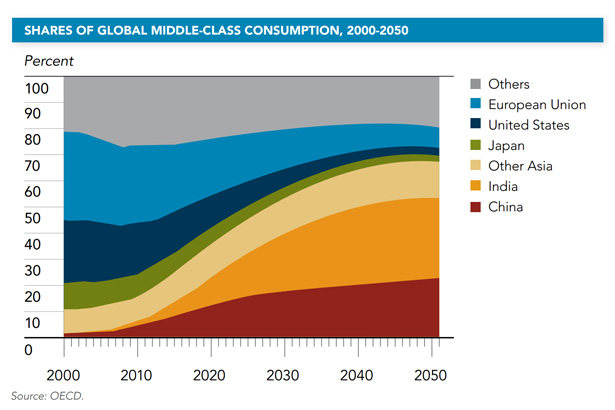
“However rapid change has been over the past couple decades, the rate of change will accelerate in the future,” states the newest quadrennial report from the National Intelligence Council (NIC), Global Trends 2030: Alternative Worlds. Released late last year, the report identifies the “game-changers, megatrends, and black swans” that may determine the trajectory of world affairs over the next 15 years, including demographic dynamics and natural resource scarcity. [Video Below]
-
World Water Day Focuses on Cooperation in the Face of Growing Stress
›March 22, 2013 // By Schuyler Null
Cooperation, not conflict; that’s the theme of this year’s World Water Day. Collaboration over water has been the rule rather than the exception over the past 70 years, UNESCO explained in the launch of their International Year for Water Cooperation initiative earlier this year (which the rest of the UN is thoughtfully supporting).
But the fact that there’s need for such an initiative shows that water conflict and other water issues are not far from the minds of global policymakers. Scarcity, drought, climate change, food security, disease – water impacts people and their governments in so many ways. Here’s a rundown of some of our best related posts.
-
Aqueduct Water Risk Atlas Shows Detailed View of Global Water Vulnerability
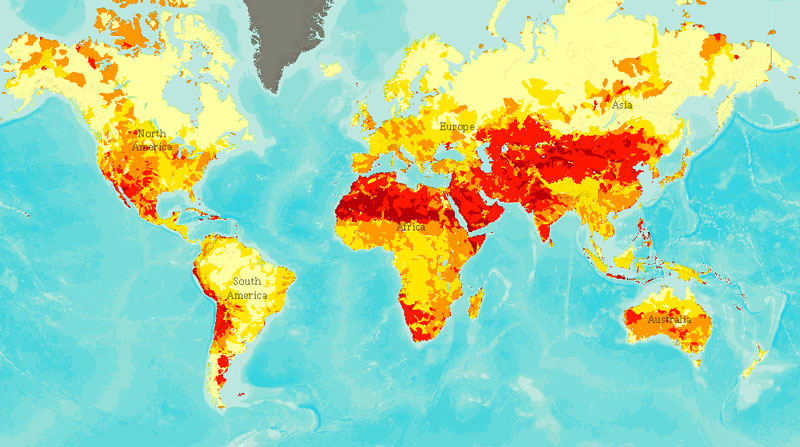
›As world population pushes towards nine billion by mid-century and millions are elevated to the global middle class every year, demand for water continues to grow as well. More people need more water for drinking and household use, but also for agriculture, mining, energy, and industry. With water often cited as a limit to growth and potential crisis point, the World Resources Institute has released the Aqueduct Water Risk Atlas, which details various types of water stress around the world in impressively detailed fashion.
-
‘Dialogue’ Interviews Caryle Murphy & John Sullivan: Saudi Arabia’s Demography & 2013’s Big Environment Stories
›Dialogue at the Wilson Center tackled demography and the environment last week, interviewing Pulitzer Prize-winning journalist and former Wilson Center public policy scholar Caryle Murphy about her new book, A Kingdom’s Future: Saudi Arabia Through the Eyes of Its Twentysomethings, followed by John Sullivan, director of the Environment and Health and Safety News Division for Bloomberg BNA, on the most important energy and environmental issues of 2013.
-
After the Arab Spring, Challenges Intensify for Women in the Middle East and North Africa
›Excerpted below is the introduction, by Haleh Esfandiari, to Challenges to Women’s Security in the MENA Region. The full report is available for download from the Wilson Center’s Middle East Program.
On the occasion of International Women’s Day 2013, the Middle East Program at the Wilson Center invited a cross-section of women activists, politicians, academics, and entrepreneurs to give us their views on the challenges women face to their security. This publication, “Challenges to Women’s Security in the MENA Region,” includes pieces from 42 women from 20 countries, including the United States, Malaysia, Indonesia, and countries in the Middle East and North Africa (MENA) shared with us their concerns, disappointments, and hopes for women in the region.
-
When Does Oil Cause War? Petro-Aggression and Revolutionary Governments
›One year ago, the United States government froze all property of the Central Bank of Iran and other Iranian financial institutions within the United States. The move was part of a broader effort to compel the Islamic Republic to give up its alleged nuclear weapons program. How is it working out?
-
A Kingdom’s Future: Saudi Arabia Through the Eyes of Its Twentysomethings
›In a new book from the Wilson Center, Caryle Murphy asks how, while its neighbors face revolutions, Saudi Arabia has been able to “weather the storm of Arab youth discontent seemingly unscathed.”
To find out, Murphy went to the source, interviewing 83 young Saudis between the ages of 19 and 29 in the spring of 2012. She found that “they are by no means a revolutionary lot, preferring gradual, step-by-step change. They want change, but not at the cost of safety and security. Most favor more tolerance for diversity, including in the realm of religion.”
-
Seven Ways Seven Billion People Affect the Environment and Security (Policy Brief)
›The Wilson Center Policy Briefs are a series of short analyses of critical global issues facing the next administration that will run until inauguration day.
Seven billion people now live on Earth, only a dozen years after the global population hit six billion. But this milestone is not about sheer numbers. Demographic trends will significantly affect the planet’s resources and people’s security.
Showing posts from category Middle East.