-
Andrew Revkin: Local Population Dynamics Crucial to Understanding Climate Vulnerability
›February 10, 2014 // By Schuyler Null“What’s become clear to me on population is that it’s really a local issue,” said Andrew Revkin in an interview at the Wilson Center. “You get the impression, ‘Oh didn’t we solve that problem?’” And to some extent, demographic shifts around the world are largely heading in the direction people anticipated, with a leveling off mid-century. But “no one really knows what happens then,” he said. “All it takes is a tiny diversion of fertility rates and things could really grow or shrink.”
-
Ready for Change: Notre Dame Launches the Global Adaptation Index
›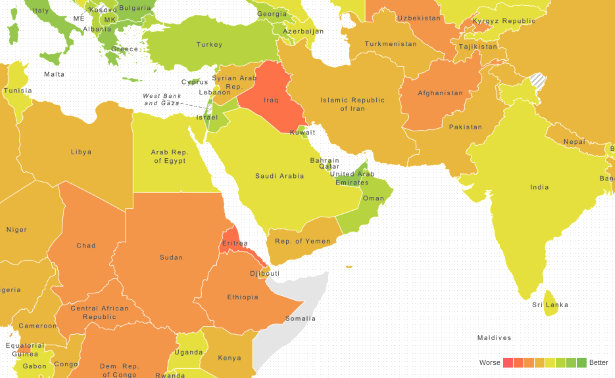
In 2008 and 2010, the price of many basic food stuffs soared, sparking a series of riots and food crises around the world. People in the poorest countries – those living with the smallest margins – were most affected, while the economies of developed nations were able to absorb the price changes. According to Notre Dame’s Global Adaptation Index, how climate change will impact different countries depends not only on their vulnerability to physical changes, but also their ability to absorb these impacts. [Video Below]
-
Our Last Best Hope? Family Planning and Women’s Empowerment
›January 7, 2014 // By Laurie MazurThe original version of this article appeared on the Aspen Institute blog.
When journalist Alan Weisman proposed a new book on the challenges posed by human population growth, his editor said, “That one’s a live wire; don’t touch it.”
-
Critical Mass? How the Mobile Revolution Could Help End Gender-Based Violence
›
The past three years – and more pointedly the past 12 months – have laid witness to monumental, if not heartbreaking, incidents of gender-based violence. The gang rape of a 23-year-old woman in New Delhi last December; the gang rape of a 16-year-old girl left for dead in a pit latrine in Western Kenya last June; the mass sexual assault of women in Tahrir Square during the 2011 revolution in Egypt and since; all were high profile atrocities that ignited outrage around the world.
-
Linking Oil and War: Review of ‘Petro-Aggression’
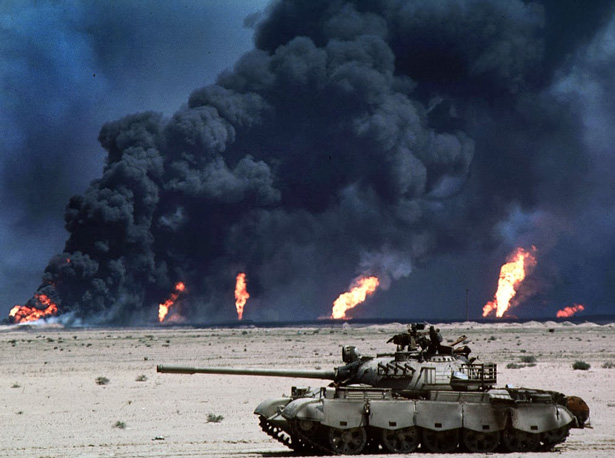
›In Petro-Aggression: When Oil Causes War, Jeff Colgan provides an indispensable starting point for researchers interested in the relationship between oil and international conflict.
-
ECC Platform
Data for Peace: Inventory of Shared Waters in Western Asia
›October 1, 2013 // By Wilson Center StaffThe original version of this article appeared on the Environment, Conflict, and Cooperation (ECC) Platform.
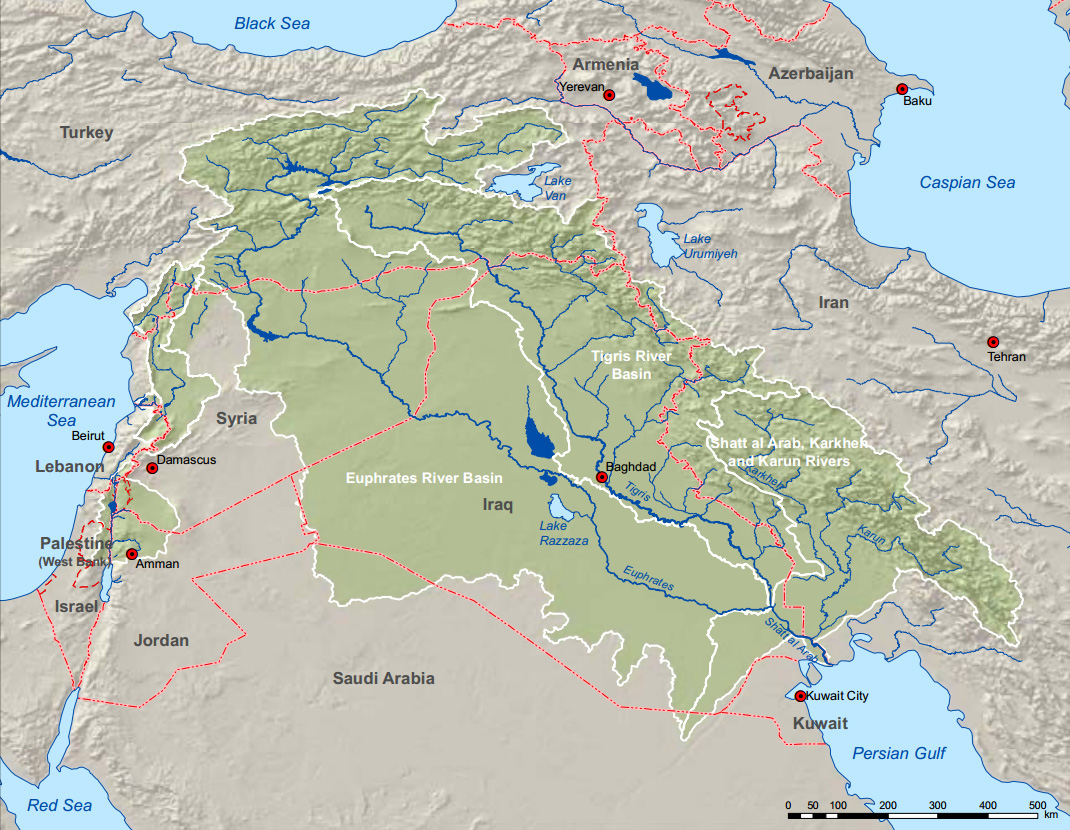
The Environment, Conflict, and Cooperation team talked to Eileen Hofstetter from the Swiss Agency for Development and Cooperation. She is co-author of the Inventory of Shared Water Resources in Western Asia released at this year’s World Water Week in Stockholm. The Inventory was prepared by the United Nations Economic and Social Commission for Western Asia and the German Federal Institute for Geosciences and Natural Resources.
-
For Fast-Growing Countries, Should Aging Be a Concern? Planning for the Second Demographic Dividend
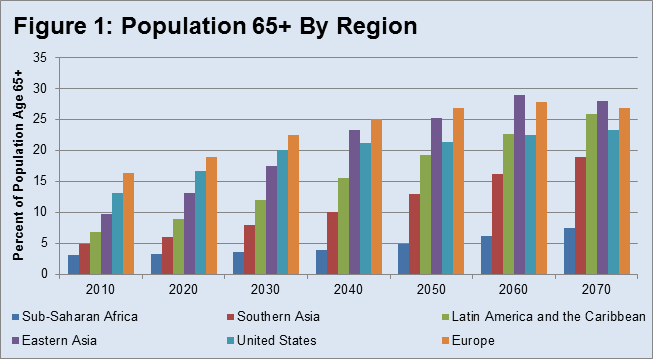
›September 10, 2013 // By Elizabeth Leahy MadsenPopulation aging and decline are frequently described as a threat to countries’ economic development and social stability. Evocative language, such as “demographic winter” and “graying of the great powers,” portrays the serious consequences that many observers envision as fertility and growth rates decline and the elderly comprise a greater percentage of the population. These concerns reach around the globe, including in Africa, which has the lowest percentage of elderly among the world’s major regions.
-
Harvesting Peace: Food Security, Conflict, and Cooperation
›Since 2008 – a year in which rapid increases in the global prices for major grains helped to trigger outbreaks of civil unrest in more than 40 countries – scholars and policymakers have paid increased attention to the potential influence of global food prices on social and political instability. Since that time, spiking prices have periodically sparked public protests and governments have struggled to respond.
Showing posts from category Middle East.