-
Opportunity Costs: Evidence Suggests Variability, Not Scarcity, Primary Driver of Water Conflict
›
Nearly 1 billion people lack reliable access to clean drinking water today. A report by the Water Resources Group projects that by 2030 annual global freshwater needs will reach 6.9 trillion cubic meters – 64 percent more than the existing accessible, reliable, and sustainable supply. This forecast, while alarming, likely understates the magnitude of tomorrow’s water challenge, as it does not account for the impacts of climate change.
-
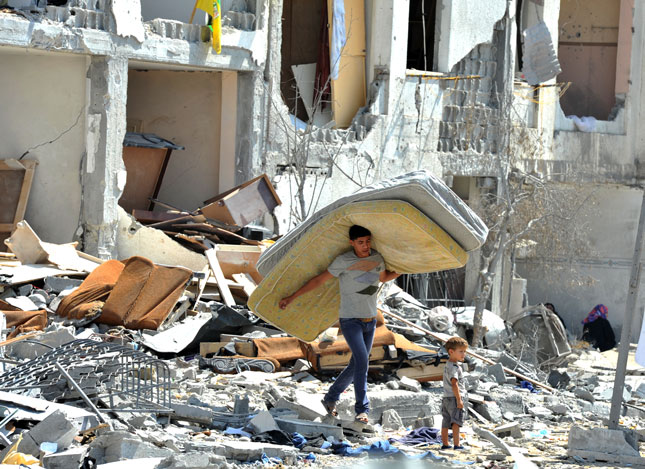
Accelerating a Cycle of Violence: Tallying the Damage to Gaza’s Youth
›August 25, 2014 // By Sarah Meyerhoff
Amid stop-and-start ceasefires, the tally of death and destruction from the recent conflict in the Gaza Strip has begun. Whatever the final losses incurred – casualties and damage are considerable with estimates varying significantly depending on the source – Gaza’s youngest residents are likely to be most profoundly affected.
-
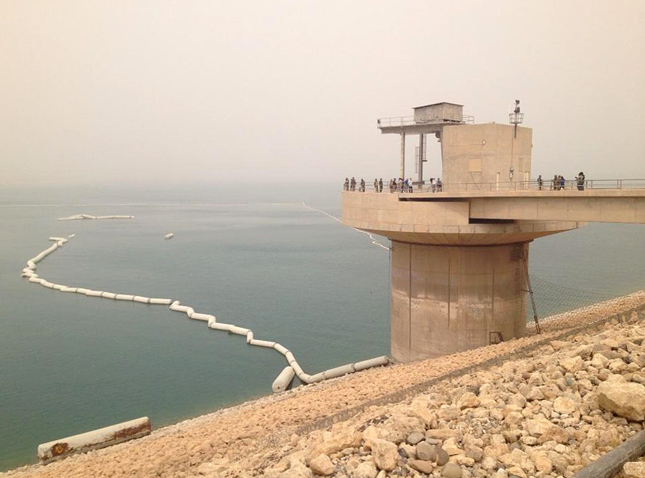
What Can Iraq’s Fight Over the Mosul Dam Tell Us About Water Security?
›The fight for control over “the most dangerous dam in the world” is raging.
Since its capture by Islamic State (IS) militants on August 7 and subsequent attempts by Iraqi government and Kurdish forces to take it back, Iraq’s Mosul Dam has been one of the central components of the government’s surprising and rapid collapse in the country’s northern and western provinces. In fact, one might see the capture of the Mosul Dam as the moment IS ascended from a dangerous insurgent group to an existential threat to Iraq as a state.
-
Alissa J. Rubin and Tim Arango, The New York Times
Rebels Capture Iraq’s Largest Dam
›August 8, 2014 // By Wilson Center StaffSunni militants captured the Mosul dam, the largest in Iraq, on Thursday as their advances in the country’s north created an onslaught of refugees and set off fearful rumors in Erbil, the Kurdish regional capital.
-
Climate Change Will Test Water-Sharing Agreements
›July 15, 2014 // By Thomas CurranMany existing water-sharing treaties should be re-assessed in the context of climate change, write Shlomi Dinar, David Katz, Lucia De Stefano, and Brian Blakespoor in a World Bank working paper.
-
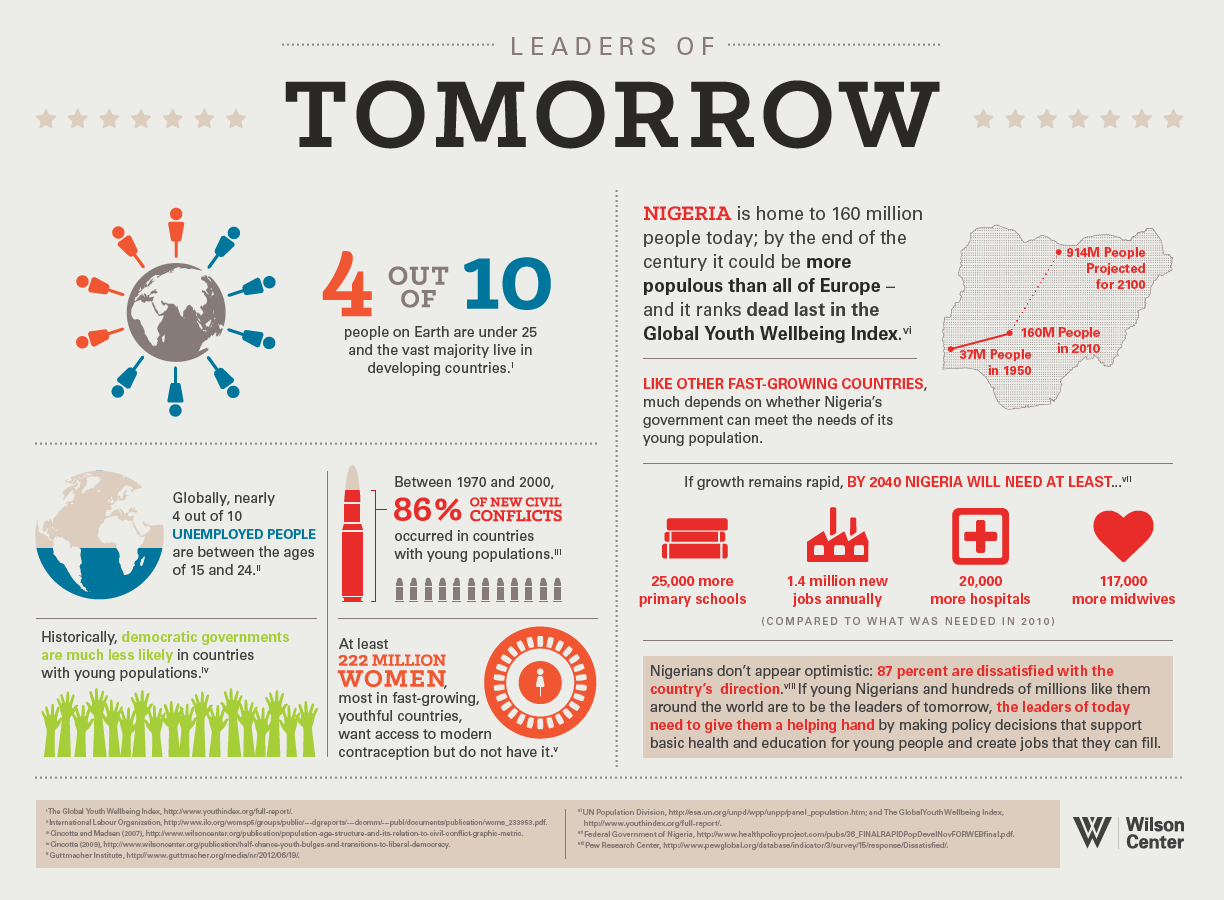
Investing in the Leaders of Tomorrow: World Population Day 2014 Youth Infographic
›World Population Day began in 1987 after public imagination was sparked by the idea that there could be 5 billion people on Earth. Today, we’re well past 7 billion and according to the latest UN projections, headed north of 9 billion by mid-century.
-
Youth and Global Violence: Saving History’s Largest Generation of Young People
›July 9, 2014 // By Moses JacksonAs the largest-ever generation of young people enters adulthood, armed conflict is having a profound effect on their future. People under the age of 24 comprise nearly half the world’s population but are the primary participants in conflict today. Conflict is more prevalent in younger societies, and half of all forcibly displaced people are children.
-
National Security and the Accelerating Risks of Climate Change (Report Launch)
›Climate change poses a serious threat to U.S. national security and is becoming a “catalyst for conflict” in vulnerable countries, according to a panel of retired military leaders speaking at the Wilson Center on May 15. [Video Below]
Showing posts from category Middle East.