-
Syria Conflict’s Connection to Climate Change, and Avoiding Maladaptation to “Hydro-Climate” Risks
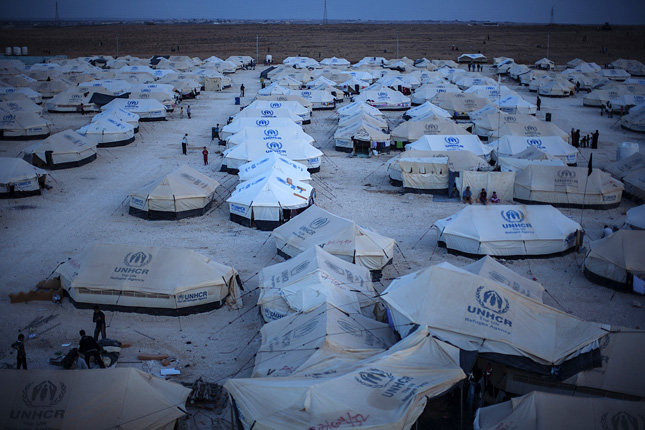
› In a headline–making article in the journal PNAS, Colin P. Kelley et al. write there is evidence that the ongoing conflict in Syria, which has killed at least 200,000, was triggered by climate change. Severe drought from 2007 to 2010 caused a massive rural-to-urban demographic shift which exacerbated pre-existing sociopolitical tensions in Syrian cities already inundated with Iraqi refugees.
 -
The U.S. Energy Pivot: A New Era for Energy Security in Asia?
›
The past decade has brought ground-shaking changes to global energy markets. The unconventional fuel boom has unexpectedly reduced U.S. dependence on oil imports, while in the Asia-Pacific region, energy-constrained nations are increasingly reliant on foreign sources to meet their soaring demand. With the U.S. slated to export liquid natural gas (LNG) to Asia as early as 2017, a new energy era has come.
-
World Water Day: A Wellspring for Sustainable Development
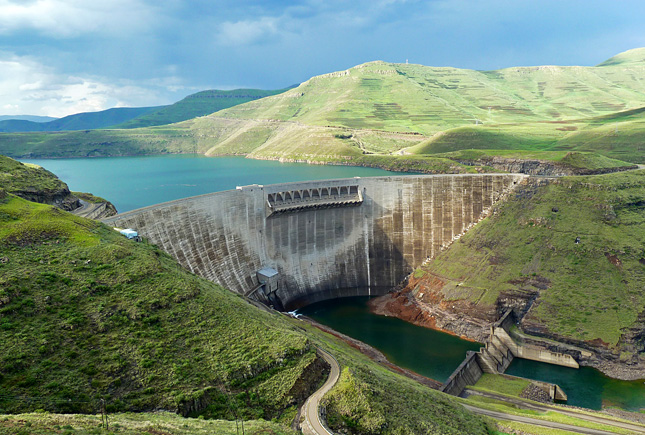
›This year’s World Water Day is taking on a broader theme than years past: sustainable development. The theme makes sense as two major international processes – the drafting of the Sustainable Development Goals to replace the Millennium Development Goals, and the most anticipated UN Climate Summit in years – are taking place in 2015. Decisions made over the next nine months will play a huge role in relationships between nations and global development priorities going forward.
-
The Future of Political Demography and Its Impact on Policy
›March 9, 2015 // By Schuyler Null“Political demography is a discipline whose time has come,” said Rob Odell of the National Intelligence Council at a gathering of demographers and researchers in New Orleans. “You can sense this inherent dissatisfaction” with a lot of analytical and predictive tools in international relations, he said, and “political demography provides policymakers a way to think about long-term trends.”
-
As Humanitarian Crises Multiply, Maternal Health and Safety of Women Becoming a Focus
›Accessing maternal health care is already a challenge in many countries, and when conflict erupts or a disaster strikes, it can get even worse, leaving millions of women on their own while at their most vulnerable, said Ugochi Daniels, chief of humanitarian response for the UN Population Fund (UNFPA). Women and girls also become more vulnerable to violence during times of crisis, she said, by virtue of nothing but their gender. [Video Below]
-
Youth Bulge, Exclusionary Regimes, and the Islamic State’s Big Mistake
›Last week, the Islamic State’s ignorance of the role of demography in their local success may have led them to overplay their hand. Seeking to dissuade Jordanians from following their government in actively supporting the alliance arrayed against them, they executed a captured Jordanian pilot in horrendous fashion, burning him alive. Yet Jordan is not like Syria or Iraq, where violence against westerners or Shi’a or other minorities has helped split people from their allegiance to the government. Instead, this act of violence seems to have unified Jordan’s Sunnis against the Islamic State for their actions against a fellow Sunni Muslim. Jordan has expanded its assault, striking dozens of targets in Iraq for the first time.
-
‘Extreme Realities’ Sheds Light on Links Between Global Climate Dynamics and National Security
›“We cannot ignore the new reality that climate change has become a major foreign policy issue in the 21st century,” a new film by Hal and Marilyn Weiner concludes.
-
Safety and Security in the Global Youth Wellbeing Index
›Few would argue with the notion that socioeconomic development is contingent on peace, safety, and security. What goes for nations, goes for people too – especially young people.
Showing posts from category Middle East.