• woodrow wilson center
  • ecsp

New Security Beat

Subscribe:
  • rss
  • mail-to
  • Who We Are
  • Topics
    • Population
    • Environment
    • Security
    • Health
    • Development
  • Columns
    • China Environment Forum
    • Choke Point
    • Dot-Mom
    • Friday Podcasts
    • Navigating the Poles
    • Reading Radar
  • Multimedia
    • Water Stories (Podcast Series)
    • Backdraft (Podcast Series)
    • Tracking the Energy Titans (Interactive)
  • Films
    • Water, Conflict, and Peacebuilding (Animated Short)
    • Paving the Way (Ethiopia)
    • Broken Landscape (India)
    • Scaling the Mountain (Nepal)
    • Healthy People, Healthy Environment (Tanzania)
  • Publications
  • Events
  • Contact Us

NewSecurityBeat

The blog of the Wilson Center's Environmental Change and Security Program
Showing posts from category DRC.
  • Stacy VanDeveer: “Green Economy” May Bring More of the Resource Curse

    ›
    Friday Podcasts  //  July 12, 2013  //  By Jacob Glass
    Stacy VanDeveer podcast

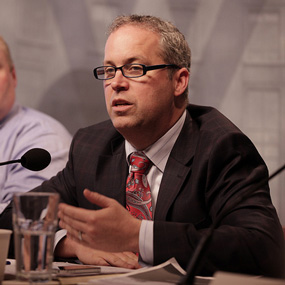
    “We can’t talk about a ‘green economy,’ ‘green technologies,’ or ‘green energies’ only by talking about technologies that are stamped out at one end of a large global process and deployed for cleaner energy,” says Stacy VanDeveer in this week’s podcast.

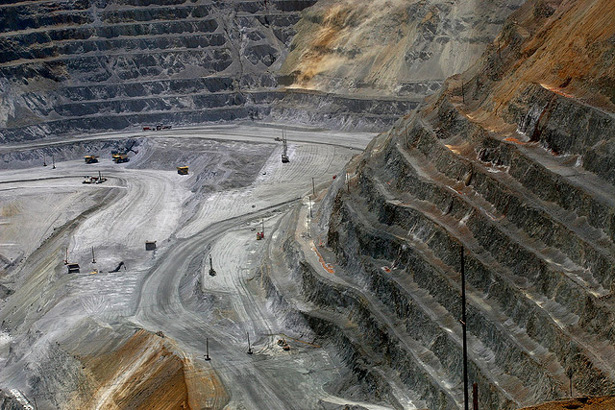
    “The green economy, or green energy transition, requires a lot of metals, and a whole lot of things that are mined,” he says. “Because of the scale of the industry now, the scale of the environmental and social change being driven by mining globally is actually quite stunning.”

    MORE
  • Despite “Greener Economy,” Extractive Industries’ Effects on Global Development, Stability Bigger Than Ever

    ›
    June 10, 2013  //  By Lauren Herzer Risi & Schuyler Null

    Despite the appearance of a new, “greener” economy, extractive industries – mining, oil, and natural gas – are now responsible for “moving more earth each year, just for mining and quarrying, than the global hydrological cycle,” writes the Transatlantic Academy’s Stacy VanDeveer in a recent paper, Still Digging: Extractive Industries, Resource Curses, and Transnational Governance in the Anthropocene. The costs of this activity are high and extend well beyond the wallet, he explains.

    MORE
  • Wilson Center Premieres ‘Healthy People, Healthy Environment’ and ‘Transcending Boundaries’ at Environmental Film Festival

    ›
    From the Wilson Center  //  April 17, 2013  //  By Maria Prebble

    Environmental security and international development aren’t typical movie-going fare, but at the 2013 DC Environmental Film Festival, ECSP premiered two short documentaries with unique environmental stories: Healthy People, Healthy Environment: Integrated Development in Tanzania shows how improving health services and environmental conservation can empower coastal communities in Africa; and Transcending Boundaries: Perspectives from the Central Albertine Rift Transfrontier Protected Area Network explores the opportunities for “peace parks” along the shared borders of Uganda, Rwanda, and the Democratic Republic of Congo.

    MORE
  • Linking Governance and Positive Maternal Health Outcomes in Africa

    ›
    Dot-Mom  //  From the Wilson Center  //  April 11, 2013  //  By Derek Langford

    Sub-Saharan Africa is perhaps the riskiest place for a woman to give birth. According to the United Nations Population Fund (UNFPA), African women comprise approximately 56 percent of the maternal deaths and 91 percent of HIV-related maternal deaths worldwide every year. In order to bring life into this world, women in Africa literally must put their own lives on the line.

    MORE
  • Nile Basin at a Turning Point as Political Changes Roil Balance of Power and Competing Demands Proliferate

    ›
    September 4, 2012  //  By Carolyn Lamere

    In 1979, Egyptian President Anwar Sadat famously said that “the only matter that could take Egypt to war again is water.” Sadat’s message was clear: the Nile is a matter of national security for Egypt.

    Indeed, Egypt relies on the Nile for 95 percent of its water. But it is not the only state with an interest in the world’s longest river. There are 11 states in the Nile River basin, which stretches from Africa’s Great Lakes region – Tanzania, Uganda, Kenya, Rwanda, Burundi, and the Democratic Republic of the Congo – to the Ethiopian and Eritrean highlands through South Sudan, Sudan, and Egypt to the Mediterranean Sea.

    MORE
  • Ingrid Schulze, Mongabay

    Local Experts Needed to Protect Congo Basin Rainforests Amid Conflict, Development Challenges

    ›
    July 13, 2012  //  By Wilson Center Staff
    The original version of this article, by Ingrid Schulze, appeared on Mongabay.

    This summer, the Democratic Republic of Congo (DRC) is expected to approve a new higher education strategy which the country has developed with the World Bank and other international donors. The shape of this educational reform initiative will be critical to Congo’s future in many ways. It could finally offer Congo’s long-suffering people a route into the 21st century. It will also help determine the future of the DRC’s forests.

    Nearly half of the Congo Basin’s remaining rainforest is in the DRC – yet the critical role of Congolese experts in forestry, agricultural science, wildlife management and other rural sciences in protecting this forest is not widely recognized.

    As one Congolese graduate student observed, the DRC has a “void” in agricultural and forestry research. Due to years of war and decades of economic crisis and mismanagement, most of Congo’s colleges and universities are severely underfunded and in disrepair. The country is short of experts who can investigate the ecology and economic potential of Congo’s forests and their biota, and provide an objective basis for setting priorities for protection and use of forest resources. While universities in Kinshasa and Kisangani do have some internationally funded programs to increase the number of biologists and other specialists, the number of graduates is nowhere near what is needed. Foreign scientists and consultants are not a substitute for Congolese experts.

    Moreover, competent rural science graduates who can advise local farmers, communities and administrators on forestry, sustainable agriculture, wildlife management, and rural development issues are also desperately needed. The DRC’s national agricultural extension service, which should be integral to this process, has been broken for decades. A 1990 USAID report described it as underfunded, without the means to provide farmers with proven crop varieties and advice on agricultural practices, and tasked more with imposing particular crops on farmers and collecting taxes than helping them. There is little evidence that this has changed significantly since the end of the Congo war in 2003.

    Continue reading on Mongabay.

    Image Credit: Depths of Forest, courtesy of flickr user Bobulix. Congo Basin map, courtesy of Wikimedia Commons user Imagico.
    MORE
  • Women’s Health: Key to Climate Adaptation Strategies

    ›
    From the Wilson Center  //  March 13, 2012  //  By Stuart Kent

    The discussion about family planning and reproductive rights “needs to be in a place where we can talk thoughtfully about the fact that yes, more people on this planet – and we’ve just crossed seven billion – does actually put pressure on the planet. And no, it is not just black women or brown women or Chinese women who create that problem,” said Kavita Ramdas, executive director for programs on social entrepreneurship at Stanford University. [Video Below]

    MORE
  • The Missing Links in the Demographic Dividend

    ›
    March 9, 2012  //  By Elizabeth Leahy Madsen

    The “demographic dividend,” a concept that marries population dynamics and development economics, is on the rise in policy circles – Rajiv Shah, Melinda Gates, and African government ministers have all discussed it recently in high-level forums. Most notably for demographers, World Bank Chief Economist Justin Yifu Lin wrote a blog post that focuses on the demographic dividend’s potential to give developing countries a powerful economic boost through declining dependency ratios and a proportionately large working-age population.

    MORE
Newer Posts   Older Posts
View full site

Join the Conversation

  • RSS
  • subscribe
  • facebook
  • G+
  • twitter
  • iTunes
  • podomatic
  • youtube
Tweets by NewSecurityBeat

Trending Stories

  • unfccclogo1
  • Pop at COP: Population and Family Planning at the UN Climate Negotiations

Featured Media

Backdraft Podcast

play Backdraft
Podcasts

More »

What You're Saying

  • Volunteers,At,The,Lagos,Food,Bank,Initiative,Outreach,To,Ikotun, Pan-African Response to COVID-19: New Forms of Environmental Peacebuilding Emerge
    Rashida Salifu: Great piece 👍🏾 Africa as a continent has suffered this unfortunate pandemic.But it has also...
  • A desert road near Kuqa An Unholy Trinity: Xinjiang’s Unhealthy Relationship With Coal, Water, and the Quest for Development
    Ismail: It is more historically accurate to refer to Xinjiang as East Turkistan.
  • shutterstock_1779654803 Leverage COVID-19 Data Collection Networks for Environmental Peacebuilding
    Carsten Pran: Thanks for reading! It will be interesting to see how society adapts to droves of new information in...

What We’re Reading

  • Rising rates of food instability in Latin America threaten women and Venezuelan migrants
  • Treetop sensors help Indonesia eavesdrop on forests to cut logging
  • 'Seat at the table': Women's land rights seen as key to climate fight
  • A Surprise in Africa: Air Pollution Falls as Economies Rise
  • Himalayan glacier disaster highlights climate change risks
More »
  • woodrow
  • ecsp
  • RSS Feed
  • YouTube
  • Twitter
  • Facebook
  • Home
  • Who We Are
  • Publications
  • Events
  • Wilson Center
  • Contact Us
  • Print Friendly Page

© Copyright 2007-2021. Environmental Change and Security Program.

Woodrow Wilson International Center for Scholars. All rights reserved.

Developed by Vico Rock Media

Environmental Change and Security Program

Woodrow Wilson International Center for Scholars

Ronald Reagan Building and International Trade Center

  • One Woodrow Wilson Plaza
  • 1300 Pennsylvania Ave., NW
  • Washington, DC 20004-3027

T 202-691-4000