-
Ingrid Schulze, Mongabay
Local Experts Needed to Protect Congo Basin Rainforests Amid Conflict, Development Challenges
›July 13, 2012 // By Wilson Center StaffThe original version of this article, by Ingrid Schulze, appeared on Mongabay.
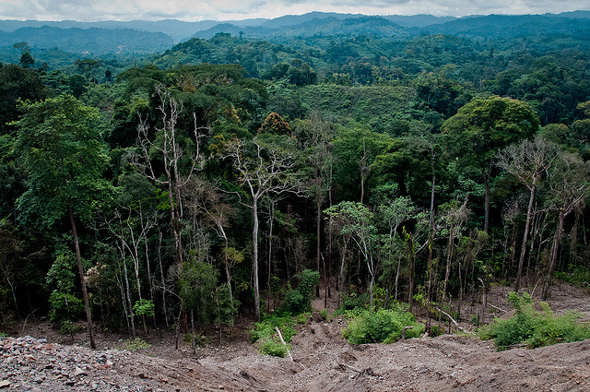
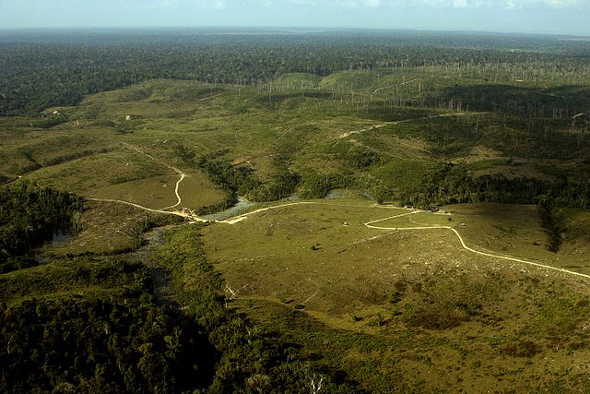
This summer, the Democratic Republic of Congo (DRC) is expected to approve a new higher education strategy which the country has developed with the World Bank and other international donors. The shape of this educational reform initiative will be critical to Congo’s future in many ways. It could finally offer Congo’s long-suffering people a route into the 21st century. It will also help determine the future of the DRC’s forests.
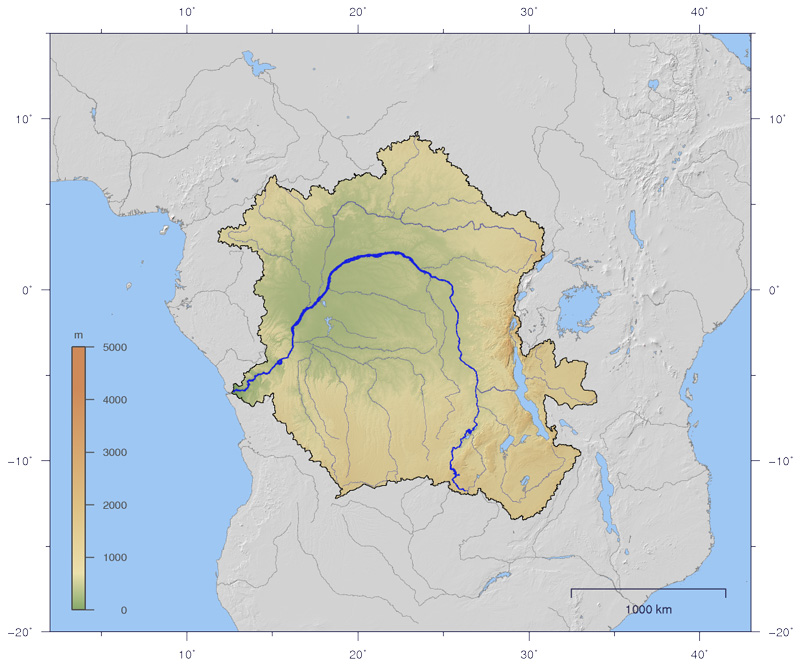
Nearly half of the Congo Basin’s remaining rainforest is in the DRC – yet the critical role of Congolese experts in forestry, agricultural science, wildlife management and other rural sciences in protecting this forest is not widely recognized.As one Congolese graduate student observed, the DRC has a “void” in agricultural and forestry research. Due to years of war and decades of economic crisis and mismanagement, most of Congo’s colleges and universities are severely underfunded and in disrepair. The country is short of experts who can investigate the ecology and economic potential of Congo’s forests and their biota, and provide an objective basis for setting priorities for protection and use of forest resources. While universities in Kinshasa and Kisangani do have some internationally funded programs to increase the number of biologists and other specialists, the number of graduates is nowhere near what is needed. Foreign scientists and consultants are not a substitute for Congolese experts.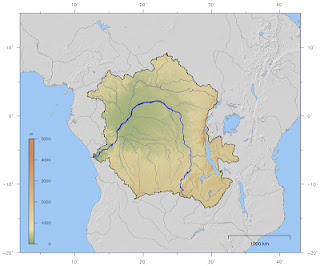
Moreover, competent rural science graduates who can advise local farmers, communities and administrators on forestry, sustainable agriculture, wildlife management, and rural development issues are also desperately needed. The DRC’s national agricultural extension service, which should be integral to this process, has been broken for decades. A 1990 USAID report described it as underfunded, without the means to provide farmers with proven crop varieties and advice on agricultural practices, and tasked more with imposing particular crops on farmers and collecting taxes than helping them. There is little evidence that this has changed significantly since the end of the Congo war in 2003.
Continue reading on Mongabay.
Image Credit: Depths of Forest, courtesy of flickr user Bobulix. Congo Basin map, courtesy of Wikimedia Commons user Imagico. -
Women’s Health: Key to Climate Adaptation Strategies
›The discussion about family planning and reproductive rights “needs to be in a place where we can talk thoughtfully about the fact that yes, more people on this planet – and we’ve just crossed seven billion – does actually put pressure on the planet. And no, it is not just black women or brown women or Chinese women who create that problem,” said Kavita Ramdas, executive director for programs on social entrepreneurship at Stanford University. [Video Below]
-
The Missing Links in the Demographic Dividend
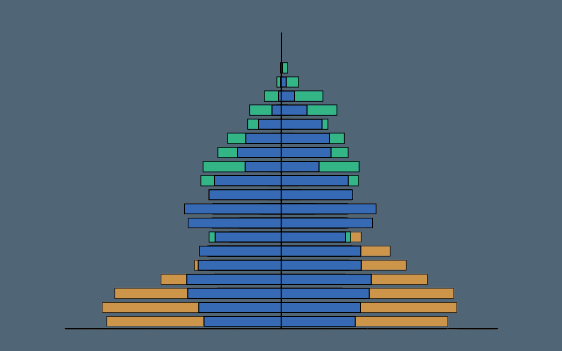
›March 9, 2012 // By Elizabeth Leahy MadsenThe “demographic dividend,” a concept that marries population dynamics and development economics, is on the rise in policy circles – Rajiv Shah, Melinda Gates, and African government ministers have all discussed it recently in high-level forums. Most notably for demographers, World Bank Chief Economist Justin Yifu Lin wrote a blog post that focuses on the demographic dividend’s potential to give developing countries a powerful economic boost through declining dependency ratios and a proportionately large working-age population.
-
More People, Less Biodiversity? The Complex Connections Between Population Dynamics and Species Loss
›March 8, 2012 // By Laurie Mazur“For if one link in nature’s chain might be lost, another and another might be lost, till this whole system of things should vanish by piece-meal.”
~ Thomas Jefferson, 1799This much is clear: As human numbers have grown, the number of species with whom we share the planet has declined dramatically. While it took about 200,000 years for humanity to reach one billion people around 1800, world population has grown sevenfold since then, surpassing seven billion last year.
-
Eric Zuehlke, Population Reference Bureau
Democratic Republic of Congo and Madagascar Connect Family Planning With Environmental Health
›February 10, 2012 // By Wilson Center StaffRemote rural communities in developing countries typically face the related challenges of extreme poverty, poor health, and environmental degradation. And population growth often exacerbates these challenges. In communities that face environmental challenges along with high fertility and high maternal and child mortality, health programs that include family planning can have great benefits for the health and well-being of women and families, with positive influences on the local environment. Meeting the reproductive health needs of women and ensuring environmental sustainability by connecting family planning with environment programs has proven to be a “win-win” strategy. Yet this connection has often been seen as controversial or irrelevant to environmental policymaking.
-
Jason Bremner, Behind the Numbers
PHE Champions Bring Their Experiences From the Field to the International Family Planning Conference in Senegal
›December 8, 2011 // By Wilson Center StaffThe original version of this article, by Jason Bremner, appeared on the Population Reference Bureau’s Behind the Numbers blog.
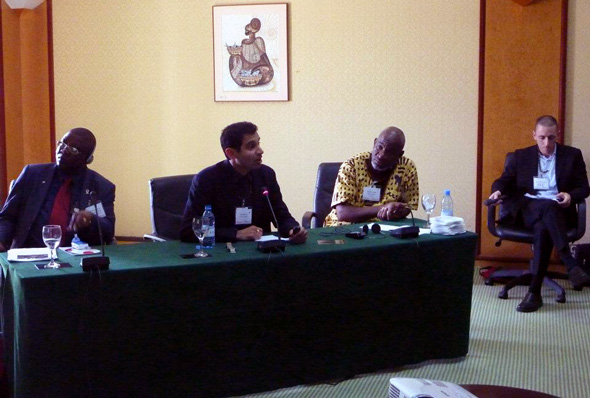
This past week at the 2011 International Conference on Family Planning, four practitioners from the field traveled from remote parts of the Democratic Republic of Congo, Ethiopia, Madagascar, and Tanzania to Dakar, Senegal, to share their successes and challenges in reaching remote communities with an integrated package of health, livelihood, and environment services. Together they made up the panel, “Reaching the Hardly Reached: Delivering Family Planning Through Population, Health, and Environment Integration.”
The panelists came from four environmental organizations whose starting point for working in these remote places was the protection of the biodiversity and natural resources upon which all life depends. Dr. Vik Mohan, physician and medical director for Blue Ventures, talked about how he and his organization transitioned from focusing initially on the conservation of coastal marine reserves and coral reefs to now working to improve health care, including access to family planning.
Blue Ventures, in response to community and women’s needs, opened a family planning clinic, and on the opening day, 20 percent of the women of reproductive age in the community came out to request contraceptives. Today they offer a whole spectrum of short- and long-acting contraceptive methods through partnerships with Marie Stopes International, Population Services International, and various funders. Blue Ventures reported that contraceptive prevalence had risen from 8 percent when they began in 2007 to 35 percent today.
Continue reading on Behind the Numbers.
Photo used with permission courtesy of PRB. Left to right: Didier Mazongo, WWF; Vik Mohan, Blue Ventures; Baraka Kalangahe, Tanzania Coastal Management Partnership; and Jason Bremner, PRB. -
UNiTE To End Violence Against Women
›November 25, 2011 // By Schuyler NullToday is the International Day to End Violence Against Women, an awareness and advocacy campaign organized by a host of UN agencies and offices “to galvanize action across the UN system to prevent and punish violence against women.”
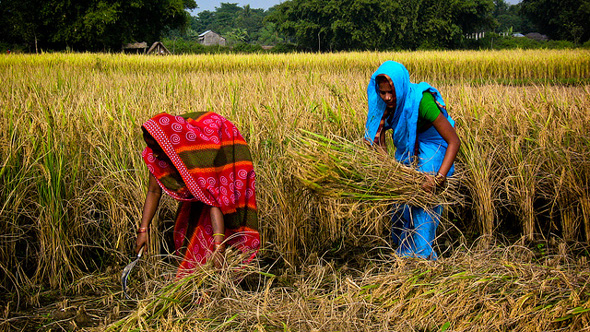
Gender equity and inequity play a role in a myriad of international development, health, security, and even environmental issues, from rape as a weapon of war; demography’s effects on political stability; maternal health and its impact on child development; women’s rights as a social stability issue; and the disproportionate effect of climate change on rural women.
The numbers around gender-based violence are staggering. According to the UN:
Here are some of New Security Beat’s posts on gender-based violence and inequity and their intersection with development, the environment, and security:- 70 percent of women experience physical or sexual violence from men in their lifetime.
- Approximately 250,000 to 500,000 women and girls were raped in the 1994 Rwandan genocide, and in the eastern Democratic Republic of Congo (DRC), at least 200,000 cases of sexual violence, mostly involving women and girls, have been documented since 1996, though the actual numbers are considered to be much higher.
- In the United States, one-third of women murdered each year are killed by intimate partners; in South Africa, a woman is killed every six hours by an intimate partner; in India, 22 women were killed each day in dowry-related murders in 2007; and in Guatemala, two women are murdered, on average, each day.
- Over 60 million girls worldwide are child brides, married before the age of 18, primarily in South Asia (31.1 million) and sub-Saharan Africa (14.1 million).
Gender-Based Violence in the DRC: Research Findings and Programmatic Implications:
Dr. Lynn Lawry, senior health stability and humanitarian assistance specialist at the U.S. Department of Defense, presented findings from the first cross-sectional, randomized cluster study on gender-based violence in the DRC at the Wilson Center this year. The first of its kind in the region, the population-based, quantitative study covered three districts in the DRC and a total of 5.2 million adults, comprehensively assessing gender-based violence, including its prevalence, circumstances, perpetrators, and physical and mental health impacts.
Pop Audio: Judith Bruce on Empowering Adolescent Girls in Post-Earthquake Haiti: “The most striking thing about post-conflict and post-disaster environments is that what lurks there is also this extraordinary opportunity,” said Judith Bruce, a senior associate and policy analyst with the Population Council. Bruce spent time last year working with the Haiti Adolescent Girls Network, a coalition of humanitarian groups conducting workshops focused on the educational, health, and security needs of the country’s vulnerable female youth population.
The Walk to Water in Conflict-Affected Areas: Constituting a majority of the world’s poor and at the same time bearing responsibility for half the world’s food production and most family health and nutrition needs, women and girls regularly bear the burden of procuring water for multiple household and agricultural uses. When water is not readily accessible, they become a highly vulnerable group. Where access to water is limited, the walk to water is too often accompanied by the threat of attack and violence.
Weathering Change: New Film Links Climate Adaptation and Family Planning: “Our planet is changing. Our population is growing. Each one of us is impacting the environment…but not equally. Each one of us will be affected…but not equally,” asserts the new documentary, Weathering Change, launched at the Wilson Center in September. The film, produced by Population Action International, explores the devastating impacts of climate change on the lives of women in developing countries through personal stories from Ethiopia, Nepal, and Peru.
Sajeda Amin on Population Growth, Urbanization, and Gender Rights in Bangladesh:
The Population Council’s Sajeda Amin describes the Growing Up Safe and Healthy (SAFE) project, launched in Dhaka and other Bangladeshi cities last. The initiative aims, to increase access to reproductive healthcare services for adolescent girls and young women, bolstering social services to protect those populations from (and offer treatment for) gender-based violence, and strengthen laws designed to reduce the prevalence of child marriage – a long-standing Bangladeshi institution that keeps population growth rates high while denying many young women the opportunity to pursue economic and educational advancement.
No Peace Without Women: On October 31, 2000, the UN Security Council adopted Resolution 1325, which called for women’s equal participation in all efforts to maintain and promote peace and security; however, little progress has been made over these last 10 years and women remain on the periphery when it comes to post-conflict reconstruction and development. A report from the humanitarian organization CARE concedes that “much of the action remains declarative rather than operational.”
Addressing Gender-Based Violence to Curb HIV: At last year’s International AIDS Conference in Vienna an astonishing development in the campaign to stem the spread of HIV/AIDS was unveiled – a microbicide with the ability to reduce the risk of transmission of HIV. This welcome development coincides with an intensified focus on women’s health and security needs among donors, especially the United States.
The Future of Women in the MENA Region: A Tunisian and Egyptian Perspective: Lilia Labidi, minister of women’s affairs for the Republic of Tunisia and former Wilson Center fellow, joined Moushira Khattab, former minister of family and population for Egypt, this summer at the Wilson Center to discuss the role and expectations of women in the Egyptian and Tunisian revolutions, as well as issues to consider as these two countries move forward.
Sources: UN Secretary-General’s Office. -
Healthy People, Healthy Ecosystems: Results From a Public-Private Partnership
›“A lot of people probably don’t think that an organization with a name like ‘World Wildlife Fund’ would have a program on population, health, and the environment,” said WWF’s Tom Dillon at the Wilson Center, but actually it is very natural. “Most of the people we work with are in rural areas, and they depend on their natural resources for their own livelihoods and for their own well-being. Of course, if you are in that situation, in order to be a steward of the environment, you’ve got to have the basics. You have got to have your own health.”
Dillon was joined by staff from WWF, as well as Scott Radloff, director of USAID’s Office of Population and Reproductive Health, and Conrad Person, director of corporate contributions at Johnson & Johnson, to talk about the results of a three-year partnership between USAID, WWF, and Johnson & Johnson. The joint effort, a formal Global Development Alliance, provided health and family planning services, clean water, and sanitation to communities in three of WWF’s priority conservation landscapes: The Salonga National Park in the Democratic Republic of Congo (DRC), the Lamu Archipelago in Kenya, and the Terai Arch Landscape in Nepal.
By creating an innovative public-private partnership that linked health objectives, particularly related to family planning and maternal and child health, to environmental and conservation activities, “this alliance was ahead of its time,” said Radloff.
Human Health Linked to Environmental Health
The project had four objectives, said Terri Lukas, WWF’s population, health, and environment (PHE) program manager: improve family health; reduce barriers to family planning and reproductive health services; improve community management of natural resources and habitat conservation; and document and promote successful approaches.
“Human health cannot be separated from environmental health anywhere,” Lukas said, “but most especially when we are working with very poor people who live very close to nature.”
Projects Provide Integrated Services
The Salonga National Park in the DRC is home to many endangered species, including the bonobo, one of the four great apes. Local communities are very isolated, and lack access to safe drinking water and sustainable livelihoods, as well as basic health and family planning services, according to Lukas. The PHE project was able to train 135 voluntary community health workers in family planning and maternal and child health care, including 55 women. One year after the training, health workers were distributing contraception to more than 300 new users per month, Lukas said.
The alliance has also integrated health and family planning services into conservation programs in Kenya’s Kiunga Marine National Reserve, in part, “to demonstrate to the people that we care about them as well as the environment, and also to show them the synergies that exist between the health issue and the environment issue,” said WWF Program Coordinator Bahati Mburah. The region has been suffering through a year-and-a-half-long drought, and has one of the highest population growth rates in east Africa, placing considerable pressure on natural resources.
“We talk to [the fisher folk] about health and family planning, and how they are related to the management of fisheries,” said Mburah. With improved transportation and mobile outreach services provided by the project, 97 percent of women are now able to access family planning services within two hours of their home, she said.
The third site is in the Terai region along the southern border of Nepal. In this lowland region, the alliance is attempting to safeguard and restore forest areas in order to allow wildlife to move and breed more freely, while at the same time improving the health and economic prospects of the people. By linking these goals, support for conservation efforts increased from 59 percent to 94 percent of households, with 85 percent attributing positive attitude changes to increased access to health services and safe drinking water, according to Bhaskar Bhattarai, project coordinator for WWF-Nepal.
Documenting and Promoting Successful Approaches
Cara Honzak, WWF’s senior technical advisor on population, health, and environment, said the global objective of the alliance was to document and promote successful PHE approaches. Comprehensive baseline and endline surveys provided critical evidence that integrated PHE programming increases family planning use in remote areas, improves conservation buy-in within communities, and leads to increased participation of women in community leadership and decision-making.
“We have played a key role in producing some of the evidence that has been used throughout Washington [D.C.], especially to provide information to government bodies that are making decisions about bringing more money into family planning, health, and particularly in the environmental sector,” said Honzak.
“After two decades in the field, and working in this area, I wasn’t expecting many surprises. I couldn’t have been more wrong,” Lukas said. “These three years have changed almost everything about the way I now view health development…I have long called myself a conservationist, but now I say to my international health colleagues: we are all conservationists, and if we aren’t, we should be.”
Event Resources- Bhaskar Bhattarai presentation
- Cara Honzak presentation
- Terri Lukas presentation
- Bahati Mburah presentation
- Photo gallery
- Video
Showing posts from category DRC.