• woodrow wilson center
  • ecsp

New Security Beat

Subscribe:
  • rss
  • mail-to
  • Who We Are
  • Topics
    • Population
    • Environment
    • Security
    • Health
    • Development
  • Columns
    • China Environment Forum
    • Choke Point
    • Dot-Mom
    • Friday Podcasts
    • Navigating the Poles
    • Reading Radar
  • Multimedia
    • Water Stories (Podcast Series)
    • Backdraft (Podcast Series)
    • Tracking the Energy Titans (Interactive)
  • Films
    • Water, Conflict, and Peacebuilding (Animated Short)
    • Paving the Way (Ethiopia)
    • Broken Landscape (India)
    • Scaling the Mountain (Nepal)
    • Healthy People, Healthy Environment (Tanzania)
  • Publications
  • Events
  • Contact Us

NewSecurityBeat

The blog of the Wilson Center's Environmental Change and Security Program
Showing posts from category China.
  • The People vs. Pollution: Empowering NGOs to Combat Pollution with Environmental Law

    ›
    China Environment Forum  //  August 23, 2018  //  By Zhuoshi Liu
    Smokestack-picture-Shutters

    China is four years into its war on pollution, and while the skies over many of its cities are bluer and thousands of polluting industries have been closed, many challenges remain. According to China’s Ministry of Ecology and Environment, 16 percent of China’s soil is polluted, 239 of China’s 338 biggest cities failed to meet air quality standards in 2017, and 32 percent of China’s surface water is not clean enough to swim in. To confront these challenges, Chinese citizens and nongovernmental organizations (NGOs) are taking legal action to halt polluters, push local government to be more accountable, and strengthen enforcement of pollution laws—but most lack the legal experience and expertise needed to be successful. A series of workshops held by the Environmental Law Institute earlier this year sought to close this gap by training NGOs and legal professionals in China on best practices for environmental public interest litigation.

    MORE
  • Like Water and Oil: Fish as a Geostrategic Resource

    ›
    Guest Contributor  //  August 7, 2018  //  By Johan Bergenas

    090309-N-0000X-004 SOUTH CHINA SEA (March 8, 2009) A crewmember on a Chinese trawler uses a grapple hook in an apparent attempt to snag the towed acoustic array of the military Sealift Command ocean surveillance ship USNS Impeccable (T-AGOS-23).  Impeccable was conducting routine survey operations in international waters 75 miles south of Hainan Island when it was harassed by five Chinese vessels.  (U.S. Navy photo/Released)

    Access to and competition over natural resources has been one of the most common triggers for conflict. Throughout the centuries, countries and communities have fought over productive agricultural land, trade routes, spices, textiles, opium, and oil, to name just a few. But the battle over one natural resource—fish—has long been overlooked. As trends in the global fish industry increasingly mirror the conflict-ridden oil sector, fish may become the newest addition to the list of resources driving geopolitical competition. There are five parallels between oil and fish that call for increasing the sustainability of the fishing industry, or we might find ourselves facing what U.S. Coast Guard Captain Jay Caputo has called “a global fish war.”

    MORE
  • China’s Waste Import Ban: Dumpster Fire or Opportunity for Change?

    ›
    China Environment Forum  //  July 19, 2018  //  By Guo Chen
    Empty Chinese plastic bottles ready to be recycled

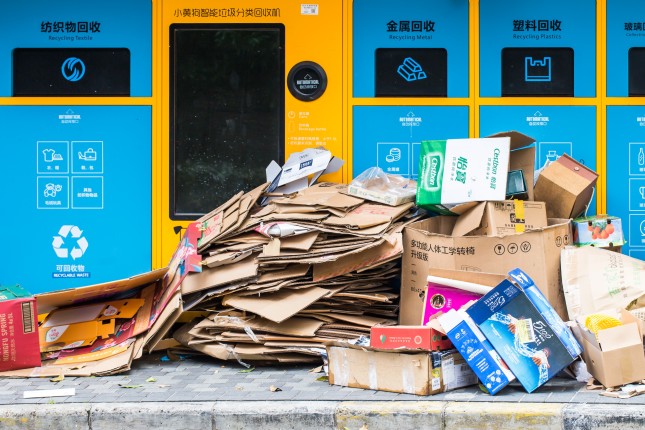
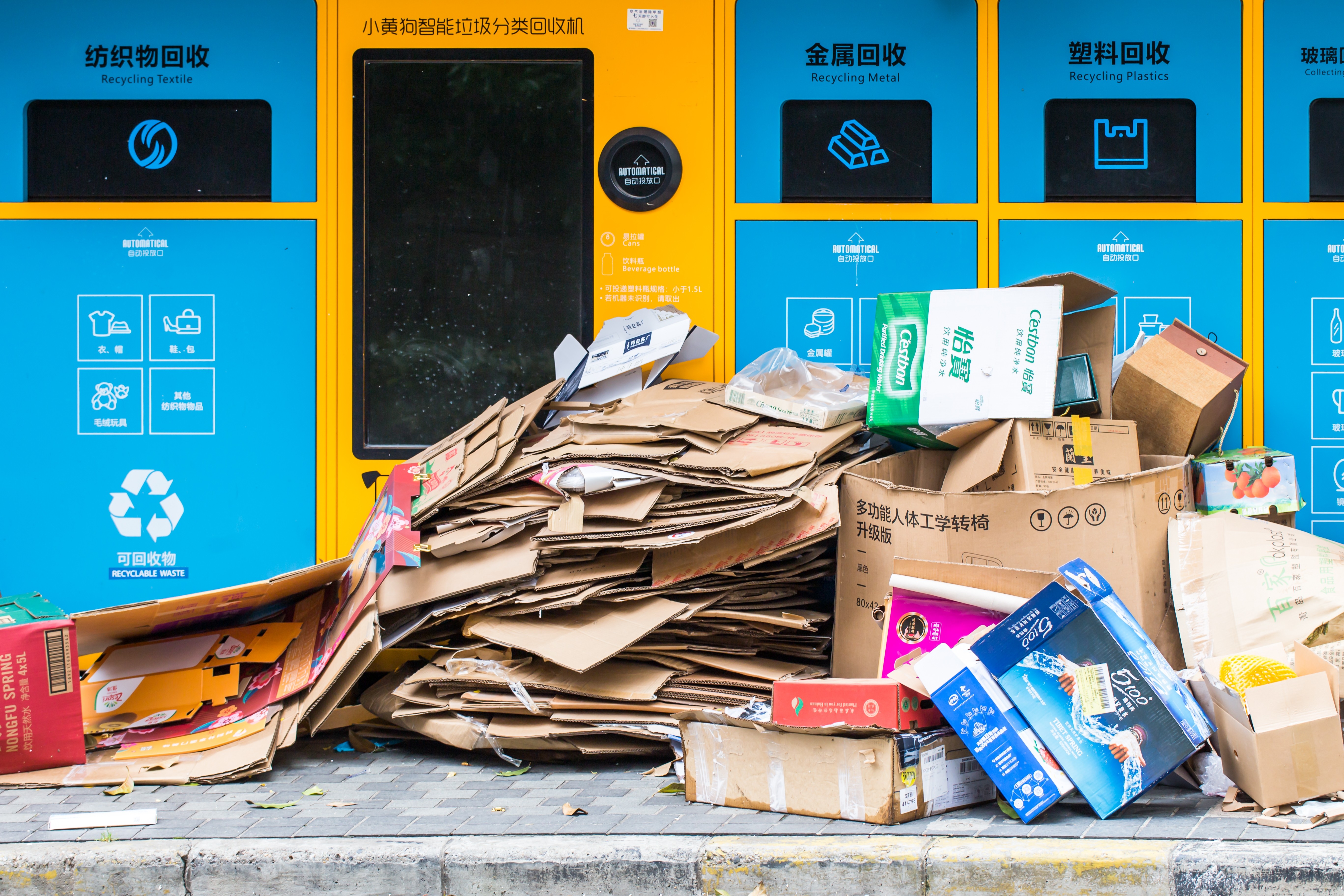
    In early January of this year, China’s “National Sword” policy banned imports of non-industrial plastic waste. The ban forces exporting countries to find new dumping grounds for their waste, which is estimated to total nearly 111 million metric tons by 2030. China’s decision has exposed deep structural flaws and interdependencies in the global waste management system. Western countries that have long depended on China to take their garbage are now struggling to deal with mounds of plastic trash, while China lacks the low-priced labor needed to effectively sort and process waste.

    MORE
  • How Family Planning Can Help Save Cheetahs

    ›
    Guest Contributor  //  June 20, 2018  //  By Wilson Center Staff
    Mother and Child

    This article by Sophie Edwards originally appeared on Devex.

    Conservationists and development practitioners may not have always seen eye to eye, but a new partnership between a cheetah conservation charity and a network of reproductive health NGOs is making the case for why these groups need to work more closely together.

    MORE
  • Limited Water for Unlimited Development: Q&A With Shaofeng Jia

    ›
    China Environment Forum  //  Choke Point  //  Q&A  //  June 14, 2018  //  By Lan Geng
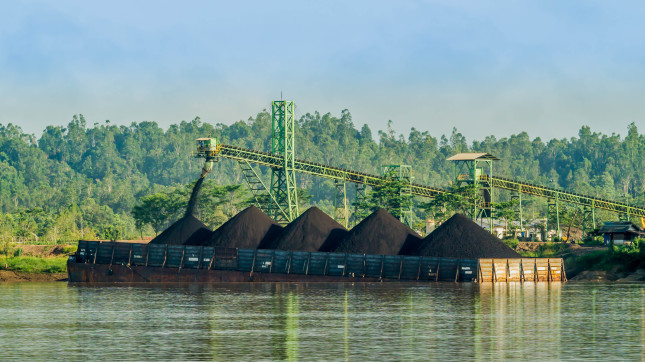
    Coal Mine Inner Mogolia

    A quarter of the coal that powers China’s economy is mined in Inner Mongolia, one of the country’s most water-scarce provinces with only slightly under two percent of China’s total water resources. The coal-rich city of Ordos, which produces nearly 70 percent of all the coal in Inner Mongolia, is bookended by expanding deserts—Kubuqi to the north and Maowushu to the south—and may one day run out of water and face a “Day Zero” like Cape Town in South Africa. Both the central and local governments are promoting a number of efforts to create new water supplies in Ordos, such as treating brackish waters and trading water rights. To learn more, the China Energy & Environment Forum recently interviewed Shaofeng Jia, the Deputy Director of Water Resources Research Center at the Chinese Academy of Sciences, who recently completed an extensive study on water-energy confrontations in Inner Mongolia.

    MORE
  • Pangolins on the Brink as Africa-China Trafficking Persists Unabated

    ›
    China Environment Forum  //  May 24, 2018  //  By Sharon Guynup
    Pangolin

    While the pangolin’s thick overlapping scales protect it from predators such as lions, this animal is an easy mark for illegal wildlife traffickers. Image courtesy of the Tikki Hywood Foundation, Zimbabwe.

    This article by Sharon Guynup originally appeared on Mongabay.

    Acting on a tip, Nigerian customs operatives raided an apartment in the southwest city of Ikeja in February. Inside, they found some 4,400 pounds of pangolin scales, and 218 ivory tusks—and arrested a Chinese suspect, Ko Sin Ying, who lived there.

    A few months earlier, at the other end of a well-worn trade route, Chinese customs officials made the largest-ever seizure of pangolin scales in the port of Shenzhen. They discovered an “empty” shipping container that had come in from Africa—stuffed with 13 tons of scales. They were packaged in bags that camouflaged their true contents beneath a veneer of charcoal. That haul had killed an estimated 20,000 to 30,000 animals, each about as big as a medium-sized dog.

    MORE
  • Grassroots Solutions for Solid Waste in China’s Growing Cities

    ›
    China Environment Forum  //  May 17, 2018  //  By Dongping Wang & Lyssa Freese
    lead image

    In June 2016, the government of the Chinese city of Xiantao cancelled an incineration project following protests by residents who felt they were not adequately consulted before the project was approved. As growing Chinese cities produce more construction and consumer waste, incineration projects have increased—along with widespread protests of their environmental and health consequences.

    MORE
  • China’s Ready to Cash In on a Melting Arctic

    ›
    China Environment Forum  //  May 10, 2018  //  By Sherri Goodman & Lyssa Freese
    Xue_Long,_Fremantle,_2016_(11)-1

    This article by Sherri Goodman and Lyssa Freese originally appeared in Foreign Policy.

    Put simply, “the damn thing melted,” Navy Secretary Richard Spencer explained in recent testimony, referring to Arctic ice melt as the trigger for the new U.S. Navy Arctic Strategy that is to be released this summer. What the Navy planned as a 16-year road map is in need of updates after only four years, in part due to receding polar ice caps, which are “opening new trade routes, exposing new resources, and redrawing continental maps,” but also in part due to the rise of China as an “Arctic stakeholder” and increasing important player in the region.

    MORE
Newer Posts   Older Posts
View full site

Join the Conversation

  • RSS
  • subscribe
  • facebook
  • G+
  • twitter
  • iTunes
  • podomatic
  • youtube
Tweets by NewSecurityBeat

Trending Stories

  • unfccclogo1
  • Pop at COP: Population and Family Planning at the UN Climate Negotiations

Featured Media

Backdraft Podcast

play Backdraft
Podcasts

More »

What You're Saying

  • Volunteers,At,The,Lagos,Food,Bank,Initiative,Outreach,To,Ikotun, Pan-African Response to COVID-19: New Forms of Environmental Peacebuilding Emerge
    Rashida Salifu: Great piece 👍🏾 Africa as a continent has suffered this unfortunate pandemic.But it has also...
  • A desert road near Kuqa An Unholy Trinity: Xinjiang’s Unhealthy Relationship With Coal, Water, and the Quest for Development
    Ismail: It is more historically accurate to refer to Xinjiang as East Turkistan.
  • shutterstock_1779654803 Leverage COVID-19 Data Collection Networks for Environmental Peacebuilding
    Carsten Pran: Thanks for reading! It will be interesting to see how society adapts to droves of new information in...

What We’re Reading

  • Rising rates of food instability in Latin America threaten women and Venezuelan migrants
  • Treetop sensors help Indonesia eavesdrop on forests to cut logging
  • 'Seat at the table': Women's land rights seen as key to climate fight
  • A Surprise in Africa: Air Pollution Falls as Economies Rise
  • Himalayan glacier disaster highlights climate change risks
More »
  • woodrow
  • ecsp
  • RSS Feed
  • YouTube
  • Twitter
  • Facebook
  • Home
  • Who We Are
  • Publications
  • Events
  • Wilson Center
  • Contact Us
  • Print Friendly Page

© Copyright 2007-2021. Environmental Change and Security Program.

Woodrow Wilson International Center for Scholars. All rights reserved.

Developed by Vico Rock Media

Environmental Change and Security Program

Woodrow Wilson International Center for Scholars

Ronald Reagan Building and International Trade Center

  • One Woodrow Wilson Plaza
  • 1300 Pennsylvania Ave., NW
  • Washington, DC 20004-3027

T 202-691-4000