-
1.3 Meters of Sea-Level Rise By 2100, and the Effects of Belo Monte’s Forced Displacement
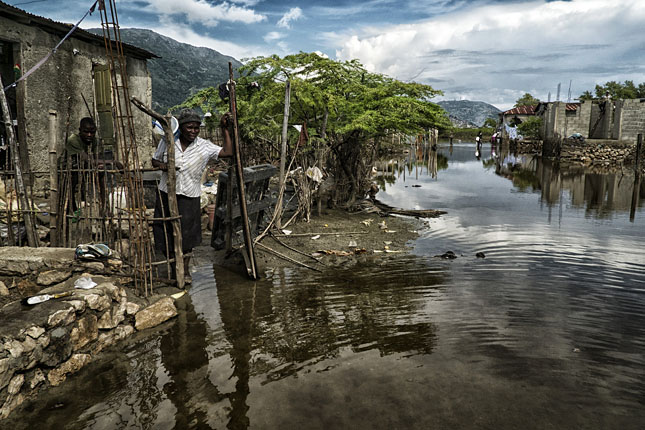
› A study published by the Proceedings of the National Academy of Sciences projects future sea-level rise with a new model, providing crucial information for coastal planning and further impetus to cut carbon emissions. Sifting through data on thermal expansion and retreating glaciers, the two leading causes of sea-level rise in the past century, the authors confirm that sea level is rising at an unprecedented rate.
 -
The Environment and Energy Stories to Watch in 2016
›The climate agreement reached in Paris last December, seen by many as a critical step toward lowering greenhouse gas emissions, was big news – perhaps too big. Pointing to the thousands of articles about COP-21, National Geographic Senior Editor Marla Cone asked at a recent Wilson Center panel, “Is this a wise use of resources, when newsrooms are so stretched thin, to have everybody pretty much chasing the same stories?”
-
Suzanne Ehlers & Simon Wright, The World Post
Zika Another Sign of Urgent Need for Primary Care
›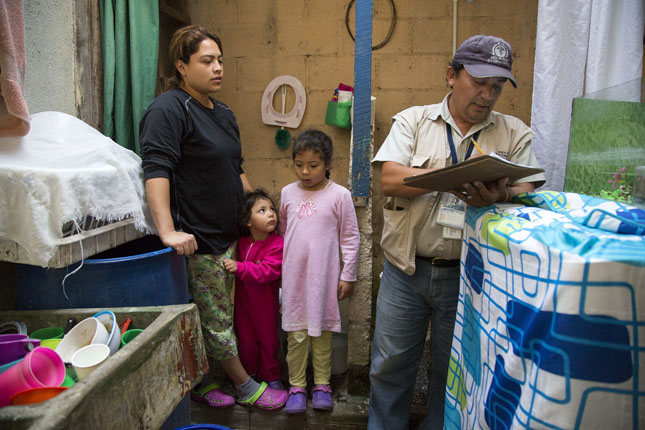
On February 1, the World Health Organization declared the spread of the Zika virus a public health emergency. The declaration was the WHO’s highest level of warning – so dire, in fact, that it has only been declared three times in the organization’s history. We believe that, as with Ebola, the lesson we learn must be the importance of robust universal primary health care services.
-
Water and Security Hotspots to Watch in 2016 [Infographic]
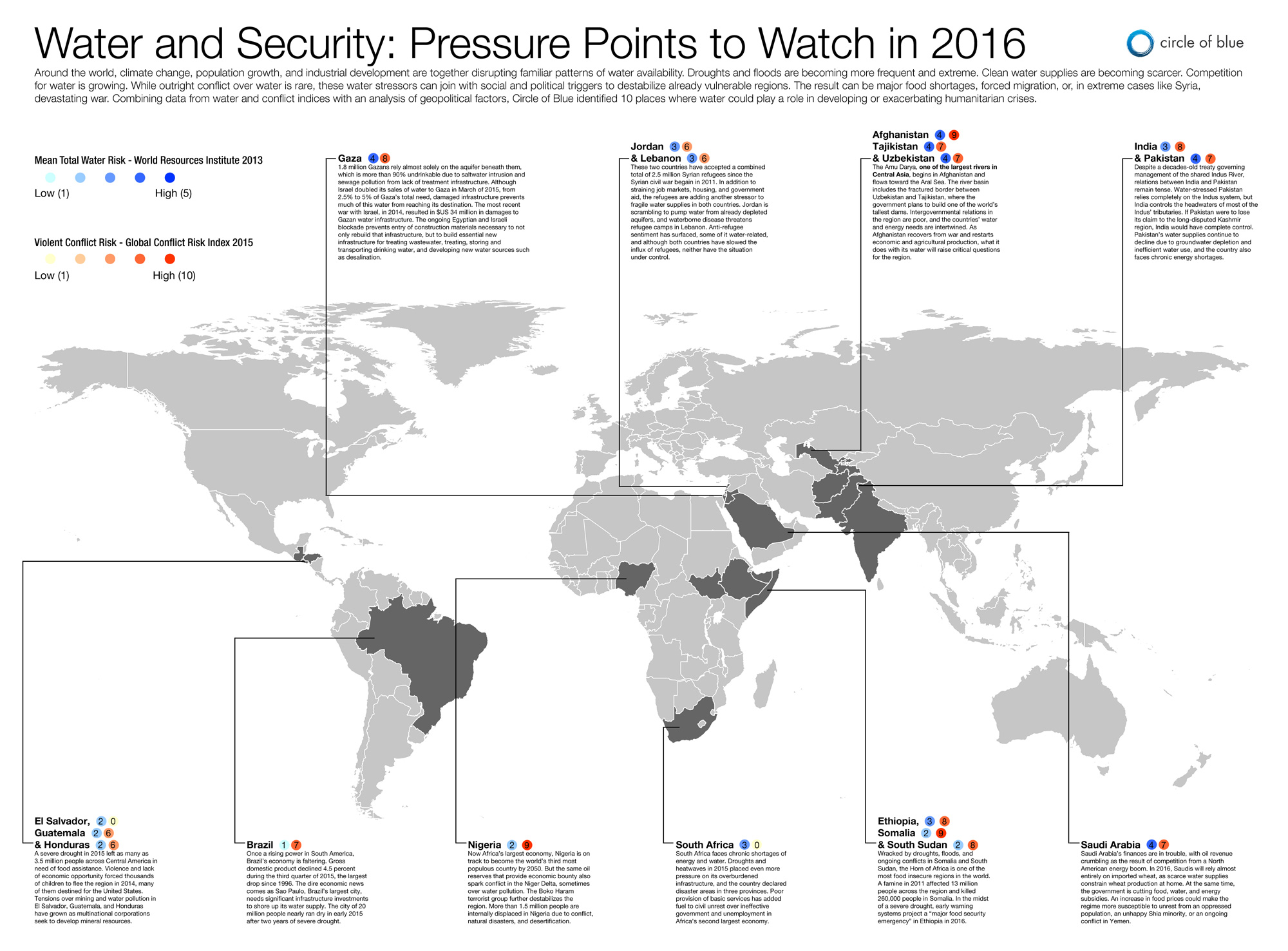
›The ongoing violence in Syria exhibits the potential for water problems – a historic drought, in this case – to exacerbate existing social and political problems and contribute to humanitarian crises. In a recently released infographic, Circle of Blue combined data from the European Commission Joint Research Center’s Global Conflict Risk Index and the World Resources Institute’s Aqueduct Water Risk Atlas to identify 10 hotspots around the world where water “could play a role in developing or exacerbating humanitarian crises” in 2016.
-
Zika Virus Prompts El Salvador and Others to Discourage Pregnancy – What Are the Potential Consequences?
›The government of El Salvador took a truly extraordinary step in an attempt to control the rapidly spreading Zika virus last week by asking its citizens to avoid getting pregnant from now until 2018. Yes, you read that right.
-
Lisa Palmer, Yale Environment 360
Will Indonesian Fires Spark Reform of Rogue Forest Sector?
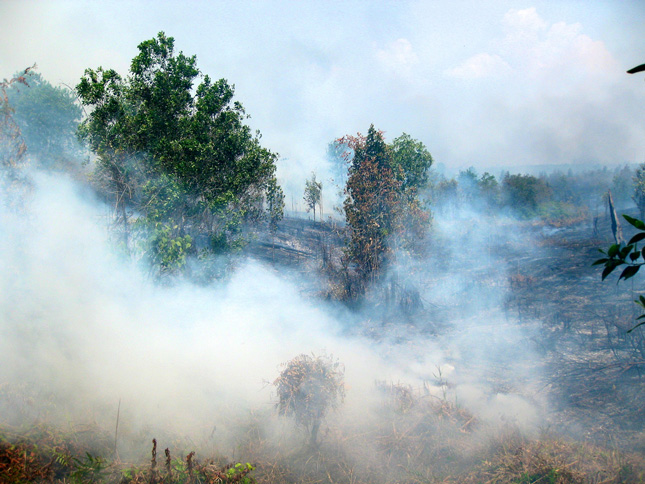
›November 11, 2015 // By Wilson Center StaffThe fires that blazed in Indonesia’s rainforests in 1982 and 1983 came as a shock. The logging industry had embarked on a decades-long pillaging of the country’s woodlands, opening up the canopy and drying out the carbon-rich peat soils. Preceded by an unusually long El Niño-related dry season, the forest fires lasted for months, sending vast clouds of smoke across Southeast Asia.
-
Growing Role of Armed Forces in Disaster Relief a Dangerous Trend for Latin America
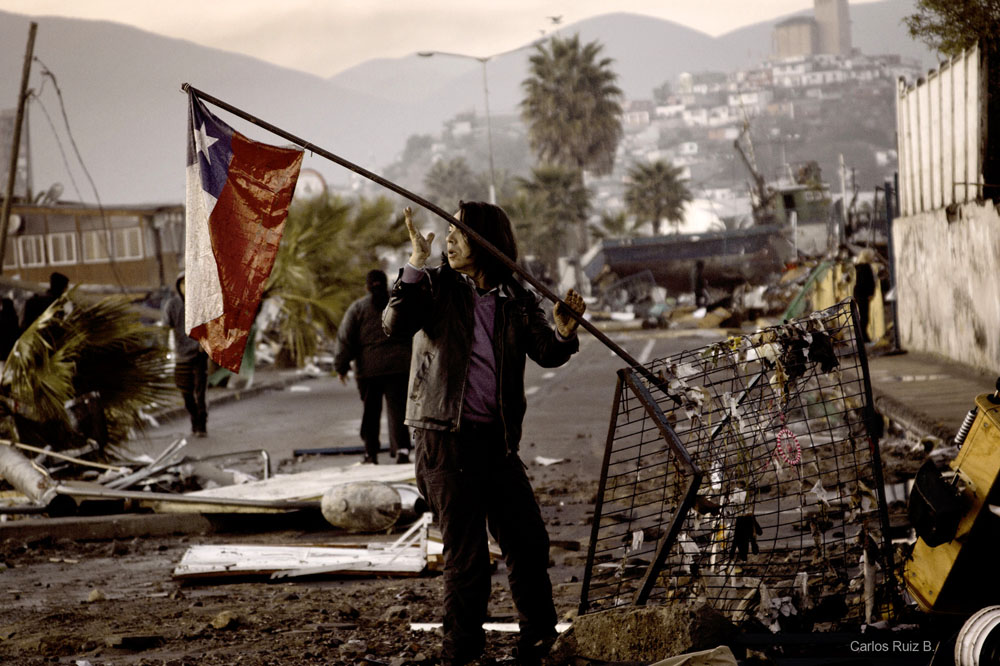
›From earthquakes to floods, when natural disasters strike, the military is often called on to bolster civilian responses. Policymakers throughout Latin America in particular are increasingly relying on the armed forces for emergency assistance.
-
New Research Links Water Security and Economic Growth
›While it is intuitively clear that economic growth is related to water security – understood here as both water availability and also exposure to water-related risks such as drought and floods – there has been very little empirical evidence of this relationship to date.
Showing posts from category Brazil.