• woodrow wilson center
  • ecsp

New Security Beat

Subscribe:
  • rss
  • mail-to
  • Who We Are
  • Topics
    • Population
    • Environment
    • Security
    • Health
    • Development
  • Columns
    • China Environment Forum
    • Choke Point
    • Dot-Mom
    • Friday Podcasts
    • Navigating the Poles
    • Reading Radar
  • Multimedia
    • Water Stories (Podcast Series)
    • Backdraft (Podcast Series)
    • Tracking the Energy Titans (Interactive)
  • Films
    • Water, Conflict, and Peacebuilding (Animated Short)
    • Paving the Way (Ethiopia)
    • Broken Landscape (India)
    • Scaling the Mountain (Nepal)
    • Healthy People, Healthy Environment (Tanzania)
  • Publications
  • Events
  • Contact Us

NewSecurityBeat

The blog of the Wilson Center's Environmental Change and Security Program
Showing posts from category Bangladesh.
  • Mismatched Flood Control System Compounds Water Woes in Southern Bangladesh

    ›
    Guest Contributor  //  January 3, 2017  //  By Nikita Sampath
    Kukumoni-Munda

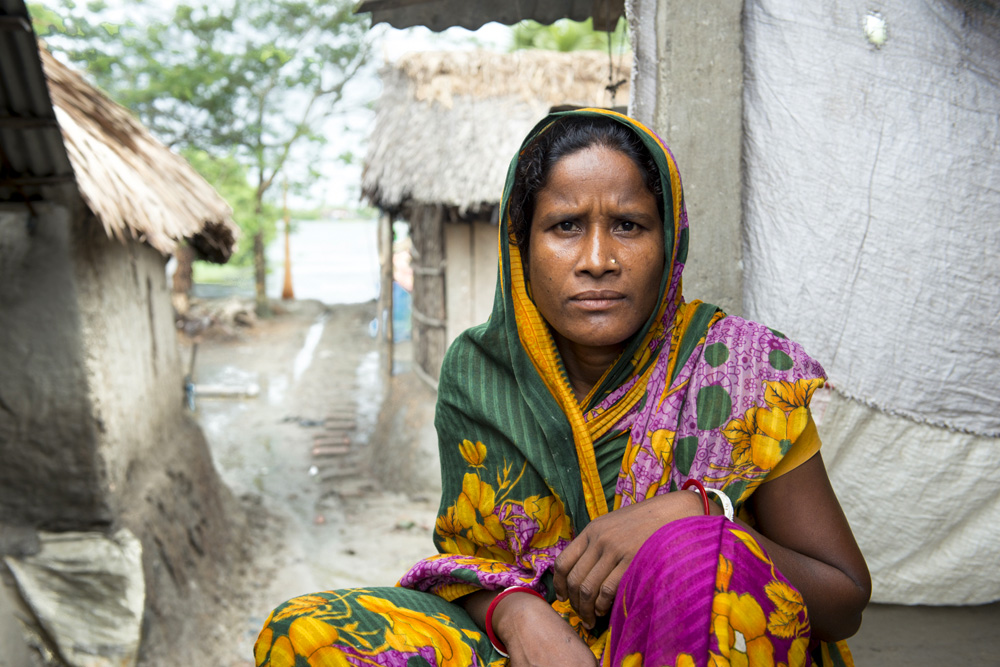
    In Koyra Number 6, a coastal hamlet bordering the Sundarbans in southwestern Bangladesh, a group of men unload barrels of water from their trawlers – 50 drums holding 30 liters each. They announce their arrival by yelling. And word spreads. This is how this village gets their daily drinking water, from a town nine miles away.

    MORE
  • USAID Climate Action Review: 2010-2016 (Report Launch)

    ›
    From the Wilson Center  //  December 19, 2016  //  By Graham Norwood
    DRC-farm

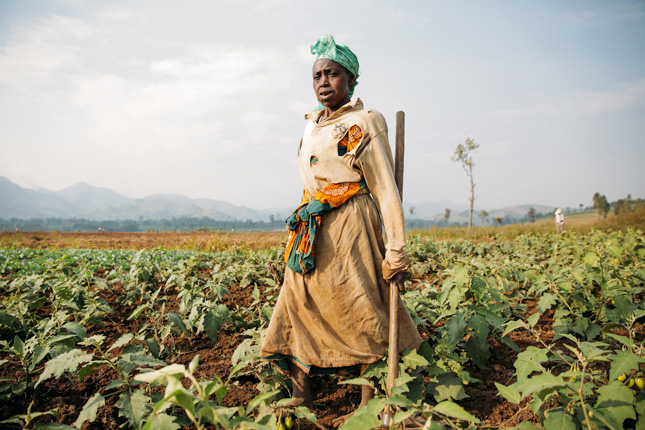
    “Climate work is practical, common-sense, good development,” said Carrie Thompson, deputy assistant administrator at the Bureau for Economic Growth, Education, and Environment at the U.S. Agency for International Development (USAID). “It’s prevention, and we all know that preventative medicine is the best medicine.”

    MORE
  • Getting to Sustainable Palm Oil: A Hardware and Software Approach to a Market Problem

    ›
    Guest Contributor  //  November 23, 2016  //  By Noel Taylor
    palm-plantation

    The palm oil sector is at a crossroads. Despite growing awareness of its massive effects on deforestation, the largely unregulated and decentralized industry has struggled to adopt, follow, and document rigorous sustainable sourcing standards.

    MORE
  • Assessing Feed the Future in Bangladesh: Production Gains, Nutrition Challenges

    ›
    September 30, 2016  //  By Anam Ahmed
    rice-field

    Among all the countries receiving agriculture and nutrition assistance through the U.S. government’s Feed the Future initiative, Bangladesh receives the third most, at approximately $50 million a year ($55 million has been requested for 2017). Yet Bangladesh’s population is larger than that of the two countries ahead of it, Tanzania and Ethiopia, combined.

    MORE
  • Report: Deadly Miscues on the Brahmaputra an Argument for More Transboundary Cooperation

    ›
    Choke Point  //  September 26, 2016  //  By Victoria Johnson
    Tibet-Temple

    Over the course of 1,800 miles, 5,300 vertical feet, and at least five name changes, the Brahmaputra River, in sometimes turbulent outbursts, flows from the Tibetan plateau to the Bay of Bengal. Along the way, it crosses three countries, including major geopolitical rivals China and India, and supplies 90 percent of downstream Bangladesh’s freshwater during the dry season.

    MORE
  • The Women of Sarawak and Mindoro on the “Invisible Battles” of Climate Change

    ›
    Eye On  //  September 8, 2016  //  By Sreya Panuganti

    “At the Eye of the Storm” is a series exploring how empowering women can ensure they are climate victors, not climate victims.

    Although separated by a thousand miles, the women of the Malaysian state of Sarawak and the Filipino island of Mindoro are united by a major struggle: climate change. As rainfall patterns grow increasingly unpredictable, natural disasters become more frequent, and drought ravages once-arable land, women are on the frontlines in both communities.

    MORE
  • As Cities Grow More Crammed and Connected, How Will We Discourage the Spread of Disease?

    ›
    Guest Contributor  //  August 19, 2016  //  By Nate Berg
    la-paz

    The original version of this article appeared on Ensia.

    Near the corner of Broadwick and Lexington in London’s Soho neighborhood, a single spot on the ground has influenced more than 150 years of urban development. It’s the location of a water pump that in 1854 physician John Snow pinpointed as the source of contamination leading to a widespread outbreak of cholera in the neighborhood that killed more than 600 people.

    MORE
  • Mobile Phone Data Helps Identify Displaced People Faster, Cheaper, More Accurately

    ›
    Guest Contributor  //  August 18, 2016  //  By David J. Wrathall & Xin Lu
    Figure1

    If we are to avert the worst of climate change impacts, we need better tools for identifying patterns of displacement and migration around climate extremes. In vulnerable developing countries, increasingly frequent and intense storms will likely exacerbate current patterns of displacement and permanent migration. Displacement often leads to humanitarian crises in the short term and can derail progress toward development in the long term. Because of this dangerous potential, displaced persons and migrants are a common focus in humanitarian responses. However disaster responders must often “fly blind” without the benefit of current, accurate information about the worst-affected populations. To better respond to the impacts of climate change as they unfold, we will need more rapid, cost-effective, and accurate methods for identifying patterns of displacement and migration.

    MORE
Newer Posts   Older Posts
View full site

Join the Conversation

  • RSS
  • subscribe
  • facebook
  • G+
  • twitter
  • iTunes
  • podomatic
  • youtube
Tweets by NewSecurityBeat

Trending Stories

  • unfccclogo1
  • Pop at COP: Population and Family Planning at the UN Climate Negotiations

Featured Media

Backdraft Podcast

play Backdraft
Podcasts

More »

What You're Saying

  • Volunteers,At,The,Lagos,Food,Bank,Initiative,Outreach,To,Ikotun, Pan-African Response to COVID-19: New Forms of Environmental Peacebuilding Emerge
    Rashida Salifu: Great piece 👍🏾 Africa as a continent has suffered this unfortunate pandemic.But it has also...
  • A desert road near Kuqa An Unholy Trinity: Xinjiang’s Unhealthy Relationship With Coal, Water, and the Quest for Development
    Ismail: It is more historically accurate to refer to Xinjiang as East Turkistan.
  • shutterstock_1779654803 Leverage COVID-19 Data Collection Networks for Environmental Peacebuilding
    Carsten Pran: Thanks for reading! It will be interesting to see how society adapts to droves of new information in...

What We’re Reading

  • Rising rates of food instability in Latin America threaten women and Venezuelan migrants
  • Treetop sensors help Indonesia eavesdrop on forests to cut logging
  • 'Seat at the table': Women's land rights seen as key to climate fight
  • A Surprise in Africa: Air Pollution Falls as Economies Rise
  • Himalayan glacier disaster highlights climate change risks
More »
  • woodrow
  • ecsp
  • RSS Feed
  • YouTube
  • Twitter
  • Facebook
  • Home
  • Who We Are
  • Publications
  • Events
  • Wilson Center
  • Contact Us
  • Print Friendly Page

© Copyright 2007-2021. Environmental Change and Security Program.

Woodrow Wilson International Center for Scholars. All rights reserved.

Developed by Vico Rock Media

Environmental Change and Security Program

Woodrow Wilson International Center for Scholars

Ronald Reagan Building and International Trade Center

  • One Woodrow Wilson Plaza
  • 1300 Pennsylvania Ave., NW
  • Washington, DC 20004-3027

T 202-691-4000