Showing posts from category Asia.
-
“There Is No Choice:” Climate, Health, Water, Food Security Must Be Integrated, Say Experts
›August 9, 2010 // By Russell SticklorBureaucratic stovepipes plague international development efforts, and aid for pressing environmental and human security concerns—such as climate change, food shortages, fresh water access, and global health threats—rarely matches the reality on the ground in the developing world, where such health and environmental problems are fundamentally interconnected.
Instead, development efforts in the field—whether spearheaded by multilaterals, bilaterals, or NGOs—are commonly devoted to single sectors: e.g., the prevention and treatment of a single disease; the implementation of irrigation infrastructure in a specific area; or the introduction of a new crop in a certain region. The reasons for such a narrow focus can come from multiple sources: finite resources, narrowly constructed funding streams, emphasis on simple and discrete indicators of success, and institutional and professional development penalties for those who conduct integrated work. But some experts argue that integrating problem-solving initiatives across categories would not only improve the efficacy of development efforts, but also better improve lives in target communities.
As part of the USAID Knowledge Management Center‘s 2010 Summer Seminar Series, a recent National Press Club panel on integration featured a frank discussion of both the opportunities and challenges inherent in breaking down barriers within and between development agencies. Panelists from the World Bank’s Environment Department, the White House Council on Environmental Quality, and the Woodrow Wilson Center’s Environment Change and Security Program weighed in on the prospects for cross-sectoral integration.
Addressing the impacts of a global problem like climate change “requires multilevel approaches,” and necessitates that we “think multisectorally along the lines of agriculture, water, transportation, energy, [and] security,” said Loren Labovitch of the White House Council on Environmental Quality. The four topics under discussion—climate change, food security, water, and health—are all Obama administration priorities, as reflected by dedicated programs and special initiatives. Finding ways to practically integrate these interrelated challenges (through efforts like the Feed the Future Initiative or the Global Health Initiative) is getting more attention from policy analysts and policymakers with each passing year.
Integration in Practice: Success Stories
While there may be an emerging willingness to discuss and even experiment with holistic programming, what does it actually look in practice? Panelist Geoff Dabelko, director of the Woodrow Wilson Center’s Environmental Change and Security Program, singled out integrated development programs in the Philippines, the Democratic Republic of Congo, and Asia as examples.
Philippines: The PATH Foundation Philippines’ Integrated Population and Coastal Resource Management (IPOPCORM) initiative uses an integrated approach to address health and environmental concerns in coastal communities. Their “basket of services” includes establishing a locally managed protected marine sanctuary to allow local fish stocks to recover, promoting alternative economic livelihoods outside of the fishing industry, and improving access to local health services and commodities, said Dabelko. To date, IPOPCORM has yielded several notable improvements, among them reduced program costs and improved health and environmental outcomes as compared to side-by-side single sector interventions. A forthcoming peer-reviewed article will appear in Environmental Conservation, and will detail the controlled comparison study of the IPOPCORM project.
Democratic Republic of Congo: Mercy Corps has also successfully pursued cross-sectoral programming as part of a larger effort to be more holistic in its humanitarian and development responses. In war-torn eastern DRC, Mercy Corps brought practitioners with expertise in natural resource management into the fold of what has historically been an emergency relief mission. In particular, the Mercy Corps mission has fused humanitarian assistance with longer-term development efforts such as enhanced environmental stewardship. For example, promoting the use of fuel-efficient cookstoves eases pressure on local forest resources by lowering the need for firewood, and improves respiratory health by lowering air pollution. The project scaled up the effort through resources from further integration, with carbon credits from avoided emissions being sold through a local broker to the European cap and trade market. These resources in turn helped finance more cook stoves, which now total 20,000 for this project.
“The lesson is we have no excuse for not doing this anywhere in the world and saying some place is too unstable,” Dabelko said. “If we can do it [integrated projects] in eastern DRC, we should be able to do it anywhere.”
Asia: Tackling programmatic integration starts with better understanding the interconnections between environmental and health challenges. Dabelko cited a recent effort of the environment and natural resources team within USAID’s Asia Bureau as an example of breaking out of narrow bureaucratic stovepipes.
USAID staff recognized that a wide set of climate, energy, economic, governance, and conflict issues affected their core biodiversity and water portfolios, even if they did not have the time, expertise, or resources to investigate those issues in detail. Trends that appeared to be in the periphery were not viewed as peripheral to planning and designing programs for long-term success.
Working with the Woodrow Wilson Center, the USAID Asia Regional Bureau engaged experts on a diverse set of topics normally considered outside their portfolios. The resulting workshop series and report led to a deeper understanding of the possible impacts of increased Himalayan glacier melt and Chinese hydropower plans on food security and biodiversity programs in the lower reaches of the Mekong River. Bringing analysis from these topically and geographically remote areas into local-level development planning is a process that will require a similar willingness to go outside the typical bounds of one’s brief.
More Integration Ahead?
These case studies provide a glimpse of what integrated programming can look like on the ground. Still, significant hurdles remain standing in the way of regular and effective integration. Cross-sectoral programming demands that old problems be addressed in innovative and perhaps unfamiliar ways, requiring the addition of new capacity in development organizations and better coordination within and between agencies. That can be a complicated process, noted Dabelko, since efforts to pursue greater programming integration can be “hamstrung by earmarks and line items.”
Integration can also prove tricky because it requires a greater willingness to accept multiple indicators of success unfolding over different time frames—health gains may occur quickly, for example, while progress on environmental conservation may unfold less speedily. This means existing programs might need to be reshaped and reoriented to accommodate these divergent time frames, which could prove somewhat difficult. “Integration can be a challenge, both from a programming perspective and from an organizational perspective,” acknowledged moderator Tegan Blaine, climate change advisor for USAID’s Africa Bureau.
Further, the temptation remains strong among appropriators and implementers alike to maintain control over authority and resources in their traditional portfolios. Getting long-time practitioners in particular issue areas to willingly cede some of their turf in the pursuit of greater integration has historically been the “real world” that stands in the way of such integrated work.
But, as shown by the standing-room-only crowd at the seminar, momentum is slowly starting to build in pursuit of breaking down old programming walls and finding new approaches to addressing emerging challenges in human and environmental security.
“There is no choice” but to fuse development agendas with climate change adaptation efforts, asserted Warren Evans, director of the World Bank’s Environment Department. “It can’t be a parallel process anymore.”
Photo Credit: “2010 Summer Seminar Series – July 15th Panel Discussion on Food Security, Climate Change, Water and Health,” used courtesy of USAID and the National Press Club. -
‘Restrepo’: Inside Afghanistan’s Korengal Valley
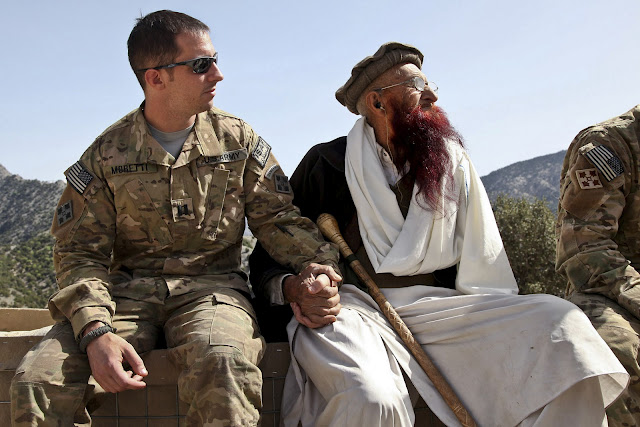
›August 2, 2010 // By Marie HokensonRestrepo, the riveting new documentary film from Tim Hetherington and Sebastian Junger, follows a platoon of U.S. soldiers deployed in the dangerous Korengal Valley of Afghanistan. As a cadet at West Point majoring in human geography, I was fascinated to watch the ways the soldiers confronted and adapted to the challenges posed by the local culture of the remote Afghan community surrounding their outpost.
West Point’s human geography program delves into the relationships between facets of society and geography that may also have potentially significant security implications. In the wars in Iraq and Afghanistan, U.S. troops fight insurgents in difficult environments – from heavily urbanized cities to extremely remote valleys – while interacting with civilian populations with radically different languages and cultures.
Restrepo: Culture in Action and Under Fire
At the remote outpost Restrepo, named in memory of a medic killed in action, the platoon receives daily fire from insurgents as they seek to improve security enough to allow the construction of a road through the valley.
At a weekly shura, the company commander explains the benefits of the road to the village elders, yet they are either unconvinced or uninterested. This frustrating meeting reveals a cultural disconnect: the Americans see the road as the way to win Afghan “hearts and minds” by facilitating progress and bringing more revenue to the community, but the Afghans are suspicious of the Americans’ motives and promises, and not convinced of the benefits.
Another culture clash arises when a cow is caught in the outpost’s concertina wire. The soldiers kill the seriously injured cow, but this proves to be a continual source of tension in negotiations between the soldiers and the locals. Killing the cow was illegal, say the Afghan elders, who seek financial compensation that the Army is not willing to provide. Perhaps better understanding of regional culture could have prevented this relatively minor incident from souring relations.
On the other hand, by attending the traditional shura gatherings with village elders, the U.S. soldiers are showing their respect for Afghan culture while facilitating negotiations and, potentially, the sharing of useful intelligence.
Although not shown in the film, the U.S. military also demonstrates its understanding of Afghan culture through the growing use of female soldiers to reach out to Afghan women. As many women in Afghanistan are not allowed to be seen by unrelated men, female soldiers are tasked with searching houses and Afghan women, as well as assessing their need for aid and gathering intelligence from them.
West Point: Culture in Theory and Practice
Dealing with the problems faced by today’s soldiers, like those in Restrepo, requires understanding the current conflict landscape and its security implications. Understanding the influence of religion, language, development, and people on the world’s geography is vital to mapping the combat terrain.
Human geography instruction at West Point provides cadets with more perceptive views of other countries and the complex problems they face. Military geography analyzes urban and natural environments, as well as related interactions, such as the impact of population dynamics and nature resources on military operations. Land-use planning and management addresses conflicts over land use and environmental strategies. Other opportunities, such as study-abroad programs and interactions with foreign cadets, increase our exposure to other cultures and geographies.
Through my study of human geography, I have gained a much greater understanding of the people and countries where I travel and work today – and where I will go in the future as a commissioned officer in the U.S. Army.
Marie Hokenson is a cadet at the United States Military Academy at West Point and an intern with the Woodrow Wilson Center’s Environmental Change and Security Program.
Photo Credit: “Mutual support,” courtesy of flickr user The U.S. Army. -
PRB Maps the PHE World
›The Population Reference Bureau (PRB) has created an interactive Google map that highlights population, health, and environmental programs in Africa, Asia, and Latin America. The Population, Health, and Environment (PHE) Map shows the locations of projects that combine improved health services, sustainable natural resource management, and ecosystem conservation.
According to PRB’s Maura Graff and Jason Bremner, “the map aims to give viewers both a sense of the scale of current PHE integration efforts, and specific information about individual organizations, projects, and their location.”
Clicking on a marker will reveal the title of a PHE program, a short description of its goals and outcomes, a link to its website, and the occasional picture of the project in action. A list on the left alphabetically catalogs all the projects based on region.
The map also provides the opportunity for those working on PHE projects in the field to find nearby projects in order to share experiences. For example, in Ethiopia, Population Media Center and DSW’s Youth to Youth could share lessons learned about disseminating information on the reduction of female genital mutilation, the importance of providing family planning services to young married couples, and the linkage between reduced family size and enhanced stewardship of social and natural resources.
Communities that understand how population, health, and environment are intertwined are more engaged and energized to make a difference. In a video interview with ECSP, Roger-Mark De Souza, director of foundation and corporate relations at the Sierra Club, explains that PHE projects are so effective because solutions to a community’s liked problems demand this logical integration. For example, while learning about the health benefits of birth spacing, father and mothers also learn how their family planning decisions can improve the economic and environmental prospects of the community.
Just like PHE projects themselves, the map is a work in progress; PRB is seeking to add PHE projects that are still active or ended after 2005. Please contact Maura Graff if you would like to add a project.
Josephine Kim is a cadet at the United States Military Academy at West Point, and an intern with the Woodrow Wilson Center’s Environmental Change and Security Program. -
A Return to Rural Unrest in Nepal?
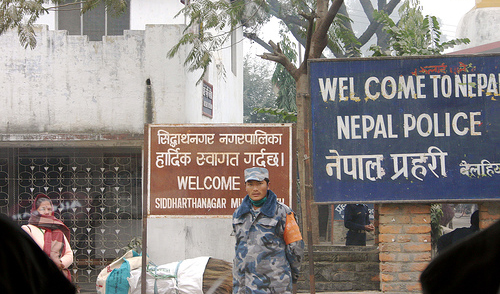
›July 27, 2010 // By Russell SticklorIn the four years since the end of Nepal’s civil war, political progress in creating a multi-party unity government in Kathmandu has moved in fits and starts. While the effort to bring the Maoists into the fold has made some headway since 2006, continuing environmental and economic troubles in the Nepalese countryside threaten to undermine these tentative steps.
In recent months, a new threat to political stability has emerged: the Sapta Kosi Multipurpose Project, a massive, India-backed hydropower scheme in eastern Nepal currently in the early stages of development. Once operational, the controversial dam—slated to reach a height of nearly 270 meters, making it one of the tallest dams in the world—is projected to generate 3,300 megawatts of electricity.
A proposed barrage and series of canals round out the project, enabling new irrigation and flood-control infrastructure in both eastern Nepal and the Indian state of Bihar, immediately to the south. But the potential environmental impacts of the mega-project have already sparked significant backlash among some Maoist-linked ethnic groups in the region, where the reach and influence of Nepal’s fledgling unity government is tenuous at best.
“Strong” Protests Threatened Over India-Backed Mega-Dam
In June, a network of 15 groups sympathetic to the Nepalese government’s Maoist wing warned of “strong” protests if survey work on the dam continued and “the voice of the indigenous people was not heard.” A memo released by the group dismissed the Sapta Kosi project as “anti-people.”
Specific criticisms of the project have ranged from safety concerns (the dam would be built in a seismically active region) to population displacement. Maoist leaders in the region have alleged that many villages—as well as important local religious sites and valuable agricultural land—could be flooded if the project goes forward. Other Maoists say the project should be delayed until Nepal is reorganized as a federal republic, at which point the states directly impacted by Sapta Kosi could be given greater control over the project.
Meanwhile, some objections to the project have targeted Nepal’s partnership with India. According to ShanghaiNews.net, members of the Maoist opposition have insinuated that hydropower from Sapta Kosi will not be consumed domestically, but rather exported to meet the needs of energy-hungry India.
A number of prominent Nepalese and Indian environmental activists have also spoken against the project, including Medha Patkar, a well-known activist who has played a major role in many past Indian anti-dam protests. Patkar warns the project will not mitigate but instead worsen seasonal flooding, calling plans for the joint India-Nepalese dam project “inauspicious from [an] environmental, cultural and religious point of view,” according to the Water & Energy Users’ Federation-Nepal.
As Nepal Pledges Security for Dam Project, India Pushes Forward
In the past, threats against the Sapta Kosi project have caused surveillance work in the area to be suspended repeatedly. But after the latest round of warnings, the Nepalese government adopted a different tactic, pledging heightened security in the region to ensure the safety of Indian officials doing fieldwork.
In doing so, Nepal’s coalition government is throwing its limited weight around, and—to a degree—staking its reputation on its ability to prevent an outbreak of violence. Historically, Nepal’s government has been largely bypassed or ignored in matters of hydroelectric development. As Nepal Water Conservation Foundation Director Dipak Gyawali told International Rivers in a June 2010 interview:The main players are private investors, with state entities and civil society unable to stand up to them….In Nepal, we just saw local politicians burn down the office of an international hydropower company even after the project was sanctioned by their leaders in the central government.
Gyawali added that during the Nepalese civil war (1996-2006), private developers were able to build “small hydropower projects even while a Maoist insurgency was raging because they did not ride roughshod over local concerns.” Regarding Sapta Kosi, Gyawali said the government should adopt a similar approach, and “start listening to the marginalized voices.” Otherwise, he warned, the Indian-Nepalese team spearheading the project “will be faced with delays, impasse, and intractable political problems,” including the potential for Maoist violence in the region. (As noted earlier this month in New Security Beat, the Indian government has also struggled with Maoist-linked violence in recent years, as New Delhi struggles to pacify a Naxalite insurgency in eastern and central India.)
Rural Nepal’s Troubles Far Bigger Than Sapta Kosi
Maoists may be wielding Sapta Kosi as a weapon to gain political leverage both in the countryside and Kathmandu, but the proposed dam is far from the only environmental issue impacting rural lives and threatening to undermine support for the central government.
In a country where firewood still accounts for 87 percent of annual domestic energy production, deforestation has been hugely problematic across rural Nepal. As of 2010, less than 30 percent of the country’s original forest-cover now remains. The rapid removal of forest cover has reduced soil quality, exacerbated seasonal flooding, and caused degraded water quality due to high sedimentation levels.
Further, as the country’s population grows at an annual rate of 2 percent, low soil productivity and unsustainable farming practices have turned Nepal’s effort to feed itself into a constant uphill struggle. According to the World Bank, the country sports one of the world’s highest ratios of population to available arable land, paving the way for potential further food shortages.
Sustainable energy development in Nepal perhaps represents one way of slowly restoring environmental health to the country. By investing in a more reliable national power grid, the central government could reduce rural dependence on firewood for fuel, allowing the country’s forests, soil, and waters to recover even as population increases. Further, hydroelectric projects like Sapta Kosi—implemented with greater involvement from local communities—could play an important role in moving the country forward. With an estimated untapped hydroelectric potential of 43,000 megawatts, Nepal could not only meet its own energy needs by developing its waterways, but profit from hydroelectric energy exports as well.
On the other hand, the Nepalese government could—at its own peril—continue to overlook rural populations’ grievances, and the environmental degradation unfolding outside Kathmandu. If left unchecked, however, these conditions could once again make the Maoist insurgency an appealing movement, potentially reviving grassroots support for anti-government extremism.
Sources: CIA, eKantipur.com (Nepal), International Rivers, Kathmandu Post, NepalNews.com, New York Times, ShanghaiNews.net, South Asia News Agency, Taragana.com, Thaindian News, Times of India, U.S. Energy Information Administration, WaterAid, Water & Energy Users Federation-Nepal, World Bank, World Wildlife Fund.
Photo Credit: “Neither in Nepal Nor India,” courtesy of Flickr user bodhithaj. -
U.S. Navy Task Force on Implications of Climate Change
›What about climate change will impact us? That’s the question the Navy’s Task Force Climate Change is trying to answer. Rear Admiral David Titley explains the task force’s objectives in this interview by the American Geophysical Union (AGU) at their recent “Climate Change and National Security” event on the Hill.
The task force is part of the military’s recent efforts to try to better understand what climate change will mean for the armed forces, from rising sea levels and ocean acidification to changing precipitation patterns. In the interview, Admiral Titley points out that for the Navy in particular, it is important to understand and anticipate what changes may occur since so many affect the maritime environment.
The Navy’s biggest near-term concern is the Arctic, where Admiral Titley says they expect to face significant periods of almost completely open ocean during the next two to three decades. “That has huge implications,” says Titley, “since as we all know the Arctic is in fact an ocean and we are the United States Navy. So that will be an ocean that we will be called upon to be present in that right now we’re not.”
Longer term, the admiral points to resource scarcity and access issues and sea level rise (potentially 1-2 meters) as the most important contributing factors to instability, particularly in places like Asia, where even small changes can have huge impacts on the stability of certain countries. The sum of these parts plus population growth, an intersection we examine here at The New Security Beat, is something that deserves more attention, according to Titley. “The combination of climate, water, demographics, natural resources – the interplay of all those – I think needs to be looked at,” he says.
Check out the AGU site for more information, including an interview with Jeffrey Mazo – whose book Climate Conflict we recently reviewed – discussing climate change winners and losers and the developing world (hint: the developing world are the losers).
Sources: American Geophysical Union, New York Times.
Video Credit: “What does Climate Change mean for the US Navy?” courtesy of YouTube user AGUvideos. -
‘Dialogue Television’ Explores Pakistan’s Population Challenge
›It’s difficult to imagine a scenario for a stable and peaceful world that doesn’t involve a stable and peaceful Pakistan. The country is among the world’s most populous and is also home to the world’s second largest Muslim population, making it the only Muslim majority nuclear state. Its history has been characterized by periods of military rule, political instability, and regional conflicts. This week on dialogue host John Milewski explores the nation’s changing demographics and what they may tell us about near and long term prospects for this vital U.S. ally with guests Michael Kugelman, Zeba Sathar, and Mehtab Karim.
Watch above or on MHz Worldview.
Michael Kugelman is program associate with the Wilson Center’s Asia Program. Much of his recent research and programming focus has involved demographics in Pakistan. He is a regular contributor to Dawn, one of Pakistan’s major English language newspapers.
Zeba Sathar is Pakistan country director at the Population Council in Islamabad. Prior to joining the council, she was chief of research in demography at the Pakistan Institute of Development Economics and a consultant with the World Bank.
Mehtab Karim is a distinguished senior fellow and affiliated professor with the School of Public Policy at George Mason University. Additionally, he is a senior research fellow at the Pew Research Center’s Forum on Religion and Public Life, specializing in global Muslim demographics. Previously, he was a professor of demography at Aga Khan University in Karachi.
Note: A QuickTime plug-in may be required to launch the video. -
‘Frontlines’ Interviews John Sewell: “Promoting Development Is a Risky Business”
›May 31, 2010 // By Wilson Center StaffQ: Foreign assistance has had major achievements over the past 50 years. What are some examples?
SEWELL: There have been many but off the top of my head I can think of three. First, the Green Revolution where the combined efforts of American aid and private foundations revolutionized agriculture in Asia. As a result, many more people lived a much longer time. Second, the efforts put into improving education, particularly of women and girls. The third is population growth. When I started working on development, the best predictions said that global population would rise to over 20 billion at the end of the 20th century. Now we know it will not go much above 9 billion and perhaps lower. That wouldn’t have happened without American leadership and funding.
Q: What are the major failures of foreign assistance?
SEWELL: Failures have occurred either because countries were not committed to development, or because aid agencies designed ineffective programs. But most major failures came about because aid was provided for political reasons— for Cold War purposes in Southeast Asia or the Middle East, not for economic and social development. And we should remember that promoting development is a risky business. If there were no failures, development agencies were being too cautious.
But the more important failures are at the strategic level. Assistance really is only effective when governments and leaders want to speed economic growth, improve health and education, and address poverty. When the government isn’t committed to development, a lot of aid is wasted.
That’s why the choice of countries is so important. Korea is one example. Korean leaders knew how to use foreign aid effectively to build agriculture and industry. Part of that assistance funded investments in health and education. We all know the result.
Egypt, on the other hand, also has received large amounts of American assistance since 1979. But its growth rates are low and they still have one of the highest rates of adult illiteracy in the world.
Perhaps the largest failure has been in Africa. Except for a small number of countries, Africa lags far behind other regions. The blame lies not just with African leaders but also with aid donors who have continued to provide assistance in ways that hinder development.
Q: In what ways can global poverty be reduced quickly in the next three to four years?
SEWELL: In the short term, it won’t happen. The global financial crisis makes that a certainty.
The best estimates are that up to 90 million people will fall back into poverty because they will have lost jobs and livelihoods. The most important thing the U.S. can do in the near term is to continue to lead the reform of the international financial systems that are essential to restarting global economic growth, particularly in the developing world.
Q: That’s the way to reduce poverty?
SEWELL: In the short term, yes. But the U.S. can target aid to build poor peoples’ capacities and can make a great difference. That means aid for education, especially women, and to enable poor people to improve their health. And jobs are critical.
I think the right goal is to empower people to move into the middle class.
That means helping to provide technical assistance and in making low-cost credits for both farmers and small scale entrepreneurs. They will be the generators of jobs that enable men and women to move out of poverty.
Q: Why do you say in one of your papers that economic growth alone will not eliminate poverty?
SEWELL: Because it’s true. Growth does not automatically diminish poverty; it has to be complemented by government actions to share the gains from growth by investing in better health and education. For this you also need a competent state. That’s how the East Asian countries managed to develop so successfully. On the other hand, many Latin American countries have grown at decent rates but have lousy income distribution. But now countries like Brazil are starting to change. For instance, the Brazilian government now pays mothers to keep their children in school where they can get education and health care.
Q: USAID has restrictions that inhibit advertising. How can the public and Congress be informed about the successes and importance of development assistance?
SEWELL: USAID has been very timid about educating the public and Congress. I am not even sure that the earlier successful programs of development education exist anymore. Some steps are easy.
USAID staff knows a lot about development. Why not send them out to talk to public groups around the country? USAID staff doesn’t even participate actively in the yeasty dialogue on development that goes on in the Washington policy community and they should be encouraged to do so. Other changes may require funding and perhaps legislation and the administration should work with the Congress to get them.
Informing the public is particularly important now when there are two major processes underway to modernize U.S. development programs and Congress is rewriting the development assistance legislation.
Q: Since China and Vietnam have both developed without democracy, how important is it to push for democracy and good governance? Are they really necessary?
SEWELL: We need to separate democracy and governance. Very few of the successful developing countries have started out as democracies; India is the big exception. On the other hand, all of the successful countries have had effective governments to do what governments should do: provide security and public goods like health and education, establish the rule of law, and encourage entrepreneurship.
We need to face the fact that no outsider, including the U.S., can “democratize” a country. But it can play an important role in helping to improve governance in committed poor countries. And one of the important parts of successful development is what a Harvard economist calls “conflict mediating institutions” that allow people to deal with the inevitable conflicts that arise within successful development.
Q: You have said that we need to make markets work. How can we help poor people begin to trade when Europe, Japan, and the United States either block imports or subsidize exports?
SEWELL: If you are serious about development, you have to give high priority to trade policy. Unfortunately, USAID seems to have very little voice in trade decisions.
The U.S. needs to focus its development trade policy on the poorest countries. The highest priority should be dropping the remaining subsidies for U.S. production of highly subsidized agricultural products like cotton that can be produced very competitively in very poor countries.
But many of these countries have difficulty selling goods in the U.S., not only because of subsidies, but also because they are not equipped to export. Transport costs are high as are the costs of meeting U.S. health and quality standards, and knowledge of marketing in America is scarce.
Here’s where USAID can play an important complementary role. U.S. companies are already providing technical assistance, some with USAID support. But USAID can expand its trade capacity building programs and focus them on the poorer countries.
Q: What about microcredit?
SEWELL: Microcredit is a very important innovation, especially for empowering poor people, particularly poor women. It’s part of the solution to ending poverty.
But there are other needs. In most poor countries, there are large groups of poor entrepreneurs who are not poor enough to get microcredit but who can’t get commercial banks to lend to them. These are people who produce products for sale— handbags, for instance—that employ 10 to 20 people, but they need capital and advice in order to grow. In the U.S., small businessmen used to borrow money from local banks.That’s how America grew. But similar institutions don’t exist in many poor countries.
Q: We are involved in so many different programs—20 or 30 different federal agencies do some sort of foreign assistance— why not just invest in education and health and let each country figure out what their own development plan should be?
SEWELL: A very good idea. I have long advocated that the U.S. should focus its programs on a few major development issues but I would go beyond just health and education. I add climate change and dealing with global health threats. We dodged the bullet on SARS [severe acute respiratory syndrome] and avian flu but we may not be so lucky in the future. And strengthening governance and strengthening weak states is essential.
The real need now is for some mechanism that oversees and coordinates the multiplicity of agencies that have programs and expertise on these critical issues. Let’s hope that emerges from the current administration’s reviews of development policy
John Sewell a senior scholar at the Woodrow Wilson International Center for Scholars, was interviewed by FrontLines Editorial Director Ben Barber. Originally published in USAID FrontLines, April 2010.The Contradictions That Define China
›As a China follower who has visited the country numerous times over the past 40 years, I have an enduring love affair with the “old” China, which prided itself on balancing the harmony of nature with its decision-making. It is tragically ironic that despite this impressive historical and cultural backdrop, current choices have pushed the country’s harmony with nature beyond the tipping point.
The atmosphere in Chengdu, the capital of Sichuan Province in central China, tells a cautionary tale of China’s current emphasis on economic growth at the expense of its citizens’ health. With lower annual sunshine totals than London, Chengdu’s perpetually grey, cloudy horizon graphically illustrates the massive industrial waste and coal-fired pollution that plague this booming city.
In April, global health experts convened in Chengdu at the 5th International Academic Conference on Environmental and Occupational Medicine, which was co-sponsored by the U.S. Centers for Disease Control and Prevention and Chinese CDC offices, to report on the impact of climate change on public health.
Because of its geography, the mountain-encircled basin in which Chengdu sits is the natural point of release for daily deposits of air pollutants and dust blown in from India and other countries to the west. A rapid series of satellite views presented by John Petterson, director of the Sequoia Foundation, brought gasps from conference attendees, as these accumulated industrial wastes were shown concentrating against the massive southern Tibetan mountain range, then turning grey and black as they moved east, before being deposited on Sichuan’s vulnerable (and already heavily polluted) basin.
Environmental risk factors, especially air and water pollution, are a major–and worsening–source of death and illness in China. Air quality in China’s cities is among the worst in the world, and industrial water pollution is a widespread health hazard.
And although air pollution is clearly a complex global problem, individual nation-states continue to approach this dilemma as though it lies between its borders alone.
Luckily, this conference was prefaced by a number of timely scientific articles on China in the Lancet. The predominantly Chinese authors clearly take the critical risks that we expect from the Lancet, which is a defender of accountability and transparency in global health. This issue brings shame to other publications who still consider their “place” to be protecting the conventional politico-economic emphasis on decision-making inherent to most industrialized countries.
At the conference, public health and climate experts openly voiced their frustration at the blatant privileging of economic priorities over the health of unknowing populations. China–the fastest growing economy in world history, with unprecedented growth driven by external “demand” and precipitous acceleration of domestic consumption–has become the poster-child for global ignorance. However, the West is an equal and essential partner, having moved their manufacturing to China for cheap labor, lax environmental regulations, and higher profits.
Dr. Mark Keim, senior advisor for the CDC’s National Center for Environmental Health, presented irrefutable evidence that root structure erosion from advancing saltwater has led to starvation in Polynesia, the first recorded evidence-based outcome measure of climate change’s public health effects.
At Mark’s request, I presented evidence on the worsening health impacts of rapid urbanization, specifically within urban enclaves that expand due to dense population growth before protective public health infrastructures and systems are in place (forthcoming in Prehospital and Disaster Medicine). Currently, the megacities in Asia and Africa–where sanitation is ignored and infectious disease is prevalent–now have the highest infant and under-age five mortality rates in the world.
Today, we face the largest gap in health indices between the haves and have-nots since the alarming days before the Alma-Ata Declaration. This new health data was an uncomfortable surprise to many conference attendees, most of whom were experts in the physical and environmental sciences.
We have become too “vertical” in our research over the past 50 years, and thus we fail to recognize that solutions to problems facing the global community must be trans-disciplinary and multi-sectoral, and serve multiple ministries and decision-makers.
If not undone by human decisions, global climate change and climate-warming greenhouse gases will rapidly intensify. This effort requires the best collaboration between science and the humanities, as well as the harmonious lessons of the “old” China.
Frederick M. Burkle, Jr., MD, MPH, DTM, is a senior public policy scholar at the Woodrow Wilson Center and a senior fellow of the Harvard Humanitarian Initiative at the Harvard School of Public Health.
Photo Credit: Chengdu skyline in smog, courtesy Flickr user lonely radio.