

Showing posts from category Asia.
-
Population and Sustainability
›“The MAHB, the Culture Gap, and Some Really Inconvenient Truths,” authored by Paul Ehrlich and appearing in the most recent edition of PLoS Biology, is a call for greater participation in the Millennium Assessment of Human Behavior (MAHB). MAHB was created, he writes, because societies understand the magnitude of environmental challenges, yet often still fail to act. “The urgent need now is clearly not for more natural science…but rather for better understanding of human behaviors and how they can be altered to direct Homo sapiens onto a course toward a sustainable society.” MAHB aims to create an inclusive global discussion of “the human predicament, what people desire, and what goals are possible to achieve in a sustainable society” in the hopes of encouraging a “rapid modification” in human behavior. The BALANCED Project, lead by the Coastal Resource Center at the University of Rhode Island, released its first “BALANCED Newsletter.” To be published biannually, the newsletter highlights recent PHE fieldwork, unpacks aspects of particular PHE projects, and shares best practices in an effort to advance the BALANCED Project’s goal: promoting PHE approaches to safeguard areas of high biodiversity threatened by population pressures. The current edition examines the integration of family planning and reproductive health projects into marine conservation projects in Kenya and Madagascar, a theater-based youth education program in the Philippines, and the combining of family planning services with gorilla conservation work in Uganda. The newsletter also profiles two “PHE Champions,” Gezahegh Guedta Shana of Ethiopia and Ramadhani Zuberi of Tanzania.“Human population growth is perhaps the most significant cause of the complex problems the world faces,” write authors Jason Collodi and Freida M’Cormack in “Population Growth, Environment and Food Security: What Does the Future Hold?,” the first issue of the Institute of Development Studies‘ Horizon series. The impacts of climate change, poverty, and resource scarcity, they write, are not far behind. Collodi and M’Cormack highlight trends in, and projections for, population growth, the environment, and food security, and offer bulleted policy recommendations for each. Offering greater access to family planning; levying global taxes on carbon; introducing selective water pricing; and removing subsidies for first-generation biofuels are each examples of suggestions advanced by the authors to meet the interrelated challenges.
 -
Parched and Hoarse, Indus Negotiations Continue to Simmer
›April 30, 2010 // By Julien KatchinoffBrewing conflicts over water in South Asia are not new to the readers of the New Security Beat. Violence due to variations in the monsoon season , high tensions over water and energy diplomacy, and pressures stemming from mismanaged groundwater stocks in the face of burgeoning population growth have all been reported on before.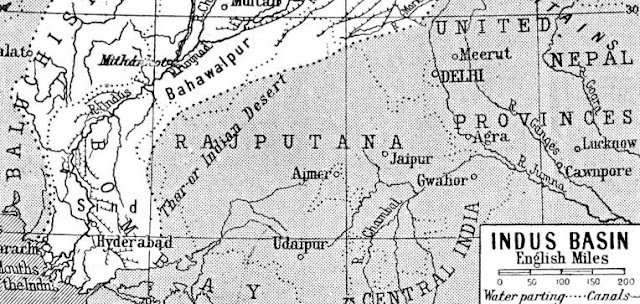
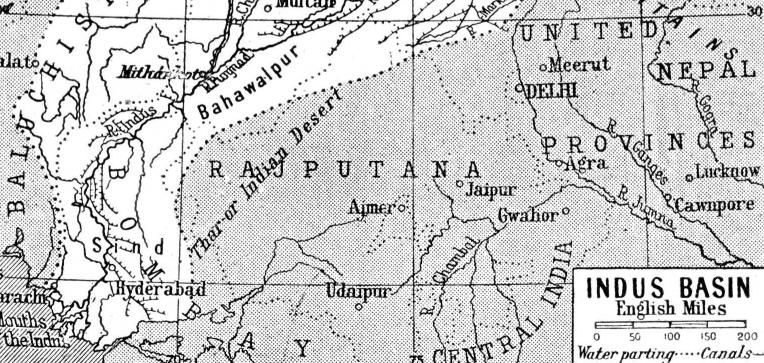
The latest addition to this thread is disappointingly familiar: escalating tensions between Pakistan and India over the Indus river basin. Pakistan views Indian plans to construct the Nimoo-Bazgo, Chutak, and Kishanganga power plants as threatening the crucial water flows of an already parched nation according to objections voiced by the Pakistani Water Commission at the annual meeting of the Indus Water Commission in March. As a result, all efforts to reach an agreement on India’s plans for expanded hydroelectric and storage facilities in the basin’s upstream highlands failed.
In a recent editorial in the Pakistani newspaper The Dawn , former Indus River System Authority Chairman Fateh Gandapur claimed that new construction amounts to a clear violation of the Indus Water Treaty (IWT):“India is building large numbers of dams …on the rivers Indus, Jhelum, Chenab, Ravi, Sutlej and Beas, including on their tributaries in Indian-administered Kashmir. Together, these will have the effect of virtually stopping the perennial flow of water into Pakistan during a period of six to seven months that include the winter season. Not only will this be a blatant violation of the IWT and international laws on water rights of lower riparian areas, it will also amount to making Pakistan dry and, in the future, causing water losses that will deprive this country of its rabi and kharif crops. Our part of Punjab, which has a contiguous canal irrigation system that is amongst the largest in the world, will be turned into a desert.”
Gandapur’s fears, shared by many in Pakistan, are borne out of the desperate situation in which many of their compatriots live. As noted in Running on Empty: Pakistan’s Water Crisis, a report by the Wilson Center’s Asia program, water availability in the country has plummeted from about 5,000 cubic meters (m3) per capita in the early 1950s to less than 1,500 m3 per capita today–making Pakistan the most water stressed country in Asia. With more than 90% of these water flows destined for agricultural use, only 10% remains to meet the daily needs of the region’s booming population. This harmful combination of low supplies and growing demand is untenable and in Karachi results in 30,000 deaths–the majority of which are children–from water-borne illnesses each year.
This harmful combination of low supplies and growing demand is untenable, and may be get worse before it gets better, as Pakistan’s population is projected to almost double by 2050. At an upcoming conference at the Wilson Center, “Defusing the Bomb: Pakistan’s Population Challenge,” demographic experts on Pakistan will address this issue in greater detail.
Recent talk of ‘water wars’ and ‘Indian water jihad’ from Hafiz Muhammad Saeed, the founder of Lashkar-e-Taiba and head of Jamaat-ud-Dawah, have played upon popular sentiments of distrust and risk inflaming volatile emotions, the South Asian News reports.
Harvard’s John Briscoe, an expert with long-time ties to both sides of this dispute, sees such statements as the inevitable result of the media-reinforced mutual mistrust that pervades the relationship of the two nations and plays on continued false rumors of Indian water theft and Pakistani mischief. “If you want to give Lashkar-e-Taiba and other Pakistani militants an issue that really rallies people, give them water,” he told the Associated Press.
The rising tensions have echoed strongly throughout the region. For the first time in its 25-year history, the South Asian Association for Regional Cooperation (SAARC) has raised the water issue (long thought to be a major political impediment and contributor to SAARC’s stagnation) among its members during its meeting this week. “I hope neighbors can find ways to compartmentalize their differences while finding ways to move forward. I am of course referring to India and Pakistan,” said Maldives President Mohammed Nasheed, during his address on Wednesday. “I hope this summit will lead to greater dialogue between (them.)”
Prime ministers Manmohan Singh and Yousuf Raza Gilani heeded the calls and responded with a hastily arranged in-person meeting on the sidelines of the SAARC conference. The emerging agreement targeted a comprehensive set of issues, including water and terrorism, and, while unsurprisingly weak on action, set a path upon which the nations can begin to move forward. Speaking about the agreement’s significance, Indian Foreign Secretary Nirumpama Rao told the Los Angeles Times, “There’s been a lot of soul-searching here. We need to take things forward. This is good for the two countries and good for the region.”
The fragile détente faces great hurdles in the months to come, especially if rainfall remains scarce as forecasters predict. Already, local communities in India and Pakistan are venting frustrations over water shortages. On Thursday, just one day after the agreement between Prime ministers Singh and Gilani, several Bangalore suburbs staged protests at the offices of the local water authorities, complaining loudly about persistent failures of delivery services to produce alternative arrangements for water provision despite regular payments by local citizens. Whether local civil action ultimately helps or hinders bilateral water cooperation between India and Pakistan will be interesting to track in the near future and we at the New Security Beat look forward to continuing to engage with readers on the latest developments.
Photo Credit: Mahe Zehra Husain Transboundary Water Resources Spring 2010 -
New Tool Maps Deforestation
›A new tool from the Center for Global Development, Forest Monitoring for Action (FORMA) tool, uses satellite data to monitor tropical deforestation on a monthly basis. Using publicly available feeds from NASA and other sources, FORMA detects the spread of deforestation in areas as small as 1 square kilometer. The video above uses FORMA to animate the rapidly growing damage in Indonesia over the last four years.
CGD hopes FORMA will help countries monitor the success of forest preservation efforts, as well as verify that those receiving payments to maintain forest cover are, in fact, doing so. Currently limited to Indonesia, FORMA will soon cover the rest of the global tropics.
The tool can be combined with third-party content, such as overlay maps of demographic and forest carbon content data, for additional applications. -
Too Much or Too Little? A Changing Climate in the Mekong and Ganges River Basins
›November 24, 2009 // By Dan Asin“I’m an optimist,” said Peter McCornick, director for water policy at Duke University’s Nicholas Institute, about the future of food and water security in the Ganges and Mekong river basins at the World Wildlife Fund’s recent two-day symposium on water and climate change (video). Although the basins are under threat not only from climate change, but also urbanization, industrialization, development, and population growth, he maintained there are solutions, “as long as we understand what is going on.”
Whereas big-picture discussions of Asia’s glaciers and rivers often start and end with “fewer glaciers = less water,” McCornick argued that the connection is not so simple. Glacial melt “is particularly important in the Indus,” he said, but not so for the Ganges or Mekong.
“The Ganges is basically a monsoon-driven river,” said McCornick, and only 6.6 percent of the Mekong’s waters have glacial origins. Predicting the effects of climate change on monsoons is “extremely difficult.” Periods of heavy and light rains will be more pronounced in the Mekong, and how and when upstream dams will release water—a possibly more serious issue (video)—is unknown.
Food security will be impacted by shifting water supplies in the Ganges and Mekong. Within the Ganges basin, India’s population—already the region’s most water-stressed—could see its yearly water supplies drop by a third, from 1,506 m3 per person today to 1,060 m3 per person by 2025. “This is still a lot of water,” McCornick said, but water efficiency must undergo dramatic improvements if food supplies are to keep up with population growth.
In contrast, the Mekong could have too much water. Eighty-five percent of the Mekong delta, located in Vietnam, is under cultivation and its staple crop and principal food export, rice, is highly susceptible to flooding, which could increase due to extreme rain events, rising sea levels, or dam releases.
The Mekong basin is also the world’s largest freshwater fishery, but the effect of dams on the migratory pattern of the basin’s 1200-1700 fish species is still unknown. The industry is valued at $2-3 billion each year, said McCornick, and declining fish populations will not only harm local food security, but local livelihoods as well.
Adaptation strategies to cope with shifts in water supply brought about by climate change must be implemented by individuals at the local level, said McCornick, who urged that future adaptation research concentrate on sub-basins. Specific adaptation strategies to be explored include:- Flexible water management institutions
- Intelligent use of groundwater resources during times of stress
- Management of the entire water storage continuum—not just that stored in dams, but also water stored in soil moisture and miniature artificial ponds.
Photo: Top, Mekong River Delta; Bottom, Mekong River Delta post-floods from heavy rains. Courtesy NASA. -
Running on Empty: Pakistan’s Water Crisis
›“Water shortages,” warns South Asia scholar Anatol Lieven, “present the greatest future threat to the viability of Pakistan as a state and a society.
This warning may be overstated, but Pakistan’s water situation is deeply troubling, as described in a new report from the Woodrow Wilson Center’s Asia Program, Running on Empty: Pakistan’s Water Crisis.
Water availability has plummeted from about 5,000 m3 per capita in the early 1950s to less than 1,500 m3 per capita today. As Simi Kamal reports in the first chapter of Running on Empty, Pakistan is expected to become “water-scarce” (below 1,000 m3 per capita) by 2035—though some experts project this could happen in 2020, if not earlier.
In an unstable nation like Pakistan, water shortages can easily become security threats. In April 2009, alarm bells sounded when the Taliban pushed southeast of Swat into the Buner district of the Northwest Frontier Province. Not only is Buner close to Islamabad, it lies just 60 kilometers from the prized Tarbela Dam, which provides Pakistan with billions of cubic meters of precious water for irrigation each year.
Soaked, Salty, Dirty, and Dry
According to Kamal, Pakistan faces significant and widespread water challenges:- Inefficient irrigation.
- Abysmal urban sanitation.
- Catastrophic environmental degradation.
- Lack of water laws to define water rights.
- Lack of a sound policy on large dams.
Women and Water in Rural Pakistan
Rural women and small farmers are particularly affected by Pakistan’s water crisis. Women bear the primary responsibility for obtaining water, but have been traditionally been shut out of government water-planning and decision-making processes. However, government and media initiatives, described by Sarah Halvorson in Running on Empty’s chapter on water and gender, are increasingly highlighting the importance of women’s participation.
Meanwhile, Adrien Couton reports that Islamabad’s water projects mainly benefit large and wealthy farmers—even though Pakistan has approximately four million farms smaller than two hectares.
Pakistan’s Thirsty Cities
With most of Pakistan’s water dedicated to agriculture, less than 10 percent is left for drinking water and sanitation. A quarter of Pakistanis lack access to safe drinking water—and many of them reside in the country’s teeming cities.
Worse, the drinking water that does exist is quickly disappearing. Lahore, which relies on groundwater, faces water table declines of up to 65 feet, as described by Anita Chaudhry and Rabia M. Chaudhry in their chapter on the city.
The scarcity of clean water in the cities—exacerbated by a lack of wastewater treatment—is a leading cause of deadly epidemics. At least 30,000 Karachiites (of whom 20,000 are children) perish each year from unsafe water.
Pakistan Must Act Now To Solve the Water Crisis
Pakistan arguably has the technological and financial resources to provide clean water. So what’s the hold-up? In her chapter on public health, Samia Altaf argues that the problem is the absence of a strong political lobby to advocate for water—and that no one holds Islamabad accountable for fixing the problem.
The report offers more recommendations for addressing Pakistan’s water:- Invest in existing infrastructure and in modest, indigenous technology.
- Strike appropriate balances between centralized and decentralized management.
- Devote more attention to water allocation and distribution on local/individual levels.
- Understand the links between agricultural and urban water pressures.
- Embrace the role of the private sector.
- Conserve by favoring water-saving technology; less water-intensive crops; and water-conserving urban building design.
- Address structural obstacles like systemic inequality and gender discrimination.
- Take immediate action. Tremendous population growth and rapidly melting glaciers in the Himalayas ensure that the crisis will deepen before it eases.
Michael Kugelman is the Wilson Center’s South Asia specialist. He is co-editor, with Robert M. Hathaway, of the recently published Wilson Center book Running on Empty: Pakistan’s Water Crisis, on which this post is based. Much of his work has focused on resource shortages in Pakistan and India. -
Going Gaga Over Grain: Pakistan and the International Farms Race
›September 17, 2009 // By Wilson Center StaffWritten by Michael Kugelman and originally published in Dawn.
Last May, while Pakistan’s military was waging its offensive in Swat, Islamabad officials were simultaneously launching another offensive in the Gulf: a charm offensive to secure investment in Pakistani farmland.
Appearing at “farmland road shows” across the region, the investment ministry representatives depicted Pakistan’s soil as the perfect solution to the Gulf nations’ food insecurity.
Such efforts have paid off for Islamabad (and according to media reports, more shows have been staged in recent days). Pakistan’s farmland is an increasingly popular target for wealthy, food-importing nations who, because of the volatility of world food markets, are taking food security matters into their own hands. These states (and also private investors) aim to buy or lease farmland overseas, grow their own crops and export them back home.
Given their lack of transparency, the details surrounding these investments are sketchy and the facts elusive. In Pakistan, uncertainty reigns over the exact amount of land made available to investors, the quantum of land sold or leased so far, and who is in fact doing the investing.
Still, even without these details, there is strong evidence to suggest that the race for Pakistan’s farmland — if not halted prematurely by farmers’ opposition or investor change-of-hearts — could trigger droves of land deals, acute resource shortages and even political strife.
Islamabad has established an extraordinarily welcoming investment environment that financiers will find hard to resist. The government’s Corporate Agriculture Farming (CAF) policy — spelled out on the Board of Investment’s website — effectively legalizes foreign land acquisitions. It permits state land to be purchased outright or leased for 50 years, and allows investors to determine the size of their acquisitions (with no upper ceiling). These features apply to a broad range of agriculture from crops, fruits and vegetables to forestry and livestock farming.
Land investors flock to countries with strong legal protections. Cambodia’s government has reportedly established a national land concession authorizing public land to be allocated to foreigners — and the country is now experiencing what the BBC describes as an “epidemic of land-grabbing.” Conversely, in India, foreign companies are banned from owning farmland — and considerably fewer investors have come calling.
Pakistan, like Cambodia, provides the legal cover farmland investors look for. However, the CAF goes beyond legal protections. It also offers generous financial incentives such as 100 per cent foreign equity; exemptions on land transfer duties; and customs-duty-free, sales-tax-free agricultural machinery imports.
Legal protection and financial incentives — what more could a foreign land investor in Pakistan want? Security, of course, and Islamabad purports to have this covered as well, through the formation of a 100,000-strong security unit. Pakistan’s government is so serious about concluding land deals that it has offered to deploy a force almost a fifth the size of the army to protect investors’ new holdings.
A rash of foreign land acquisitions in Pakistan would deepen the country’s resource crisis. Pakistan already suffers widespread water shortages, and could be water-scarce by 2020. However, supplies could dry up much sooner if enormous quantities of water are siphoned off to support large-scale, water-intensive agricultural production schemes.
To understand the scale of Pakistan’s water shortages, take a look at Aquastat, the FAO’s water statistics database. Of all the nations most often associated with relinquishing farmland, only one — Kenya — has less water availability per capita than Pakistan’s 1400 cubic meters. In fact, of the nearly 200 countries listed in the database, only 35 have less water than Pakistan — many of them the parched countries of the Gulf that are seeking the water-laden farmland they lack at home.
Indeed, quests for overseas farmland are water hunts as much as they are land hunts. Yet investors are seemingly so seduced by Islamabad’s legal and financial inducements that they disregard the fact that Pakistan’s water supply can barely sustain its own farming, much less that of immense foreign agribusiness projects.
Pakistan’s water and energy shortages could also limit the possible benefits accruing from the deals, including better technology, more employment and higher crop yields. With limited energy to operate upgraded farm machinery, and limited water to irrigate cropland, farming job prospects could suffer and talk of increased yields could become irrelevant.
Land deals could mean not just compromised small-holder livelihoods but also widespread displacement. Not surprisingly, critics argue that big land acquisitions could spark violent responses and mass political unrest. Such predictions may be premature — other than in Madagascar, opposition has been relatively localized — but they are not far-fetched in Pakistan.Here’s why. According to the World Food Program, 77 million Pakistanis are already food-insecure, and many of them live in the country’s most volatile areas. Foreign land holdings could cause a flare-up of this food vulnerability powder keg at the worst possible time. During the height of last year’s global food crisis, Pakistan imposed export bans to keep domestic food prices down.
According to a report by the International Institute for Sustainable Development, the UAE — which hopes to grow rice and wheat in Pakistan — then requested blanket exemptions from these bans.
Islamabad eventually relaxed export restrictions on Basmati rice. So a politically explosive scenario — such as the UAE trucking rice out of a drought-stricken or war-ravaged Pakistan and exporting it back to the Gulf while hungry locals look on — is not at all unrealistic. Throw that investment-protecting security force into the mix, and things could get really ugly.
Furthermore, there are long-standing rifts between Pakistan’s rural poor and its wealthy, landholding elite. Scores of huge land acquisitions — particularly if they displace poor laborers — would exacerbate these class-based cleavages.
Ominously, the Taliban’s actions in Swat reveal a new ability to exploit class divisions by pitting landless farmers against their landlords. Militants may well use farmland acquisitions as a pretext for fomenting a fresh class revolt in Punjab, the fertile, populous province coveted by the Taliban and reportedly ground zero for the farms race in Pakistan. Such a thought is enough to make one wonder if those farmland road shows are really worth the effort.
Michael Kugelman is program associate with the Asia Program at the Woodrow Wilson International Center for Scholars.
Bottom photo: CARE food aid in Pakistan. Courtesy flickr user Feinstein International Center.
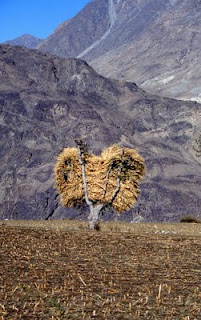
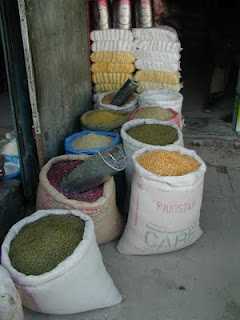
Top photo: Gilgit, Pakistan. Courtesy flickr user michaelnewport. -
Weekly Reading
›Christian Aid’s “Growing Pains: The Possibilities and Problems of Biofuels” finds that “huge subsidies and targets in developed countries for boosting the production of fuels from plants such as maize and palm oil are exacerbating environmental and social problems in poor nations.”
Framing the climate change debate in terms of national security could help advance climate legislation in Congress, argues a New York Times editorial, one week after its front-page article on the topic. In letters to the editor, James Morin of Operation FREE calls climate change the “ultimate destabilizer,” and retired Vice Admiral Lee Gunn warned that the “repercussions of these changes are not as far off as one would think.”
Researchers at Purdue University’s Climate Change Research Center found that climate change could deepen poverty, especially in urban areas of developing countries, by increasing food prices. “While those who work in agriculture would have some benefit from higher grains prices, the urban poor would only get the negative effects.” Of the 16 countries studied, “Bangladesh, Mexico and Zambia showed the greatest percentage of the population entering poverty in the wake of extreme drought.”
India’s 2009 State of the Environment Report finds that almost half of the country’s land is environmentally degraded, air pollution is increasing, and biodiversity is decreasing. In addition, the report points out that almost 700 million rural people—more than half the country’s population—are directly dependent on climate-sensitive resources for their subsistence and livelihoods. And furthermore, “the adaptive capacity of dry land farmers, forest dwellers, fisher folk and nomadic shepherds is very low.”
Surveys completed by a Cambodian national indigenous peoples network find that “five million hectares of land belonging to indigenous minority peoples [have] been appropriated for mining and agricultural land concessions in the past five years,” reports the Phnom Penh Post.
The Economic Report on Africa 2009 warns that despite declining food prices, “many African countries continue to suffer from food shortage and food insecurity due to drought, conflicts and rigid supply conditions among other factors.” -
Weekly Reading
›The Population Reference Bureau’s 2009 World Population Data Sheet shows that global population numbers will reach 7 billion in 2011. Among its key findings, PRB notes that “population growth is one root cause of increases in global greenhouse gas emissions. But the complexity of the mechanisms through which demographic factors affect emissions is not fully taken into consideration in many analyses that influence governments’ climate change mitigation efforts.”
The Guardian reports that U.S. marines have launched an energy audit of American military operations in Afghanistan, the first such assessment to take place in a war zone. “Some 80% of US military casualties in Afghanistan are due to improvised explosive devices (IEDS),” the article elaborates, “and many of those placed in the path of supply convoys.” DoD’s Alan Shaffer recently told ClimateWire, “nearly three-quarters of what convoys move in Afghanistan’s treacherous terrain is fuel or water.”
The Department of State released an inspection of the operations of the Bureau of African Affairs that identifies a rift between U.S. diplomats and the U.S. military’s recently established African Command (AFRICOM). As the Wilson Center’s Steve McDonald told Bloomberg.com, “It got off to a hugely bad start…Part of it was tied up with policies of the Bush era, where our own security concerns far overrode any sensitivities to local considerations.”
T. Paul Shultz of Yale University’s Economic Growth Center evaluates population and health policies, looking specifically at “the causal relationships between economic development, health outcomes, and reproductive behavior.”
Oxfam’s “The Future is Here: Climate Change in the Pacific” includes recommendations for adapting and mitigating climate change in Australia, New Zealand, and the Pacific island nations—a region “where half the population lives within 1.5 kilometers of the sea.”



 “Water shortages,” warns South Asia scholar Anatol Lieven, “present
  Written by Michael Kugelman and originally published in
  Here’s why. According to the World Food Program,


