

Showing posts from category Africa.
-
Watch: Harriet Birungi: Challenges Facing HIV-Positive Adolescents in Kenya
›“Services are not necessarily very adolescent-friendly, so when you get children who are HIV-positive they are likely to face discrimination,” says Harriet Birungi, an associate in the Reproductive Health Program with the Population Council in Kenya, in this interview with ECSP’s Gib Clarke following the Global Health Initiative’s Integrating HIV/AIDS and Maternal Health Services panel.
According to Birungi, medical service censoring and targeted exclusion from schools are among the top challenges facing Kenyan adolescents living with HIV/AIDS. She hopes better support systems and intervention strategies, especially for pregnant individuals, will help medical personnel more quickly identify HIV-positive young adults needing critical medical services. -
Lessons from the Field: Focusing on Environment, Health, and Development to Address Conflict
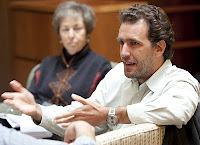
› “Even in the hardest moments of conflict there are opportunities for cooperation, and they need to be seized,” said Juan Dumas, senior advisor of Fundación Futuro Latinamericano during the Pathways to Peace: Stories of Environment, Health, and Conflict roundtable event co-hosted by the Wilson Center’s Environmental Change and Security Program and the Fetzer Institute on January 13th.
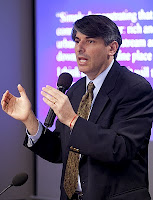
“Even as you were talking about the conflict potential,” said Aaron Wolf, professor of Geoscience at Oregon State University, “everywhere you looked there were people talking about water uniting together across boundaries and being able to share… [and] people being willing to talk about water when they wont talk about anything else.”
Dumas and Wolf were joined by Gidon Bromberg, co-director of Friends of the Earth Middle East (FoEME); Shewaye Deribe, project coordinator for the Ethio Wetlands and Natural Resources Association (EWNRA); and Joan Regina L. Castro, executive vice president of the PATH Foundation Philippines, Inc. (PFPI) to discuss work that demonstrates the positive impact multi-dimensional development and peacebuilding programs can have on environmental conflict arenas.
Water as an Entry Point“In the academic world, there’s a growing documentation about the coming wars of the 21st century are going to be about water resources,” said Wolf, discussing how water resources are inherently intertwined with the Arab-Israeli and other regional conflicts. His research, however, suggests the opposite. In recent history, he said, cooperation for the resource, not conflict, was observed in nearly two-thirds of the world’s cross-boundary watersheds.
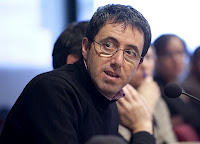
“Water is a wonderful way to have regional dialogue,” he continued, discussing how technical data and modeling are only part of any successful water conflict resolution. “A language that people have in common, and when we talk about water—because it’s connected to everything we do—we end up talking about our shared vision of the future.”“We came out with a vision that is a shared vision,” echoed Bromberg in describing the Good Water Neighbors (GWN) project—a FoEME program seeking to improve water scarcity and quality in the Jordan River watershed by fostering cooperation between Israeli, Palestinian, and Jordanian leaders. “The Jordan office advocates that vision to the Jordanian government, the Israeli office to Israeli government, the Palestinian office to the Palestinian authority. That’s proven to be very effective because it’s the same vision.”
While hesitant to say the program could lead to or be a model for peace in the Middle East, Bromberg did underscore how multi-dimensional methods used in GWN could productively serve future peacebuilding efforts in the region.
“By empowering young people to go out and improve their own water reality with their own hands [through rainwater harvesting and grey water collection] they learn together, and then they build the facilities within their own communities,” said Bromberg. “…Not only does it empower the youths but it helps create peacemakers.”
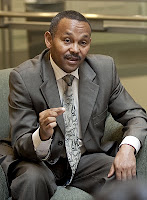
Integrated PHE and Conflict Avoidance“Water is common for all of us because it is the base of our life, of our survival,” said Deribe, linking ENWRA’s integrated population, health, and environment (PHE) wetland restoration program in Ethiopia to the greater discussion. “I think it is a lack of altruism, a lack of mutualistic thinking which leads us to this kind of conflict.”
Castro, pointing to her own PHE experience with PFPI, found that multi-sectoral programs promote improved environmental quality and community stability. In the Philippines, her program targeted local youth, fishermen, and policymakers to promote food security through sustainable resource management, improved medical and family planning services, and expanded livelihood training.
Castro found that a PHE program could continue even after funding ran out. “A project can be sustained and can be owned by the local governments and local communities if they are provided the capacity to be able to continue to implement the programs and that they see the value of the programs that they do,” she said.
Lessons in Conflict Resolution
Funding, said Dumas, is the biggest limiting operating factor for organizations that facilitate dialogue in environmental conflict areas. The ability to travel across Latin America on short notice to help resolve conflict has been extremely beneficial to Dumas’ organization; but in an arena where funders require full proposals with specific outcomes and indicators, such availability over the long-term is “not financially sustainable.”
Dumas did, however, suggest ways to reduce the need for conflict resolution while opening accessibility to funding. He recommended that institutions mainstream environmental considerations into all sectors of decision-making, thereby improving capacity to respond to environmental conflicts within the given population. He also suggested the creation of “early action funds” – pools of money that his and other organizations can use on short notice for dialogue facilitation support. -
Alec Crawford on Climate Change and Conflict in Africa and the Middle East
›January 14, 2010 // By Sajid Anwar“Climate change certainly does pose a risk to the world in terms of violent conflict, but there’s a lot of nuance to that argument and a lot of attention and care has to be put into making that case,” says Alec Crawford, project officer at the International Institute for Sustainable Development (IISD) in this video interview with ECSP Director Geoff Dabelko.
According to Crawford, the argument that climate change will lead directly to violent conflict is overly simplistic, but climate could be one of conflict’s many drivers in both Africa and the Middle East. A recent IISD report discusses the potential security challenges of climate change and how to prevent them. -
Eco-Tourism: Kenya’s Development Engine Under Threat
›Africa’s elephants and black rhinos—already at risk—are increasingly threatened as the price of black market ivory rises, global markets contract, and unemployment rates rise. To fight poaching of these tusked animals, Ian Craig, founder of the Lewa Conservancy in Kenya and the brains behind the Northern Rangelands Trust, takes a unique approach to conservation that involves both local community members and high-level government officials, as well as private and public sector investors.
In the 1970s the black rhino population was at about 20,000. Less than three decades later, it had fallen to 200. Today, the population is about 600, of which 79 live in the Lewa Conservancy. The vast regions of Kenya covered by the Northern Rangelands Trust and the Lewa Conservancy are difficult to govern, so the conservancies partner with local communities to ensure the security necessary to protect the animals from poachers. By investing in community institutions, the conservancies create long-term sustainability and self-sufficiency.
But why should local communities—often beset by poverty, disease, and hunger—care about saving elephants or rhinoceroses rather than killing them for their tusks or meat? Revenue from tourism can total hundreds of thousands of dollars, especially because of the high cost and exclusive nature of tourism facilities in the area. This money is then injected back into community programs to improve adult literacy, school nutrition, health care, micro-credit, water and irrigation systems, community livestock and agriculture, and forestry and aquaculture.
In some politically volatile areas, the conservancy serves not only as a platform for ecological security, but also as a mediator of disputes. Where livestock theft is rampant, multi-ethnic anti-poaching teams have been able to act as intermediaries. Community elders and other traditional leaders serving on the conservancies’ boards have bi-annual meetings to further intra- and inter-regional cooperation. Along with regular managerial and council meetings, the board meetings set standards for good practices, open dialogue for policymaking and cooperation, and act as a unique platform for communication between different ethnic and regional groups.
Community members understand they have a stake in protecting not only the animals, but in ensuring security and building trust within the country. With its unique combination of local-level engagement, the cooperation and support of the Kenyan Wildlife Service and the national government, and with the resources available to the conservancies as a group, the Lewa Wildlife Conservancy hopes to create a model of conservation that can be used across Africa and in other at-risk regions.
The future is shaky: ivory prices continue to rise, the migration of animals has facilitated poaching, and small arms are abundantly available. However, the new community-focused approach has helped to create positive attitudes that aren’t just about saving animals, but about developing the nation.
Justine Lindemann is program assistant with the Africa Program at the Woodrow Wilson International Center for Scholars.
Photo: Elephants in Lewa Conservancy area, courtesty Flickr user Mara 1 -
Climate Combat? Security Impacts of Climate Change Discussed in Copenhagen
›Leaders from the African Union,the European Union, NATO, and the United Nations have agreed unanimously that climate change threatens international peace and security, and urged that the time for action is now.
In Copenhagen Tuesday, Anders Fogh Rasmussen, the secretary-general of NATO; Jean Ping, the chairperson of the Commission of the African Union; and Helen Clark, the administrator of the UN Development Programme, were joined by Carl Bildt and Per Stig Møller, foreign ministers of Sweden and Denmark respectively, to take part in a remarkable public panel discussion organized by the Danish Ministry of Foreign Affairs.
The leaders agreed climate change could hold serious implications for international security, both as a “threat multiplier” of existing problems and as the cause of conflict, under certain conditions.
Møller suggested there is evidence that higher temperatures in Africa could be directly linked to increases in conflict. Ping emphasized that African emissions make up only 3.8 per cent of the climate problem, though Africa will likely suffer some of its most serious impacts. Fogh Rasmussen warned of the dangers of territorial disputes over the Arctic as the sea ice recedes. “We need to stop the worst from happening,” said Clark.
While there was broad agreement on the seriousness of the challenge, the participants differed on what should be done. Responding to a question from the audience, Bildt argued that Europe should not necessarily throw open its doors to climate migrants, but that the bloc needed to help countries deal with climate change so people can stay at home. Clark argued that enlightened migration policy could meet two sets of needs: reversing declining populations in the North while providing a destination for unemployed workers from the South.
Fogh Rasmussen said militaries can do much to reduce their use of fossil fuels. He noted that 170 casualties in Afghanistan in 2009 have been associated with the delivery of fuel. There is no contradiction, he argued, between military efficiency and energy efficiency.
However, the real significance of the climate-security event lay not in what these leaders said, but that they were there to say it at all. Not many issues can gather the heads of the AU, NATO, and the UNDP on the same platform, alongside the foreign ministers of Sweden and Denmark. This event proved that climate change has become a core concern of international policymakers.
The only way to tackle global problems, as Ping argued, is to find global solutions. And a clear understanding of the potentially devastating security implications of climate change might be one way to bring about those global solutions.
“We are all in the same ship, and if that ship sinks, we will all drown,” said Ping.
Oli Brown is senior researcher and program manager at the International Institute for Sustainable Development (IISD). Read more of IISD’s postings on its blog.
Photo: Courtesy United Nations Photo. -
VIDEO – Integrating Population, Health, and Environment (PHE) in Ethiopia
›December 4, 2009 // By Sean Peoples“Incorporating environment, population, and health is a timely issue. Unless we focus on integrated approaches, our Ethiopian Millennium Development Goals cannot be achieved,” says Negash Teklu, executive director of the Consortium for Integration of Population, Health, and Environment (CIPHE), in this short video.
I interviewed Teklu and three other members of CIPHE in Yirgalem, Ethiopia, where they spoke of the importance of PHE integration; why it is vital to involve the community in development projects; and practical steps for implementing integration at the grassroots level.
Everyone agrees that Ethiopia faces serious challenges. Much of the economy is based on agriculture, but drought is all too common, and the land is exacerbated by continual overuse. High rates of population growth coupled with limited resources and uncertain crop yields leaves many people vulnerable to hunger and malnutrition. In addition, the country’s health system struggles to provide comprehensive care.
To combat these interconnected problems, the members of CIPHE truly believe that an integrated PHE approach that uses multi-sectoral interventions will best serve the needs of their fellow Ethiopians.
“If we follow the integrated PHE approach, economically we can be beneficial,” Mogues Worku of LEM Ethiopia told me. “We can share a lot of resources among the different sectoral organizations. At the same time with limited resources we can attain our goal by integrating the different sectoral offices and organizations, even at the grassroots level.”
This video will be the first of many on population, health, and environment problems and solutions in Ethiopia. Subscribe to our ECSP YouTube channel or the New Security Beat blog to see the latest videos. -
New Tool Maps Deforestation
›A new tool from the Center for Global Development, Forest Monitoring for Action (FORMA) tool, uses satellite data to monitor tropical deforestation on a monthly basis. Using publicly available feeds from NASA and other sources, FORMA detects the spread of deforestation in areas as small as 1 square kilometer. The video above uses FORMA to animate the rapidly growing damage in Indonesia over the last four years.
CGD hopes FORMA will help countries monitor the success of forest preservation efforts, as well as verify that those receiving payments to maintain forest cover are, in fact, doing so. Currently limited to Indonesia, FORMA will soon cover the rest of the global tropics.
The tool can be combined with third-party content, such as overlay maps of demographic and forest carbon content data, for additional applications. -
Ethiopia: A Holistic Approach to Community Development Blossoms Two Years After Taking Root
›November 12, 2009 // By Sean PeoplesAs evening fell upon Yirgalem, Ethiopia, more than 70 participants from a large cross-section of Ethiopia’s NGO community—as well as a few international participants like myself—gathered in a packed conference room in the Furra Institute for the second annual General Assembly of the Consortium for the Integration of Population, Health, and Environment (CIPHE).
 “Even in the hardest moments of conflict there are opportunities for cooperation, and they need to be seized,” said
  “In the academic world, there’s a growing documentation about the coming wars of the 21st century are going to be about water resources,” said
  “We came out with a vision that is a shared vision,” echoed
  “Water is common for all of us because it is the base of our life, of our survival,” said
  Africa’s elephants and black rhinos—already at risk—are increasingly threatened as the
  Leaders from the African Union,
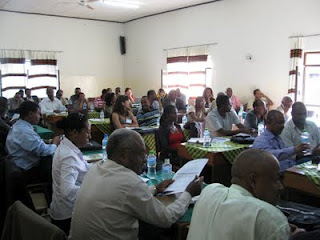 As evening fell upon Yirgalem, Ethiopia, more than 70 participants from a large cross-section of Ethiopia’s NGO community—as well as a few international participants like myself—gathered in a packed conference room in the

