Showing posts from category Africa.
-
Reporting From Kenya: U.S. Editors Cover Health, Environment, and Security
›November 4, 2009 // By Sajid Anwar The global recession has “been very hard on journalists,” explained Andrea Crossan, radio producer for BBC’s “The World”. “With these kinds of cutbacks, you really feel it when it comes to foreign coverage.” Along with Stephanie Hanson, associate director and coordinating editor of CFR.org, and Margaret McElligott, senior producer for washingtonpost.com, Crossan spoke about the International Reporting Project’s (IRP) Gatekeeper trip to Kenya at a Wilson Center event sponsored by the Environmental Change and Security Program.
“You’ve seen a lot of areas of the world that just aren’t getting the coverage these places deserve, and Africa is one of those places,” said Crossan, partly due to the expense of travel, security, and satellite equipment. IRP, a project of The Johns Hopkins University’s School of Advanced International Studies, aims to fill gaps in foreign reporting left by extensive budget cuts by offering U.S.-based editors and journalists opportunities to report on international stories.
“I’ve traveled a fair amount with the BBC, and I’ve seen some really difficult living conditions for people. I’ve never seen anything like I’ve seen in Kibera,” said Crossan. “We can look at all of the things we are talking about today”—environment, health, security—“through what’s happening in Kibera.”
Poverty and Pirates
At a meeting at the University of Nairobi, a student criticized foreign reporting of Kenya, saying that it “only seems to cover poverty and pirates,” said Crossan. That’s a slight improvement over previous years, when U.S. coverage focused on “witches and war,” noted an audience member.
McElligott, who previously worked for AllAfrica.com, agreed that U.S. media coverage of Africa is becoming richer, with fewer instances of racism accompanying reporting. “The world is so much smaller now,” with email, Facebook, blogs, and video providing additional venues and in-country contacts, she said.
The Kenyan press is the “most trusted institution” in the country, said Hanson. They expose corruption, report on health issues, and call the government to task. With the decline in U.S. journalists posted abroad, the support and stories provided by Kenyan reporters is crucial to getting coverage in the international media.
While pitching international stories to U.S. audiences might be a hard sell, “if it’s a good, compelling story, it will go up in a prominent place” with or without a U.S. angle, said McElligott. “It’s just about telling human stories,” said Crossan.
Kenya on the Edge: Drought and Conflict“In the last months we’ve seen the food crisis grow in Kenya,” said McElligott. On the group’s visit to Laikipia, she noted the impacts of soil degradation, unsustainable water extraction from rivers, and the lack of governmental regulation. Lack of land and water is forcing pastoralists to travel miles away from home in order to feed cattle and goats.
“We’re desperate for water here,” said Laikipia resident Niyok Npanyaki in an IRP video report. “We’ve decided that if water is cut off, we’ll go to the water source on Mount Kenya, even if the government doesn’t let us. Otherwise we will die. People don’t start wars for no reason. If I am hungry, but if you have food, I’ll come to you and find it.”
“Loss of natural resources puts people under extreme pressure and people will go to extreme lengths in order to get those fundamentally important natural resources,” says Dr. Anthony King, director of Laikipia Wildlife Forum, in the video. Adding to the tension between farmers and pastoralists is the easy access to firearms in the Horn of Africa. “Almost every pastoralist will have an automatic weapon,” says King.
The IRP fellows visited the headquarters of the UN Environment Programme in Nairobi, but found it difficult to gauge the effectiveness of UNEP at addressing Kenya’s drought and deforestation. According to Crossan, UNEP has invested in a number of local programs, but the UNEP officials they spoke with seemed frustrated that the Kenyan government was not more involved in tackling the country’s environmental problems.
“Something I struggle with in my own work is trying to understand what actual effect these large multilateral agencies have on the ground. What is the World Bank actually doing in Ghana? What are they actually doing in Kenya?” said Hanson. “Does the money get distributed? Who does it go to? Having more Kenyans or Ghanaians who could report on these things and look into them in terms of transparency and accountability would be incredibly helpful.”
Malaria: A Disease of the Poor“Malaria was, to be honest, not a disease that was really on my radar,” said Hanson. “I had, in a way, discounted its importance to what has happened on the continent.” At a children’s critical care unit in Nyanza Province, one of the poorest areas in Kenya with one of the highest rates of HIV and malaria, she saw beds filled with sick children. “This was shocking to me.”
When a family member is stricken with malaria, the burden of care is typically falls upon the mother, who often must travel long distances to the nearest hospital—“some of them had walked hours with a sick child,” said Hanson—leaving their other children at home and farms largely untended.
“When these women have to leave their farms to come to the clinic, they’re losing work days on the farm,” said Hanson. “That just means that their farms are less productive. They have less money to send their children to school, give their children medical care, and feed their children.”
“These macro-political issues—disputed elections, post-election violence—are actually connected to daily issues like malaria infections, hospital capacity rates, agricultural yields, and without a government that can address those things it is very difficult to see how a place like Kenya can move forward,” concluded Hanson.
Drafted by Sajid Anwar and Meaghan Parker.
Edited by Meaghan Parker. -
Send in the Scientists: Finnish MP Calls for Assessing Toxic Waste Threats in Somalia
›October 22, 2009 // By Geoffrey D. Dabelko“If there are rumors, we should go check them out!” declared Finnish MP Pekka Haavisto about barrels of toxic waste that supposedly washed ashore in Somalia after the 2004 tsunami. I spoke with Haavisto in Helsinki last month as he took a break from marathon budget meetings.
“I think it is possible to send an international scientific assessment team in to take samples and find out whether there are environmental contamination and health threats. Residents of these communities, including the pirate villages, want to know if they are being poisoned, just like any other community would.”
In April this year, Haavisto flew commercial to Mogadishu to meet with Somalia’s president, Sheik Sharif Sheik Ahmed (who narrowly escaped assasination today), and African Union (AU) peacekeepers. In August Haavisto visited Puntland state to speak with President Abdirahman Mohamed Mohamud and other government representatives.
“Parliamentarian” is only one of Haavisto’s jobs. He also works as Finland’s special envoy for the Horn of Africa and, after playing a similar role within the EU as special representative for Sudan. From 1999-2005, he headed the UN Environment Programme’s Disaster and Conflicts Programme (then called the Post-Conflict Assessment Unit), which specializes in objective scientific environmental assessments in war-torn countries.
Haavisto is an enthusiastic advocate for environmental missions that may improve the desperate conditions resulting from violent conflicts. “We should be talking with all the factions,” he told me, to investigate the toxic waste charges. Such a thorough and objective assessment could provide a rare and potentially valuable avenue for addressing underlying suspicions and grievances some Somalis hold against those whom they claim dump waste off shore and overfish their waters.
Using environmental dialogue to build confidence is a top objective of Haavisto’s former colleagues at UNEP—and an idea that is gaining more traction within the wider UN family. For example, UNEP is now working directly with the UN Department of Peacekeeping Operations (DPKO) to provide “green advisors” to their blue helmets, lowering their environmental bootprints and establishing green, self-sufficient bases, including one in Somalia for AU troops.
Assessing the tsunami’s possible toxic legacy in Somalia may provide an avenue for dialogue by addressing first-order concerns for local populations. The dialogue could ultimately support action on front-burner problems outside Somalia, such as piracy, poverty, internal conflict, and terrorism.
Photo: IDPs outside Mogadishu, courtesy of Flickr user Abdurrahman Warsameh and ISN Security Watch. -
Trees: The Natural Answer to Climate Change, Food Insecurity, and Global Poverty
›September 30, 2009 // By Brian KleinSome advocates of geoengineering have touted fake, plastic “trees” as a promising technology for absorbing carbon. But other experts are promoting a solution that also filters water, encourages rainfall, prevents erosion and desertification, offers economic opportunities, and provides a vital source of food for a growing global population: real trees. -
Weekly Reading
›The American Security Project (ASP) launched its Climate Security Index, which identifies climate change “a clear and present danger to the national security of the United States,” at an event hosted by George Washington University. ASP warns that “American leaders will face a multitude of tough choices as climate-induced national security threats begin to compete with and crowd out our ability to respond to traditional threats,” reports ClimateWire.
According to “Fewer Emitters, Lower Emissions, Less Cost,” contraception is almost five times cheaper than conventional green technologies as a means of combating climate change. “[E]ach $7 spent on basic family planning (2009 US$) would reduce CO2 emissions by more than one ton,” researchers conclude, while low-carbon technologies would add an extra $25 per ton.
Experts at a recent forum on sexual and reproductive health and development in Berlin also argued for making the population-climate link, although it did not appear in the Call to Action. Helen Clark, administrator of the UN Development Programme (UNDP), said that there is a “virtuous cycle formed by educating women and families in the developing world on the number of children they actually wish to have, improving the health of women and promoting gender equality, reducing poverty and hunger, and mitigating climate change.”
The World Bank has suspended International Finance Corporation (IFC) funding of operations in the palm oil sector over concerns that lending could be causing social and environmental harm, says Mongabay.com. World Bank President Robert Zoellick announced the move in a letter to NGO leaders who argued that IFC-backed palm oil production in Indonesia was fuelling deforestation, land grabbing, and human rights abuses.
In “Urban Poverty and Vulnerability in Kenya,” Oxfam warns that Kenya “is facing a new urban timebomb, with millions of Nairobi residents suffering a daily struggle for food and water as the divide between rich and poor widens.” The group points out that “the price of staple foods such as maize has more than doubled in the past year” and drought has led to an outbreak of cholera “as almost 90% of slum dwellers have no piped clean water.”
“Water and Conflict: Incorporating Peacebuilding into Water Development” from Catholic Relief Services outlines a way for development and human rights practitioners to integrate water and peacebuilding in their projects, drawing on the experiences of CRS and other development organizations, mainly in Central and South America. -
Is the White Ribbon the New Black? Making Maternal Health Fashionable
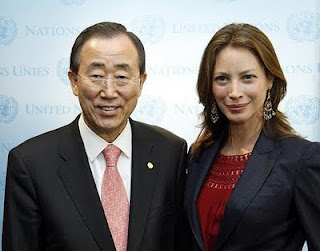
›Celebrity philanthropists such as Bono, Angelina Jolie, and George Clooney have shined their star power on global issues like AIDS, genocide, and refugees. In last month’s Vogue, supermodel Christy Turlington turned the light on one of the most overlooked problems: maternal mortality.
-
Weekly Reading
›In an Economist.com debate on population growth between John Seager of Population Connection and Michael Lind of the New America Foundation, Seager argues that rapid population growth is “the source of many of the world’s—especially the poor world’s—woes,” as it accelerates environmental degradation and “undermines both security and development.” On the other hand, Lind counters that “countries are not poor because they have too many people,” and asserts that “technology and increased efficiency have refuted what looks like imminent resource exhaustion.”
In Foreign Policy, David J. Rothkopf contends that actions to mitigate climate change—though necessary to avoid very serious consequences—could subsequently spur trade wars, destabilize petro-states, and exacerbate conflict over water and newly important mineral resources (including lithium).
The International Crisis Group (ICG) reports that “the exploitation of oil has contributed greatly to the deterioration of governance in Chad and to a succession of rebellions and political crises” since construction of the World Bank-financed Chad-Cameroon pipeline was completed in 2003. Chad must reform its management of oil resources in order to avoid further impoverishment and destabilization, ICG advises.
The Royal Society and the Institution of Mechanical Engineers (IME)—both based in the United Kingdom—released independent reports on geoengineering the climate. While calling reduction of greenhouse gas emissions “the safest and most predictable method of moderating climate change,” the Royal Society recommends that governments and international experts look into three techniques with the most potential: CO2 capture from ambient air, enhanced weathering, and land use and afforestation. The IME identified artificial trees, algae-coated buildings, and reflective buildings as the most promising alternatives. “Geo-engineering is no silver bullet, it just buys us time,” IME’s Tim Fox told the Guardian.
In “Securing America’s Future: Enhancing Our National Security by Reducing Oil Dependence and Environmental Damage,” the Center for American Progress (CAP) argues that unless the United States switches to other fuels, it “will become more invested in the volatile Middle East, more dependent on corrupt and unsavory regimes, and more involved with politically unstable countries. In fact, it may be forced to choose between maintaining an effective foreign policy or a consistent energy supply.”
The Chinese government is “drawing up plans to prohibit or restrict exports of rare earth metals that are produced only in China and play a vital role in cutting edge technology, from hybrid cars and catalytic converters, to superconductors, and precision-guided weapons,” The Telegraph relates. The move could send other countries scrambling to find replacement sources.
In studying the vulnerability of South Africa’s agricultural sector to climate change, the International Food Policy Research Institute finds that “the regions most vulnerable to climate change and variability also have a higher capacity to adapt to climate change…[and that] vulnerability to climate change and variability is intrinsically linked with social and economic development.” South African policymakers must “integrate adaptation measures into sustainable development strategies,” the group explains. -
Weekly Reading
›Christian Aid’s “Growing Pains: The Possibilities and Problems of Biofuels” finds that “huge subsidies and targets in developed countries for boosting the production of fuels from plants such as maize and palm oil are exacerbating environmental and social problems in poor nations.”
Framing the climate change debate in terms of national security could help advance climate legislation in Congress, argues a New York Times editorial, one week after its front-page article on the topic. In letters to the editor, James Morin of Operation FREE calls climate change the “ultimate destabilizer,” and retired Vice Admiral Lee Gunn warned that the “repercussions of these changes are not as far off as one would think.”
Researchers at Purdue University’s Climate Change Research Center found that climate change could deepen poverty, especially in urban areas of developing countries, by increasing food prices. “While those who work in agriculture would have some benefit from higher grains prices, the urban poor would only get the negative effects.” Of the 16 countries studied, “Bangladesh, Mexico and Zambia showed the greatest percentage of the population entering poverty in the wake of extreme drought.”
India’s 2009 State of the Environment Report finds that almost half of the country’s land is environmentally degraded, air pollution is increasing, and biodiversity is decreasing. In addition, the report points out that almost 700 million rural people—more than half the country’s population—are directly dependent on climate-sensitive resources for their subsistence and livelihoods. And furthermore, “the adaptive capacity of dry land farmers, forest dwellers, fisher folk and nomadic shepherds is very low.”
Surveys completed by a Cambodian national indigenous peoples network find that “five million hectares of land belonging to indigenous minority peoples [have] been appropriated for mining and agricultural land concessions in the past five years,” reports the Phnom Penh Post.
The Economic Report on Africa 2009 warns that despite declining food prices, “many African countries continue to suffer from food shortage and food insecurity due to drought, conflicts and rigid supply conditions among other factors.” -
Weekly Reading
›The Population Reference Bureau’s 2009 World Population Data Sheet shows that global population numbers will reach 7 billion in 2011. Among its key findings, PRB notes that “population growth is one root cause of increases in global greenhouse gas emissions. But the complexity of the mechanisms through which demographic factors affect emissions is not fully taken into consideration in many analyses that influence governments’ climate change mitigation efforts.”
The Guardian reports that U.S. marines have launched an energy audit of American military operations in Afghanistan, the first such assessment to take place in a war zone. “Some 80% of US military casualties in Afghanistan are due to improvised explosive devices (IEDS),” the article elaborates, “and many of those placed in the path of supply convoys.” DoD’s Alan Shaffer recently told ClimateWire, “nearly three-quarters of what convoys move in Afghanistan’s treacherous terrain is fuel or water.”
The Department of State released an inspection of the operations of the Bureau of African Affairs that identifies a rift between U.S. diplomats and the U.S. military’s recently established African Command (AFRICOM). As the Wilson Center’s Steve McDonald told Bloomberg.com, “It got off to a hugely bad start…Part of it was tied up with policies of the Bush era, where our own security concerns far overrode any sensitivities to local considerations.”
T. Paul Shultz of Yale University’s Economic Growth Center evaluates population and health policies, looking specifically at “the causal relationships between economic development, health outcomes, and reproductive behavior.”
Oxfam’s “The Future is Here: Climate Change in the Pacific” includes recommendations for adapting and mitigating climate change in Australia, New Zealand, and the Pacific island nations—a region “where half the population lives within 1.5 kilometers of the sea.”
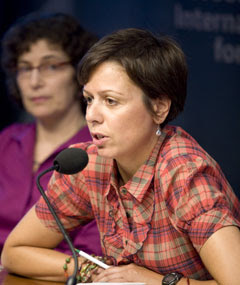 The global recession has “been very hard on journalists,” explained
 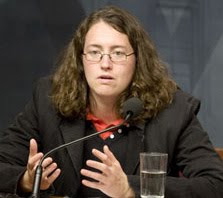 “In the last months we’ve seen the food crisis grow in Kenya,” said McElligott. On the group’s visit to Laikipia, she noted the impacts of soil degradation, unsustainable water extraction from rivers, and the lack of governmental regulation. Lack of land and water is forcing pastoralists to travel miles away from home in order to feed cattle and goats.
 “Malaria was, to be honest, not a disease that was really on my radar,” said Hanson. “I had, in a way, discounted its importance to what has happened on the continent.” At a
 Some advocates of