-
A Lens Into Liberia: Experiences from IRP Gatekeepers
›The International Reporting Project (IRP) gives “editors – the ‘gatekeepers’ – a chance to get out of the newsrooms and to see for themselves the importance of international affairs,” said John Schidlovsky, director of IRP, at a Wilson Center event about the independent journalism organization’s recent two-week trip to Liberia with 11 U.S. news editors. [Video Below]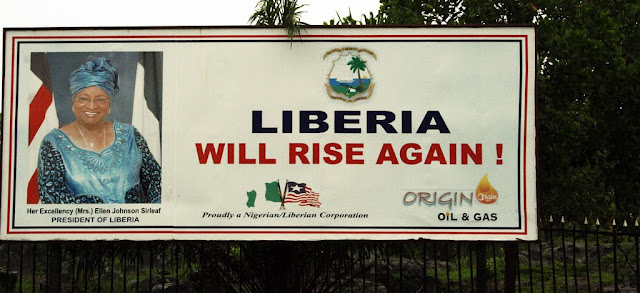
Schidlovsky stressed the importance of providing international opportunities for journalists in the face of news industry budget cuts. IRP fills the gap by sending gatekeepers, who help determine what news items will be selected for publication or broadcast, to countries that are often underrepresented and neglected in mainstream media.
Three of the gatekeepers, Sunni Khalid, managing news editor at WYPR Baltimore; Ed Robbins, a video journalist; and Teresa Wiltza, senior editor for The Root, shared their observations from their Liberia trip, as well as their insights into the challenges of international reporting.
Economic Challenges and Opportunities
Liberia is slowly beginning to rebuild its economy after a 14-year civil war with more than 200,000 casualties, but there are still “tremendous challenges,” said Khalid. “How do people survive? What kind of jobs do they have? How do they feed their families?”
According to World Bank figures, 84 percent of Liberians earn less than $1 a day, and more than 94 percent earn less than $2 a day. The government’s annual budget is only $369 million, the official unemployment rate is 85 percent, and corruption and lack of infrastructure remain major concerns.
Despite these problems, “Liberia has a lot of good points going for it,” said Khalid. Investment in the country’s raw materials is growing; most recently, the country signed a $7 billion deal with China and a European consortium to continue iron-ore mining.
Initially expecting to “write an obituary for Liberia,” Khalid said he “came out of this trip fairly optimistic about Liberia’s future.” With its “small population, great location, and mineral wealth,” as well as “competent political leadership,” Liberia can take advantage of its potential, he said.
“Capturing the Flavor” of Liberia
Robbins hopes to paint a multidimensional picture of Liberia and “capture the flavor of the country beyond Monrovia,” with his series of short films, which will be available on the websites of both Time and the International Reporting Project,
Robbins previewed one of these films, a profile of the chair of the Liberian Women’s Initiative, Etweda “Sugars” Cooper, who he says “embodies a certain power of a lot of Liberian women in her dedication and also her love for the country.”
At the local level, “the problems of recovery and development are all there in miniature,” said Robbins. But with dedicated leadership from people like Cooper, communities are slowly beginning to rebuild the schools, roads, hospitals, and other infrastructure that was destroyed in the civil wars.
“When you read books and articles, it tends to be really focused on the war and the devastation,” said Robbins. But there is also a sense of optimism among Liberians: “you can see hope in these people, a sense there is something there,” he said.
Empowering Women and Ending Rape
Wiltz pointed out that, “there is a prevailing sense of hope,” particularly among the older generation of women. After years of violence, these female “peace warriors” led the movement that ended Liberia’s civil war. But seven year later, “for women there, the biggest issue is that of economic empowerment,” said Wiltz. “They’re feeling empowered, but they’re broke.”
Sexual violence has become “part of the national psyche,” Wiltz said. During the civil war in Liberia, it has been estimated that more than 60 percent of the female population was raped. Today, “everyone seems sensitized to the issue, and yet it’s still a huge problem,” she said. Sexual violence is still common despite the prevention efforts of radio campaigns, NGOs, and Liberian President Ellen Johnson-Sirleaf.
“You’re in a country where families were destroyed by war,” Wiltz said. In the process of rebuilding Liberia, the new challenge is to engage and empower a new generation of young women and girls. “Underneath the surface there is all this pain and this legacy of extreme cruelty, but they very much want to overcome this.”
Much of the gatekeepers’ coverage is available online: Sunni Khalid produced a week-long series of radio pieces for WYPR, an NPR affiliate; Ed Robbins produced a series of short films for Time; and Teresa Wiltz published several articles on The Root.
Sources: CIA World Factbook, U.S. State Department, World Bank, World Health Organization, WYPR.
Photo Credit: “Liberia Will Rise Again,” courtesy of flickr user Jason Judy. -
Apply Now for the Compton Foundation/PRB International Fellowship
Doing Research on Reproductive Health, Environment, and Security?
›January 19, 2011 // By Hannah Marqusee
The Population Reference Bureau and Compton Foundation’s International Fellows Program deadline is rapidly approaching on January 24. The fellowship is for students from sub-Saharan Africa or Latin America seeking to affect policy and/or improve the effectiveness of population, family planning, and reproductive health programs in the developing world. Master’s students may be awarded up to $10,000 and PhD students up to $20,000 to perform capstone/internship work or dissertation research on the intersection between reproductive health, the environment, and security.
2010 Compton/PRB Fellow Kennedy Maring, a Ugandan student at UNC Chapel Hill, spent a year researching the feasibility of integrating family planning services into HIV/AIDS programs in Masindi, Uganda, in order to address high rates of mother-to-child transmission of HIV. Maring interviewed 182 pregnant women and 11 health providers in Masindi, and found that while more women in the area understood that HIV could be passed from mother to child than the national average, few were using available services such as HIV counseling or family planning. Her research resulted in many recommendations to improve prevention of HIV transmission and use of family planning, including: integrate family planning into HIV prevention; train more health providers; involve men in reproductive health care; encourage hospital delivery; bring services to the people; and provide free breast milk supplements.
Patrick Kipalu, an American University student from the Democratic Republic of Congo (DRC), traveled deep into his country’s forests to interview indigenous people about their perspective on and awareness of climate change, deforestation, and mitigation programs such as the UN Reducing Emissions from Deforestation and Forest Degradation program (REDD). Kipalu’s research showed that weak forestry governance, widespread ignorance of forestry laws, corruption, and lack of indigenous community participation, among other challenges, will make successful implementation of REDD difficult. If the current style of forestry management in the DRC continues, REDD will only provide incentives for more corruption and deforestation, he found. In this highly centralized government process, the government, logging companies, and other powerful stakeholders will reap all the benefits without any revenue going back to benefit indigenous forest communities.
How to Apply
2011 fellowship applications are being accepted until January 24, 2011. To apply, send a completed application form, curriculum vitae, cover letter, transcript, abstract of proposed research, budget, and two letters of recommendation to Dr. Ashley Frost at afrost@prb.org. Master’s students must also provide a letter from the organization where their capstone/internship will take place, and Ph.D. students must provide proof of an approved research proposal.
For full instructions, visit the fellowship site on PRB.
Photo Credit: Adapted from “photoshot,” courtesy of flickr user hippolyte. -
How Population Growth Is Straining the World’s Most Vital Resource
Turning Up the Water Pressure [Part Two]
›January 19, 2011 // By Russell SticklorThis article by Russell Sticklor appeared originally in the Fall 2010 issue of the Izaak Walton League’s Outdoor America magazine. Read part one here.
As concerns over water resources have grown around the globe, so too have proposed solutions, which range from common sense to absurd. Towing icebergs into the Persian Gulf or floating giant bags of fresh water across oceans to water-scarce countries are among the non-starters. But more moderate versions of those ideas are already being put into practice. These solutions showcase the power of human ingenuity — and reveal just how desperate some nations have become to secure water.
For example, India is doing business with a company out of tiny Sitka, Alaska, laying the framework for a water-export deal that could see huge volumes of water shipped via supertankers from the water-rich state of Alaska to a depot south of Mumbai. Depending on the success of this arrangement, moving bulk water via ship could theoretically become as commonplace as transoceanic oil shipments are today.
There is far greater potential, however, in harnessing the water supply of the world’s oceans. Perhaps more than any other technological breakthrough, desalination offers the best chance to ease our population-driven water crunch, because it can bolster supply. Although current desalination technology is not perfect, Eric Hoke, an associate professor of environmental engineering at the University of California-Los Angeles, told me via email, it is already capable of converting practically any water source into water that is acceptable for use in households, agriculture, or industrial production. Distances between supply and demand would be relatively short, considering that 40 percent of the world’s population — some 2.7 billion people — live within 60 miles of a coastline.
The Lure of Desalination
Although desalination plants are already up and running from Florida to Australia, the jury is still out on the role desalination can play in mitigating the world’s fresh water crisis. Concerns persist over the environmental impact seawater-intake pipes have on marine life and delicate coastal ecosystems. Another question is cost: Desalination plants consume enormous amounts of electricity, which makes them prohibitively expensive in most parts of the world. Desalination technology may not be able to produce water in sufficient scale — or cheaply enough — to accommodate the growing need for agricultural water. “Desalination is more and more effective [in producing] large quantities of water,” notes Laval University Professor Frédéric Lasserre in an interview. “But the capital needed is huge, and the water cost, now about 75 cents per cubic meter, is far too expensive for agriculture.” Although desalination might be “a good solution for cities and industries that can afford such water,” Lasserre predicts it “will never be a solution for agricultural uses.”
Nevertheless, desalination’s promise of easing future water crunches in populous coastal regions gives the technology game-changing potential at the global level. “Desalination technology,” Columbia University’s Upmanu Lall told said in an email, “will improve to the point that [water scarcity] will not be an issue for coastal areas.”
A Glass Half Full
With world population projected to grow by at least 2 billion during the next 40 years, water will likely remain a chief source of global anxiety deep into the 21st century. Because water plays such a fundamental role in everyday life across every society on earth, its shared stewardship may become an absolute necessity.
Take India and Pakistan’s landmark Indus Waters Treaty of 1960, which is still in effect today. The agreement — signed by two countries that otherwise can’t stand each other — shows that when crafted appropriately and with enough patience, international water-sharing pacts can help defuse tensions over water access before those tensions escalate into violence. Similar collaboration on managing shared waters in other areas of the world — a process that can be a bit bumpy at times — has proven successful to date.
Meanwhile, more widespread distribution of reliable family planning tools and services across Latin America, sub-Saharan Africa, and Asia will also be needed if the international community hopes to meaningfully address water scarcity concerns. Better access to healthcare and family planning tools would empower women to take greater control over their reproductive health and potentially elevate living standards in crowded parts of the developing world. Smaller family sizes would help decelerate population growth over time, easing the burden on water and soil resources in many areas. The key is ensuring such efforts have adequate funding. The United States recently pledged $63 billion over the next six years through its Global Health Initiative to help partner countries improve health outcomes through strengthened health systems, with a particular focus on improving the health of women and children.
Putting a dent in the global population growth rate will be important, but it must be accompanied by a sustained push for conservation — nowhere more so than in agriculture. Investing in the repair of a leaky irrigation infrastructure could help save water that might otherwise literally slip through the cracks. Attention to maintaining healthy soil quality — by practicing regular crop rotation, for example — could also help boost the efficiency of irrigation water.
Setting a Fair Price
The most enduring changes to current water-use practices may have to come in the form of pricing. In most parts of the world, including parts of the United States, groundwater removal is conducted with virtually zero oversight, allowing farmers to withdraw water as if sitting atop a bottomless resource. But as groundwater tables approach exhaustion, the equation changes; as Ben Franklin famously pointed out, “when the well’s dry, we know the worth of water.”
The key, then, is to establish the worth of water before this comes to pass. Smart pricing could encourage conservation by making it less economical to grow water-intensive crops, particularly those ill-suited to a particular climate. “Some crops being grown should not be grown . . . once the true cost of water is factored in,” Nirvikar Singh, a University of California-Santa Cruz economics professor who focuses on water issues, told me via email. Pricing would also provide a revenue stream for modernizing irrigation infrastructures and maintaining sewage systems and water treatment centers, further bolstering water efficiency and quality both in the United States and around the globe.
To be sure, implementing a pricing scheme for water resources — which have been essentially free throughout history — will be unpopular in many parts of the world. It’s natural to expect some pushback from the public as water managers and governments take steps to address the 21st century water crunch. But given the resource’s undeniable and universal value on an ever-more crowded planet, few options exist aside from using the power of the purse to push for more efficient water use.
In the end, however, water pricing must be combined with greater public value on water conservation — we must not flush water down our drains before using it to its full potential. Whether that involves improving the water transportation infrastructure, recycling wastewater, taking shorter showers, or turning to less water-intensive plants and crops, steps big and small need to be taken to better conserve and more equitably divide the world’s water to irrigate our farms, grow our economies, and sustain future generations.
Sources: Columbia Water Center, National Geographic, Population Reference Bureau, White House.
Photo Credits: “Juhu Beach Crowded,” courtesy of flickr user la_imagen, and “Irrigation (China),” courtesy of flickr user spavaai. -
How Population Growth Is Straining the World’s Most Vital Resource
Turning Up the Water Pressure [Part One]
›January 18, 2011 // By Russell SticklorThis article by Russell Sticklor appeared originally in the Fall 2010 issue of the Izaak Walton League’s Outdoor America magazine.
For many Americans, India — home to more than 1.1 billion people — seems like a world away. Its staggering population growth in recent years might earn an occasional newspaper headline, but otherwise, the massive demographic shift taking place on our planet is out of sight, out of mind. Yet within 20 years, India is expected to eclipse China as the world’s most populous nation; by mid-century, it may be home to 1.6 billion people.
So what?
In a world that is increasingly connected by the forces of cultural, economic, and environmental globalization, the future of the United States is intertwined with that of India. Much of this shared fate stems from global resource scarcity. New population-driven demands for food and energy production will increase pressure on the world’s power-generating and agricultural capabilities. But for a crowded India, domestic scarcity of one key resource could destabilize the country in the decades to come: clean, fresh water.
Stepping Into a Water-Stressed Future
From Africa’s Nile Basin and the deserts of the Middle East to the arid reaches of northern China, water resources are being burdened as never before in human history. There may be more or less the same amount of water held in the earth’s atmosphere, oceans, surface waters, soils, and ice caps as there was 50 — or even 50 million — years ago, but demand on that finite supply is soaring.
Consider that since 1900, the world population has skyrocketed from one billion to the cusp of seven billion today, with mid-range projections placing the global total at roughly 9.5 billion by mid-century. And it only took 12 years to add the last billion.
Unlike the United States — which is a water-abundant country by global standards — India is growing weaker with each passing year in its ability to withstand drought or other water-related climate shocks. India’s water outlook is cause for alarm not just because of population growth but also because of climate change-induced shifts in the region’s water supply. Depletion of groundwater stocks in the country’s key agricultural breadbaskets has raised water worries even further. Water scarcity is not some abstract threat in India. As Ashok Jaitly, director of the water resources division at New Delhi’s Energy and Resources Institute, told me this past spring, “we are already in a crisis.”
How the country manages its water scarcity challenges over the coming decades will have repercussions on food prices, energy supplies, and security the world over — impacts that will be felt here in the United States. And India is not the only country wrestling with the intertwined challenges of population growth and water scarcity.
Transboundary Tensions
Several of the world’s most strategically important aquifers and river systems cross one or more major international boundaries. Disputes over dwindling surface- and groundwater supplies have remained local and have rarely boiled over into physical conflict thus far. But given the challenges faced by countries like India, small-scale water disputes may move beyond national borders before the end of this century.
Looming global water shortages, warns a recent World Economic Forum report, will “tear into various parts of the global economic system” and “start to emerge as a headline geopolitical issue” in the coming decades.
This has become a national security issue for the United States. Any country that cannot meet population-linked water demands runs the risk of becoming a failed state and potentially providing fertile ground for international terrorist networks. For that reason, the United States is keeping close track of how water relations evolve in countries like Yemen, Syria, Somalia, Pakistan, and Afghanistan. It is also one of the reasons water security is a key goal of U.S. development initiatives overseas. For instance, between 2007 and 2008, the U.S. Agency for International Development (USAID) invested nearly $500 million across more than 70 countries to boost water efficiency, improve water treatment, and promote more sustainable water management.
More Mouths to Feed, Limited Land to Farm
Water is a critical component of industrial processes the world over — from manufacturing and mining to generating energy — and shapes the everyday lives of the people who rely on it for drinking, cooking, and cleaning. But the aspect of modern society most affected by decreasing water availability is food production. According to the United Nations, agriculture accounts for roughly 70 percent of total worldwide water usage.Global population growth translates into tens of millions of new mouths to feed with each passing year, straining the world’s ability to meet basic food needs. Given the finite amount of land on which crops can be productively and reliably grown and the constant pressure on farms to meet the needs of a growing population, the 20th and early 21st centuries have been marked by periodic regional food crises that were often induced by drought, poor stewardship of soil resources, or a combination of the two. As demographic change continues to rapidly unfold throughout much of Asia and sub-Saharan Africa, the ability of farmers and agribusinesses to keep pace with surging food demands will be continually challenged. Food shortages could very well emerge as a staple of 21st century life, particularly in the developing world.
Mirroring the growing burden on farmland will be a growing demand for water resources for agricultural use — and the outlook is not promising. According to a report from the International Water Management Institute in Sri Lanka, “Current estimates indicate that we will not have enough water to feed ourselves in 25 years’ time.”
As one of the world’s largest agricultural producers, the United States will be affected by this food crisis in multiple ways. Decreased food security abroad will increase demand for food products originating from American breadbaskets in California and the Midwest, possibly resulting in more intensive (and less sustainable) use of U.S. farmland. It may also drive up prices at the grocery store. Booming populations in east and south Asia could affect patterns of global food production, particularly if severe droughts spark downturns in food production in key Chinese or Indian agricultural centers. Such an outcome would push those countries to import huge quantities of grain and other food staples to avert widespread hunger — a move that would drive up food prices on the global market, possibly with little advance warning. Running out of arable land in the developing world could produce a similar outcome, Upmanu Lall, director of the Columbia Water Center at Columbia University, said via email.
Changing Tastes of the Developing World
Economic modernization and population growth in the developing world could affect global food production in other ways. In many developing countries, rising living standards are prompting changes in dietary preferences: More people are moving from traditional rice- and wheat-based diets to diets heavier in meat. Accommodating this shift at the global level results in greater demand on “virtual water” — the amount of water required to bring an agricultural or livestock product to market. According to the World Water Council, 264 gallons of water are needed to produce 2.2 pounds of wheat (370 gallons for 2.2 pounds rice), while producing an equivalent amount of beef requires a whopping 3,434 gallons of water.
In that way, the growing appeal of Western-style, meat-intensive diets for the developing world’s emerging middle classes may further strain global water resources. Frédéric Lasserre, a professor at Quebec’s Laval University who specializes in water issues, said in an interview about his book Eaux et Territories, that at the end of the day, it simply takes far more water to produce the food an average Westerner eats than it does to produce the traditional food staples of much of Africa or Asia.
Continue reading part two of “Turning Up the Water Pressure” here.
Sources: Columbia Water Center, ExploringGeopolitics.org, International Water Management Institute (Sri Lanka), Population Reference Bureau, The Energy and Resources Institute (India), United Nations, USAID, World Economic Forum, World Water Council.
Photo Credits: “Ganges By Nightfall,” courtesy of flickr user brianholsclaw, and “Traditional Harvest,” courtesy of flickr user psychogeographer. -
Integrated Development in PHE: Updates From Ethiopia and the Philippines
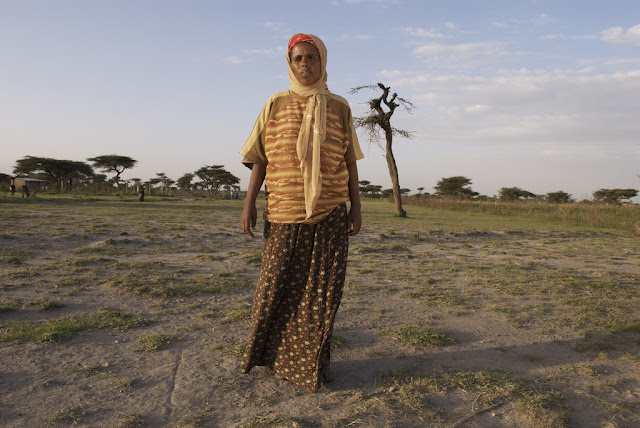
›“All protected areas in Ethiopia are being threatened by population pressure,” said Negash Teklu, executive director of PHE Ethiopia at an event at the Wilson Center co-sponsored by ECSP and the Africa Program. The best way to address this pressure is by implementing integrated population, health, and environment (PHE) programs that combine natural resource management with family planning services, said Teklu. “Without the family planning component, they cannot solve the protected area problems,” he said.
Teklu was joined by Joan Regina Castro, executive vice president at PATH Foundation Philippines, Inc., and Annie Wallace, PHE technical advisor with the USAID Global Health Fellows Program, to compare PHE projects in Ethiopia and the Philippines and identify best practices. [Video Below]
The Population-Climate Connection
To address population growth in areas of high biodiversity, Teklu created PHE Ethiopia, a consortium to coordinate PHE projects in the country and increase awareness of the value added by integrating them.
“The population-climate connection is easily seen in Ethiopia,” said Teklu. The country’s deforestation, loss of biodiversity, poverty, high maternal and child mortality, and vulnerability to climate change are linked to the rapid growth of its population, which is currently 85 million. Building community resilience in this kind of environment is “critical,” he said.
Bridging Gaps: Gender, Youth, and Religion
Wallace, in her assessment of the Packard Foundations’ PHE projects in Ethiopia, found the projects bridged gender gaps. By integrating health and environmental education in PHE youth groups and in outreach by extension workers, the projects increased male involvement in health and family planning (a traditionally female activity) and increased women’s involvement in agriculture and environmental activities (traditionally male). This cross-gender success increased the total number of family planning users, said Wallace.
But for any of this work to succeed, “community ownership and participation are very critical and essential,” said Teklu. Both youth and religious leaders were primary stakeholders in this process. “Youth are the next leaders. By targeting youth you can get them to think about livelihoods and make these connections,” said Wallace.
PHE has proven to “transcend religion,” said Castro. Despite traditional opposition to abortion and family planning, support from Christian and Islamic leaders in Ethiopia and the Philippines was critical in determining a project’s success. “When religious leader buy-in comes in, the community really responds to that,” said Wallace.
In addition, religious leaders understand the population-environment connection. “Our livelihoods are affected when we have too many mouths to feed…family planning and reproductive health makes sense,” an Ethiopian religious leader told Wallace.
Securing Sustainable Support for Scaling Up
IPOPCORM, the PHE initiative in the Philippines, is now “the biggest [PHE] project, modesty aside, in the world,” said Castro, because it has succeeded in working at all levels of government. To scale up its work in the “priority areas” of high biodiversity and rapid population growth, where the “poorest of the poor” live, IPOPCORM first scaled up its advocacy work. To be sustainable, “you have to have a lot of PHE leaders and champions” at all levels, from village to national government, she said.
Ethiopia faces a significant challenge in securing sustainable support and funding from the national government and other sources. “While there is buy-in for the local approach, there isn’t funding,” Wallace said. “A lot of work is donor-driven, whether we like it or not,” she added. “There needs to be a more sustainable strategy” to ensure the survival of these projects, she said, which means garnering national and international support.
But it also means conducting research to provide empirical evidence of PHE’s added value, the speakers agreed. A new paper in the journal Environmental Conservation, coauthored by Castro, uses evidence from IPOPCORM’s projects to conclude that integrating family planning and coastal resource management offers benefits over single-sector approaches. But elsewhere, there is a “big need for monitoring and evaluation” to “strongly gather data to show our success on the ground,” said Teklu.
However, communities on the ground “don’t need the empirical evidence,” said Castro. “The community and the people say their lives are linked and so the solutions should be linked,” she said. “The life that they live speaks of integration.”
Photo Credit: “Safia Fungie Hasenna – Climate witness from Ethiopia” by Zeresenay Berhane Mehar courtesy of flickr user Oxfam International -
New Insights Into the Population Growth Factor in Development
›“We have not found any country that has developed or gotten out of poverty while maintaining high birth rates,” said Martha Campbell, president of Venture Strategies for Health and Development. “Family planning is not a cost to a Ministry of Finance – it’s an investment,” said Malcolm Potts of the University of California Berkeley.
Campbell and Potts were joined by panelists Eliya Msiyaphazi Zulu, director and founder of the African Institute for Development Policy, and Jotham Musinguzi, director of the African Region at Partners in Population and Development, for a Wilson Center discussion of the implications of rapid population growth on human and economic development. [Video Below]
Africa’s Key Population Growth Challenges
“Africa’s population of one billion can reach between 1.8 and 2.3 billion by 2050, depending on how well the continent actually does in reducing fertility,” Zulu said. In 2010, Africa accounted for 15 percent of the total world population, but current estimates suggest this will grow to 23 percent by 2050.
“Rapid growth, young age structures, and urbanization are Africa’s main population challenges,” said Zulu. “Addressing these concerns is increasingly seen to be the key to the continent’s development prospects and realization of the Millennium Development Goals.” With 40 to 50 percent of populations in Africa under the age of 15, there is “high momentum for further population growth,” he said.
“Africa has a very high demand for fertility control, and the demand will undoubtedly increase,” said Zulu. “The main challenge, therefore, is not that of demand, but how to ensure those who are in need actually have access to contraception.” In many African regions, current rates of contraception use are as low as seven percent. In some areas, as many as 97 percent of women cannot afford the full cost of contraception, he said.
“It’s not just about reducing fertility,” said Zulu. Improving education and increasing labor force opportunities will not only help populations develop economically, but will also allow African countries to take full advantage of the demographic dividend, he said.
“The international development community should build on Africa’s success stories and support efforts to achieve universal access to family planning, expand public education on reproductive matters, improve the status of women, and improve the situation in urban settings,” Zulu concluded.
Family Planning and the MDGs
“Women are dying; children are dying. They shouldn’t be,” said Musinguzi. “By investing US$1 million in family planning, you can prevent 800 maternal deaths, 11,000 infant deaths, 14,000 deaths in children under five, and 360,000 unwanted pregnancies.”
“Women are clearly saying they have a need for family planning,” Musinguzi said. Presenting statistics from sub-Saharan Africa, he noted that 31 countries have a total fertility rate of more than five. Fourteen million unintended pregnancies occur each year, but only 25 percent of women use family planning. In Uganda, for example, the population has more than doubled in less than 20 years; women on average have more than six children each; and only 18 percent of married women use modern contraception.
“For a country trying to achieve the MDGs…the question of addressing total fertility rate is very important,” said Musinguzi. Reducing unmet need for family planning services can help African countries reduce the costs of achieving several of the Millennium Development Goals, including offering universal primary education; reducing child mortality; improving maternal health; combating HIV/AIDS, malaria, and other diseases; and ensuring environmental sustainability.
Policy Implications
“This is an urgent message – waiting 10 years to get family planning back on the international agenda will be enormously costly,” Potts said. “Of all the medical interventions that exist, contraception is the single most powerful. It is the only one that can have an impact on maternal and infant mortality, on the autonomy of women, on economic progress, on social stability and the rate at which we destroy the environment,” he said.
“Education and family planning are the driving mechanisms of development – they’re synergistic,” said Potts. “One of our needs is to get economists, family planning, and development experts on the same page.”
Sources: Guttmacher Institute, Population Action International, Population Reference Bureau.
Photo Credit: Untitled, courtesy of flickr user stttijn. -
The Role of Population Dynamics in Climate Adaptation
›December 21, 2010 // By Wilson Center StaffThis post is a synthesis of a panel discussion at the UNFPA Population Dynamics and Climate Change conference in Mexico City with Marcia Castro, of the Harvard School of Public Health; Heather D’Agnes, of USAID; and Lori Hunter, of the University of Colorado at Boulder.
It is well-known that environmental change — including climate change — has important impacts on human health. However, it is less well understood how health systems shape the responses of individuals and households to environmental change. Population dynamics — such as fertility, migration, and mortality and morbidity — influence community health and greatly affect community resilience in the face of environmental changes, including the capacity to adapt to climate change.
Mortality and Morbidity
Morbidity and mortality dramatically shape a household’s ability to adapt its livelihood strategies to a changing climate. For example, in areas of high HIV prevalence, such as sub-Saharan Africa, adult mortality seriously undermines livelihood options. In the face of such loss, the household’s reliance on local natural resources intensifies. If environmental change reduces the amount of available resources, the household has fewer options for energy and sustenance.
Morbidity also affects adaptive capacity, and morbidity itself can be shaped by environmental change. For example, environmental scarcity can increase poverty, which can lead to an increase in risky transactional sex, further fueling the HIV pandemic. Malnutrition resulting from drought and environmental shocks can suppress the immune systems of HIV-positive people, making them more vulnerable to illness and less able to adapt to other external changes.
Fertility and Family Planning
Healthier households are more resilient households, so increasing access to health services, including reproductive health services, is essential for building adaptive capacity. High fertility poses challenges to a family’s livelihood and has negative health effects on women and children. Providing reproductive health services is an effective way to improve the capacity of these vulnerable groups to adapt to climate change. For example, a recent study argues that lowering fertility rates in the Himalayan region could increase community resilience to the predicted fluctuations in water quantity.
However, there is a high level of unmet demand for contraception across the globe. How can community adaptation programs help meet this need? Importantly, research from the Philippines suggests that integrating population, health, and environment programs in a package approach to community development is more effective than single-sector interventions. Including family planning and reproductive health services in community-based climate adaptation programs could not only more effectively meet the community’s needs, but could also improve its adaptive capacity better than health or climate programs alone.
Migration
Another population process, migration, can both impact health and affect the capacity for adaptation. For example, internal migration in the Brazilian Amazon appears associated with the spread of malaria, which negatively impacts the adaptive capacity of households. To mitigate climate change’s health impacts, states should more effectively plan settlements and health systems, including health impact assessments for infrastructure and development projects. (Editor’s Note – northern Nigeria and Niger present another example of similar climate-related migratory patterns that significantly impact health and economic resilience.)
In summary, the scientific evidence is clear that population dynamics — such as mortality, fertility, and migration — and environmental trends are linked. Projects intended to improve a community’s ability to adapt to a changing climate should consider and address these linkages in their design and implementation.
Sources: Foundation for Environmental Conservation, UNFPA, USAID.
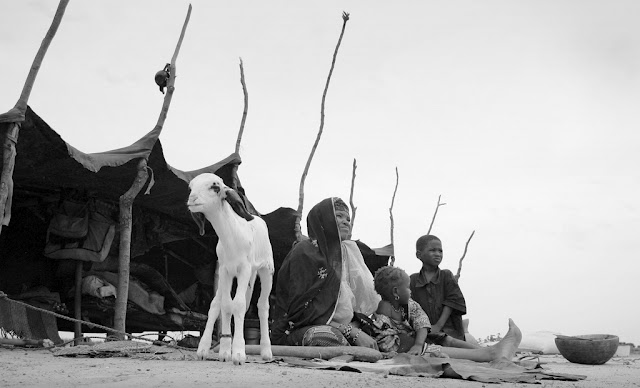
Photo Credit: “Toureg family in Niger,” courtesy of flickr user ILRI. -
Rebuilding Stronger, Safer, Environmentally Sustainable Communities After Disasters
The GRRT Toolkit for Humanitarian Aid
›Natural disasters present an immediate humanitarian crisis but are also an opportunity to rebuild societies to be more resilient and environmentally sustainable than they were before. The “Green Recovery and Reconstruction Training Toolkit” (GRRT), created by World Wildlife Fund (WWF) and the American Red Cross and launched at the Wilson Center on November 19, will help future humanitarian efforts integrate principles of environmental conservation into their disaster recovery strategies. This strategic partnership has been “an incredible effort and marriage between organizations that have different operating styles, different approaches to situations,” said WWF Chief Operating Officer Marcia Marsh. While implementing the GRRT may not be easy, “we need integrated solutions for integrated problems,” said Erika Clesceri, bureau environmental officer at USAID.
A Critical Partnership
In the midst of a crisis, humanitarian workers on the ground often do not have the time, skills, or funding to incorporate environmental concerns into relief efforts, said Robert Laprade, senior director for emergencies and humanitarian assistance at CARE. Humanitarian workers are “going a hundred miles an hour, they’re going on adrenaline and they’re there to save people’s lives – and the environment is just of secondary importance,” he said.
But “environmental sustainability is critical to the achievement of long-lasting recovery results,” said Roger Lowe, senior vice president of communications at American Red Cross. The Red Cross Principles of Conduct state that “relief aid must strive to reduce future vulnerabilities to disaster as well as meeting basic needs” and “avoid long-term beneficiary dependence upon external aid,” he said.
From Damnation, Purgatory, and Armageddon to Redemption
For many crisis-stricken regions, lack of an emphasis on environmental sustainability during disaster recovery efforts can mean “damnation in the present, purgatory in the near future, and Armageddon in the long term,” said Peter Walker, director of the Feinstein International Center at Tufts University. Stress on the environment caused by climate change or unsustainable resource consumption can often contribute to conflict, he explained.
In Darfur, “the environmental change was part and parcel of what led to that conflict,” Walker said. At one time an “environmental Eden” of diverse ecological zones, Darfur gradually became an environment that could not support a society of livestock herding. As the environment changed, some former herders became salaried, armed gunmen, known as the Janjaweed who felt they faced “a choice of no choice,” Walker said, to either “die as pastoralists or become pariahs as mercenaries.”
The challenge for humanitarian aid organizations is to not only help communities recover from disasters, but help them adapt to future environmental stress caused by globalization, climate change, or other factors. “If you cannot adapt,” Walker said, “that’s going to lead to violence.” To avoid aid dependency or resurgence in conflict it is critical to integrate environmental sustainability into disaster relief efforts from the beginning, he said:We used to believe that our world in the aid business was divided between relief on the left and long-term development on the right, and one would gradually go into the other in this relief-development continuum. But the reality is that you have a significant population – a population of millions of people – who are effectively trapped in a form of aid purgatory. They’re basically on a drip feed. Humanitarian assistance does not get you forward, it keeps you alive.
The GRRT offers organizations guidelines for implementing integrated disaster relief to provide a sustainable solution. While every crisis is different, the GRRT’s guidelines should be as applicable to “flooding in Boston as they are to flooding in Aceh,” said Walker.
Implementing Integrated Solutions
Securing funding for this integrated approach will be a challenge, as a significant portion will go towards staffing and training people on the ground, said Clesceri. A stand-alone, dedicated budget for environmental issues within humanitarian assistance programs must “be fought and re-fought for on a continual basis,” she said.
Local partnerships are essential. “Replicate” should be “stricken from the lexicon,” said Marsh. “You can’t replicate, and this toolkit isn’t meant to be a one-size-fits-all.” Instead, she said, the goal of the GRRT is to “create very practical approaches with communities.”
The key to helping communities recover from disasters is to form the kinds of strategic partnerships demonstrated by WWF and the American Red Cross in the creation of the GRRT. “Interdisciplinary groups are always, in my mind, going to get you a better solution in the end, but the risk is that they take more time…but it’s absolutely worth it,” she said.
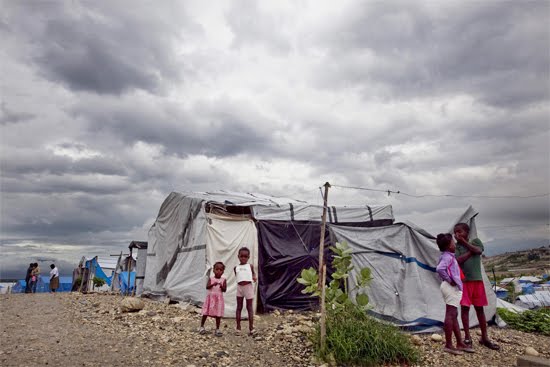
Photo Credit: “Dark Clouds from Haiti’s Hurricane Tomas Loom over Camps,” courtesy of flickr user United Nations Photo.
Showing posts from category Africa.