

-
Rebuilding Stronger, Safer, Environmentally Sustainable Communities After Disasters
The GRRT Toolkit for Humanitarian Aid
›Natural disasters present an immediate humanitarian crisis but are also an opportunity to rebuild societies to be more resilient and environmentally sustainable than they were before. The “Green Recovery and Reconstruction Training Toolkit” (GRRT), created by World Wildlife Fund (WWF) and the American Red Cross and launched at the Wilson Center on November 19, will help future humanitarian efforts integrate principles of environmental conservation into their disaster recovery strategies. This strategic partnership has been “an incredible effort and marriage between organizations that have different operating styles, different approaches to situations,” said WWF Chief Operating Officer Marcia Marsh. While implementing the GRRT may not be easy, “we need integrated solutions for integrated problems,” said Erika Clesceri, bureau environmental officer at USAID.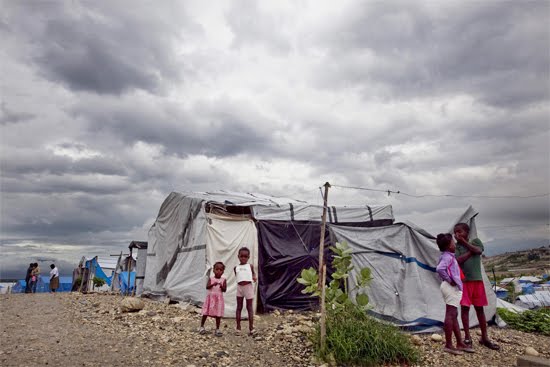
A Critical Partnership
In the midst of a crisis, humanitarian workers on the ground often do not have the time, skills, or funding to incorporate environmental concerns into relief efforts, said Robert Laprade, senior director for emergencies and humanitarian assistance at CARE. Humanitarian workers are “going a hundred miles an hour, they’re going on adrenaline and they’re there to save people’s lives – and the environment is just of secondary importance,” he said.
But “environmental sustainability is critical to the achievement of long-lasting recovery results,” said Roger Lowe, senior vice president of communications at American Red Cross. The Red Cross Principles of Conduct state that “relief aid must strive to reduce future vulnerabilities to disaster as well as meeting basic needs” and “avoid long-term beneficiary dependence upon external aid,” he said.
From Damnation, Purgatory, and Armageddon to Redemption
For many crisis-stricken regions, lack of an emphasis on environmental sustainability during disaster recovery efforts can mean “damnation in the present, purgatory in the near future, and Armageddon in the long term,” said Peter Walker, director of the Feinstein International Center at Tufts University. Stress on the environment caused by climate change or unsustainable resource consumption can often contribute to conflict, he explained.
In Darfur, “the environmental change was part and parcel of what led to that conflict,” Walker said. At one time an “environmental Eden” of diverse ecological zones, Darfur gradually became an environment that could not support a society of livestock herding. As the environment changed, some former herders became salaried, armed gunmen, known as the Janjaweed who felt they faced “a choice of no choice,” Walker said, to either “die as pastoralists or become pariahs as mercenaries.”
The challenge for humanitarian aid organizations is to not only help communities recover from disasters, but help them adapt to future environmental stress caused by globalization, climate change, or other factors. “If you cannot adapt,” Walker said, “that’s going to lead to violence.” To avoid aid dependency or resurgence in conflict it is critical to integrate environmental sustainability into disaster relief efforts from the beginning, he said:We used to believe that our world in the aid business was divided between relief on the left and long-term development on the right, and one would gradually go into the other in this relief-development continuum. But the reality is that you have a significant population – a population of millions of people – who are effectively trapped in a form of aid purgatory. They’re basically on a drip feed. Humanitarian assistance does not get you forward, it keeps you alive.
The GRRT offers organizations guidelines for implementing integrated disaster relief to provide a sustainable solution. While every crisis is different, the GRRT’s guidelines should be as applicable to “flooding in Boston as they are to flooding in Aceh,” said Walker.
Implementing Integrated Solutions
Securing funding for this integrated approach will be a challenge, as a significant portion will go towards staffing and training people on the ground, said Clesceri. A stand-alone, dedicated budget for environmental issues within humanitarian assistance programs must “be fought and re-fought for on a continual basis,” she said.
Local partnerships are essential. “Replicate” should be “stricken from the lexicon,” said Marsh. “You can’t replicate, and this toolkit isn’t meant to be a one-size-fits-all.” Instead, she said, the goal of the GRRT is to “create very practical approaches with communities.”
The key to helping communities recover from disasters is to form the kinds of strategic partnerships demonstrated by WWF and the American Red Cross in the creation of the GRRT. “Interdisciplinary groups are always, in my mind, going to get you a better solution in the end, but the risk is that they take more time…but it’s absolutely worth it,” she said.
Photo Credit: “Dark Clouds from Haiti’s Hurricane Tomas Loom over Camps,” courtesy of flickr user United Nations Photo. -
Whither the Demographic Arc of Instability?
›December 14, 2010 // By Richard Cincotta
After the Berlin Wall came down in 1989, the demand for geostrategic mapping went up. Pentagon geographers revised maps almost monthly in order to keep pace with the rapid sequence of events – the toppling of Eastern Europe’s communist regimes, the rise of pro-Western liberal democracies in their place, and the reunification of Germany. Then came more borders, and even more maps: the breakup of the Soviet Union and the withdrawal of forces from former Warsaw-Pact states, the splintering of Yugoslavia and Czechoslovakia, and requests for accession to NATO. When, in the late 1990s, it became apparent that the end of the Cold War would have little effect on the emergence of civil and ethnic conflicts in Africa, Asia, and Latin America, and that a network of militant Islamist organizations had coalesced across Muslim Asia and Africa, strategic mapmaking shifted focus to identifying conditions in the Global South.
-
Empowering Women in the Muslim World
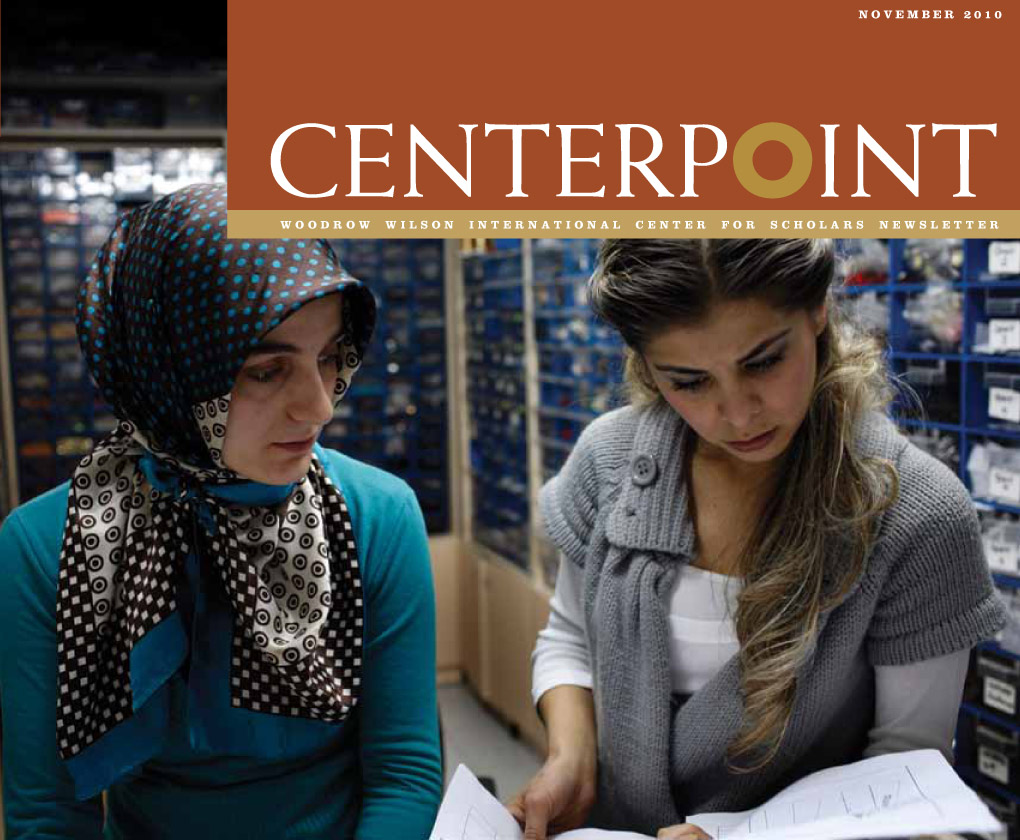
›December 2, 2010 // By Wilson Center StaffOriginally featured in the Wilson Center’s Centerpoint, November 2010.
For decades, women in the Middle East have actively struggled for equal status before the laws of their respective countries. They have strived to attain equal participation in politics and society, and progressive justice throughout the region. While they have made progress in some parts of the region, many challenges remain. The Wilson Center’s Middle East Program recently held three meetings to discuss challenges as well as progress to empowering women across the Muslim world.
A Modern Narrative
The American Islamic Congress (AIC) recently published a report, “A Modern Narrative for Muslim Women in the Middle East: Forging a New Future,” that highlights past and present triumphs and difficulties – economic, legal, political, religious, and social –for women’s rights throughout the region. On September 30, the Middle East Program co-sponsored a meeting with the AIC to review the status of women in Saudi Arabia and Jordan, based on findings in the AIC’s report.
Fawziah Al-Hani, manager of the Gherass Center for Social Education in Saudi Arabia, expressed frustration about the progress women have made in her native Saudi Arabia. She said women there are perceived as second-class citizens by the country’s legal, economic, political, religious, and social institutions. Women’s issues are rarely discussed in Saudi political and social spheres, and women are not represented in government or the business sector. She said if women are allowed to be active outside the home, they are mostly restricted to educational and health activities.
While she is frustrated about these restrictive Saudi policies toward women, Al-Hani said she maintains hope, as changes take place within the society and government through new initiatives and movements.
Rana Husseini, a human rights activist, author, and journalist, detailed the changes to the status of women in Jordan over the past 20 years. Husseini, whose human rights activities over the past two decades in Jordan have focused on honor crimes and other women’s issues, said Jordan has made substantial progress on women’s rights as a result of intense media and civil society activism. While there is room for improvement, she said women are now participating in government and significant reforms have been made to the judicial system.
Though the effectiveness of quotas for women in government may be debated, Husseini noted that quotas facilitate women’s participation in elections and government service. In fact, she said, there are some 50 women judges in Jordan. She noted that honor killings, except in extreme cases, are becoming rarer, and harsher sentences are being imposed for honor crimes.
With constant pressure on the government and society, reforms will continue, said Husseini, who is optimistic about the future for women rights in Jordan and in the Middle East as a whole.
Demographic Realities
Why do many Middle Eastern women not enjoy the same economic opportunities as women of other regions? Can they be empowered to participate at a greater level? Nadereh Chamlou, a senior adviser at the World Bank, attributed the gender inequality to restrictive social norms. She said the region’s women must be empowered to participate in a more significant way if their countries are to effectively exploit, instead of squander, the current economic “window of opportunity.”
At a September 13 discussion, Chamlou said the good demographic news is that there are high numbers of working-age people and thus the potential for rapid economic growth. However, Middle Eastern countries have the highest dependency rates in the world, a fact that Chamlou attributed to the low economic participation of Middle Eastern women relative to female citizens’ participation in other parts of the world. This reality means the Middle East’s demographic composition will not be exploited to its full potential.
Increasing economic opportunities for women will require changing social norms, said Chamlou. She cited a study conducted by the World Bank in three Middle Eastern capitals – Amman, Jordan; Cairo, Egypt; and Sana’a, Yemen – that revealed the biggest reason for the poor representation of women in the workforce is the negative male attitude regarding women working outside the home. Notably, social norms and such negative male attitudes proved to restrict women’s participation far more than the need to attend to child-rearing duties. Despite the successful efforts of most Middle Eastern states to improve education opportunities, conservative social norms still pose a barrier to female empowerment.
Some simple changes could have a substantial impact. Chamlou recommended focusing on educated, middle-class women, undertaking more efforts to bring married women into the workforce, and emphasizing changing attitudes – particularly among conservative younger men – toward women working outside the home.
Lessons from Tunisia
In Tunisia, the progress of women’s empowerment can serve as a model for the region, noted women’s rights advocate Nabiha Gueddana, president and director-general of the National Agency for Family and Population in Tunisia.
Speaking at a September 8 meeting, Gueddana said the Arab world can learn much from her native Tunisia regarding the positive effects of empowering women. Gueddana, also a candidate for undersecretary-general of UN Women at the United Nations, described how Tunisian women have been empowered politically, economically, and socially, and how this empowerment has benefited Tunisian society.
Tunisia has undergone substantial changes since achieving independence from France in 1956. Tunisian women had second-class status in the years prior, a time Gueddana described as one that relegated them to a life of constant child-rearing, illiteracy, and economic dependence.
Yet Tunisia has become a beacon for other Muslim societies: the country’s labor code allows full female participation in the economy and education is open equally to boys and girls. Family planning programs and important strides in health have considerably lowered the birth rate and lengthened the life expectancy of the average woman. Gueddana also noted that Tunisia’s economic growth is now five times greater than the growth rate of its population.
Measures to empower women in Tunisia have benefited not only women but Tunisian society as a whole, with significant shifts in men’s attitudes regarding women’s rights and roles in society. Gueddana indicated that her efforts extend beyond Tunisia, as she strives to help empower women throughout the world. She said such efforts will persist so long as women anywhere find themselves disadvantaged, dependent, and living as second-class citizens.
Women’s empowerment in society rests increasingly not in the political but in the economic and business domains (Editor’s note: one could add that women’s empowerment has the potential to considerably impact the environmental domain as well). While women have made considerable progress in the political arena, economic power is still male-dominated throughout the region.
Gueddana said the discussion of women’s rights should take place within the broader context of human rights. Violence against women, particularly sexual violence, is a widespread phenomenon across all societies and, unfortunately, often considered taboo for discussion. She said all citizens benefit when all have equal rights and can use them to expand their opportunities and achievements to enhance their societies.
Dana Steinberg is the editor of the Wilson Center’s Centerpoint.
Photo courtesy of Centerpoint. -
World AIDS Day 2010: Not Yet in a Position to Say “Mission Accomplished”
›December 1, 2010 // By Schuyler NullToday is World AIDS day. More than 33 million people are currently living with HIV around the world, according to the UN, and the vast majority of them (22 million) are located in sub-Saharan Africa.
“We have halted and begun to reverse the epidemic. Fewer people are becoming infected with HIV and fewer people are dying from AIDS,” said Executive Director Michel Sidibé in the 2010 edition of UNAIDS’ annual report.“However we are not yet in a position to say ‘mission accomplished.’ Growth in investment for the AIDS response has flattened for the first time in 2009. Demand is outstripping supply. Stigma, discrimination, and bad laws continue to place roadblocks for people living with HIV and people on the margins.”
Particularly in sub-Saharan Africa, “people on the margins” often means women and children. As a result, there has been more and more integration of HIV/AIDS programs with gender and maternal health. The environmental community has also worked closely with HIV/AIDS interventions in places where the destruction of natural resources makes certain populations more vulnerable than others and valuable conservation efforts are threatened.
As development efforts become more cross-sectoral, it’s important to keep in mind and maximize these connections between community, economic, and environmental health.
Check out The New Security Beat’s coverage of HIV/AIDS integration with other health and environment programs including coverage from the Global Health Initiative’s “Integrating HIV/AIDS and Maternal Health Services” event last year, a sit-down interview on the challenges facing HIV-positive adolescents with Harriet Birungi of the Population Council in Kenya, and an examination of how gender-based violence contributes to women’s vulnerability to HIV.
Sources: Population Reference Bureau, UN, World Wildlife Federation.
Map Credit: World AIDS Campaign. -
Watch: Blue Ventures PHE Program in Madagascar
›“All conservation efforts will be in vain if family planning issues aren’t addressed,” says Rebecca Hill, project manager for the Sexual and Reproductive Health Programme at Blue Ventures in a video highlighting their population, health, and environment (PHE) programming in Madagascar.
While primarily a marine conservation group, Blue Ventures also recognizes the need for integrating population into their efforts. They began a family planning program in southwestern Madagascar in 2008 as part of a “holistic approach to conservation.” The project aims to address the high unmet need for family planning, high fertility and maternal and infant mortality, and conserve the coastal environment. “We are directly saving lives,” Hill says.
Rapid population growth is creating an unsustainable strain on natural resources, as Matthew Erdman of Blue Ventures wrote in a previous post on The New Security Beat:The average total fertility rate in Velondriake is 6.7 children per woman, according to our data. On average women are only 15 years old when they first conceive. To compound this problem, a majority of the population is under the age of 15 – at or approaching reproductive age. At the current growth rate, the local population will double in only 10 to 15 years. The local food sources, already heavily depleted, barely feed the current population, let alone twice that amount. Without enabling these coastal communities to stabilize their population growth, efforts to improve the state of marine resources and the community’s food security are considerably hindered.
Hill describes the situation in the village when she joined the Blue Ventures in 2008 as “alarming,” with women “having up to 17 children despite not wanting children.” Many people in the town had never heard of condoms and had no idea how to use them, she said, and “they are desperate to have access to contraception.”
Today, the initial family planning program has been scaled up to the surrounding region and generated significant community involvement by peer educators teaching community members about sexual and reproductive health. It’s also become the first PHE project to receive support from the UNFPA within Madagascar.
There are currently 18 community-based distributors who give out two types of contraception in their villages. The fact that the community has so fully embraced the project shows that it can be replicated elsewhere, says Hill in the video. “Communities themselves have harnessed the ideas and consider that what we’re doing is vitally important.”
“Addressing family planning needs and issues is inextricably linked with conservation issues,” says Hill. “All conservation efforts will be in vain, if family planning issues are not addressed.”
Video Credit: Blue Ventures Family Planning Project from Alexander Goodman on Vimeo. -
Nigeria’s Future Clouded by Oil, Climate Change, and Scarcity [Part Two, The Sahel]
›November 19, 2010 // By Schuyler NullIf southern Nigeria’s demographic and environmental problems have helped fuel today’s conflicts, it’s the north’s issues that may feed the conflicts of tomorrow.
Nigeria’s lack of development and poor governance is not exclusive to the delta region, only more well-known because its oil reserves. The north of the country, which is predominately Muslim and accounts for more than half of Nigeria’s population, faces many of the same problems of environmental degradation, lack of jobs, and inadequate infrastructure. Northern Nigeria is also growing much faster than the south, with a total fertility rate of 6.6 children per woman, compared to 4.6 in the southern states. The median age of first-time mothers in northern Nigeria is only 18 years old.Nigeria holds nearly a fifth of the entire population of sub-Saharan Africa. By 2050, it’s expected to pass Indonesia, Brazil, and Bangladesh and take its place among the top five most populous countries in the world, according to UN estimates. But a litany of outstanding and new development, security, and environmental issues – both in the long-troubled Niger delta in the south and the newly inflamed north – present a real threat to one West Africa’s most critical countries.
If southern Nigeria’s demographic and environmental problems have helped fuel today’s conflicts, it’s the north’s issues that may feed the conflicts of tomorrow.
Nigeria’s lack of development and poor governance is not exclusive to the delta region, only more well-known because its oil reserves. The north of the country, which is predominately Muslim and accounts for more than half of Nigeria’s population, faces many of the same problems of environmental degradation, lack of jobs, and inadequate infrastructure. Northern Nigeria is also growing much faster than the south, with a total fertility rate of 6.6 children per woman, compared to 4.6 in the southern states. The median age of first-time mothers in northern Nigeria is only 18 years old.
Climate, Culture, and Discontent in the North
Last summer, in an offensive that stretched across four northern states, a hardline Islamist group called Boko Haram emerged suddenly to challenge the government, attacking police stations, barracks, and churches in escalating violence that claimed more than 700 lives, according to The Guardian. The government responded with a brutal crackdown, but recent targeted killings and a prison break seem to indicate the group is back.
Perhaps most distressingly, Boko Haram appears to have won some local support. Said one local cloth trader to The New York Times in an interview this October, “It’s the government’s fault. Our representatives and our government, they are not sincere. What one person acquires is enough to care for a massive amount of people.”
As in the south, mismanagement of natural resources has also played a role in creating a dangerous atmosphere of distrust in the government. After gold was discovered this spring in northwestern Nigeria, many under- and unemployed flocked to the region to try their luck, but they also unwittingly contaminated local water with high levels of lead. Although the state health officials say they have now identified more than 180 villages thought to be affected, the epidemic was only discovered after a French NGO stumbled upon it while testing for meningitis in June. More than 400 infant deaths have been connected to the mining, according to Reuters.
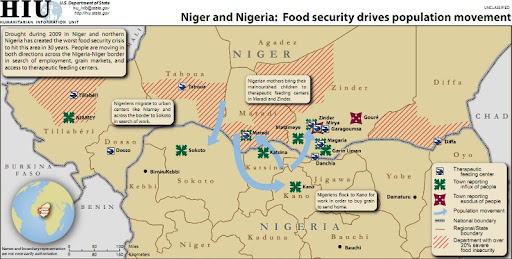
Contributing to natural resource-related misery in the north are climatic changes. Declining rainfall in the West African Sahel over the last century has pushed rain belts successively south, driving pastoralists into areas often already occupied. According to Anthony Nyong’s work, presented in ECSP Report 12, these changes have elevated competition over natural resources to the single most common cause of conflict in northern Nigeria in recent years.In addition to the long-term trend of declining rainfall, an acute drought in 2009 and another this year in neighboring Niger and Chad have created the worst food security crisis in 30 years. The droughts have also driven a great deal of cross-border migration into Nigeria, which itself saw lower than usual rainfall in the north, especially the northeast, around the ever-disappearing Lake Chad (see map above for resulting migration patterns).
What rain did fall in the border areas fell suddenly and torrentially, causing rampant flooding that affected two million people. The floods not only caused physical damage but also came just before harvest season, destroying many crops and further reducing food security. Made more vulnerable by the number of displaced people and flooding, the area was then hit with its worst cholera outbreak in years, which has killed 1,500 people so far and spread south.
Cholera is not the only preventable disease to flourish in northern Nigeria in recent years. In 2003, cleric-driven fear of a U.S. plot to reduce fertility in Muslim women caused the widespread boycott of a UN-led polio vaccination drive. The fast-spreading disease then emerged in six of Nigeria’s neighbors where the disease had previously been eradicated. The northern states today remain the only consistently polio-endemic area in Africa, according to the Global Polio Eradication Initiative.
“A Stable Nigeria Is a Stable Africa”
Nigeria’s size and its wealth of natural resources make it a strategically important country for the future of the region. “A stable Nigeria is a stable Africa,” said Wilson Center scholar and former NEITI officer Uche Igwe in an interview. “Nigeria is 150 million people and the minute Nigeria becomes unstable, the West Africa sub-region will be engulfed.”
While there have been some strides in recent years in reducing corruption and addressing infrastructure needs (for example, NEITI’s work to promote revenue transparency), the development, health, environmental security, and human security situations remain dire in many parts of the country. With one of the fastest growing populations in the world and severe environmental problems in both the north and the south, scarcity will almost certainly be a challenge that Nigeria will have to face in the coming years. How the government responds to these challenges moving forward is therefore critical.
In 2008, in response to high oil prices, British Prime Minister Gordon Brown announced his intentions to send military aid to help combat Niger Delta militants. The statement was met with dismay from humanitarian organizations and caused the collapse of a ceasefire (which was then resumed for a time and now seems to be falling apart again). Brown was forced to backtrack into simply offering training support to Nigerian security forces.
In terms of U.S. assistance, USAID requested $560 million for Nigeria in FY 2010 – 75 percent of which is allocated towards HIV/AIDS – and the U.S. military has engaged in joint exercises with Nigerian forces. But so far, little has been done to integrate U.S. aid in a cohesive manner. Given the breadth of these issues, such integration is crucial.
“We need partners, like the United States and Europe, who have a stake in stability – in Nigeria, the Niger Delta, the Gulf of Guinea, and the world,” Igwe said. It remains to be seen what the Nigerian reaction would be to an offer of aid from the West that addresses not only the country’s security issues but also its myriad other problems, in a substantial and integrated fashion.
Part one on Nigeria’s future – The Delta – addresses oil, insurgency, and the environment in the south.
Sources: AFP, AFRICOM, AP, BBC, Global Polio Eradication Initiative, The Guardian, Independent, The New York Times, ReliefWeb, Reuters, SaharaReporters, USAID.
Photo Credit: “The Ranch,” courtesy of flickr user Gareth-Davies, and “Niger and Nigeria: Food security drives population movement,” courtesy of the U.S. State Department. -
Nigeria’s Future Clouded by Oil, Climate Change, and Scarcity [Part One, The Delta]
›November 18, 2010 // By Schuyler NullNigeria holds nearly a fifth of the entire population of sub-Saharan Africa. By 2050, it’s expected to pass Indonesia, Brazil, and Bangladesh and take its place among the top five most populous countries in the world, according to UN estimates. But a litany of outstanding and new development, security, and environmental issues – both in the long-troubled Niger Delta in the south and the newly inflamed north – present a real threat to one of West Africa’s most critical countries.
A 400-Year CurseNigeria collected $46 billion in oil revenue during FY 2009, trailing only Saudi Arabia, Iran, and the United Arab Emirates. Despite their country’s mineral wealth, however, roughly 70 percent of Nigerians live below the poverty line, with the oil-producing south facing particularly abject deficiencies.
“I have never worked in an area as bereft as the Niger Delta – it is shockingly undeveloped,” said former Wilson Center fellow Deirdre Lapin, in a phone interview with ECSP (listen to the audio embedded above for the full interview). Lapin worked in community development for Shell in Nigeria from 1997-2003 and also spent time at USAID and UNICEF. “Compared to everywhere else I have been, it is without question the most neglected and the least advanced in terms of general development and welfare for the ordinary person,” she said.
According to the UN, the Niger Delta accounts for upwards of 80 percent of Nigeria’s foreign exchange earnings and about 70 percent of total government revenues. Instead of benefiting from its mineral wealth, the delta has suffered tremendous environmental damage that has spurred a grassroots anti-oil (and later anti-government) insurgency. During the oil companies’ drilling drive in the 1970s, it was not uncommon to see large amounts of tar collected on the roots of mangroves and the sides of creeks, and oil slicks were frequent, Lapin said.
The environmental situation in the delta improved as production plateaued, but due to oil theft, poor maintenance, and derelict equipment and pipelines scattered across the delta, spills continue. According to The New York Times, by some estimates, the delta has endured the equivalent of an Exxon Valdez spill every year, for the last 50 years. But there has never been an impartial, empirically based environmental study of the impact of the oil and gas industry on the delta, Lapin said, which would be an important step forward. (A UNEP study is currently underway but has already been criticized for alleged inaccuracy.)
Southern Nigeria’s infamous duality – miserable lack of infrastructure, services, and security in the midst of abundant natural resources – helped give rise to the term “resource curse” among development specialists, a term which has since been applied to similar situations in the Democratic Republic of Congo, Sierra Leone, and even Afghanistan. Lapin pointed out that in the eastern part of the delta, the resource curse actually goes back 400 years, to the slave trade and palm oil.
“Blood Oil” and Scarcity in the Delta
The sophisticated insurgency in the delta began as a response to the oil and gas industry, but has in many ways become dependent on it. Groups of armed “boys” – some of whom are remnants of political-intimidation efforts during the 2003 elections – have become notorious in the delta and abroad, often putting on shows for the media. Some of these groups are loosely organized under the moniker MEND (Movement for the Emancipation of the Niger Delta), with the stated intent of driving the oil companies out of the delta in response to environmental destruction and lack of revenue sharing, but others simply profit through extortion, racketeering, and oil theft (also known as “bunkering”). At the peak of their activities, insurgent activity has cut oil production between 25 and 35 percent, Lapin said, prompting oil companies to move further and further off-shore in recent years.With unemployment in the delta at 90 percent by some estimates, militancy has become a viable way of life for many. Bunkering can net up to $60 million a day, according to a BBC report. The practice, which former president Umaru Yar’Adua called Nigeria’s “blood oil,” costs the government up to $5 billion annually, and many gangs are rumored to have political connections that protect them in exchange for their services.
Contributing to the delta’s propensity for conflict is the region’s demography.
“There are probably 120 mutually unintelligible languages and dialects that are spoken [in the Niger Delta] and 40 major identifiable ethnic groups,” Lapin said. Because of the number of creeks and lack of infrastructure, the region’s 20 million inhabitants are fractured into many small communities – roughly 80 percent are under 1,500 people, according to Lapin. In addition to its splintered social structure, population growth and years of conflict have left a mass of unemployed delta residents who have adopted a “siege mentality,” as a UN report puts it (a feeling especially prevalent among the young). With three percent population growth and local fish and agriculture sectors on the decline, it is likely the Niger Delta will face increased scarcity in the coming years, further fueling discontent.
“What is truly needed in order to put Nigeria on a solid footing for the future is a government with very clear objectives for the economic and social development of the country, putting those forward as the priorities, changing the style in which governance is taking place today,” Lapin said. “And that will require something of a revolution, a major sea-change.”
Part two on Nigeria’s future – The Sahel – addresses conflict, scarcity, and demographics in the northern part of the country and concludes with recommendations for the future.
Sources: BBC, CIA, Energy Information Agency, The Guardian, The New York Times, Population Reference Bureau, Reuters, UN.
Photo Credit: “Niger Delta oil disaster,” courtesy of flickr user Sosialistisk Ungdom – SU, and a NASA Space Shuttle Overflight photo of the Niger Delta, courtesy of NASA. -
Human and Climate Security in Africa
›A new study by the Strauss Center’s program on Climate Change and African Political Stability, “Locating Climate Insecurity: Where Are the Most Vulnerable Places in Africa?,” maps the regions of Africa most vulnerable to climate change based on four main indicators: (1) physical exposure to climate-related disasters; (2) household and community vulnerability; (3) governance and political violence; and (4) population density. Across all indicators, they found that the “areas with the greatest vulnerability are parts of Madagascar, coastal West Africa, coastal Nigeria, Ethiopia, and the Democratic Republic of Congo.” The authors hope this paper will serve as a launching point for future research on the diverse regional causes of climate change vulnerability, ultimately guiding adaptation strategies across the continent.“After the Rain: Rainfall Variability, Hydro-Meteorological Disasters, and Social Conflict in Africa,” by Cullen Hendrix and Idean Salehyan of the University of North Texas, examines how extreme weather events, rainfall, and water scarcity affect political stability in Africa. The authors found that rainfall has a “significant effect” on political conflict and that wetter years are also the more violent ones. However, they also found extreme variability between countries, with Tanzania, Zimbabwe, Swaziland, Mauritania, and Mozambique showing the strongest correlation between rainfall and conflict. This suggests that many local environmental and social factors were also affecting levels of violence. “Water scarcity can lead to resource competition, poor macroeconomic outcomes, reduced state capacity, and ultimately, social conflict,” the authors concluded.
Showing posts from category Africa.






.jpg)