-
Amid Perfect Storm of Climate Challenges, Can Aquaculture Net Food Security Gains in Bangladesh?
›October 15, 2013 // By Jacob Glass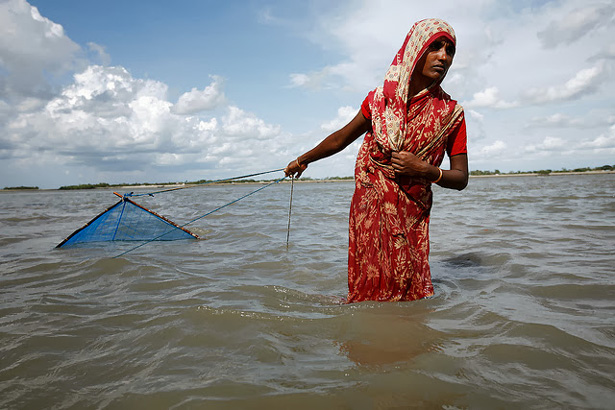
It is difficult to find a country feeling the negative impacts of climate change more severely than Bangladesh. Name any alarming, seemingly far off effect of a warming world being discussed in the halls of Washington or the summits of Copenhagen, and there is a good chance Bangladesh is experiencing it today. Flooding, drought, sea level rise, mass migration, and crushing poverty are exacerbated by a growing population and rapid urbanization. This perfect storm of climactic and demographic trends presents a looming crisis for Bangladesh, no more so than when it comes to food security.
-
Gladys Kalema-Zikusoka on Gorilla Conservation and Community Health in Uganda and DRC
›
Dr. Gladys Kalema-Zikusoka never expected to be so deeply involved in family planning when she started Conservation Through Public Health (CTPH) 10 years ago. CTPH began with a simple mission: to help preserve endangered mountain gorillas in Virunga National Park in the Democratic Republic of the Congo, and Bwindi Impenetrable National Park in Uganda. But, as Kalema-Zikusoka explains in this week’s podcast, they quickly found that to help the gorillas, they had to help the people living around them.
-
Harvesting Peace: Food Security, Conflict, and Cooperation (Report Launch)
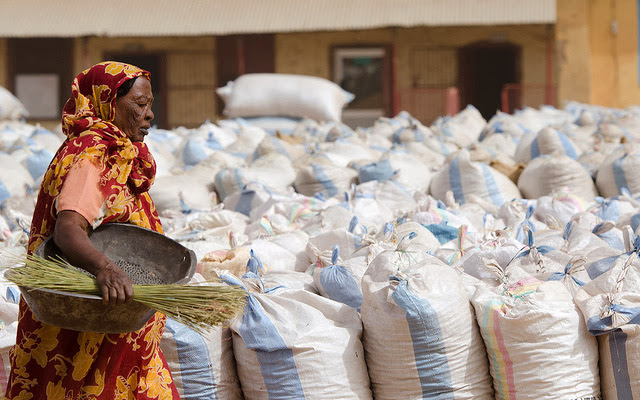
›In the wake of food riots in more than 30 countries in 2008 and the Arab Spring, in which food prices played an instigating role, the relationship between food security and instability demands a closer examination. “There is a lot of data on conflict, and a lot of data on food security, but it’s rarely brought together,” said Emmy Simmons, the author of the latest edition of ECSP Report. [Video Below]
-
African Leaders Urge Action to Meet (and Succeed) MDG 5
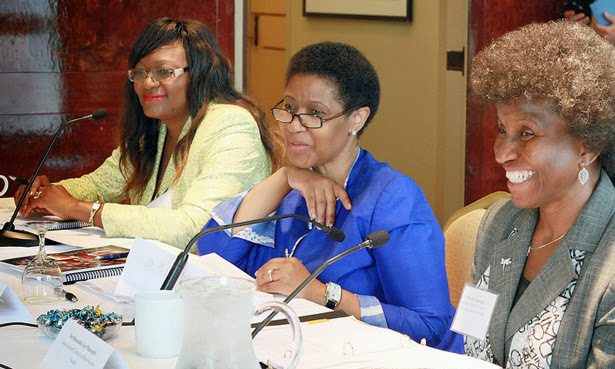
›As world leaders gathered at the UN for a special event on achieving the Millennium Development Goals (MDGs) last month, there was much to celebrate. Some of the MDG targets – on poverty reduction and safe drinking water, for example – have been reached ahead of the 2015 deadline. But on MDG 5, which addresses maternal mortality and reproductive health, progress lags shamefully behind.
-
Emmy Simmons: To Improve Food Security and Prevent Conflict, Think and Commit Long Term
›
“Food is really fundamental to people’s daily existence, and the price or the access to that food is clearly important to them, and people will turn out in the streets when that price spike is unanticipated,” says Emmy Simmons, author of Harvesting Peace: Food Security, Conflict, and Cooperation, in this week’s podcast.
Simmons gives an overview of the latest edition of ECSP Report, which examines how conflict affects food security, and how food security affects conflict.
-
Complicated Causality: Edward Carr on Food Security and Conflict
›
“It seems to me the food security linkage suffers from the same problem that an awful lot of the environment and conflict literature suffers from: There are more negative cases than positive cases,” says Edward Carr in this week’s podcast. “In other words, you have a lot of cases where there is a [food] price spike and no violence or no conflict.”
-
Sarah Crowe, UNICEF
Ethiopia Set to Achieve Millennium Development Goals in Child Mortality
›For a country that once made headlines for famine, poverty, and war, Ethiopia is gaining a reputation as a development leader on the African continent. In just over 10 years, the country has slashed child mortality rates by half, rising in global rank from 146 in 2000 to 68 in 2012. More money is being spent on health care, poverty levels and fertility rates are down, and twice as many children are in school.
-
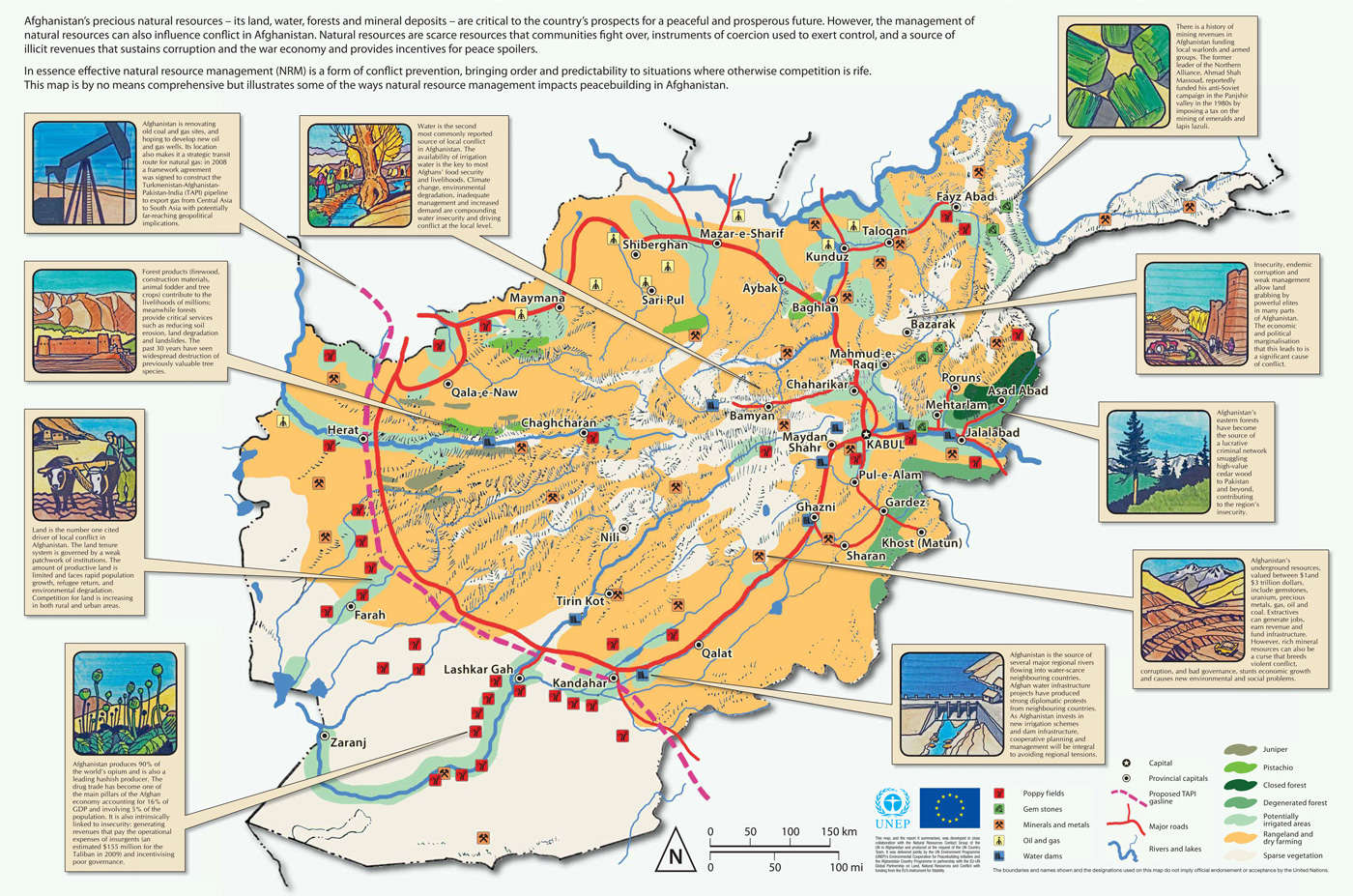
To Build Peace, Confront Afghanistan’s Natural Resource Paradox
›There’s a popular saying in Afghanistan reflecting the value of water: “Let Kabul be without gold, but not without snow.”
Living in a refugee camp across the border in Pakistan during the Soviet occupation, my father, who worked as a doctor in Samangan, Bamyan, Kunar, and Balkh provinces, used to tell me about the importance of our country’s natural wealth. He was optimistic that it was Afghanistan’s land, water, forests, and minerals that would help the country re-emerge as a strong nation. However, he also knew that the mismanagement of our natural resources is partly to blame for the instability, insecurity, and vulnerability that have gripped our country for so many years. This is the paradox of the natural resource wealth in Afghanistan.
Showing posts from category zz Organizations.