-
Dennis Taenzler, ECC Platform
What’s Next in European Climate Diplomacy?
›September 5, 2013 // By Wilson Center StaffThe original version of this article appeared on the Environment, Conflict, and Cooperation (ECC) Platform.
At the end of June, the European Union Foreign Affairs Council adopted a set of conclusions on EU climate diplomacy that left us with mixed feelings. Acknowledging and recalling that climate change is of paramount importance is commonplace – too often quoted and very seldom followed by decisive action. Explicit reference to the positive results of the Durban and Doha climate conferences is even a reason to get nervous. Many negotiators and observers will doubt a similarly enthusiastic framing for the most recent results.
-
Harvesting Peace: Food Security, Conflict, and Cooperation
›Since 2008 – a year in which rapid increases in the global prices for major grains helped to trigger outbreaks of civil unrest in more than 40 countries – scholars and policymakers have paid increased attention to the potential influence of global food prices on social and political instability. Since that time, spiking prices have periodically sparked public protests and governments have struggled to respond.
-
Prospects for Gender Parity in UN Peacekeeping Forces, Evaluating Girls’ Empowerment Efforts
›
The Population Council’s annual report highlights new work from one of the largest organizations doing research on the lives of adolescent girls in the developing world. Of particular note is the Council’s Adolescent Girls Empowerment Program, a four-year study launched in May which will involve 42,000 girls in seven countries – Bangladesh, Burkina Faso, Ethiopia, Guatemala, India, Tanzania, and Zambia. The aim is to evaluate successful strategies for helping girls avoid child marriage, sexually transmitted infections, and unintended pregnancies at a critical juncture in their lives. Council President Peter Donaldson writes that young girls are “one of the potentially most influential figures in the developing world.” A typical 12-year-old girl “in the next few years…will either abandon or continue her schooling, be pushed into marriage and childbearing, or develop a sense of proud ownership of her physical self… As her future is reconfigured, so is ours.”
-
A Season for Motherhood: The Role of Family Planning in Improving Maternal Health
›Ensuring access to family planning is not only a matter of human rights, but can also play a key role in protecting the health of mothers and children. Maternal health experts and program directors met at the Wilson Center on July 31 to discuss the role family planning takes in women’s health in developing countries, what successes family planning programs worldwide have had so far, and what can be done to expand services. Sarah Craven, chief of the UN Population Fund’s Washington office, moderated the event.
-
Flooding and Food Security in Trinidad and Tobago: Roger-Mark Interviewed for ‘A Sea Change’
›August 21, 2013 // By Schuyler Null“Climate change is one of the greatest challenges that we are facing in today’s world; it is particularly important for us in the Caribbean and for a country like Trinidad and Tobago,” says ECSP Director and Trinidad-native Roger-Mark De Souza in an upcoming documentary by Sustain T&T, a non-profit based in the islands.
-
Rear Admiral Neil Morisetti on Opportunities for Transatlantic Cooperation on Climate Change, Energy
›
“We’ve got real pressure on key natural resources: food, water, energy, and land,” says Rear Admiral Neil Morisetti, the U.K. Foreign and Commonwealth Office’s special representative on climate change, in this week’s podcast. “But what we haven’t got, if I can use the words of Winston Churchill, we haven’t got ‘action this day.’”
“Morisetti spoke at the Wilson Center on June 6 for the launch of The Climate and Energy Nexus: Challenges and Opportunities for Transatlantic Security, by CNA and the Royal United Services Institute. As climate change threatens stability in some places, energy security has emerged as a key vulnerability to Western militaries’ abilities to respond to conflict and assist in disaster relief operations, says Morisetti.
-
Harnessing the Demographic Dividend: PRB’s ENGAGE Presentations Look to Empower, Educate
›The demographic dividend – the idea that a decline from high to low rates of population growth can lead to dramatic economic gains – has become something of a buzzword in development circles. Sub-Saharan Africa holds the single largest block of remaining high fertility countries and while headlines tend towards the dramatic about demographic shifts there, less column space has been devoted to examining the underlying issues causing these shifts or the other changes that will be necessary for countries to benefit from them.
-
Why Has the Demographic Transition Stalled in Sub-Saharan Africa?
›August 7, 2013 // By Elizabeth Leahy Madsen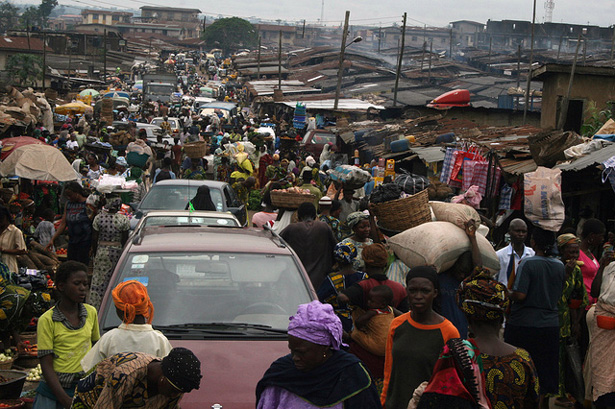
In a recent post on the new United Nations population projections, I discussed the risk in assuming that countries in sub-Saharan Africa will progress through the demographic transition at a pace similar to other regions. Making this assumption is questionable because fertility decline in Africa has generally proceeded more slowly than in other parts of the world, with several cases of “stalls” and even small fertility increases over time.
Showing posts from category zz Organizations.