-
Big Changes Need Big Stories: The Year Ahead in Environment and Energy Reporting
›
While climate change has enjoyed a recent spike in news coverage, journalists face a constant challenge to bring sustained attention to other environmental stories, including resource scarcity, the changing oceans, and demographic change. [Video Below]
-
Environmental Impacts of Household Size, Bringing Family Planning Outside the Health Sector
› What are the environmental implications of changing household sizes? A recent article by Mason Bradbury, M. Nils Peterson, and Jianguo Liu, published in Population and Environment, analyzes data from 213 countries over 400 years and finds the average number of occupants per home tends to decline as population grows. This dynamic, they write, indicates that accommodating housing could prove to be one of “the greatest environmental challenges of the twenty-first century.” As countries develop and urbanize, “according to convergence theory, household size decreases (often from greater than five to less than three).” Other cultural shifts, like increasing divorce rates, urban sprawl driven by rising affluence, decreasing numbers of multigenerational households, and larger houses (in the United States, homes more than doubled in size between 1950 and 2002, according to the article) compound the issue. As population growth continues in parts of the world, these trends pose critical questions for conservation and environmental sustainability, since “households are the end consumers of most natural resources and ecosystem services.”
 -
Unveiling the Dark Places: Urbanization, Economic Change, and Gender-Based Violence
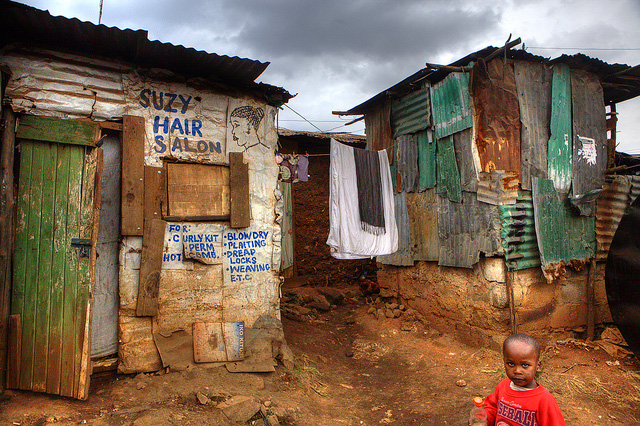
›“If there was a perfect slum, Kibera would be it.” The notoriously overcrowded and underserved settlement in the Kenyan capital of Nairobi captivates the public imagination, engendering visions of urban violence, poverty, and hopelessness, said Caroline Wanjiku Kihato of the University of the Witwatersrand at the Wilson Center on February 18. The area was ravaged by ethnic violence that erupted across the country following Kenya’s disputed 2007 elections, pitting neighbor against neighbor in tribal clashes that killed more than 1,000 people, displaced many thousands more, and provoked an alarming surge in sexual violence.
-
Have Ideas About Reducing Urban Poverty in the Developing World? In Graduate School? Apply Within
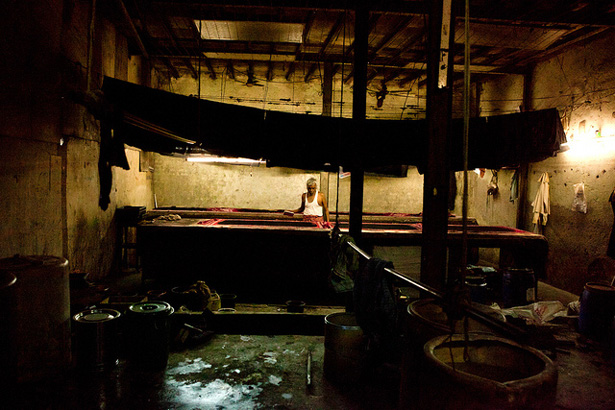
›The Wilson Center’s Urban Sustainability Laboratory, in partnership with USAID, International Housing Coalition, World Bank, and Cities Alliance, is pleased to announce the 5th Annual Urban Poverty Paper Competition for graduate students. The competition calls on students currently enrolled in a Master’s or PhD program to submit paper abstracts on topics relating to urban poverty in the developing world.
-
Alison Brysk: Urbanization, Economic Change Hidden Drivers of Gender-Based Violence
›
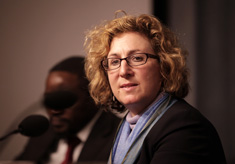
Gender-based violence in developing countries is more than just a product of culture, war, extreme poverty, or historical patriarchy; it’s also a result of rapid economic change and urbanization, according to Alison Brysk, a fellow at the Wilson Center and the Mellichamp professor of global governance at the University of California, Santa Barbara.
-
Bouncing Forward: Why “Resilience” Is Important and Needs a Definition
›As policymakers respond to the threat of climate and environmental change, the concept of resilience has found itself at the center of discussion. Few scientists and policymakers, however, can come to a consensus on how to define, evaluate, and build resilience.
-
Basket Case No More? Bangladesh’s Successes Portend Resilience in Face of Change
›This past December, Bangladesh turned 42, bringing the country Henry Kissinger once predicted would become a “basket case” into comfortable middle age (though perhaps this analogy breaks down for countries like Switzerland, age 722).
-
Andrew Revkin: Local Population Dynamics Crucial to Understanding Climate Vulnerability
›February 10, 2014 // By Schuyler Null“What’s become clear to me on population is that it’s really a local issue,” said Andrew Revkin in an interview at the Wilson Center. “You get the impression, ‘Oh didn’t we solve that problem?’” And to some extent, demographic shifts around the world are largely heading in the direction people anticipated, with a leveling off mid-century. But “no one really knows what happens then,” he said. “All it takes is a tiny diversion of fertility rates and things could really grow or shrink.”
Showing posts from category urbanization.