-
Surf and Turf: The Environmental Impacts of China’s Growing Appetite for Pork and Seafood
›
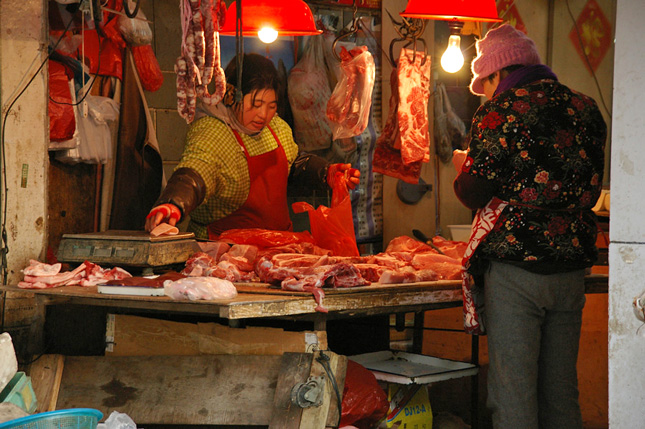
Half the world’s pigs – 476 million – reside in China. Increasingly prosperous consumers are eating fewer grains and demanding a more protein-rich diet, ballooning the pork industry to 15 times its 1960s-era size. In the last 30 years, Chinese demand for meat has quadrupled and China is now the largest consumer of seafood in the world.
-
Violent Straw Men? Sex Ratios, Conflict, and a Methodological Disconnect
›
The emerging subfield of “security demographics” is interested in how demographic trends, such as youth bulges, high or low fertility rates, and sex ratios affect the security and stability of nation-states and regions. In our research, Andrea Den Boer and I have attempted to show that abnormally high sex ratios – situations where there are significantly more men than women – have been a security concern in the past and may affect security and stability in the future.
-
Earth Day 2014: Women at the Center of Sustainable Cities
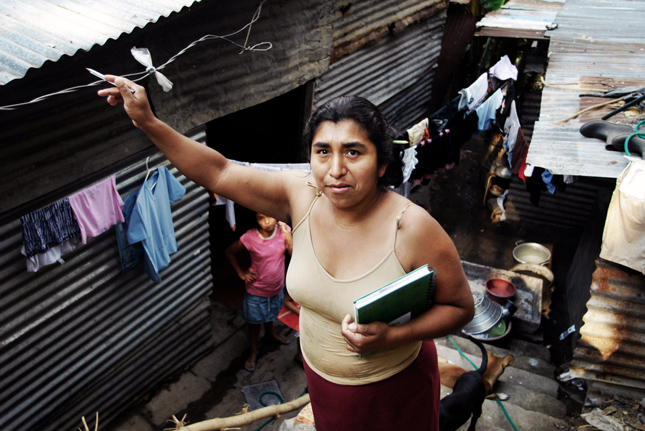
›April 22, 2014 // By Roger-Mark De SouzaWhen I first came on board the Wilson Center last Earth Day, I wrote that I wanted to forge new paths and identify ways that reproductive health, environmental conservation, and women’s empowerment affect our lives today and in the future.
-
Alfred Omenya: Gender-Based Violence Must Be Made More Visible
›
Reducing gender-based violence requires turning our attention to what we normally do not see, says Alfred Omenya of Eco-Build Africa. In this week’s podcast, Omenya, who collaborated on a four-year study investigating all types of violence in four cities around the world, explains how certain forms of gender-based violence are “invisible” in conventional research and policy.
-
Double Dividends: Population Dynamics and Climate Adaptation
›If current projections hold, Africa’s population will more than double in 40 years, putting more people at risk of food, water, health, and economic insecurity as the climate changes, as well as negating progress made in reducing carbon emissions per person. But what if it didn’t? [Video Below]
-
High Food Prices an Unlikely Cause for the Start of the Arab Spring
›April 7, 2014 // By Richard CincottaJust months after popular uprisings toppled Tunisia and Egypt’s authoritarian regimes, a trio of complex-system researchers published a brief article linking these demonstrations with high levels of the UN Food and Agriculture Organization’s international Food Price Index. Marco Lagi, Karla Bertrand, and Yaneer Bar-Yam’s model, which predicts outbreaks of deadly social conflict when the index tops 210, has since become a popular explanation wielded by many for bouts of popular unrest, including the Arab Spring and overthrow of Ukraine’s government. But were food prices really an underlying “hidden” cause for the start of a wave of instability that is still being felt today?
-
Assessing Climate Vulnerability and Adaptation: IPCC Working Group II in Their Own Words
›The latest report by the United Nations Intergovernmental Panel on Climate Change (IPCC) brings new evidence to bear on the real and potential impacts of climate change, emphasizing the need to manage risks and build resilience. In a dramatic, slickly produced video accompanying the much-anticipated Working Group II contribution to the report, released on March 30, several of the working group’s dozens of authors discuss key issues addressed in their section, which covers “impacts, adaptation, and vulnerability.”
-
A New Dimension to Geopolitics: Geoff Dabelko on the Latest IPCC Report
›“The Intergovernmental Panel on Climate Change is an attempt to get an international group of scientists together to assess what we know about climate change,” says Geoff Dabelko in an interview with the Wilson Center’s Context program. “That is not a quick process.”
Showing posts from category urbanization.