• woodrow wilson center
  • ecsp

New Security Beat

Subscribe:
  • rss
  • mail-to
  • Who We Are
  • Topics
    • Population
    • Environment
    • Security
    • Health
    • Development
  • Columns
    • China Environment Forum
    • Choke Point
    • Dot-Mom
    • Friday Podcasts
    • Navigating the Poles
    • Reading Radar
  • Multimedia
    • Water Stories (Podcast Series)
    • Backdraft (Podcast Series)
    • Tracking the Energy Titans (Interactive)
  • Films
    • Water, Conflict, and Peacebuilding (Animated Short)
    • Paving the Way (Ethiopia)
    • Broken Landscape (India)
    • Scaling the Mountain (Nepal)
    • Healthy People, Healthy Environment (Tanzania)
  • Publications
  • Events
  • Contact Us

NewSecurityBeat

The blog of the Wilson Center's Environmental Change and Security Program
Showing posts from category sanitation.
  • Sally Edwards on Health and Climate Change in the Caribbean: “It’s a Very Complex Web”

    ›
    Friday Podcasts  //  August 14, 2015  //  By Carley Chavara

    edwards-small“The relationship between human health…and environmental changes is extremely complex,” says Sally Edwards, advisor for sustainable development and environmental health of the Pan-American Health Organization/World Health Organization office for the eastern Caribbean countries, in this week’s podcast.

    MORE
  • Without Water, No Sustainable Development: World Water Week 2015

    ›
    Guest Contributor  //  August 12, 2015  //  By Anders Jägerskog
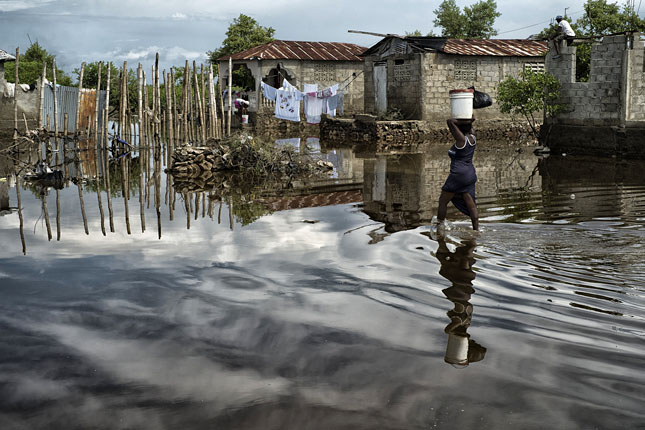
    Little Girls Carry Water Containers

    The World Economic Forum recently named water crisis the world’s number one risk for the next 10 years for its potential impact on people and industry. Indeed, as the global community grapples with climate change – and environmental change of all kinds – understanding the fundamental nature if water to human society is crucial. The input report for this year’s World Water Week, released yesterday by the Stockholm International Water Institute, in fact argues that getting water management right is a prerequisite for sustainable development.

    MORE
  • The SDGs Are All About Integration – Good Thing PHE Programs Have Been Doing That for Years

    ›
    Guest Contributor  //  August 5, 2015  //  By A.Tianna Scozzaro, Cara Honzak & Cheryl Margoluis
    scalingthemountain2

    Last week, the United Nations concluded one of the last negotiations on the road to adopting the Sustainable Development Goals in September. We’ve entered the home stretch of a process that has taken more than two years, bringing governments, civil society organizations, and communities together to define the development goals and targets that UN member states will be expected to aim for over the next 15 years.

    MORE
  • Lauri Romanzi on Rethinking Maternal Morbidity Care in a Historical Context

    ›
    Dot-Mom  //  Friday Podcasts  //  July 24, 2015  //  By Josh Feng

    Romanzi-smallIn May 1855, Dr. James Marion Sims opened the first obstetric fistula hospital in New York City. Just 40 years later, it closed, reflecting a sharp decline in maternal morbidity rates in the United States and other Western countries. The Waldorf Astoria Hotel now stands on the site of the former hospital. “We know that we have eradicated obstetric fistula in high income countries; it happened at the turn of the 20th century,” says Dr. Lauri Romanzi, project director of Fistula Care Plus, in this week’s podcast.

    MORE
  • Oakland’s Water Treatment Plant Generates Its Own Energy and Then Some

    ›
    Choke Point  //  July 15, 2015  //  By Keith Schneider
    waste water pic 3

    As part of the Wilson Center and Circle of Blue’s Global Choke Point project, Choke Point: Port Cities will examine how Oakland, California, and Shenzhen, Guangdong Province, are responding to interlinked water, energy, and pollution challenges. These multimedia reports are meant to inform exchanges and convenings in 2016 to share among leaders of both cities and others like them around the Pacific Rim.

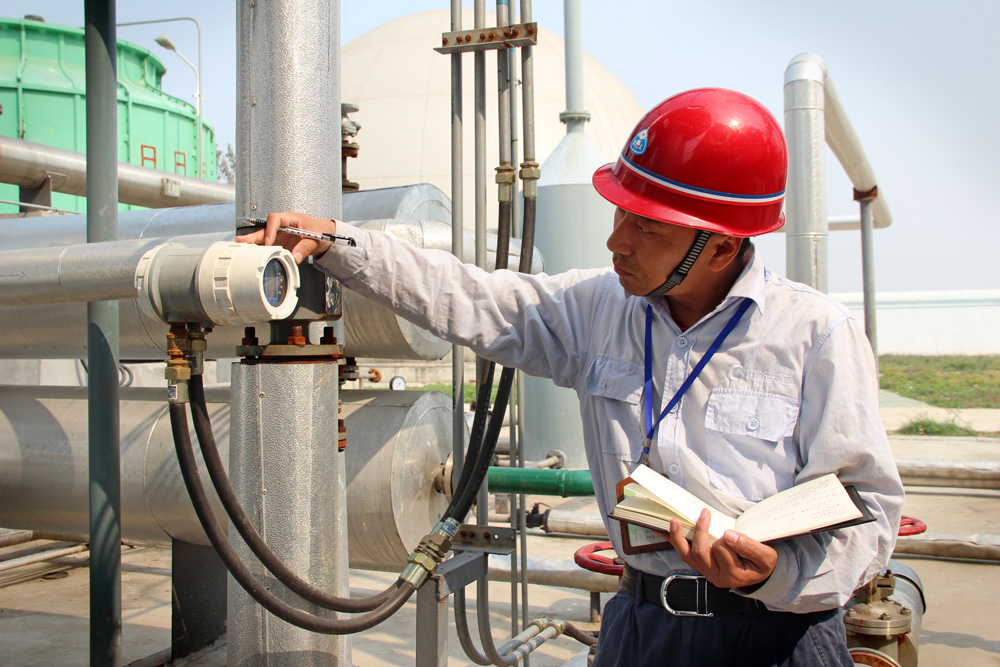
    Although treating wastewater generally ranks alongside police and fire safety, schools, and transit as the top priorities of any sensible city hall, new ideas about cleaning up sewage almost never attract headlines or TV airtime. In its 90-year history, for instance, The New Yorker, the most urbane and expansive magazine in the country, has never published a feature article on sewage treatment.

    MORE
  • Oakland’s Web of Waters Shapes New Economy, Civic Energy

    ›
    Choke Point  //  July 14, 2015  //  By Keith Schneider
    Lake-Merritt

    As part of the Wilson Center and Circle of Blue’s Global Choke Point project, Choke Point: Port Cities will examine how Oakland, California, and Shenzhen, Guangdong Province, are responding to interlinked water, energy, and pollution challenges. These multimedia reports are meant to inform exchanges and convenings in 2016 to share among leaders of both cities and others like them around the Pacific Rim.

    In March 1999, not long after he was sworn in as the 47th mayor of Oakland, Jerry Brown called Lesley Estes, the supervisor of the city’s watershed protection program. Brown, who is now California’s governor, wanted the city staffer he called “Creek Lady” to describe the most formidable ideas she had to conserve natural areas, make parks more beautiful, and clean up the city’s waters.

    MORE
  • Karachi’s Heat Wave a Sign of Future Challenges to Pakistan’s Fragile Democracy

    ›
    Guest Contributor  //  July 8, 2015  //  By Tim Kovach
    A man cools off under a public tap, while others wait to fill their bottles, during intense hot weather in Karachi

    Karachi, the world’s second largest city by population, is emerging from the grips of a deadly heatwave. A persistent low pressure system camped over the Arabian Sea stifled ocean breezes and brought temperatures in excess of 113°F (45°C) to the city of 23 million people in June. The searing heat disrupted electricity and water service, making life nearly unbearable. All told, officials estimate the heatwave killed at least 1,200 Pakistanis, more than twice as many as have died in terrorist attacks this year.

    MORE
  • Codi Yeager-Kozacek, Circle of Blue

    Middle East Conflicts Jeopardize Water for Millions

    ›
    June 15, 2015  //  By Wilson Center Staff
    Ramadi

    The original version of this article, by Codi Yeager-Kozacek, appeared on Circle of Blue. 

    Millions of people across the Middle East face drought, scarce drinking water supplies, and poor sanitation due to civil wars and conflict. Meanwhile, resource constraints and foreign military interventions risk more severe humanitarian disasters.

    MORE
Newer Posts   Older Posts
View full site

Join the Conversation

  • RSS
  • subscribe
  • facebook
  • G+
  • twitter
  • iTunes
  • podomatic
  • youtube
Tweets by NewSecurityBeat

Trending Stories

  • unfccclogo1
  • Pop at COP: Population and Family Planning at the UN Climate Negotiations

Featured Media

Backdraft Podcast

play Backdraft
Podcasts

More »

What You're Saying

  • Volunteers,At,The,Lagos,Food,Bank,Initiative,Outreach,To,Ikotun, Pan-African Response to COVID-19: New Forms of Environmental Peacebuilding Emerge
    Rashida Salifu: Great piece 👍🏾 Africa as a continent has suffered this unfortunate pandemic.But it has also...
  • A desert road near Kuqa An Unholy Trinity: Xinjiang’s Unhealthy Relationship With Coal, Water, and the Quest for Development
    Ismail: It is more historically accurate to refer to Xinjiang as East Turkistan.
  • shutterstock_1779654803 Leverage COVID-19 Data Collection Networks for Environmental Peacebuilding
    Carsten Pran: Thanks for reading! It will be interesting to see how society adapts to droves of new information in...

What We’re Reading

  • Rising rates of food instability in Latin America threaten women and Venezuelan migrants
  • Treetop sensors help Indonesia eavesdrop on forests to cut logging
  • 'Seat at the table': Women's land rights seen as key to climate fight
  • A Surprise in Africa: Air Pollution Falls as Economies Rise
  • Himalayan glacier disaster highlights climate change risks
More »
  • woodrow
  • ecsp
  • RSS Feed
  • YouTube
  • Twitter
  • Facebook
  • Home
  • Who We Are
  • Publications
  • Events
  • Wilson Center
  • Contact Us
  • Print Friendly Page

© Copyright 2007-2021. Environmental Change and Security Program.

Woodrow Wilson International Center for Scholars. All rights reserved.

Developed by Vico Rock Media

Environmental Change and Security Program

Woodrow Wilson International Center for Scholars

Ronald Reagan Building and International Trade Center

  • One Woodrow Wilson Plaza
  • 1300 Pennsylvania Ave., NW
  • Washington, DC 20004-3027

T 202-691-4000