• woodrow wilson center
  • ecsp

New Security Beat

Subscribe:
  • rss
  • mail-to
  • Who We Are
  • Topics
    • Population
    • Environment
    • Security
    • Health
    • Development
  • Columns
    • China Environment Forum
    • Choke Point
    • Dot-Mom
    • Friday Podcasts
    • Navigating the Poles
    • Reading Radar
  • Multimedia
    • Water Stories (Podcast Series)
    • Backdraft (Podcast Series)
    • Tracking the Energy Titans (Interactive)
  • Films
    • Water, Conflict, and Peacebuilding (Animated Short)
    • Paving the Way (Ethiopia)
    • Broken Landscape (India)
    • Scaling the Mountain (Nepal)
    • Healthy People, Healthy Environment (Tanzania)
  • Publications
  • Events
  • Contact Us

NewSecurityBeat

The blog of the Wilson Center's Environmental Change and Security Program
Showing posts from category risk and resilience.
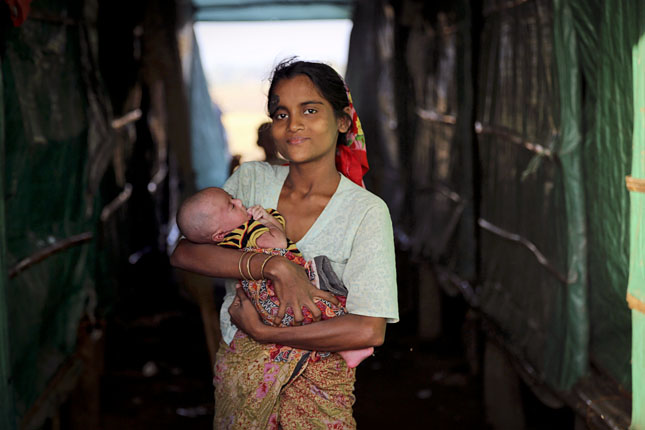
  • Flooding and Food Security in Trinidad and Tobago: Roger-Mark Interviewed for ‘A Sea Change’

    ›
    August 21, 2013  //  By Schuyler Null

    “Climate change is one of the greatest challenges that we are facing in today’s world; it is particularly important for us in the Caribbean and for a country like Trinidad and Tobago,” says ECSP Director and Trinidad-native Roger-Mark De Souza in an upcoming documentary by Sustain T&T, a non-profit based in the islands.

    MORE
  • Vulnerability View: GAIN Index Rates Climate Change Preparedness

    ›
    Eye On  //  July 31, 2013  //  By Jacob Glass
    DPRK GAIN Index Profile

    According to the UN, the planet has warmed faster since the turn of the century than any other period on record. Sea-level rise has also increased pace to 0.12 inches a year – almost double the rate observed during the 20th century. This “unprecedented” rate of climate change is expected to disproportionally impact developing countries, whose socio-economic, political, and physical landscapes make them particularly vulnerable to the effects. The GAIN Index, an interactive mapping tool recently acquired by the University of Notre Dame, can help policymakers prepare for these changes by comparing the climate change vulnerability and readiness of countries around the world.

    MORE
  • Is Resilience Too Accurate to Be Useful?

    ›
    Guest Contributor  //  June 6, 2013  //  By Phil Vernon

    ‘Toward Resilience’ is a series on the meaning of global resilience and vulnerability today. The original version of this article appeared on International Alert.

    Resilience is a wonderful metaphor. It somehow conveys in a single word the qualities of bending without breaking, of healing after an injury, of tensile rather than brittle strength. Oak and palm trees are resilient to the power of strong winds, before which they bend and then straighten again. Resilient people pick themselves up after being knocked down, draw on their reserves of ideas and strength to deal with difficult challenges, or hunker down until the gale has blown itself away. Resilient economies bounce back, and resilient ecosystems restore themselves after the fire or the flood has passed.

    MORE
  • Measuring Community Resilience: Implications for Development Aid

    ›
    Guest Contributor  //  May 28, 2013  //  By Molly Jones

    ‘Toward Resilience’ is a series on the meaning of global resilience and vulnerability today.

    A staggering amount of development dollars – one in three, in fact – are lost due to natural disasters and crises. Certain communities are less affected than others by such disasters; they are more resilient. Knowing where vulnerability and strength exist and how to bolster them could help avoid these losses. Yet, today, very little data exists to help development practitioners understand which adaptive capacities are lagging in a given community.

    MORE
  • Looking Back to Get Ahead: FEMA’s Strategic Foresight Initiative on Natural Disaster Preparedness

    ›
    Guest Contributor  //  May 13, 2013  //  By Alan M. Wright

    ‘Toward Resilience’ is a series on the meaning of global resilience and vulnerability today.

    Natural disasters have dominated news coverage in the past several years, with many observers noting a distressing rise in the frequency and scale of disasters as well as rising costs. Despite these worrying trends, a critical mass of leadership and public support for doing something about it is emerging.

    MORE
  • Clive Mutunga: Addressing Population Growth Can Build Resilience to Climate Change in Kenya and Malawi

    ›
    Friday Podcasts  //  April 26, 2013  //  By Carolyn Lamere

    “We know that a number of these countries in Africa have the least to do with climate change in terms of emissions, but they are the most vulnerable, and they are the ones with the least capacity to deal with the effects of climate change,” says Clive Mutunga in this week’s podcast. Mutunga, a senior associate at Population Action International, discusses the results of a study PAI conducted looking at the entwined and related impacts of climate change and population growth, as well as other factors like water scarcity, on Kenya and Malawi.

    MORE
  • Steven Gale on Futures Analysis at USAID

    ›
    Friday Podcasts  //  April 12, 2013  //  By Carolyn Lamere

    There’s renewed interest in looking at future trends at USAID, said Steven Gale, a senior advisor at the agency. But “we’re always asking ourselves, ‘what is the development goal that [USAID] wants to achieve, and how is this megatrend going to increase or decrease the actual probability’” of that goal will be met?

    In this week’s podcast, Gale describes the role of futures analysis at USAID, including the history of past efforts and similarities to other forward-looking projects, like the National Intelligence Council’s quadrennial Global Trends reports.

    MORE
  • Bouncing Back: How Do Population Dynamics and Social Cohesion Affect the Resilience of Societies?

    ›
    From the Wilson Center  //  April 9, 2013  //  By Carolyn Lamere

    ‘Toward Resilience’ is a series on the meaning of global resilience and vulnerability today.

    “The scale and the impact of disasters today can be greater than anything we’ve previously experienced,” said Laurie Mazur at the Wilson Center on March 18. “The proliferation of disasters has gotten a lot of people talking about resilience, about how we can lessen our risk and how we can recover more quickly from disasters of all kinds.” [Video Below]

    MORE
Newer Posts   Older Posts
View full site

Join the Conversation

  • RSS
  • subscribe
  • facebook
  • G+
  • twitter
  • iTunes
  • podomatic
  • youtube
Tweets by NewSecurityBeat

Trending Stories

  • unfccclogo1
  • Pop at COP: Population and Family Planning at the UN Climate Negotiations

Featured Media

Backdraft Podcast

play Backdraft
Podcasts

More »

What You're Saying

  • Volunteers,At,The,Lagos,Food,Bank,Initiative,Outreach,To,Ikotun, Pan-African Response to COVID-19: New Forms of Environmental Peacebuilding Emerge
    Rashida Salifu: Great piece 👍🏾 Africa as a continent has suffered this unfortunate pandemic.But it has also...
  • A desert road near Kuqa An Unholy Trinity: Xinjiang’s Unhealthy Relationship With Coal, Water, and the Quest for Development
    Ismail: It is more historically accurate to refer to Xinjiang as East Turkistan.
  • shutterstock_1779654803 Leverage COVID-19 Data Collection Networks for Environmental Peacebuilding
    Carsten Pran: Thanks for reading! It will be interesting to see how society adapts to droves of new information in...

What We’re Reading

  • Rising rates of food instability in Latin America threaten women and Venezuelan migrants
  • Treetop sensors help Indonesia eavesdrop on forests to cut logging
  • 'Seat at the table': Women's land rights seen as key to climate fight
  • A Surprise in Africa: Air Pollution Falls as Economies Rise
  • Himalayan glacier disaster highlights climate change risks
More »
  • woodrow
  • ecsp
  • RSS Feed
  • YouTube
  • Twitter
  • Facebook
  • Home
  • Who We Are
  • Publications
  • Events
  • Wilson Center
  • Contact Us
  • Print Friendly Page

© Copyright 2007-2021. Environmental Change and Security Program.

Woodrow Wilson International Center for Scholars. All rights reserved.

Developed by Vico Rock Media

Environmental Change and Security Program

Woodrow Wilson International Center for Scholars

Ronald Reagan Building and International Trade Center

  • One Woodrow Wilson Plaza
  • 1300 Pennsylvania Ave., NW
  • Washington, DC 20004-3027

T 202-691-4000