• woodrow wilson center
  • ecsp

New Security Beat

Subscribe:
  • rss
  • mail-to
  • Who We Are
  • Topics
    • Population
    • Environment
    • Security
    • Health
    • Development
  • Columns
    • China Environment Forum
    • Choke Point
    • Dot-Mom
    • Friday Podcasts
    • Navigating the Poles
    • Reading Radar
  • Multimedia
    • Water Stories (Podcast Series)
    • Backdraft (Podcast Series)
    • Tracking the Energy Titans (Interactive)
  • Films
    • Water, Conflict, and Peacebuilding (Animated Short)
    • Paving the Way (Ethiopia)
    • Broken Landscape (India)
    • Scaling the Mountain (Nepal)
    • Healthy People, Healthy Environment (Tanzania)
  • Publications
  • Events
  • Contact Us

NewSecurityBeat

The blog of the Wilson Center's Environmental Change and Security Program
Showing posts from category risk and resilience.
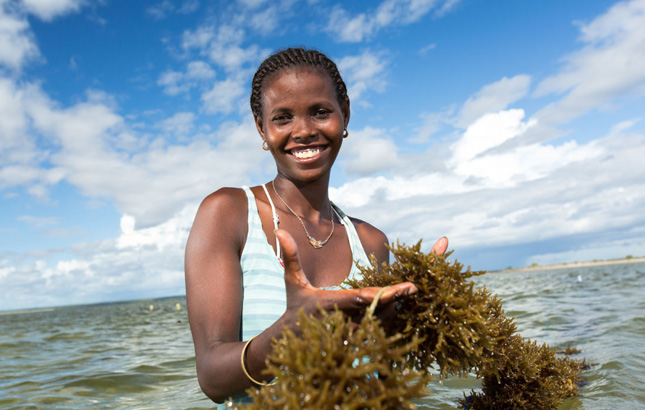
  • Laurie Mazur: Build on Natural Tendencies to Strengthen Social Resilience

    ›
    Friday Podcasts  //  April 5, 2013  //  By Carolyn Lamere

    ‘Toward Resilience’ is a series on the meaning of global resilience and vulnerability today.

    “The proliferation of disasters has gotten a lot of people talking about resilience, about how we can lessen our risk, and how we can recover more quickly from disasters of all kinds,” says Laurie Mazur in this week’s podcast.

    Mazur describes the qualities of communities that can weather adversity, including social cohesion and the ability to make decisions for themselves. Above all, she reiterates that “humans are nothing if not resilient,” and the governance structures and disaster mitigation schemes we employ should capitalize on that native resilience, rather than infringe upon it.

    MORE
  • On Building a Better (and More Resilient) World: Complexity, Community, and the Precautionary Principle

    ›
    April 3, 2013  //  By Laurie Mazur

    ‘Toward Resilience’ is a series on the meaning of global resilience and vulnerability today.

    From the 2004 Indian Ocean tsunami to Superstorm Sandy, the last decade has seen an incredible array of natural disasters. Of course, disasters of all kinds are nothing new, but, thanks to the growing scale and interconnectedness of the human enterprise – and the damage we have done to the natural world – the frequency, scale, and consequences of today’s calamities are truly without precedent.

    MORE
  • Family Planning an Important Component of Resilience to Climate Change, Says Roger-Mark De Souza

    ›
    Friday Podcasts  //  March 29, 2013  //  By Carolyn Lamere

    “We believe that if you want to respond to critical development issues like climate change, that you need to address the social dimensions of resilience,” says Roger-Mark De Souza of Population Action International (PAI) in this week’s podcast.

    “If you want to address climate change and you only look at mitigation, you are missing some of the important components,” he said. PAI, which advocates for better access to family planning in developing countries, starts from the standpoint that allowing couples to decide how many children they have leads to “investments in education and technology, providing opportunities for additional economic growth, enhanced development, and ultimately helping to build resilience and adaptive capacity.”.

    MORE
  • After Cyclone Haruna, Blue Ventures Leverages Its PHE Program for Disaster Response in Madagascar

    ›
    Beat on the Ground  //  Guest Contributor  //  March 28, 2013  //  By Laura Robson

    ‘Toward Resilience’ is a series on the meaning of global resilience and vulnerability today.

    Balbine is moving through her coastal village of Andavadoaka with a sense of urgency. Normally she works as a community-based distributor for Blue Ventures’ integrated population, health, and environment (PHE) program in southwest Madagascar, providing health information and products to her community. However, since Cyclone Haruna swept through the region several weeks ago, Balbine has been especially busy distributing diarrhea treatment kits to mothers caring for sick infants, providing families sleeping out in the open with mosquito nets to protect against malaria, setting up water filtering stations, and emphasizing the importance good hygiene practices.

    MORE
  • Goldilocks Had It Right: How to Build Resilient Societies in the 21st Century

    ›
    March 5, 2013  //  By Laurie Mazur

    ‘Toward Resilience’ is a series on the meaning of global resilience and vulnerability today.

    When Superstorm Sandy slammed into the U.S. East Coast last October, it was the latest in a series of “teachable moments” about our growing vulnerability to climate change.

    MORE
  • Janani Vivekananda on Strengthening Resilience to Climate Variability in South Asia

    ›
    Friday Podcasts  //  February 22, 2013  //  By Carolyn Lamere

    “Building resilience should help address the root causes of vulnerability, creating increased capacity to be able to adapt to a range of possible climate futures, not just cope with… specific climate impacts,” says International Alert’s Janani Vivekananda. Otherwise, if the specific impacts don’t play out, “in a fragile context that could be quite destabilizing and seen as a wasted opportunity.”

    MORE
  • Strengthening Responses to Climate Variability in South Asia

    ›
    From the Wilson Center  //  February 22, 2013  //  By Carolyn Lamere

    Climate change and conflict can create a self-reinforcing feedback loop: Climate change exacerbates existing conflicts, while conflict makes adapting to climate change more difficult, said Janani Vivekananda of International Alert at the Wilson Center on February 7. [Video Below]

    MORE
  • In Building Resilience for a Changing World, Reproductive Health Is Key

    ›
    April 20, 2012  //  By Laurie Mazur

    Change is a constant in human (and natural) history. But today, we have entered an era in which the pace, scale, and impact of change may surpass anything our species has previously confronted.

    MORE
Newer Posts   Older Posts
View full site

Join the Conversation

  • RSS
  • subscribe
  • facebook
  • G+
  • twitter
  • iTunes
  • podomatic
  • youtube
Tweets by NewSecurityBeat

Trending Stories

  • unfccclogo1
  • Pop at COP: Population and Family Planning at the UN Climate Negotiations

Featured Media

Backdraft Podcast

play Backdraft
Podcasts

More »

What You're Saying

  • Volunteers,At,The,Lagos,Food,Bank,Initiative,Outreach,To,Ikotun, Pan-African Response to COVID-19: New Forms of Environmental Peacebuilding Emerge
    Rashida Salifu: Great piece 👍🏾 Africa as a continent has suffered this unfortunate pandemic.But it has also...
  • A desert road near Kuqa An Unholy Trinity: Xinjiang’s Unhealthy Relationship With Coal, Water, and the Quest for Development
    Ismail: It is more historically accurate to refer to Xinjiang as East Turkistan.
  • shutterstock_1779654803 Leverage COVID-19 Data Collection Networks for Environmental Peacebuilding
    Carsten Pran: Thanks for reading! It will be interesting to see how society adapts to droves of new information in...

What We’re Reading

  • Rising rates of food instability in Latin America threaten women and Venezuelan migrants
  • Treetop sensors help Indonesia eavesdrop on forests to cut logging
  • 'Seat at the table': Women's land rights seen as key to climate fight
  • A Surprise in Africa: Air Pollution Falls as Economies Rise
  • Himalayan glacier disaster highlights climate change risks
More »
  • woodrow
  • ecsp
  • RSS Feed
  • YouTube
  • Twitter
  • Facebook
  • Home
  • Who We Are
  • Publications
  • Events
  • Wilson Center
  • Contact Us
  • Print Friendly Page

© Copyright 2007-2021. Environmental Change and Security Program.

Woodrow Wilson International Center for Scholars. All rights reserved.

Developed by Vico Rock Media

Environmental Change and Security Program

Woodrow Wilson International Center for Scholars

Ronald Reagan Building and International Trade Center

  • One Woodrow Wilson Plaza
  • 1300 Pennsylvania Ave., NW
  • Washington, DC 20004-3027

T 202-691-4000