-
Sam Eaton Describes Population-Food-Environment Links in Rural Philippines
›
In this podcast, journalist Sam Eaton describes the process of producing two pieces that aired on Marketplace and NewsHour last year on the connection between population, the environment, and food security in the Philippines. Eaton visited the rural village of Humayhumay where PATH Foundation Philippines, Inc., has a pilot program distributing contraceptives and teaching community members about conservation and sustainable livelihoods. Although Eaton said he was at first hesitant to tackle such an “abstract concept” as integrated population, health, and environment development, he found on the ground that it had “all the elements of a good story” and there were tangible benefits visible within the community. Eaton discussed his reporting at the Wilson Center on January 28.
-
Child Mortality in the Developing World: Hans Rosling Crosses the “River of Myths” Once More
›“The world my father told me about 50 years ago was a divided world,” says Hans Rosling, famed Swedish statistician and development expert, in a new video. Standing in the middle of one of his trademark graphs of development indicators, his body neatly splitting the data, he gestures: “In many people’s minds, the world still looks like this: developing and developed.”
“But it’s a myth,” he continues, “because the world has improved immensely in the last 50 years.”
-
Sam Eaton on Food Security, Family Size, and Family Planning in the Philippines
›February 13, 2013 // By Graham Norwood“We chose the Philippines because we really wanted to do a story that looked at population growth,” reporter Sam Eaton says of his two-part contribution to the Food for Nine Billion project, which aired last year on PBS’ NewsHour and American Public Media’s Marketplace. Eaton recently visited the Wilson Center to discuss his experiences in the Philippines, describing the heavy toll overcrowding and poor resource management is taking on the country’s ecosystems and highlighting how access to family planning may hold the key to a better future.
-
Fishing for Families: Reporting on Population and Food Security in the Philippines
›
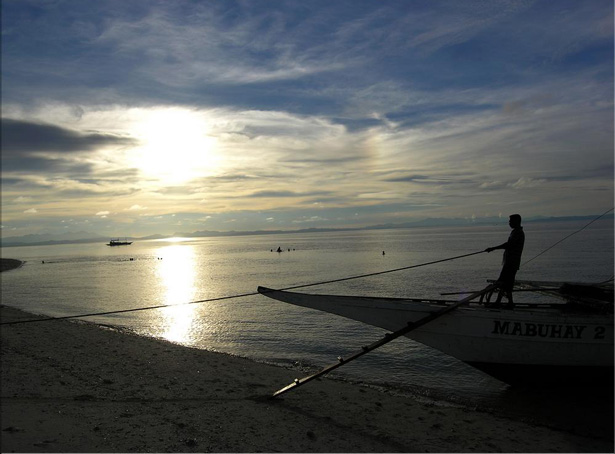
“My income is just right to feed us three times a day,” Jason Bostero told Sam Eaton in the rural Philippine village of Humayhumay. “It’s really, really different when you have a small family.” Eaton traveled to the Philippines to report on the connections between food security and population for Homelands Productions, creating a short film and radio piece that ran on NewsHour and Marketplace as part the Food for Nine Billion series last year. [Video Below]
-
Rachel Yavinsky, Behind the Numbers
Energy-Saving Stoves and Family Planning Benefit Women and Families in Rural Uganda
›January 23, 2013 // By Wilson Center StaffThe original version of this article, by Rachel Yavinsky, appeared on the Population Reference Bureau’s Behind the Numbers blog.
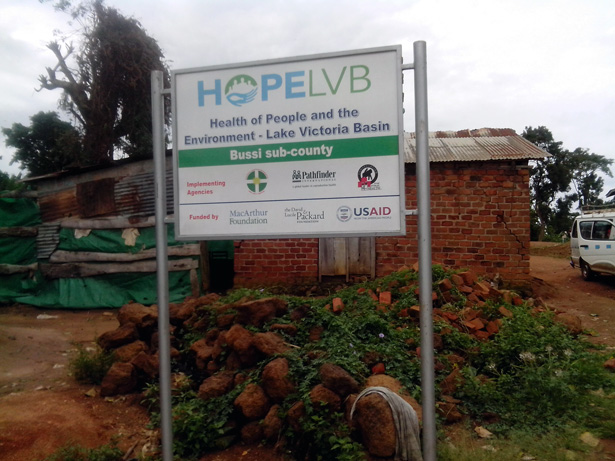
After 45 minutes on Lake Victoria in a wooden fishing boat, my PRB colleague and I arrived on Busi Island, one of the Ugandan sites of the HOPE-LVB (Health of People and the Environment – Lake Victoria Basin) project. PRB, who partners on this project, came to Busi Island to see HOPE-LVB in action.
-
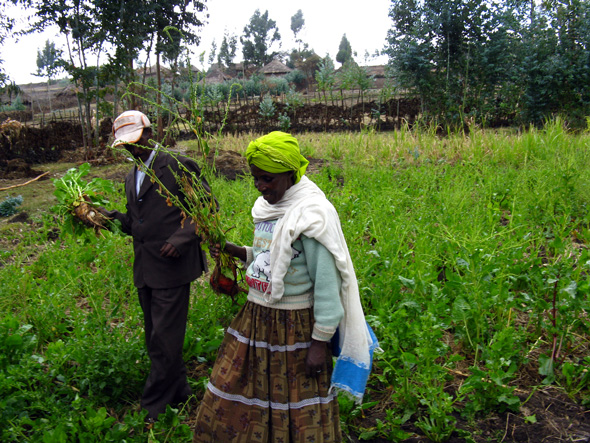
Measuring Sustainable Development in Ethiopia’s Guraghe Zone
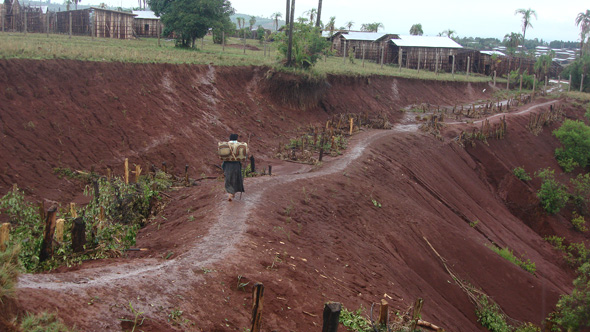
›Despite progress over the years, Ethiopia’s Guraghe zone, located in the Southern Nations, Nationalities, and People’s Region, faces many development challenges. As senior monitoring and evaluation officer in the Guraghe People’s Self-help Development Organization (GPSDO), I have been working in this region for more than five years trying to reduce poverty and improve socio-economic development. The organization as a whole has been here for more than 50.
-
Five Questions for Population, Health, and Environment Projects in Ethiopia
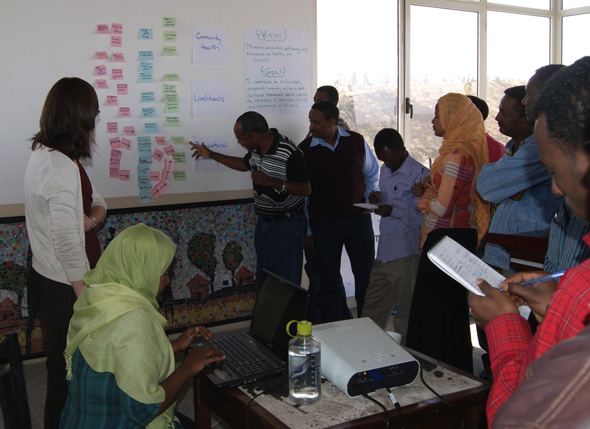
›Since the integrated population, health, and environment (PHE) approach is relatively new in international development, donors, partners, and implementers want to know how it’s improving people’s lives. In the PHE community, we believe that combining efforts to address natural resource management, reproductive health, and livelihoods is making a difference in places where rapid population growth combines with poverty and environment degradation. But to know for sure and be able to convince others, we need to have data to support those beliefs.
-
Stronger Evidence Base Needed to Demonstrate Added Value of PHE
›It is well known that public health issues that affect the world’s most vulnerable populations – food insecurity, maternal and child health, water- and sanitation-related disease, and resource scarcity – are inextricably linked. Where these linkages are strongest, experience on the ground has shown that community-based integrated approaches to development provide more effective and sustainable solutions over vertical, sector-based programs. But so far, there are very few comprehensive evaluations providing strong quantitative evidence of this advantage.
Showing posts from category PHE.