-
Lessons From Kenya and Malawi on Combining Climate Change, Development, and Population Policy
›“The combined effects of rapid population growth and climate change are increasing food insecurity, environmental degradation, and poverty levels in Malawi and Kenya,” said Clive Mutunga, a senior research associate at Population Action International (PAI).
-
Wilson Center Premieres ‘Healthy People, Healthy Environment’ and ‘Transcending Boundaries’ at Environmental Film Festival
›Environmental security and international development aren’t typical movie-going fare, but at the 2013 DC Environmental Film Festival, ECSP premiered two short documentaries with unique environmental stories: Healthy People, Healthy Environment: Integrated Development in Tanzania shows how improving health services and environmental conservation can empower coastal communities in Africa; and Transcending Boundaries: Perspectives from the Central Albertine Rift Transfrontier Protected Area Network explores the opportunities for “peace parks” along the shared borders of Uganda, Rwanda, and the Democratic Republic of Congo.
-
Family Planning an Important Component of Resilience to Climate Change, Says Roger-Mark De Souza
›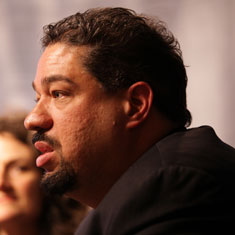
“We believe that if you want to respond to critical development issues like climate change, that you need to address the social dimensions of resilience,” says Roger-Mark De Souza of Population Action International (PAI) in this week’s podcast.
“If you want to address climate change and you only look at mitigation, you are missing some of the important components,” he said. PAI, which advocates for better access to family planning in developing countries, starts from the standpoint that allowing couples to decide how many children they have leads to “investments in education and technology, providing opportunities for additional economic growth, enhanced development, and ultimately helping to build resilience and adaptive capacity.”.
-
After Cyclone Haruna, Blue Ventures Leverages Its PHE Program for Disaster Response in Madagascar
›
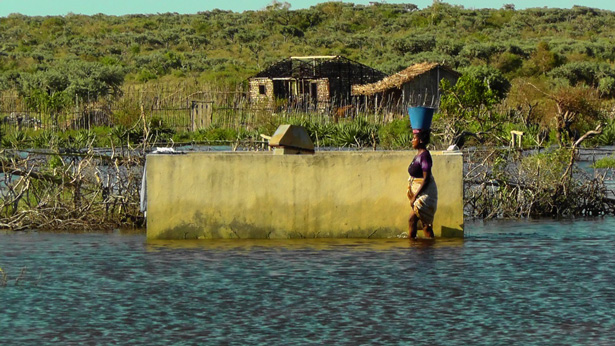
Balbine is moving through her coastal village of Andavadoaka with a sense of urgency. Normally she works as a community-based distributor for Blue Ventures’ integrated population, health, and environment (PHE) program in southwest Madagascar, providing health information and products to her community. However, since Cyclone Haruna swept through the region several weeks ago, Balbine has been especially busy distributing diarrhea treatment kits to mothers caring for sick infants, providing families sleeping out in the open with mosquito nets to protect against malaria, setting up water filtering stations, and emphasizing the importance good hygiene practices.
-
Making ‘Healthy People, Healthy Environment’: A Look Inside Integrated Development
›“We need dynamic approaches. We can’t just keep going with the single sector approach and hoping that a conservation project will do really more than it’s intended to do,” said ECSP’s Multimedia Editor Sean Peoples in an interview with Dialogue at the Wilson Center. “These people are living integrated lives. How can we have integrated solutions for them?”
-
Imelda Abano on the Challenges of Reporting on Population and the Environment in the Philippines
›In this podcast, Imelda Abano, who writes for Eco-Business in the Philippines, discusses her experiences reporting on population and environmental issues.
“It’s a very tough job for us to be reporting on these issues, but we have the responsibility to raise awareness…and we have to push for government action,” Abano says.
-
In Uganda, Integrating Population, Health, and Environment to Meet Development Goals
›Fifty years after independence, Uganda has one of the highest population growth rates in the world at 3.3 percent – a rate which puts the country on track to nearly double in population over the next two decades. More than 50 percent of the population is under the age of 18. This large youth cohort will ensure that the country continues to grow for decades to come, even if couples choose – and are able – to have smaller families. And according to the State of Uganda Population Report 2011, “with more than one million people added to the population every year, the quality of [health] service delivery will suffer.”
-
International Women’s Day: Violence Pervasive, With Wide-Ranging Effects
›March 8, 2013 // By Kate DiamondThe theme of this year’s International Women’s Day is “a promise is a promise: time for action to end violence against women.” The theme reflects that although there are a number of treaties and conventions that on paper promise to protect women’s rights, equality, and security, in reality, those promises to protect human rights have been broken time and again.
Showing posts from category PHE.