-
Africa’s Urban Youth Cohort, and Women’s Health in Forest Communities
› As recently discussed by the National Intelligence Council, sub-Saharan Africa is home to both the most rapidly growing populations in the world and its fastest expanding cities. Save the Children’s recent report, Voices From Urban Africa: The Impact of Urban Growth on Children, explores the challenges faced by the continent’s youngest age cohort, revealing what forces are driving children and families to migrate to urban areas and the poverty many are experiencing upon getting there. In response to the report’s findings, the authors recommend training and deploying more health care workers, facilitating public-private dialogue to identify long-term water and sanitation solutions, improving access to jobs and skills training, expanding access to early childhood care, and strengthening the education system to ensure widespread attendance. Compiled from 1,050 interviews, the report is unique for its first-hand accounts of the daily lives of children, their families, and community members.
 -
Managing the Planet: The World at Seven Billion
›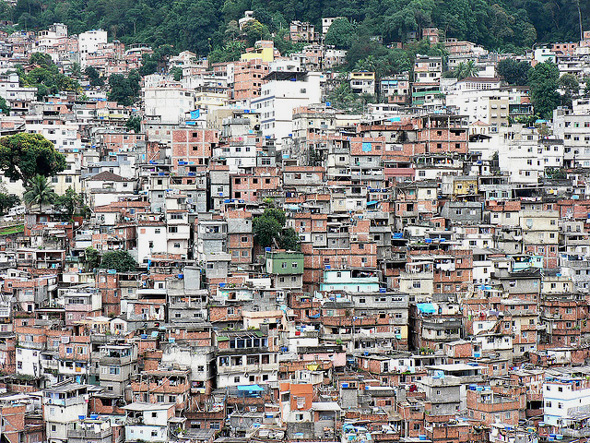
Population growth “is highly concentrated in what are today the poorest and least well-governed areas of the world,” said George Mason University professor Jack Goldstone at the Wilson Center on December 5.
Goldstone was joined by Suzanne Ehlers, president and CEO of Population Action International (PAI), and Matthew Erdman, population-health-environment technical advisor at USAID, to discuss the implications of seven billion people and counting for the environment as part of the joint Wilson Center-George Mason University Managing the Planet series. [Video Below]
-
Ravao’s Story: A Health and Environment Champion From Madagascar’s Mikea Forest
›The original version of this article, by Vik Mohan, appeared on Blue Ventures’ blog.
I recently spent a hectic and intense couple of weeks in the village of Andavadoaka, where Blue Ventures’ community health project is based, during my annual visit to Madagascar. Although I founded our Safidy (meaning “choice”) health program several years ago, each return visit brings new and inspiring stories and lessons from our team on the ground.
-
What Next? Finding Ways to Integrate Population and Reproductive Health Into Climate Change Adaptation
›November 12, 2012 // By Kathleen MogelgaardThe size, composition, and spatial distribution of human populations are constantly changing, and in some areas of the world, they’re changing very rapidly. Related trends in fertility and reproductive health are also in flux. These changes will affect how people experience climate change, both individually and societally.
-
Clean Cookstoves and PHE Champions on Tanzania’s Northern Coast
›As our ferry slowly made its way across the Pangani River along the northern coast of Tanzania, I sat next to a woman whose child held her hand tightly. The boy and I exchanged smiles, but we mainly admired the view. The late morning sun was behind us as the royal blue river met the cloudless sky.
-
Education as a Conservation Strategy – Really?
›The original version of this article appeared in The Nature Conservancy’s October issue of their Science Chronicles newsletter.
It seems like everywhere you turn recently, you hear how the planet’s population is headed to 10 billion. And obvious questions follow: How can we balance far more people with the natural resources needed for their survival? How will we get more food? How will we get more energy?
-
Population and Environment in Saadani National Park, and Repositioning Family Planning in Sub-Saharan Africa
›Tanzania’s Saadani National Park is a hotbed of biodiversity and, like other national parks in the region, it’s surrounded by human activity. A report by the BALANCED Project, “Population, Health, Environment Situational Analysis for the Saadani National Park Area, Tanzania,” provides a snapshot of the population, health, and environment situation inside the park to serve as a baseline for future activities of the Tanzania Coastal Management Partnership (TCMP) – a joint initiative of the government of Tanzania, USAID, and the University of Rhode Island’s Coastal Resources Center. A behavioral monitoring system implemented in June 2009 used surveys that reached a total of 437 respondents (54 percent women) from eight villages to analyze the “behaviors that positively and negatively influence the utilization and condition of natural resources.” The surveys found that arable land is scarce, fisheries are being depleted, and people have inadequate access to healthcare, water, sanitation, fuel, and family planning resources. The results suggest a strong case for expanding TCMP’s existing integrated approach – combining HIV/AIDS, conservation, and livelihoods goals – to include promotion of positive behavior changes, particularly as they relate to family planning and the effects of population growth on biodiversity loss and resource depletion.
-
Hillary Rosner, Momentum Magazine
Bridges and Bicycles in India
›October 8, 2012 // By Wilson Center StaffThis is part of a seven-part “environmental challenges and opportunities” series featured in the University of Minnesota’s fall issue of Momentum magazine.
As world population careens toward nine billion, all the planet’s systems will be strained. Lowering fertility rates is a complex endeavor, and no one path leads directly there. Poverty, access to contraception, education, job prospects, cultural mores – all of these influence family size. So addressing any of them, or a combination, can help. Solutions abound, at least on a relatively small scale, such as conservation programs that include family planning components.
Showing posts from category PHE.