-
Without the Enforcement of Environmental Laws, Petroleum Infrastructure Projects in Timor-Leste Come at a Cost
›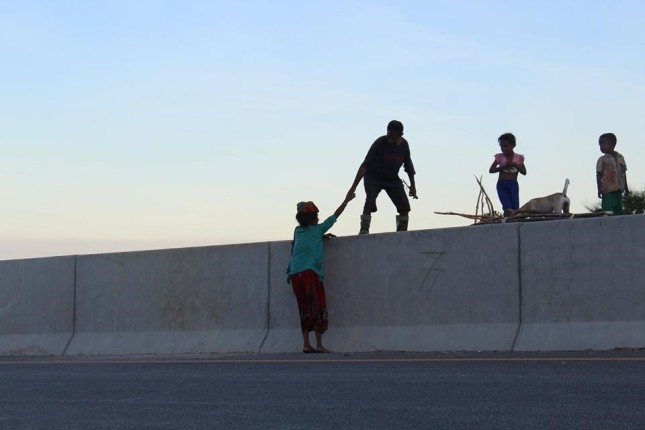
Ignoring environmental laws in Timor-Leste to build a petroleum infrastructure project could mean serious problems for communities including environmental destruction, loss of land, and loss of livelihoods. Communities are already facing some of these problems because project proponents haven’t fulfilled their legal obligations to do extensive environmental research and planning to mitigate any damage to the local environment. The supporters have also failed to meaningfully involve local communities, including interested experts, academics, and civil society groups, in this process.
-
America Must Act on the North and South Poles
›
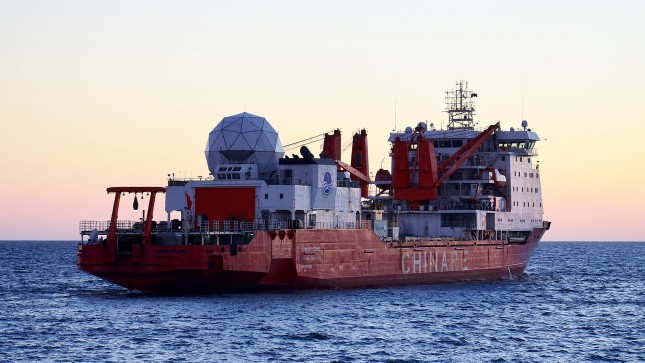
The two poles of our planet—the Arctic and Antarctica—demand greater attention right now. For decades, the United States has played a leadership role in both regions, a responsibility that it must continue to fulfill as a warming climate and other drivers of change are creating new challenges and opportunities. Regrettably, the Trump Administration has not devoted the resources or high-level attention necessary to maintaining American leadership position on these critical matters.
-
Like Water and Oil: Fish as a Geostrategic Resource
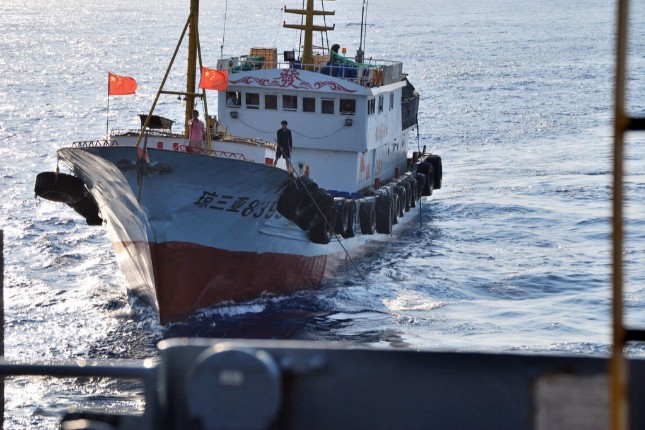
›Access to and competition over natural resources has been one of the most common triggers for conflict. Throughout the centuries, countries and communities have fought over productive agricultural land, trade routes, spices, textiles, opium, and oil, to name just a few. But the battle over one natural resource—fish—has long been overlooked. As trends in the global fish industry increasingly mirror the conflict-ridden oil sector, fish may become the newest addition to the list of resources driving geopolitical competition. There are five parallels between oil and fish that call for increasing the sustainability of the fishing industry, or we might find ourselves facing what U.S. Coast Guard Captain Jay Caputo has called “a global fish war.”
-
China’s Ready to Cash In on a Melting Arctic
›Put simply, “the damn thing melted,” Navy Secretary Richard Spencer explained in recent testimony, referring to Arctic ice melt as the trigger for the new U.S. Navy Arctic Strategy that is to be released this summer. What the Navy planned as a 16-year road map is in need of updates after only four years, in part due to receding polar ice caps, which are “opening new trade routes, exposing new resources, and redrawing continental maps,” but also in part due to the rise of China as an “Arctic stakeholder” and increasing important player in the region.
-
An Unholy Trinity: Xinjiang’s Unhealthy Relationship With Coal, Water, and the Quest for Development
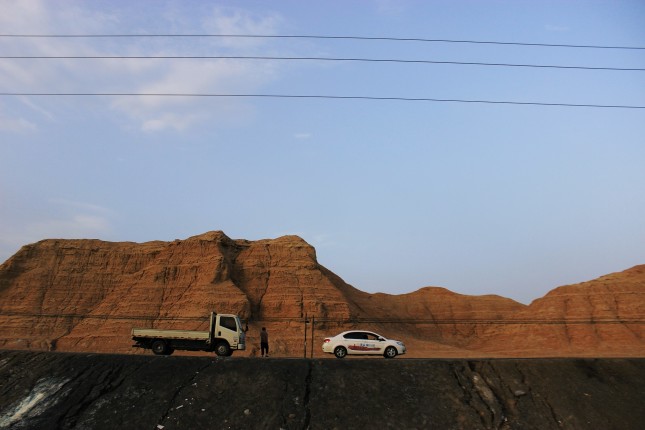
›Sitting shotgun in a beat-up vehicle en route to Tashkorgan a small town in the western Chinese province of Xinjiang, I soaked in the magnificence—or what I could see through the dust-coated windshield. The unpaved and rocky road, which carves through the precipitous Karakorum pass, will be (when finished) a key link in China’s “One Belt One Road” plan to connect China to Pakistan. China’s ambitious plans for westward expansion will demand an almost inconceivably enormous amount of energy and resources, and water-scarce Xinjiang will play a central role. With plans like these, how can China meet its water needs?
-
Backdraft #7: Janani Vivekananda on What Renewable Energy Projects Can Learn From Oil, and Future-Proofing Humanitarian Responses
›As more and more development and humanitarian programs contend with climate-related problems, there are important lessons learned from past experience that should not be forgotten, says Janani Vivekananda, formerly of International Alert and now with adelphi, in this week’s episode of “Backdraft.” -
Can Demographic-Environmental Stress Contribute to Mass Atrocities? And the Future of Arctic Cooperation
›In a brief published by the Stanley Foundation, Cullen Hendrix explores how “the degradation and overexploitation of renewable sources…and unequal access to these resources” can make societies more or less susceptible to experiencing mass atrocities. Hendrix proposes that “demographic-environmental stress” is most likely to contribute to mass atrocities (genocide, war crimes, or crimes against humanity) in agricultural societies that have a high level of group identity-driven politics and economics, exclusionary political institutions, political actors that deprive certain groups, or when governments have low legitimacy. -
In Ecuador, Indigenous Environmental Attitudes Affected by Proximity to Oil Extraction
›True to essentialist stereotypes, Latin America’s indigenous peoples are the best stewards of the region’s rainforests. But the source of their enthusiasm for environmental protection is more complex than mere ascriptive traits or whether they speak native languages. What’s more, in a development that should be worrying to environmentalists, exposure to the negative effects of extractive industries appears to have a degrading effect on that enthusiasm.
Showing posts from category oil.

 As more and more development and humanitarian programs contend with climate-related problems, there are important lessons learned from past experience that should not be forgotten, says Janani Vivekananda, formerly of International Alert and now with adelphi, in this week’s episode of “